 AI
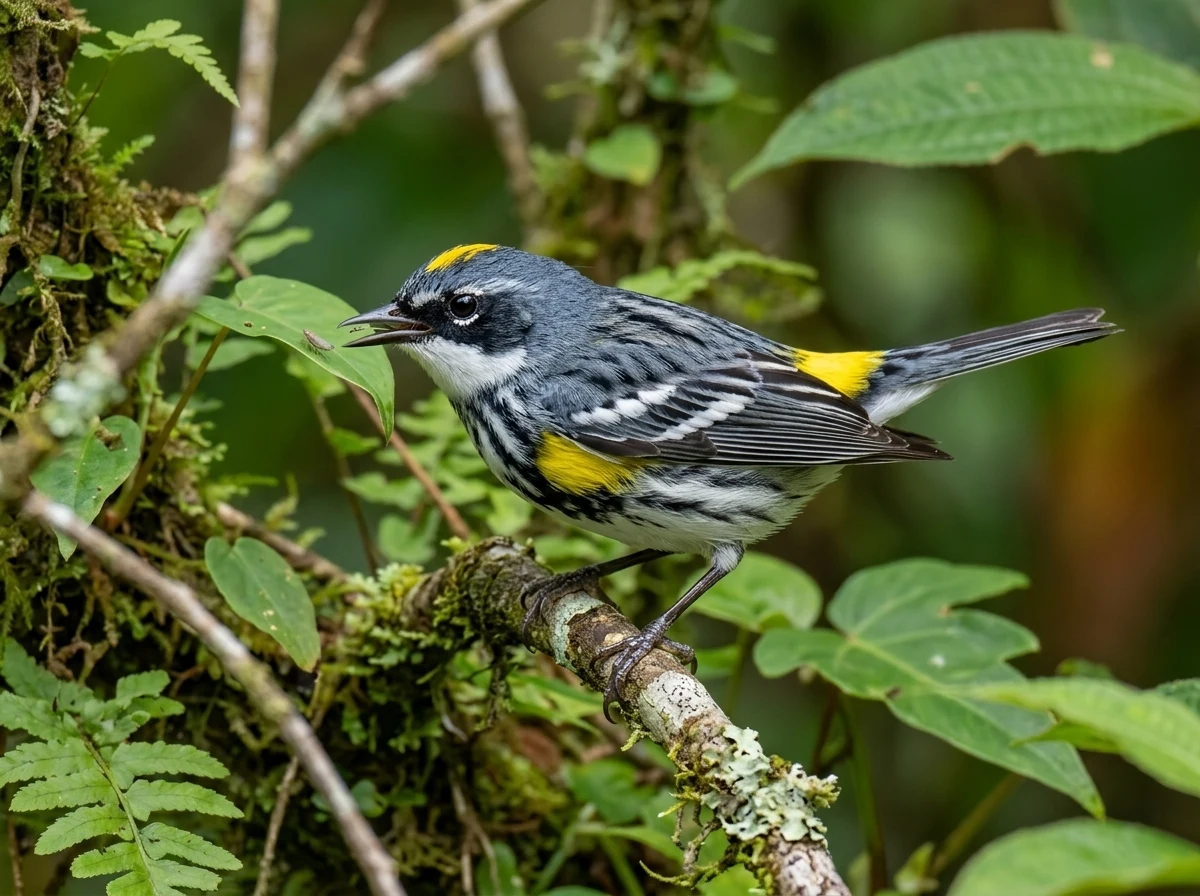
AIAI reconstruction created with Nano Banana 2 · 1K, grounded in the profile’s documented taxonomy, habitat, natural-history sources, and an open-license visual reference when available. It is an interpretive image, not documentary evidence. Image policy →
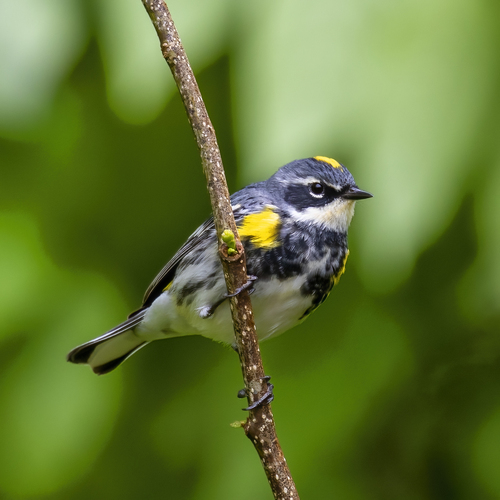
Yellow-rumped Warbler
Reinita Coronada
Setophaga coronata
The yellow-rumped warbler (Setophaga coronata) is a regular North American bird species that can be commonly observed all across the continent. Its extensive range connects both the Pacific and Atlantic coasts of the U.S. as well as Canada and Central America, with the population concentrated in the continent's northern reaches during the breeding season and migrating southwards to southern North and Central America in the winter. It generally prefers coniferous forests or mixed coniferous-deciduous forests as its breeding habitat, while during the winter it can be found inhabiting more open areas such as shrublands that offer food resources. The yellow-rumped warbler is primarily insectivorous, though the species does eat fruits such as juniper berries as well, especially in winter. The species combines four closely related forms: the eastern myrtle warbler (spp. coronata); its western counterpart, Audubon's warbler (spp. group auduboni); the northwest Mexican black-fronted warbler (spp. nigrifrons); and the Guatemalan Goldman's warbler (spp. goldmani). All subspecies of the yellow-rumped warbler are characterized by the yellow rump as its name implies, while intra-group and inter-group variations in appearance exist in spite of many similarities. The myrtle and Audubon's groups, as two major subspecies, are distinguished by noticeable features such as differing throat colorations.
Sound archive
Hear its voice
Explore real songs and calls. The spectrogram turns each sound into a visual trace of time and frequency.

Play: song by Scott Olmstead
Choose another recording
Sound recorded by Scott Olmstead · XC1141315 · CC BY-NC-SA 4.0. Visualization by Stichting Xeno-canto voor Natuurgeluiden.
Every recording retains the creator, catalogue number, and license published by Xeno-canto. Metadata via GBIF ↗
Island profile
About the Yellow-rumped Warbler
This atlas includes Yellow-rumped Warbler (Setophaga coronata) with atlas status “Accidental / vagrant” within scope “Avibase inferred core 380.” Global trait data associate it primarily with forest; consult the linked records to resolve its Puerto Rico habitat use.
Conservation
Least Concern
IUCN LC
- Global IUCN
- LC
- Puerto Rico DNER
- No current listing in source crosswalk
- Federal ESA
- No current listing in source crosswalk
- Critical habitat
- Not identified in source crosswalk
Natural history
How it lives
- Habitat
- forests
- Elevation
- 0–1140 m
- Nest
- Cup / bowl · Tree
- Clutch
- 3–6 eggs
- Social behavior
- Social / flocking
Keep exploring
This bird belongs to 6 paths through the atlas.
Related in the atlas
Where to fly next
Connected by taxonomy, habitat, occurrence, and conservation.
 AI
AI AI
AI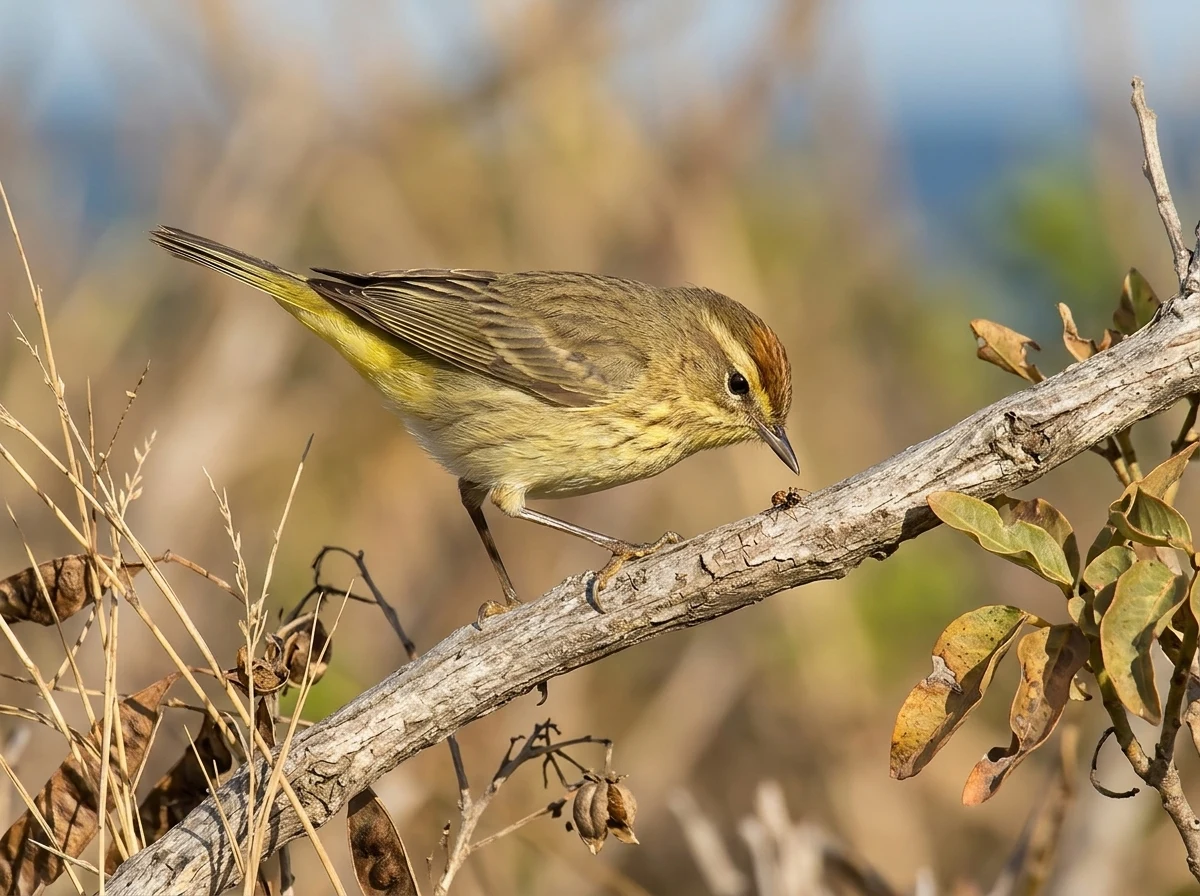 AI
AI AI
AI AI
AI AI
AI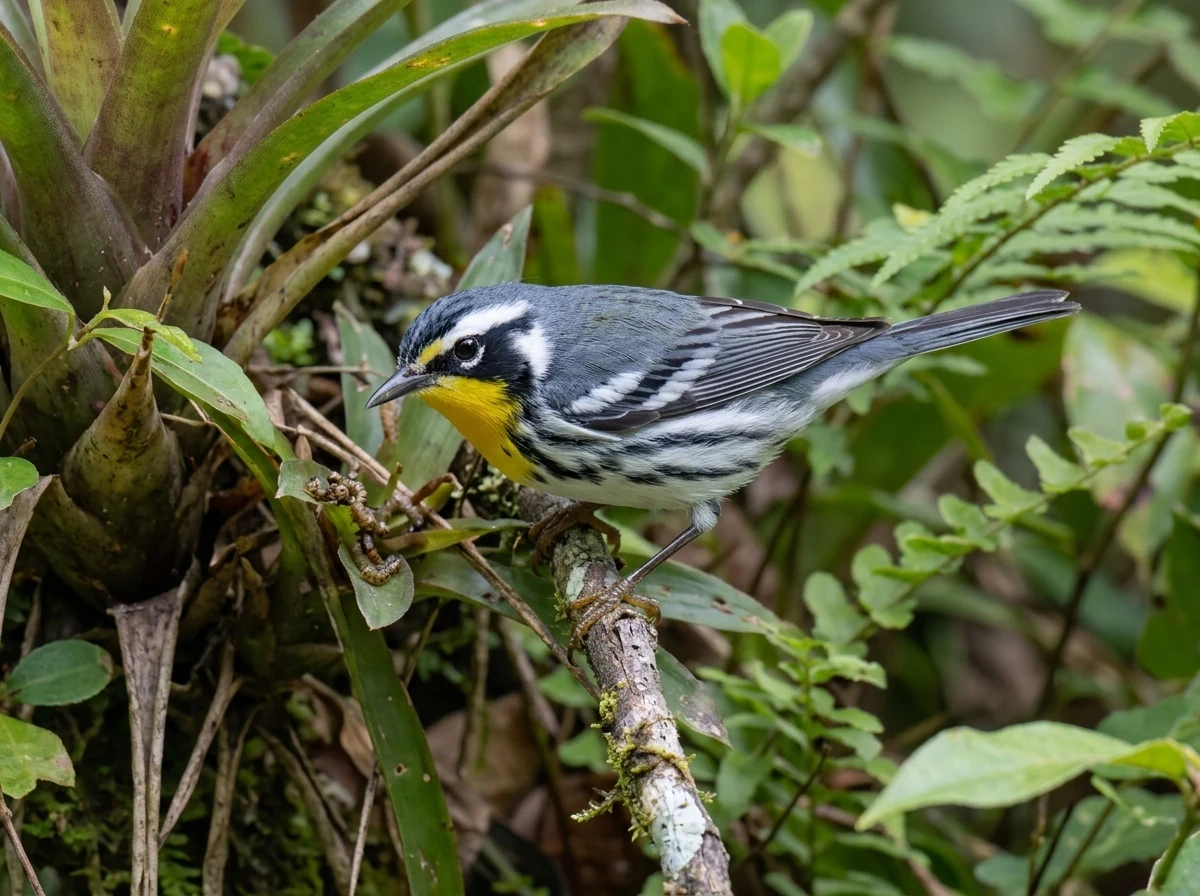
Evidence trail