Field identification
Identifywhat you saw.
Begin with one clue—size, shape, color, habitat, or voice—and narrow the possibilities until you reach a documented profile.
Turn an observation into an answer.
A strong identification starts with structure and context. Notice size, silhouette, bill, movement, and setting first; color changes with the light and is often a secondary clue.
Then compare lookalikes, hear their recordings, and check occurrence, habitat, and season. The atlas keeps those paths connected so a single clue never becomes a dead end.
Three ways to begin
Use the clue you remember.
Identification keys
Compare without guessing.
Curated guides to Puerto Rico groups and questions that are commonly confused.
All guides →Pattern-based identification
Black-and-yellow birds
Identify six black-and-yellow birds in Puerto Rico by yellow-patch placement, size, bill, habitat, sex, and age.Visual identification
Black birds
Compare Puerto Rico's most-confused black birds using size, bill, tail, color patches, behavior, and habitat.Size-first identification
Small birds
Identify Puerto Rico's small birds by relative size, bill, tail, behavior, color, and habitat, from todies and hummingbirds to warblers and grassquits.Identification answer
Are there crows in Puerto Rico?
A clear answer about Puerto Rico's crows: current population, historical species, and black birds commonly mistaken for them.Identification by silhouette
Large birds of Puerto Rico
Identify Puerto Rico pelicans, frigatebirds, herons, raptors, and large visitors by silhouette, flight, habitat, and status.Identification by silhouette
Long-tailed birds
Identify Puerto Rico long-tailed birds by shape, habitat, and status: Pin-tailed Whydah, Puerto Rican Lizard-Cuckoo, grackle, tropicbirds, and rarities.Identification by sound
Birds of the night
Distinguish Puerto Rican Owl, Nightjar, nighthawks, and night-herons by rhythm, silhouette, flight, habitat, and credited recordings.Everyday identification
Backyard and urban birds
Identify birds around yards, balconies, plazas, and streets, and create safer urban spaces.Green is not enough
Parrots and parakeets
Separate Puerto Rican Parrot from introduced parakeets using voice, silhouette, pattern, and context.Identification in flight
Raptors
Compare hawks, falcons, kestrels, and Osprey by silhouette, flight, habitat, and season.Shorelines and wetlands
Herons
Compare herons, egrets, and night-herons by size, legs, bill, plumage, posture, and feeding.Forest, coast, and plaza
Pigeons and doves
Distinguish pigeons and doves by size, tail, neck, wings, flight, voice, and habitat.Migration at water level
Shorebirds and plovers
Identify shorebirds by size, bill, legs, behavior, habitat, and season.Perches and voices
Flycatchers and kingbirds
Compare kingbirds, Puerto Rican Flycatcher, and elaenia by voice, bill, tail, perch, and hunting.Residents and travelers
Warblers
Identify warblers by face, wings, tail, habitat, behavior, and season, including two endemics.Fieldcraft
Diagnostic photography for bird identification
Which photos to take to identify a bird in a brief encounter: diagnostic angles, settings, and tropical light in Puerto Rico.Fieldcraft
How to photograph skulking birds in dense vegetation
A field method for photographing skulking birds: find the gap, focus on the eye, anticipate movement and respect ethical limits.Fieldcraft
Bird tracking: tracks, feathers, and signs
A practical guide to identifying birds by tracks, feathers, droppings, and feeding signs, featuring common Puerto Rico species.Fieldcraft guide
How to observe molt and plumage for bird identification
Read feather generations, molt limits and wear to identify Puerto Rico birds, with a practical observation exercise and cautions on aging.Family Learning
Backyard Bird Bingo: A Family Game
A 16-bird backyard bingo card with identification clues and family rules to learn bird ID at home, no field trip required.Identification
Bird Track and Sign Detective
Learn to read tracks, feathers and nests: a practical guide to indirect bird signs comparing heron, raptor and shorebird feet.Identification · Comparison
Compare Two Hummingbirds: Mango vs. Emerald
A comparison guide to the Puerto Rican Mango and Puerto Rican Emerald: size, bill, color, habitat, and sound, with observation questions.Learning · Identification
Dichotomous Key for Common Birds
Learn to use and build a dichotomous key to identify common Puerto Rico birds by color, size, bill, and habitat, with examples and exercises.Identification
Great Egret Breeding vs Nonbreeding Plumage
How the Great Egret's bill, lores, and nuptial plumes change between breeding and nonbreeding seasons, with field criteria.Identification
Cattle Egret Juvenile vs Adult Plumage
A practical guide to distinguishing juvenile and adult Western Cattle-Egret plumage, with field criteria and comparison to Snowy Egret.Identification
Juvenile Little Blue Heron vs Snowy Egret
A practical guide to telling a juvenile Little Blue Heron from a Snowy Egret using field marks, with an observation procedure and frequently asked questions.Identification
Green Heron vs Least Bittern
A practical guide to telling the Green Heron from the Least Bittern by size, posture, flight, habitat and behavior, using ornithological sources.Bird identification
Blue-winged Teal vs Northern Shoveler
A practical comparison of Blue-winged Teal and Northern Shoveler: bill, size, plumage, flight, and recorded status in Puerto Rico, with source-backed evidence.Identification
American Coot vs Common Gallinule
Compare the American Coot and Common Gallinule by bill and frontal shield color, with an observation routine and frequently asked questions.Identification
Purple Gallinule vs Common Gallinule
A practical comparison of Purple and Common Gallinules: bill, frontal shield, legs, color, and behavior, with a wetland observation procedure.Identification
Brown Pelican vs American White Pelican
Compare the Brown Pelican and American White Pelican: size, color, flight, feeding, and status in Puerto Rico, with a useful field checklist.Identification in flight
Magnificent Frigatebird vs Brown Pelican in Flight
Compare Magnificent Frigatebird and Brown Pelican silhouettes in flight: tail, wings, neck and posture. Includes an observation routine and FAQs.Identification
Red-tailed Hawk vs Osprey
Compare the shape and flight of the Red-tailed Hawk and Osprey in Puerto Rico. Learn to tell their wings, tail, and behavior apart in the air.Identification · Raptors
Peregrine Falcon vs Merlin
A practical comparison of the Peregrine Falcon and the Merlin: size, silhouette, flight, prey, and how to tell them apart in Puerto Rico.Identification
American Kestrel vs Merlin
A practical comparison of the American Kestrel and the Merlin: size, color, tail, flight, habits, and a step-by-step observation procedure for Puerto Rico.Identification
Scaly-naped Pigeon vs White-crowned Pigeon
Compare the Scaly-naped Pigeon and White-crowned Pigeon in Puerto Rico: field marks, habitat, movements, and an observation routine.Identification
White-winged Dove vs Mourning Dove
A practical comparison of White-winged Dove and Mourning Dove: wings, tail, size, silhouette, and habitat, plus a field observation procedure.Identification
Zenaida Dove vs Mourning Dove
Compare the Zenaida Dove and Mourning Dove by size, tail shape, and wing marks. Includes an observation routine and frequently asked questions.Identification
Common Ground Dove vs Zenaida Dove
A practical comparison of the Common Ground Dove and Zenaida Dove in Puerto Rico: size, plumage, habitat, and ground behavior.Identification
Greater Antillean Grackle vs Shiny Cowbird
A practical comparison of the Greater Antillean Grackle and Shiny Cowbird: bill, tail, size, eyes, and behavior for identification in Puerto Rico.Identification
Smooth-billed Ani vs Greater Antillean Grackle
Compare the Smooth-billed Ani and Greater Antillean Grackle by bill and tail shape, with an observation routine and FAQs.Identification
Northern Mockingbird vs Pearly-eyed Thrasher
A visual comparison of the Northern Mockingbird and Pearly-eyed Thrasher in Puerto Rico: size, bill, plumage, and behavior for identification.Identification
Puerto Rican Tody vs Puerto Rican Emerald
A practical comparison of the Puerto Rican Tody and the Puerto Rican Emerald: bill, color, flight, habitat, and habits for confident identification.Identification
Blackpoll Warbler vs Black-and-white Warbler
A practical comparison of Blackpoll and Black-and-white Warblers: patterns, behavior, and how to tell them apart in Puerto Rico.Identification
Prairie Warbler vs Palm Warbler
Compare Prairie and Palm Warblers: streaks, stripes, eyebrow, tail and behavior to identify them in Puerto Rico.Identification
Northern Waterthrush vs Louisiana Waterthrush
A practical comparison of Northern and Louisiana Waterthrushes: eyebrow, throat, bill, habitat, and behavior for confident identification.Identification
Spotted Sandpiper vs Solitary Sandpiper
A practical comparison of Spotted and Solitary Sandpipers: key marks, behavior, habitat, and a field routine to tell them apart.Shorebird identification
Greater Yellowlegs vs Lesser Yellowlegs
A practical comparison of Greater and Lesser Yellowlegs: size, bill, voice, habitat, and an observation routine to tell them apart in Puerto Rico.Identification
Western Sandpiper vs Semipalmated Sandpiper
A practical comparison of Western and Semipalmated Sandpipers: bill, shape, legs, and a step-by-step observation routine to avoid confusion.Identification
Sanderling vs Ruddy Turnstone
A practical comparison of Sanderling and Ruddy Turnstone: size, legs, bill, behavior, and coastal habitat in Puerto Rico.Identification
Killdeer vs Semipalmated Plover
A practical comparison of Killdeer and Semipalmated Plover: number of breast bands, size, proportions, and how to confirm each species in the field.Identification
Royal Tern vs Sandwich Tern
Compare Royal and Sandwich Terns by size, bill, and crest. Includes an observation procedure and frequently asked questions.Identification
Adult vs Juvenile Laughing Gull
Compare adult and juvenile Laughing Gulls: hood, bill, legs, and molt. Includes an observation routine and frequently asked questions.Introduced scavenger
Turkey Vulture in Puerto Rico: What It Is and How to Recognize It
The Turkey Vulture (aura tiñosa) was introduced to Puerto Rico from Cuba in the 1800s. Learn its field marks, where to see it, and why it soars in a V.Silhouettes in the sky
Turkey Vulture vs. Red-tailed Hawk: Telling Them Apart in Flight
Turkey Vultures soar with wings in a V and wobble; Red-tailed Hawks glide steady with a visible head and rusty tail. Six clues to tell them apart for good.Look up
Birds Circling in the Sky in Puerto Rico: A Silhouette Guide
What bird is circling overhead? In Puerto Rico it is usually a Turkey Vulture, Red-tailed Hawk, or frigatebird. ID them by wings, tail, and place.Owls, múcaros, and barn owls
Owls of Puerto Rico: the complete identification guide
Puerto Rico has three documented living owls: the endemic Puerto Rican Owl, the Short-eared Owl, and the Barn Owl. How to tell them apart and which owls are gone.Field comparison
Barn Owl vs. Puerto Rican Owl: how to tell them apart
The Barn Owl is large, pale, and heart-faced; the Puerto Rican Owl is small, brown, and round-headed. Compare size, voice, habitat, and the extinct cave owl.Identification answer
Are there eagles in Puerto Rico?
Puerto Rico has no resident eagles; the Bald Eagle is only an accidental visitor. The big fish hawk you see is usually an Osprey. Learn to tell them apart.Identification answer
Are there toucans in Puerto Rico?
Puerto Rico has no wild toucans; none appear on the official bird list. See which big-billed or colorful birds people mistake for them and why escapes happen.Identification answer
Are there flamingos in Puerto Rico?
The American Flamingo is now only a rare visitor to Puerto Rico; its former population is considered extirpated. Learn its history and how to identify it.Identification answer
Are there seagulls in Puerto Rico?
Yes: the Laughing Gull is the only gull that nests in Puerto Rico and is common April to September. Eleven other gulls are rare visitors. Learn how to identify them.Identification answer
Are there cardinals in Puerto Rico?
The Northern Cardinal does not live in Puerto Rico, and the Red-crested Cardinal is introduced and scarce. Meet the red and orange birds you will actually see.Lagoons, marshes, and reservoirs
Ducks of Puerto Rico: residents, migrants, and whistling-ducks
Four ducks nest in Puerto Rico, and all four are on the island's threatened lists. Learn to tell them apart, what a Gadwall is, and when migrants arrive.Rails of marsh and mangrove
Gallinules, coots, and rails of Puerto Rico
Puerto Rico's gallareta is the Common Gallinule: red shield, yellow tip, white flank stripe. Compare it with the coot, Purple Gallinule, and Clapper Rail.Coasts, bays, and cays
Are there pelicans in Puerto Rico? The Brown Pelican
Yes: the Brown Pelican is a resident that nests on cays off Lajas, Vieques, and Aguadilla. It left the federal list in 2009 but is still endangered in Puerto Rico.A single resident species
Are there woodpeckers in Puerto Rico?
Yes, but only one lives here: the Puerto Rican Woodpecker, an endemic with a red breast and black back. Where to see it, what it eats, and which others visit.Birds that dive
Grebes and cormorants of Puerto Rico
Two grebes breed in Puerto Rico, Pied-billed and Least; cormorants arrive only as rarities. Learn how to tell them from ducks and gallinules.Identify by color
Red birds
Puerto Rico has no Northern Cardinal, so red is usually a patch. Compare the woodpecker, tody, bishop, redstart, and rare red visitors.Identify by color
Blue birds
Puerto Rico's “gorrión azul” is the Indigo Bunting, a scarce migrant that can look brown in winter. Compare it with the grosbeak, warbler, and heron.Identify by color
Green birds
Tody, parrot, hummingbirds, and spindalis: Puerto Rico's green birds are mostly endemics. Learn to separate them from introduced parakeets.Identify by color
Yellow birds
The Bananaquit is the likeliest yellow bird in a Puerto Rico yard. Compare it with Adelaide's Warbler, Yellow Warbler, and yellow seed-eaters.Identify by color
White birds
Most white birds in Puerto Rico are egrets. Separate them by size, bill, and legs, then learn the tropicbirds, ibises, and rare white visitors.Names that travel
What bird is a chombo or a sucha?
Chombo and sucha are Latin American names for vultures, not Puerto Rican bird names. Puerto Rico's established vulture is the Turkey Vulture. See how to tell.Puerto Rican name
What is a mozambique?
In Puerto Rico a mozambique is the Greater Antillean Grackle, the yellow-eyed, V-tailed black bird of plazas and beaches. Learn to tell it from Shiny Cowbird.Ground-walking migrants
What bird is a pizpita?
In Puerto Rico, pizpita names three migratory warblers that walk and bob: the Ovenbird and two waterthrushes. Separate them by eyebrow, legs, and habitat.The forest kingbird
What bird is the clérigo?
The clérigo is the Loggerhead Kingbird, a sturdy, black-capped kingbird of Puerto Rico's woodlands and coffee farms. Here is how to tell it from the Gray Kingbird.Identification · Night-herons
Yellow-crowned vs. Black-crowned Night-Heron: telling Puerto Rico's yaboas apart
A yaboa is a night-heron. Yellow-crowned has a black-and-white face and eats crabs; Black-crowned has a black cap and back. Compare adults and juveniles.Identification · Endemic species
What is a comeñame? Puerto Rico's endemic bullfinch
The comeñame is the Puerto Rican Bullfinch, an endemic black bird with rufous patches. Learn its song, where it lives, and why the IUCN lists it as Vulnerable.Identification · Thrushes and thrashers
Pearly-eyed Thrasher vs. Red-legged Thrush: Puerto Rico's two 'zorzales'
Pearly-eyed Thrasher is brown, streaked, pale-eyed; Red-legged Thrush is gray with red legs and bill. How to tell them apart and why one worries conservationists.Caribbean parrots
The Hispaniolan Parrot in Puerto Rico
The Hispaniolan Parrot is not native to Puerto Rico; it arrived as an aviary bird and pet. Tell it from the Iguaca by its white forehead and maroon belly.Macaws
Are there macaws in Puerto Rico?
Yes: Blue-and-yellow Macaws breed in the wild around San Juan and Orocovis, while Red-and-green and Scarlet Macaws appear as escapes. Here is how to tell them apart.Names and silhouettes
Parrot vs. parakeet: the difference
In Puerto Rico, a cotorra (amazon parrot) is stocky and short-tailed; a perico (parakeet) is smaller with a long, pointed tail. Here is how to tell them apart.The big forest pigeon
Scaly-naped Pigeon in Puerto Rico: how to identify it and where to see it
The Scaly-naped Pigeon (paloma turca) is Puerto Rico's big gray forest pigeon with a wine-red, scaly neck. It is native: how to recognize, hear, and find it.One family, many names
Dove vs. pigeon: what the difference really is in Puerto Rico
There is no scientific difference: doves and pigeons are one family. In Puerto Rico the name tracks size and lifestyle. Here is how to tell them apart in the field.Plazas, bridges, and ledges
City pigeons in Puerto Rico: the Rock Pigeon
Puerto Rico's city pigeon is the Rock Pigeon (Columba livia), introduced and found in 72 % of the island. How to recognize it, where it nests, and its legal status.The forest floor
Quail-doves of Puerto Rico: three living species and one extinct
Puerto Rico has three living quail-doves—Ruddy, Key West, and Bridled—plus an extinct one. How to tell them apart, where they live, and why they are hard to see.The smallest dove
Common Ground Dove and Puerto Rico's small doves
The rolita (Common Ground Dove) is Puerto Rico's smallest native dove: 15–18 cm, a scaly breast, and rufous wings in flight. How to recognize it and where it lives.White egrets
Great Egret vs. Snowy Egret vs. Cattle Egret in Puerto Rico
Check bill and legs: Great Egret has a yellow bill and black legs, Snowy Egret yellow feet, and Cattle Egret is short and stocky in pastures.Ibises and spoonbills (Threskiornithidae)
Ibises in Puerto Rico: Scarlet, White, Glossy, and Spoonbill
Four Threskiornithidae have been recorded in Puerto Rico: Glossy Ibis, White Ibis, Scarlet Ibis, and Roseate Spoonbill. Where and how they have appeared.Dark herons
Blue Herons of Puerto Rico: Little Blue, Tricolored, and Great Blue
Little Blue Heron is small and all dark, Tricolored has a white belly, and Great Blue is the giant gray winter visitor. Field marks, seasons, and places.Pointed wings
Falcons of Puerto Rico
Puerto Rico has one resident falcon, the American Kestrel, plus three visitors: Merlin, Peregrine, and a 2008 Aplomado. How to tell them apart.Introduced estrildids
Munias, Mannikins, and Waxbills of Puerto Rico
Scaly-breasted Munia, Bronze Mannikin, Orange-cheeked Waxbill, Java Sparrow and more: how to identify Puerto Rico's 9 introduced estrildids and where they breed.Bishops and weavers
Northern Red Bishop and Yellow-crowned Bishop
Northern Red Bishop and Yellow-crowned Bishop are African weavers first recorded in Puerto Rico in 1971. How to identify them, when they breed, and where to look.Mynas and starlings
Mynas and Starlings in Puerto Rico
Common Myna, Common Hill Myna, and European Starling are all introduced and scarce in Puerto Rico. How to identify them and tell them from grackles and cowbirds.Brood parasitism
Shiny Cowbird in Puerto Rico
Shiny Cowbird reached Puerto Rico on its own by 1955 and lays its eggs in other birds' nests. How to identify it and why it nearly wiped out the mariquita.Look-alike birds
Gray Kingbird vs. Loggerhead Kingbird
Loggerhead Kingbird has a black head and a square, pale-tipped tail; Gray Kingbird is gray with a mask and notched tail. Compare habitat, voice, and behavior.Look-alike birds
Bananaquit vs. Adelaide's Warbler
Adelaide's Warbler has a yellow throat and two white wing bars; the Bananaquit has a gray throat and a curved bill. Field marks, habitat, and behavior compared.Look-alike birds
Northern Mockingbird vs. Red-legged Thrush
The Red-legged Thrush has orange-red legs, bill, and eye ring; the mockingbird is gray with white wing and tail patches. Compare size, habitat, and nests.Look-alike birds
Swallows vs. Swifts in Puerto Rico
Swifts have crescent wings, never line up on wires, and are related to hummingbirds; swallows are songbirds. A guide to Puerto Rico's species and their seasons.Look-alike birds
Grassquits and Sparrows of Puerto Rico
Black-faced Grassquits have a black face and breast; Yellow-faced show a yellow throat and brow. Separate grassquits, the bullfinch, and introduced sparrows.Sand, surf, and shore
Beach Birds of Puerto Rico
Puerto Rico beach birds: sandpipers, plovers, terns, pelicans, and gulls. Names, field marks, and which months to find each one on the sand.Practice with familiar species
Notice shape first.
Open a profile, study its field marks, and continue to related species.
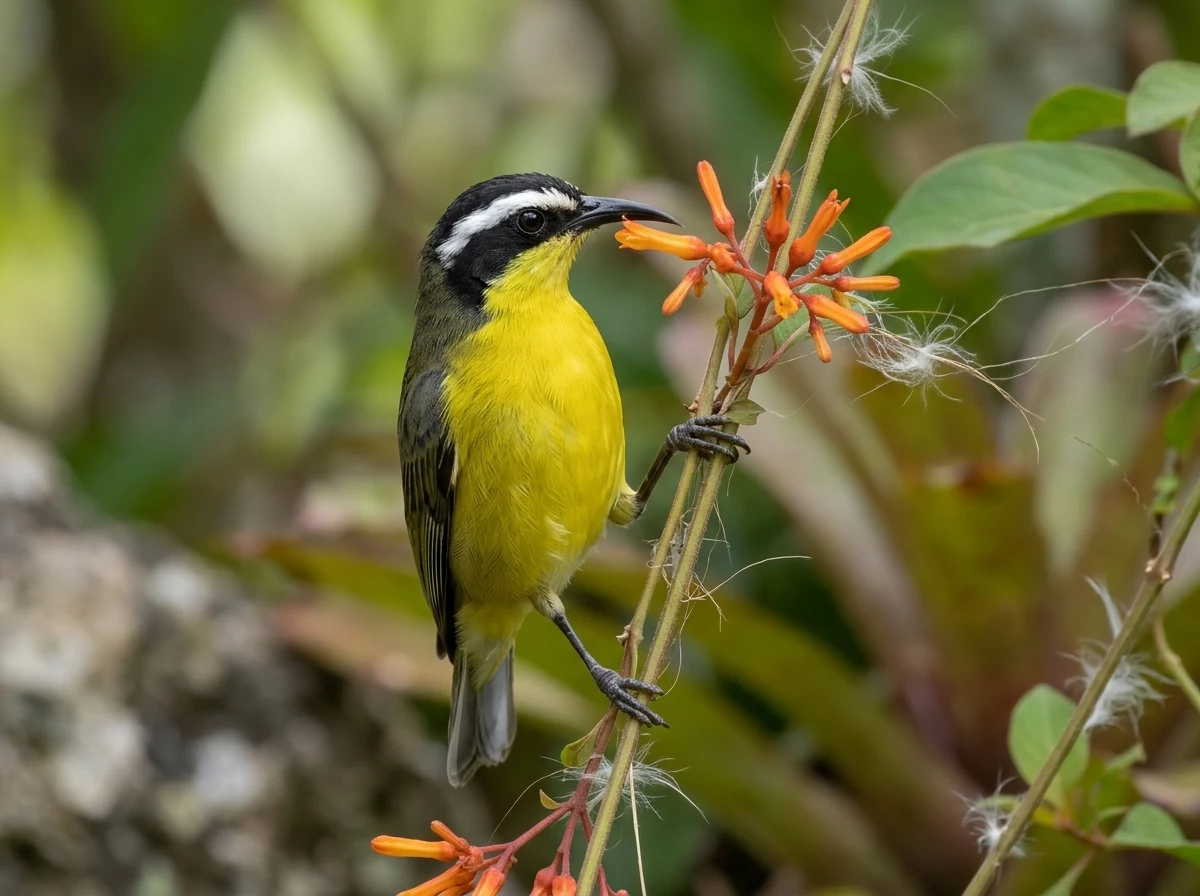
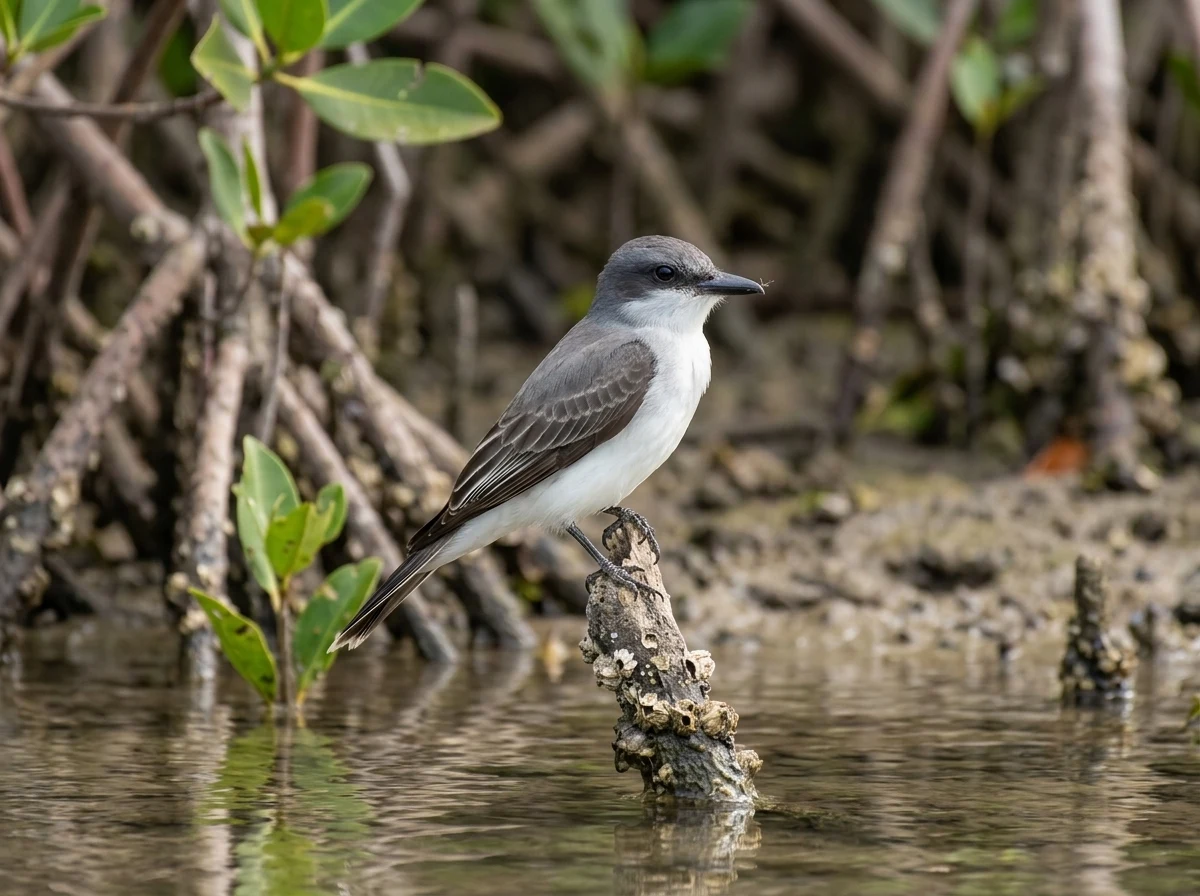
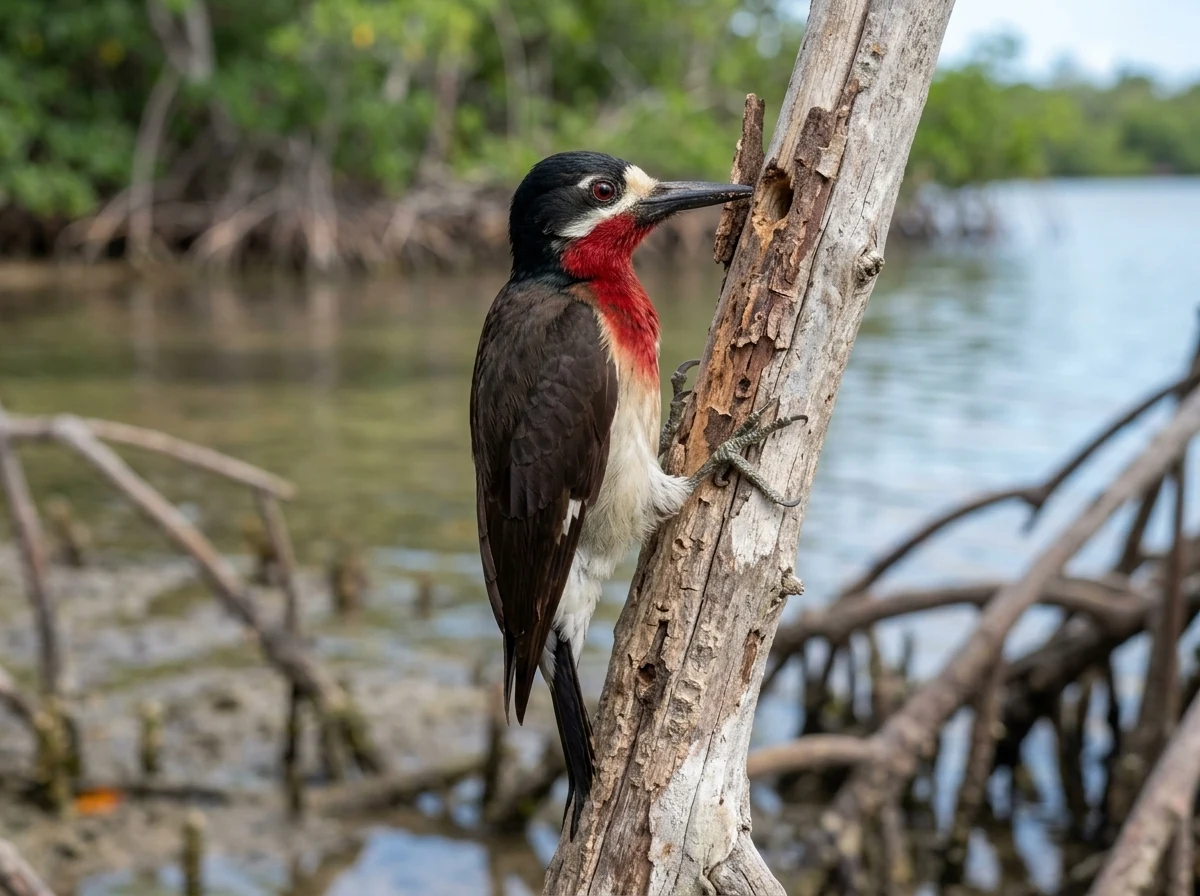
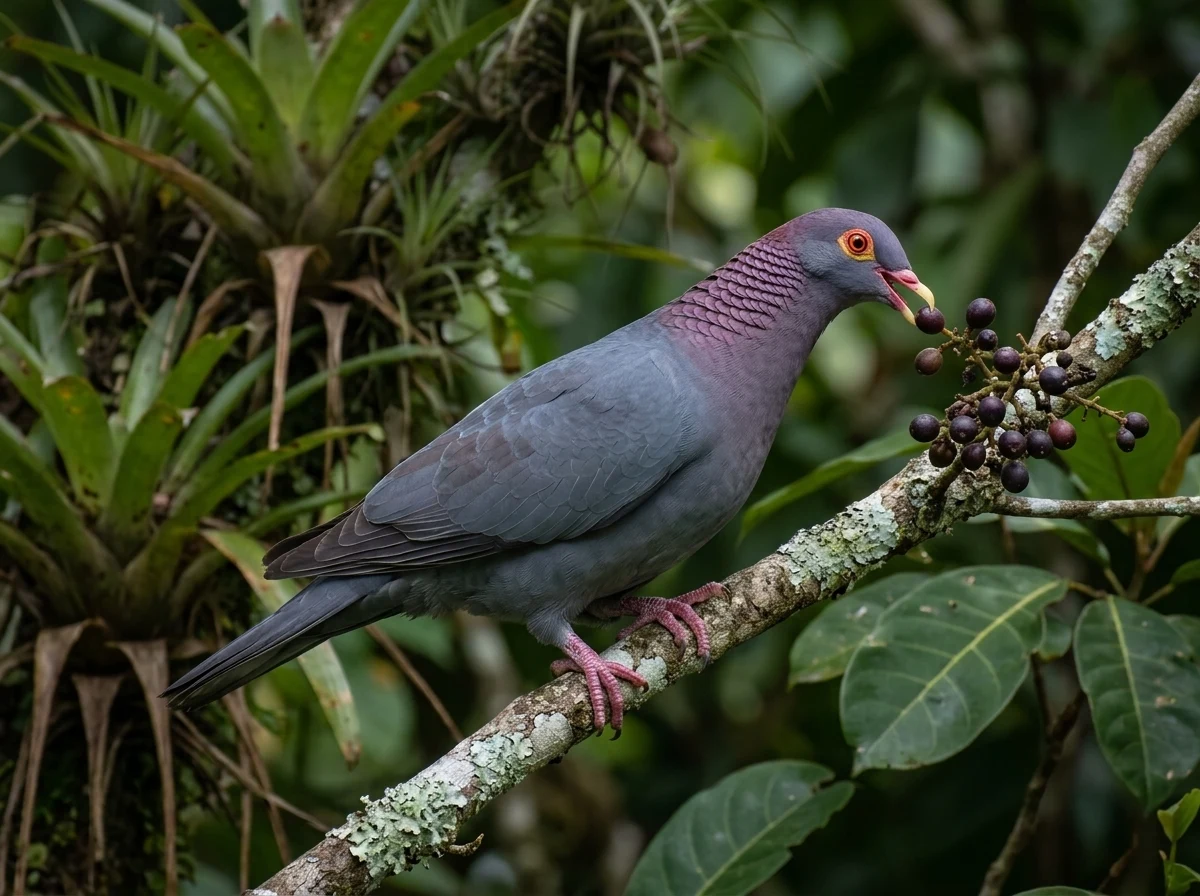
Narrow the field
Explore useful identification sets.
Town & Garden Birds
Adaptable birds found in gardens, parks, towns, plantations and other human-shaped landscapes.
Hummingbirds (Trochilidae)
Meet the 8 Puerto Rico bird records in the family Trochilidae.
Herons, Egrets, and Bitterns (Ardeidae)
Meet the 15 Puerto Rico bird records in the family Ardeidae.