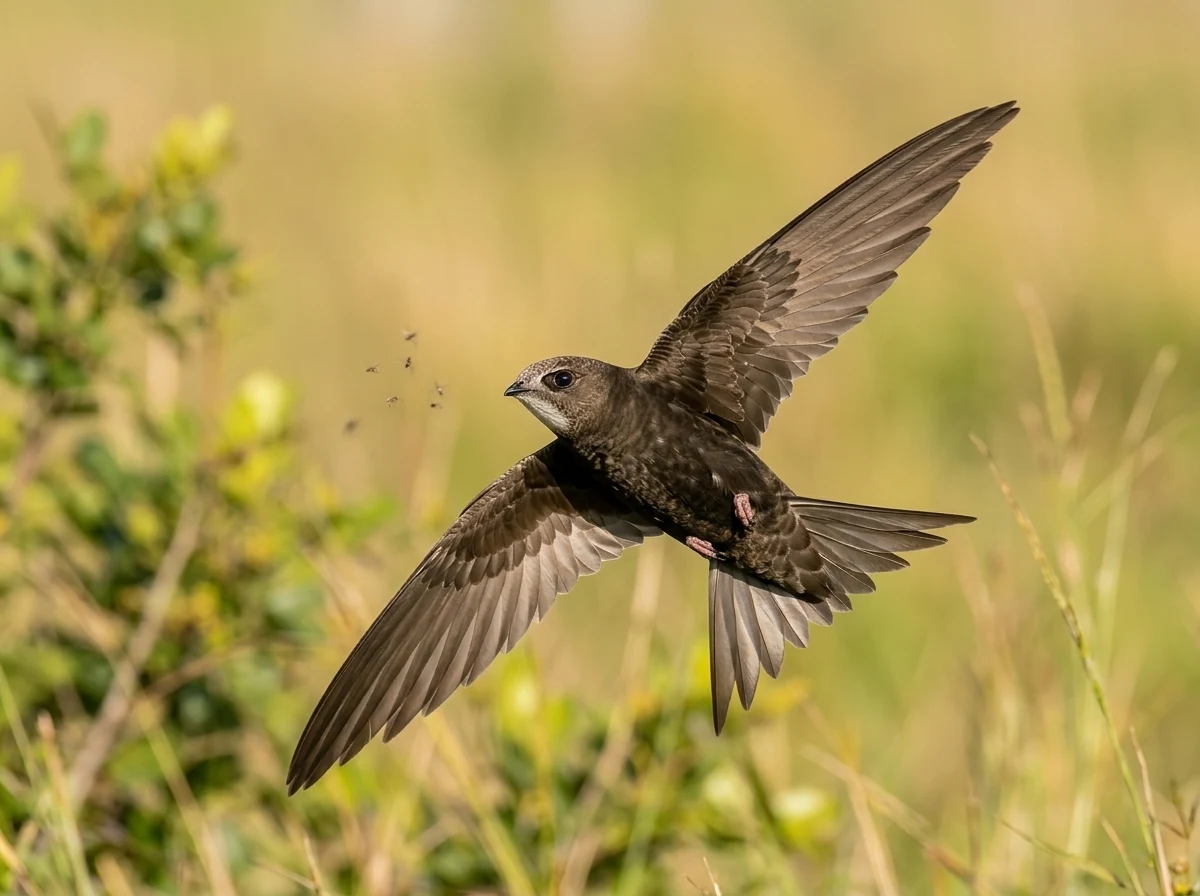
 AI
AIAI reconstruction created with Nano Banana 2 · 1K, grounded in the profile’s documented taxonomy, habitat, natural-history sources, and an open-license visual reference when available. It is an interpretive image, not documentary evidence. Image policy →
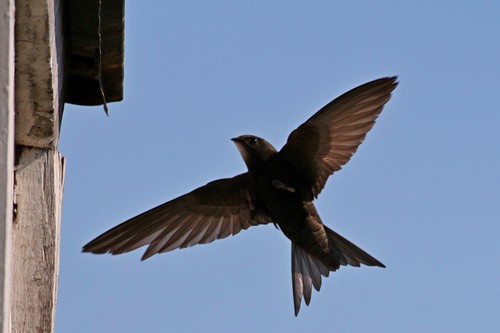
Common Swift
Vencejo Común
Apus apus
The common swift (Apus apus) is a medium-sized bird, superficially similar to the barn swallow or house martin but somewhat larger, though not stemming from those passerine species, being in the order Apodiformes. The resemblances between the groups are due to convergent evolution, reflecting similar contextual development. The swifts' nearest relatives are the New World hummingbirds and the Southeast Asian treeswifts. Its scientific name Apus is Latin for a swift, thought by the ancients to be a type of swallow with no feet (from Ancient Greek α, a, "without", and πούς, pous, "foot"). Swifts have very short legs which they use primarily for clinging to vertical surfaces (hence the German name Mauersegler, literally meaning "wall-glider"). They never settle voluntarily on the ground where they would be vulnerable to accidents and predation, and non-breeding individuals may spend up to ten months in continuous flight.
Sound archive
Hear its voice
Explore real songs and calls. The spectrogram turns each sound into a visual trace of time and frequency.

Play: call, flight call by Thierry THOMAS
Choose another recording
Sound recorded by Thierry THOMAS · XC1094251 · CC BY-NC-SA 4.0. Visualization by Stichting Xeno-canto voor Natuurgeluiden.
Every recording retains the creator, catalogue number, and license published by Xeno-canto. Metadata via GBIF ↗
Island profile
About the Common Swift
This atlas includes Common Swift (Apus apus) with atlas status “Accidental / vagrant” within scope “Avibase inferred core 380.” Global trait data associate it primarily with plains; consult the linked records to resolve its Puerto Rico habitat use.
Conservation
Least Concern
IUCN LC
- Global IUCN
- LC
- Puerto Rico DNER
- No current listing in source crosswalk
- Federal ESA
- No current listing in source crosswalk
- Critical habitat
- Not identified in source crosswalk
Natural history
How it lives
- Habitat
- grasslands
- Elevation
- 0–4000 m
- Nest
- Cup / bowl · Building; Rock; Tree
- Clutch
- 1–4 eggs
- Social behavior
- Colonial; Solitary
Keep exploring
This bird belongs to 7 paths through the atlas.
Related in the atlas
Where to fly next
Connected by taxonomy, habitat, occurrence, and conservation.
 AI
AI AI
AI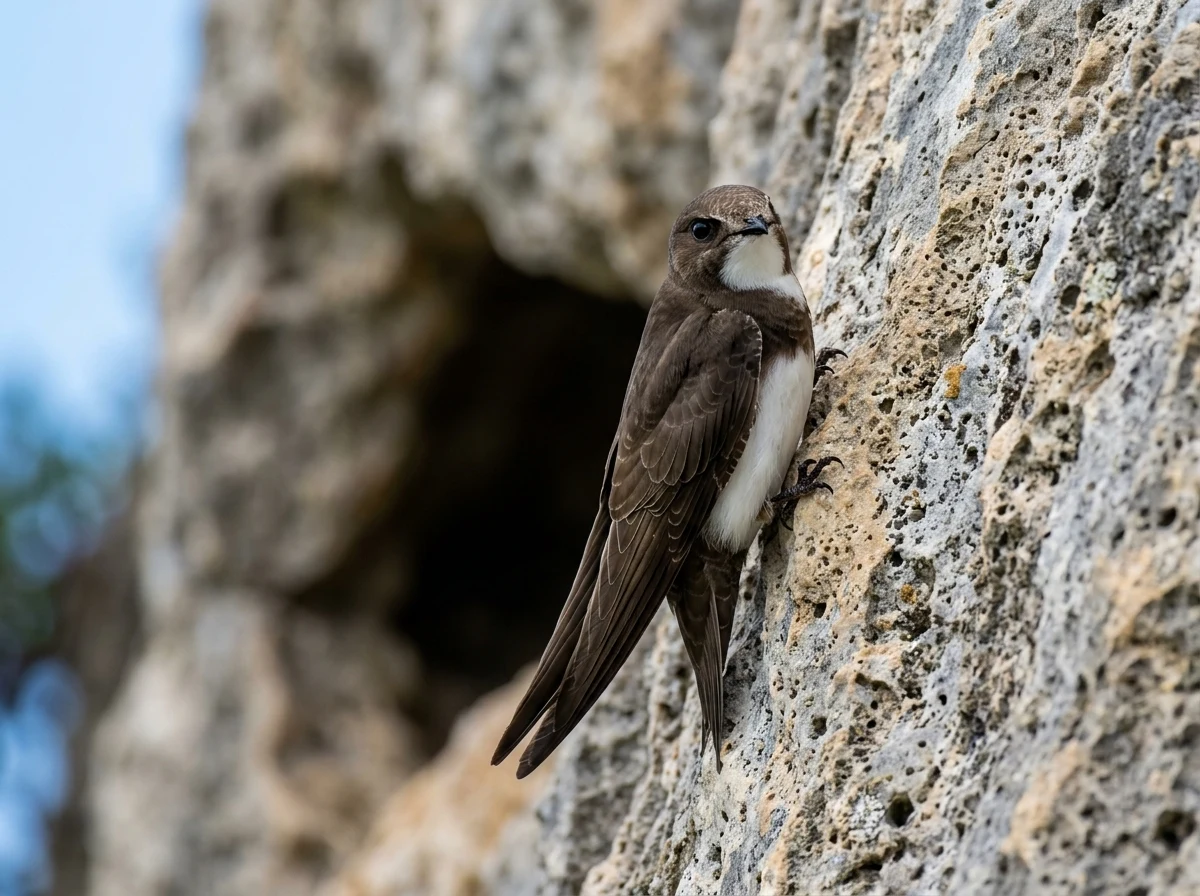 AI
AI AI
AI AI
AI AI
AI
Evidence trail