 AI
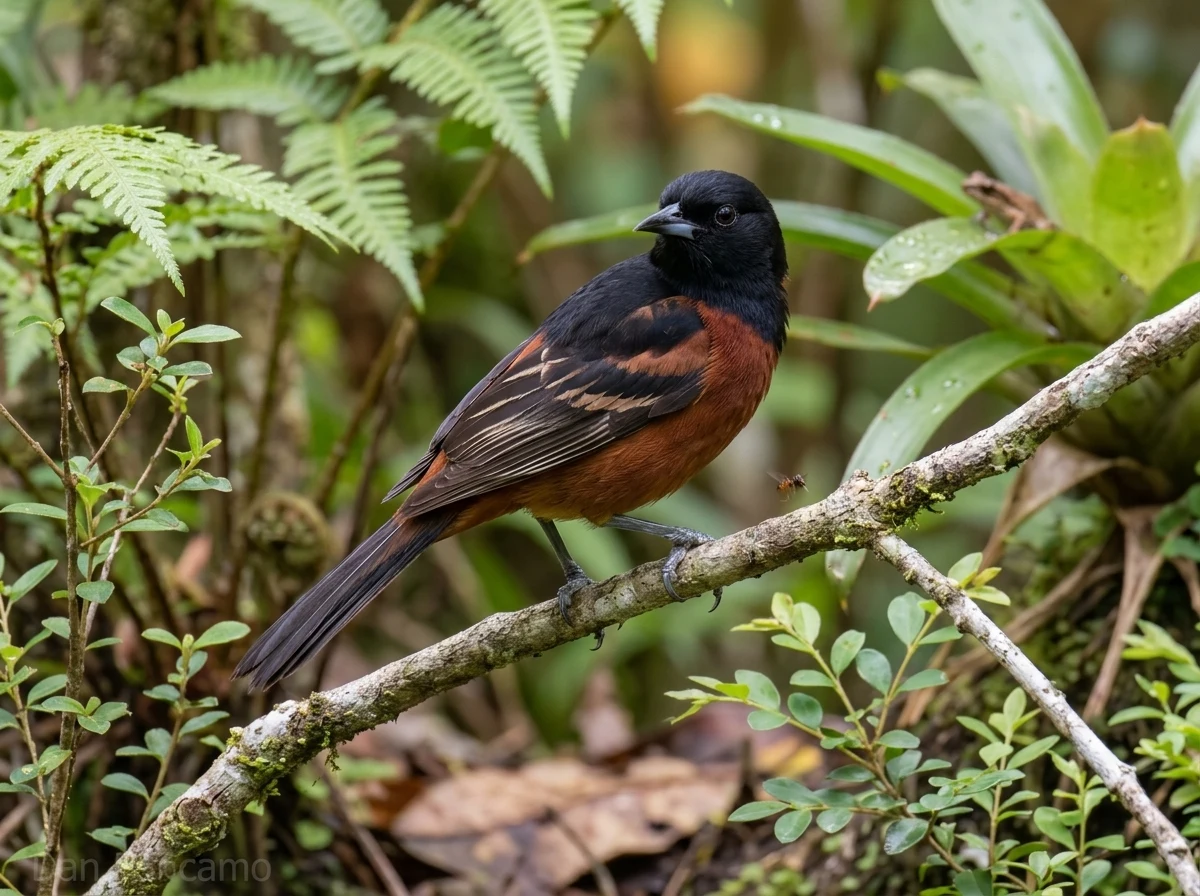
AIAI reconstruction created with Nano Banana 2 · 1K, grounded in the profile’s documented taxonomy, habitat, natural-history sources, and an open-license visual reference when available. It is an interpretive image, not documentary evidence. Image policy →
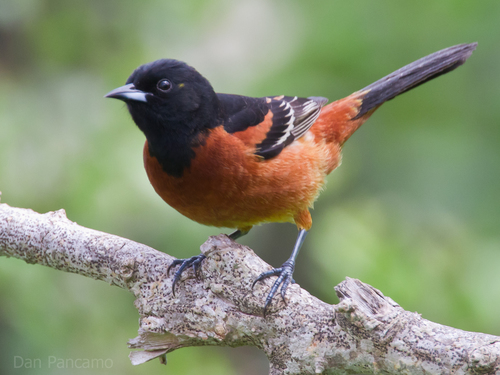
Orchard Oriole
Bolsero Castaño
Icterus spurius
The orchard oriole (Icterus spurius) is the smallest species of icterid. The subspecies of the Caribbean coast of Mexico, I. s. fuertesi, is sometimes considered a separate species, the ochre oriole or Fuertes's oriole. The orchard oriole is a small bird with a length of 5.9-7.1 inches, a weight of 0.6-1.0 ounces, and a wingspan of 9.8 inches. Adult males have chestnut or ochre underparts, while adult females and juveniles have olive-green upper parts and yellowish breasts and bellies. They inhabit semi-open areas with deciduous trees in eastern North America, southern Tamaulipas, and Veracruz. Their winter range extends from central Sinaloa and southern Veracruz to northern Colombia and northwestern Venezuela. Orchard orioles prefer living near lakes and streams, nesting in tightly woven pouches attached to horizontal tree branches. They are nocturnal migrants and feed on insects, spiders, fruit, nectar, and seeds depending on the season. During flight, they usually swoop close to the ground and fly at or below treetop level. Courtship displays include bowing, seesawing, and begging. The species name "spurius" refers to their original misidentification as female Baltimore orioles, and they are sometimes mistaken for New World warblers.
Sound archive
Hear its voice
Explore real songs and calls. The spectrogram turns each sound into a visual trace of time and frequency.

Play: song by Sue Riffe
Choose another recording
Sound recorded by Sue Riffe · XC939379 · CC BY-NC-SA 4.0. Visualization by Stichting Xeno-canto voor Natuurgeluiden.
Every recording retains the creator, catalogue number, and license published by Xeno-canto. Metadata via GBIF ↗
Island profile
About the Orchard Oriole
This atlas includes Orchard Oriole (Icterus spurius) with atlas status “Accidental / vagrant” within scope “Avibase inferred core 380.” Global trait data associate it primarily with woodland; consult the linked records to resolve its Puerto Rico habitat use.
Conservation
Least Concern
IUCN LC
- Global IUCN
- LC
- Puerto Rico DNER
- No current listing in source crosswalk
- Federal ESA
- No current listing in source crosswalk
- Critical habitat
- Not identified in source crosswalk
Natural history
How it lives
- Habitat
- forests
- Elevation
- 0–900 m
- Nest
- Cup / bowl · Shrub / bush / vine; Tree
- Clutch
- 2–7 eggs
- Social behavior
- Colonial; Social / flocking; Pairs / family groups; Solitary
Keep exploring
This bird belongs to 6 paths through the atlas.
Related in the atlas
Where to fly next
Connected by taxonomy, habitat, occurrence, and conservation.
 AI
AI AI
AI AI
AI AI
AI AI
AI AI
AI
Evidence trail