 AI
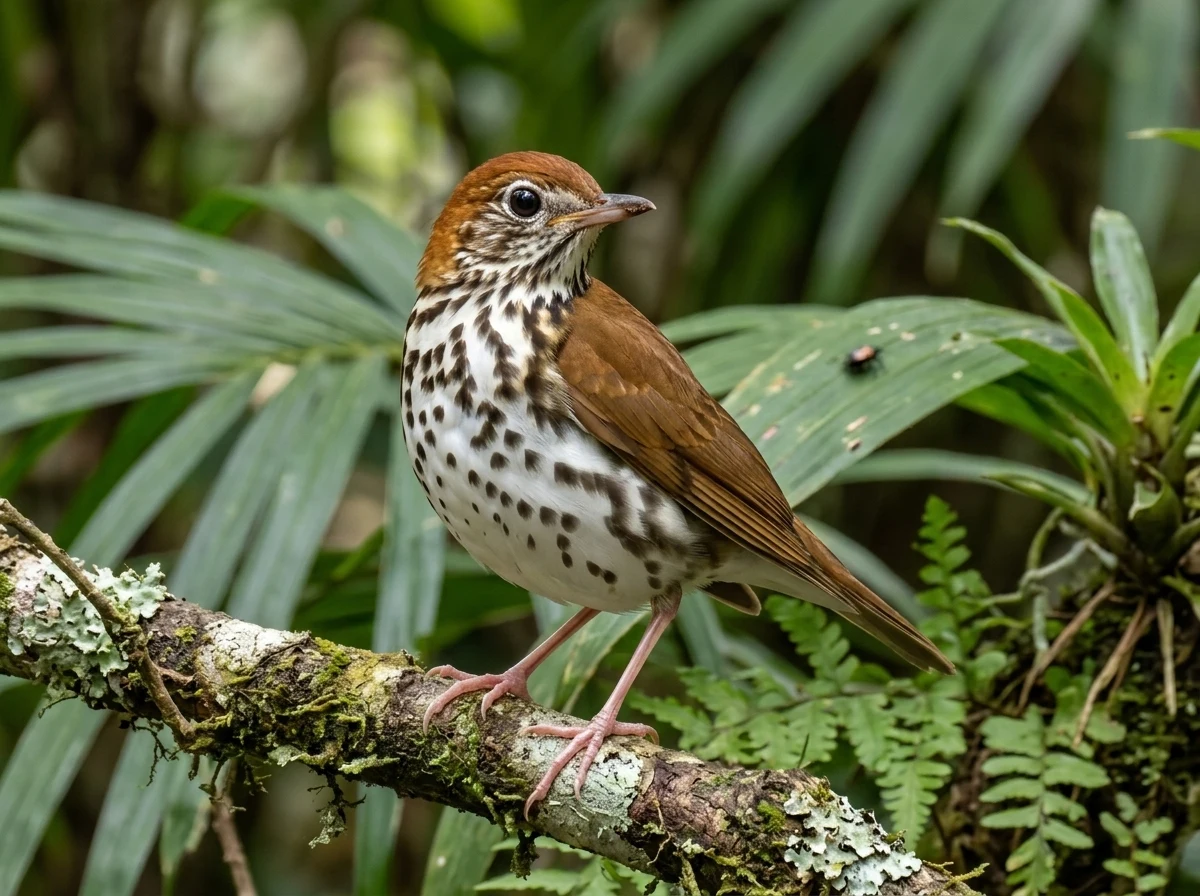
AIAI reconstruction created with Nano Banana 2 · 1K, grounded in the profile’s documented taxonomy, habitat, natural-history sources, and an open-license visual reference when available. It is an interpretive image, not documentary evidence. Image policy →
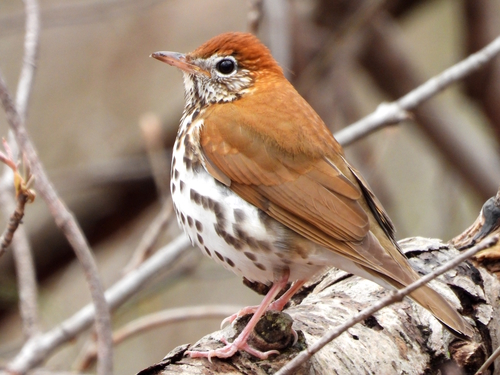
Wood Thrush
Zorzalito Maculado
Hylocichla mustelina
The wood thrush (Hylocichla mustelina) is a North American passerine bird in the family Turdidae and is the only species placed in the genus Hylocichla. It is closely related to other thrushes such as the American robin and is widely distributed across North America, wintering in Central America and southern Mexico. The wood thrush is the official bird of the District of Columbia. The wood thrush is a medium-sized thrush, with brown upper parts with mottled brown and white underparts. The male and female are similar in appearance. The song of the male is often cited as being the most beautiful in North America. The wood thrush is an omnivore, and feeds preferentially on soil invertebrates and larvae, but will also eat fruits. In the summer, it feeds on insects continuously in order to meet daily metabolic needs. It is solitary, but sometimes forms mixed-species flocks. The wood thrush defends a territory that ranges in size from 800 to 28,000 m2 (960 to 33,490 sq yd). The wood thrush is monogamous, and its breeding season begins in the spring; about 50% of all mated pairs are able to raise two broods, ranging in size from two to four chicks.
Sound archive
Hear its voice
Explore real songs and calls. The spectrogram turns each sound into a visual trace of time and frequency.

Play: song by Don Henise
Choose another recording
Sound recorded by Don Henise · XC1133722 · CC BY-NC-SA 4.0. Visualization by Stichting Xeno-canto voor Natuurgeluiden.
Every recording retains the creator, catalogue number, and license published by Xeno-canto. Metadata via GBIF ↗
Island profile
About the Wood Thrush
This atlas includes Wood Thrush (Hylocichla mustelina) with atlas status “Accidental / vagrant” within scope “Avibase inferred core 380.” Global trait data associate it primarily with forest; consult the linked records to resolve its Puerto Rico habitat use.
Conservation
Least Concern
IUCN LC
- Global IUCN
- LC
- Puerto Rico DNER
- No current listing in source crosswalk
- Federal ESA
- No current listing in source crosswalk
- Critical habitat
- Not identified in source crosswalk
Natural history
How it lives
- Habitat
- forests
- Elevation
- 50–1325 m
- Nest
- Cup / bowl · Shrub / bush / vine; Tree
- Clutch
- 3–4 eggs
- Social behavior
- Social / flocking
Keep exploring
This bird belongs to 6 paths through the atlas.
Related in the atlas
Where to fly next
Connected by taxonomy, habitat, occurrence, and conservation.
 AI
AI AI
AI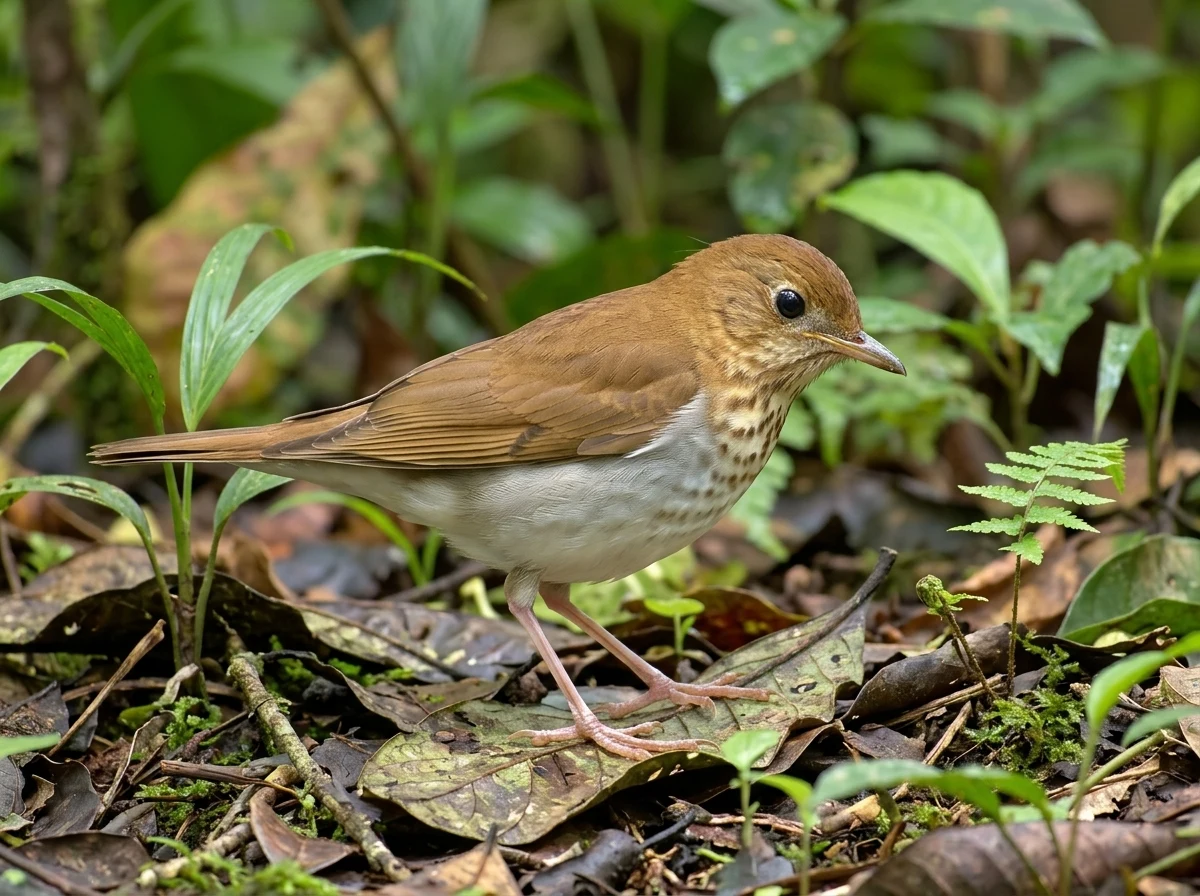 AI
AI AI
AI AI
AI AI
AI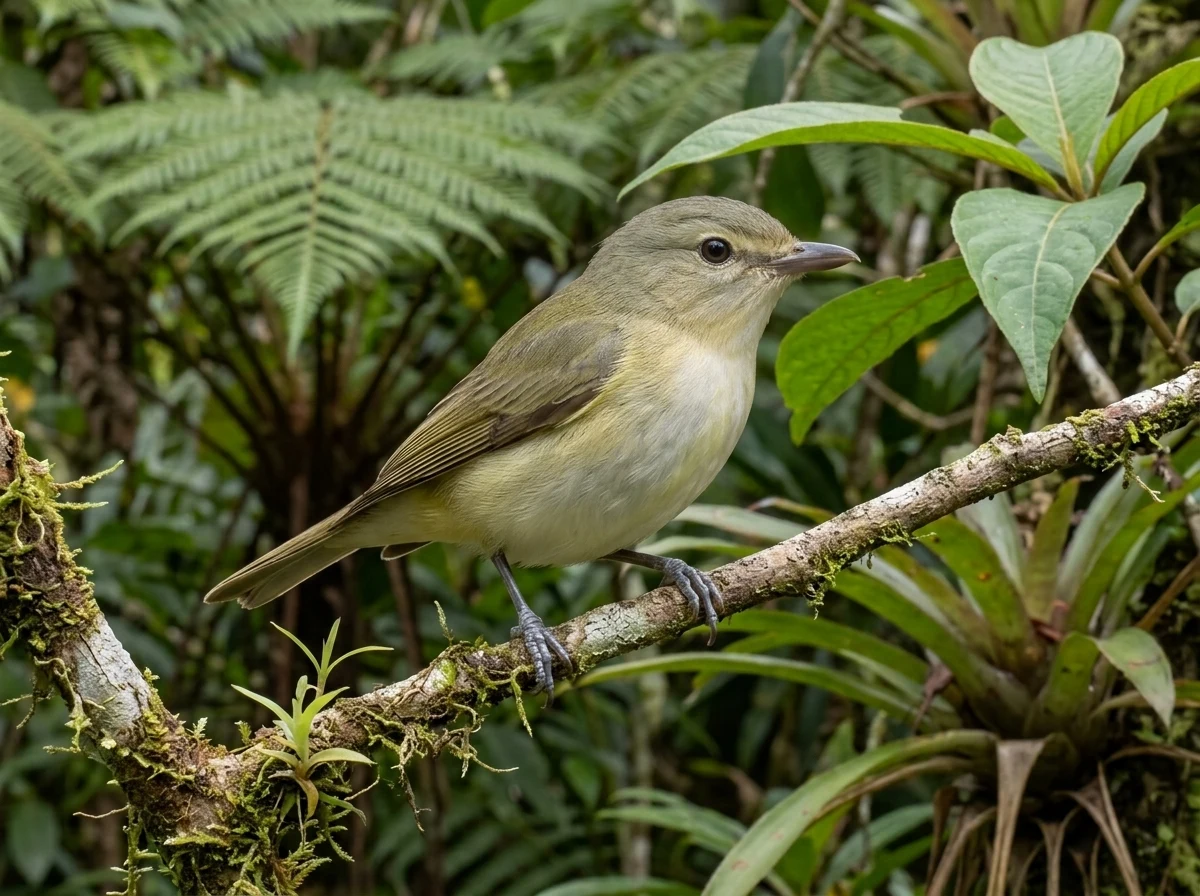
Evidence trail