 AI
AIAI reconstruction created with Nano Banana 2 · 1K, grounded in the profile’s documented taxonomy, habitat, natural-history sources, and an open-license visual reference when available. It is an interpretive image, not documentary evidence. Image policy →
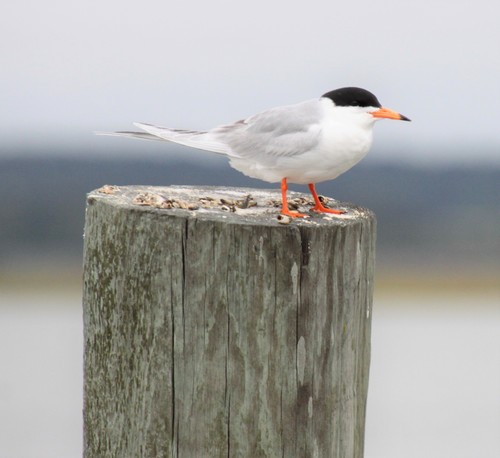
Forster's Tern
Charrán de Foster
Sterna forsteri
Forster's tern (Sterna forsteri) is a tern in the family Laridae. The genus name Sterna is derived from Old English "stearn", "tern", and forsteri commemorates the naturalist Johann Reinhold Forster. It breeds inland in North America in the northern United States and southern Canada, and migrates south to winter in the southern United States, Mexico, the Caribbean, and northern Central America. It is also a rare but annual vagrant in western Europe, and has wintered in Ireland and Great Britain on a number of occasions. This species breeds in colonies in marshes. It nests in a ground scrape and lays two or more eggs. Like all white terns, it is fiercely defensive of its nest and young. The Forster's tern feeds by plunge-diving for fish, but will also hawk for insects in its breeding marshes. It usually feeds from saline environments in winter, like most Sterna terns. It usually dives directly, and not from the "stepped-hover" favored by the Arctic tern. The offering of fish by the male to the female is part of the courtship display. This is a medium-small tern, 33–36 cm (13–14 in) long with a 78–80 cm (31–31 in) wingspan and a weight ranging from 130 to 190 g (4.6-6.7 oz ). It is most similar to the common tern, with pale gray upperparts and white underparts. Its legs are red and its bill is red, tipped with black. In winter, the forehead becomes white and a characteristic black eye mask remains. Juvenile Forster's terns are similar to the winter adult. The call is similar to that of common terns, but also some harsher sounds suggestive of a small gull like Bonaparte's gull. This species is unlikely to be confused with the common tern in winter because of the black eye mask, but is much more similar in breeding plumage. Forster's has a gray center to its white tail, and the upperwings are whiter, without the darker primary wedge of the common tern.
Sound archive
Hear its voice
Explore real songs and calls. The spectrogram turns each sound into a visual trace of time and frequency.

Play: call by Paul Driver
Choose another recording
Sound recorded by Paul Driver · XC1027067 · CC BY-NC-SA 4.0. Visualization by Stichting Xeno-canto voor Natuurgeluiden.
Every recording retains the creator, catalogue number, and license published by Xeno-canto. Metadata via GBIF ↗
Island profile
About the Forster's Tern
This atlas includes Forster's Tern (Sterna forsteri) with atlas status “Accidental / vagrant” within scope “Avibase inferred core 380.” Global trait data associate it primarily with wetland; consult the linked records to resolve its Puerto Rico habitat use.
Conservation
Least Concern
IUCN LC
- Global IUCN
- LC
- Puerto Rico DNER
- No current listing in source crosswalk
- Federal ESA
- No current listing in source crosswalk
- Critical habitat
- Not identified in source crosswalk
Natural history
How it lives
- Habitat
- wetlands
- Elevation
- 0–2500 m
- Nest
- Scrape · Water
- Clutch
- 2–3 eggs
- Social behavior
- Colonial; Social / flocking; Solitary
Keep exploring
This bird belongs to 6 paths through the atlas.
Related in the atlas
Where to fly next
Connected by taxonomy, habitat, occurrence, and conservation.
 AI
AI AI
AI AI
AI AI
AI AI
AI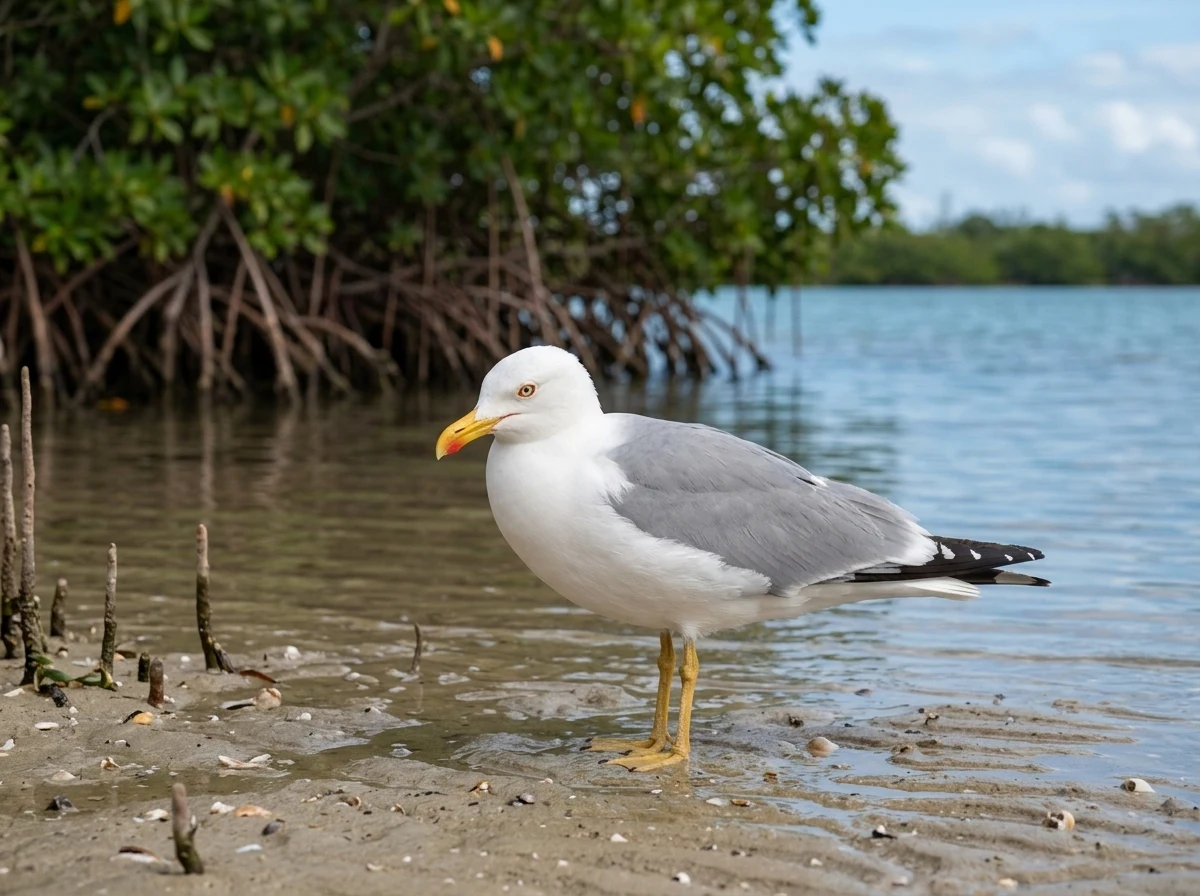 AI
AI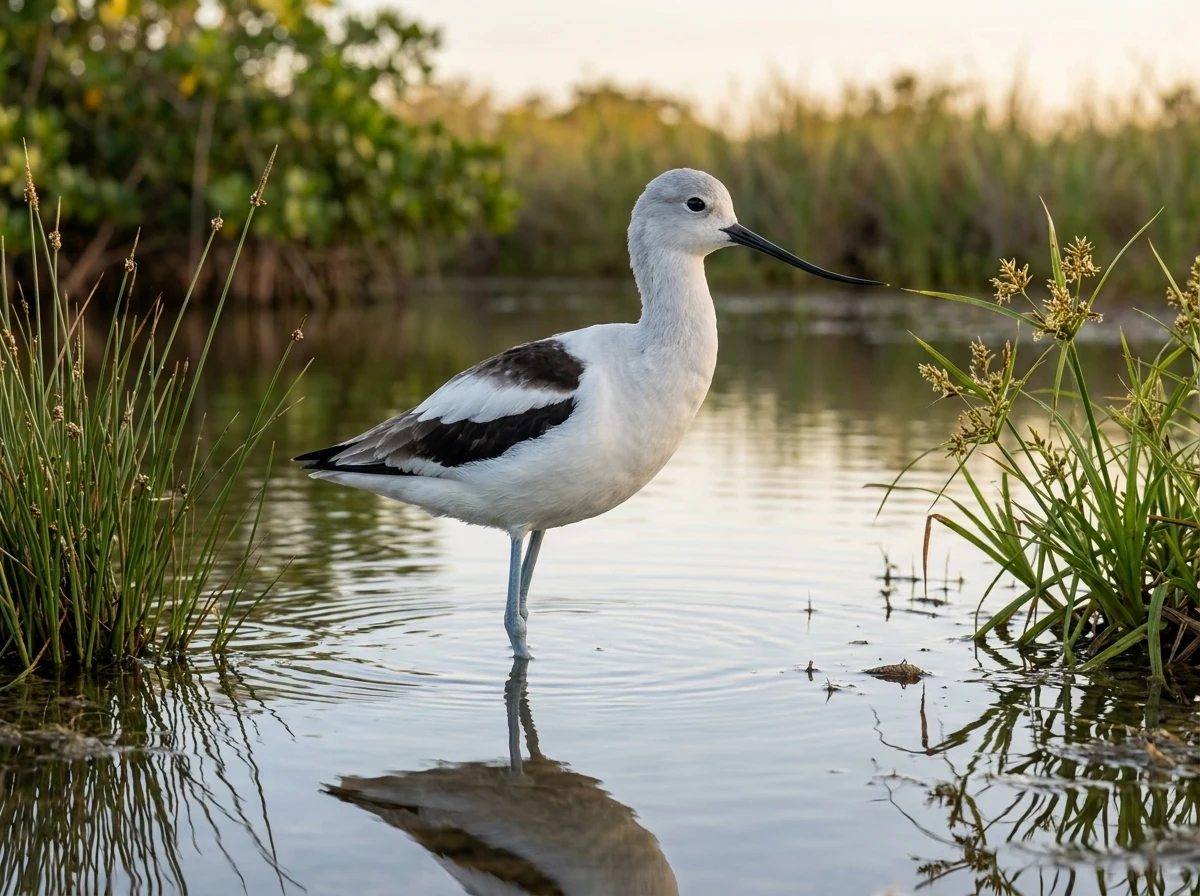

Evidence trail