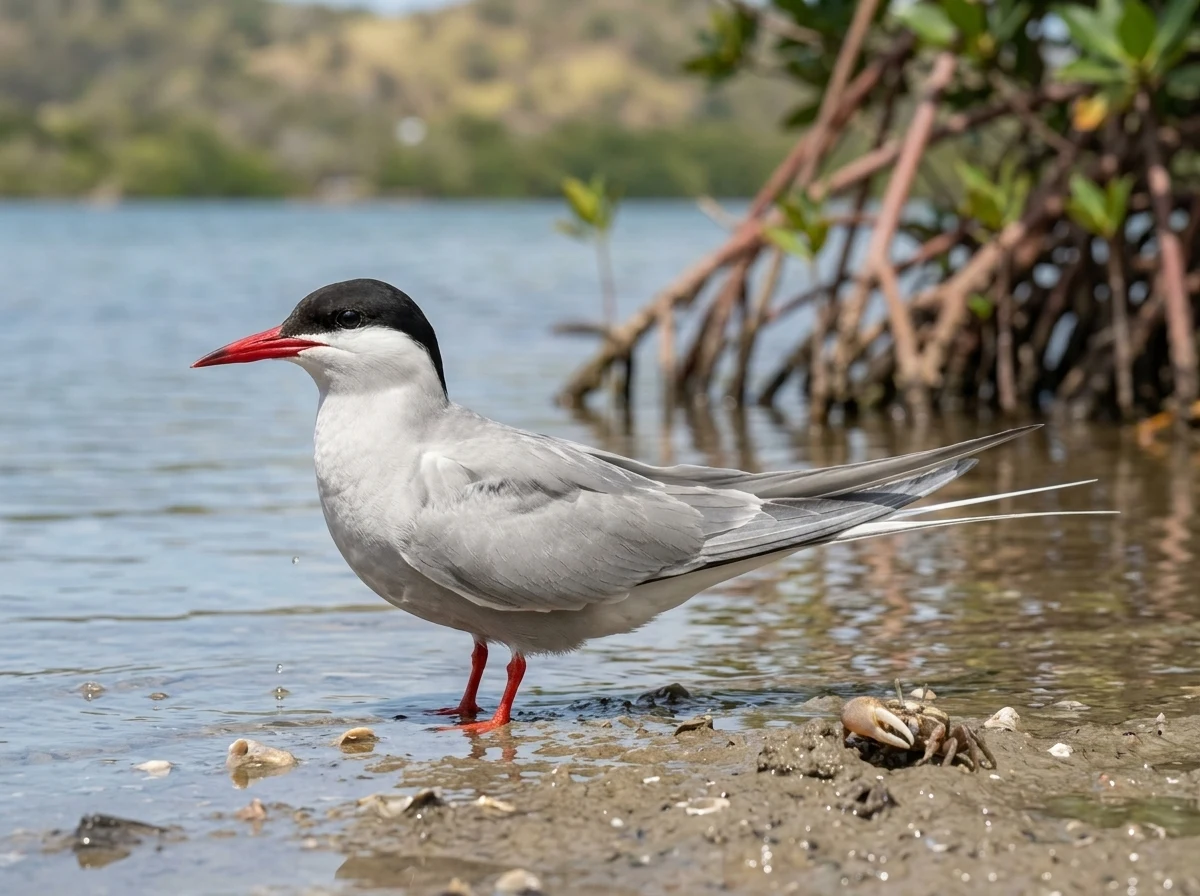
 AI
AIAI reconstruction created with Nano Banana 2 · 1K, grounded in the profile’s documented taxonomy, habitat, natural-history sources, and an open-license visual reference when available. It is an interpretive image, not documentary evidence. Image policy →
Arctic Tern
Charrán Ártico
Sterna paradisaea
The Arctic tern (Sterna paradisaea) is a tern in the family Laridae. This bird has a circumpolar breeding distribution covering the Arctic and sub-Arctic regions of Europe (as far south as Brittany), Asia, and North America (as far south as Massachusetts). The species is strongly migratory, seeing two summers each year as it migrates along a convoluted route from its northern breeding grounds to the Antarctic coast for the southern summer and back again about six months later. Recent studies have shown average annual round-trip lengths of about 70,900 km (38,300 nmi) for birds nesting in Iceland and Greenland, and about 48,700 km (26,300 nmi) for birds nesting in the Netherlands, while an individual from the Farne Islands in Northumberland with a light level geolocator tag covered a staggering 96,000 km (52,000 nmi) in ten months from the end of one breeding season to the start of the next. These are by far the longest migrations known in the animal kingdom. Arctic terns are medium-sized birds. They have a length of 28–39 cm (11–15 in) and a wingspan of 65–77 cm (26–30 in), and weigh around 100 g. In the breeding season they are mainly grey and white plumaged, with a blood red beak and feet, a black crown and nape, and white cheeks. The mantle is grey, and the scapulars grey, tipped white. The upper wing is grey with a white leading edge and a narrow blackish trailing edge on the primary feathers; the collar is completely white, as is the rump. The deeply forked tail is whitish, with grey outer webs. In winter, the forehead becomes partly white, and the bill and legs are black. Juveniles also have a partly white forehead, and narrow pale orangey-brown fringes on the grey mantle feathers (unlike common tern, where the mantle feathers are more completely gingery-brown). Arctic terns are long-lived birds, with many reaching fifteen to thirty years of age, with a record of 31 years. They eat mainly fish and small marine invertebrates. The species is abundant, with an estimated two million individuals. While the trend in the number of individuals in the species as a whole is not known, exploitation in the past has reduced this bird's numbers in the southern reaches of its ranges.
Sound archive
Hear its voice
Explore real songs and calls. The spectrogram turns each sound into a visual trace of time and frequency.

Play: call by bert de bruin
Choose another recording
Sound recorded by bert de bruin · XC1005051 · CC BY-NC-SA 4.0. Visualization by Stichting Xeno-canto voor Natuurgeluiden.
Every recording retains the creator, catalogue number, and license published by Xeno-canto. Metadata via GBIF ↗
Island profile
About the Arctic Tern
This atlas includes Arctic Tern (Sterna paradisaea) with atlas status “Accidental / vagrant” within scope “Avibase inferred core 380.” Global trait data associate it primarily with coastal; consult the linked records to resolve its Puerto Rico habitat use.
Conservation
Least Concern
IUCN LC
- Global IUCN
- LC
- Puerto Rico DNER
- No current listing in source crosswalk
- Federal ESA
- No current listing in source crosswalk
- Critical habitat
- Not identified in source crosswalk
Natural history
How it lives
- Habitat
- coasts
- Elevation
- 0–100 m
- Nest
- Scrape · Ground
- Clutch
- 2–3 eggs
- Social behavior
- Colonial; Solitary
Keep exploring
This bird belongs to 6 paths through the atlas.
Related in the atlas
Where to fly next
Connected by taxonomy, habitat, occurrence, and conservation.
 AI
AI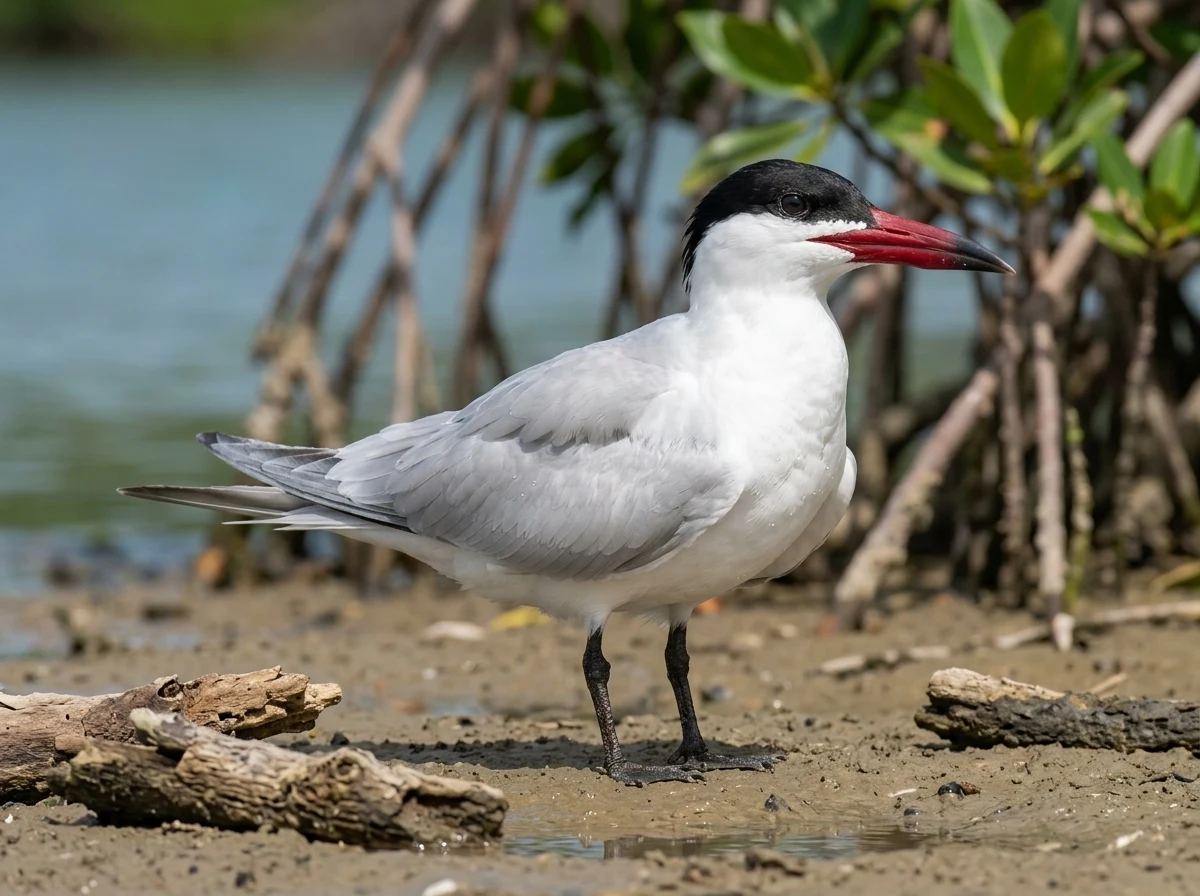 AI
AI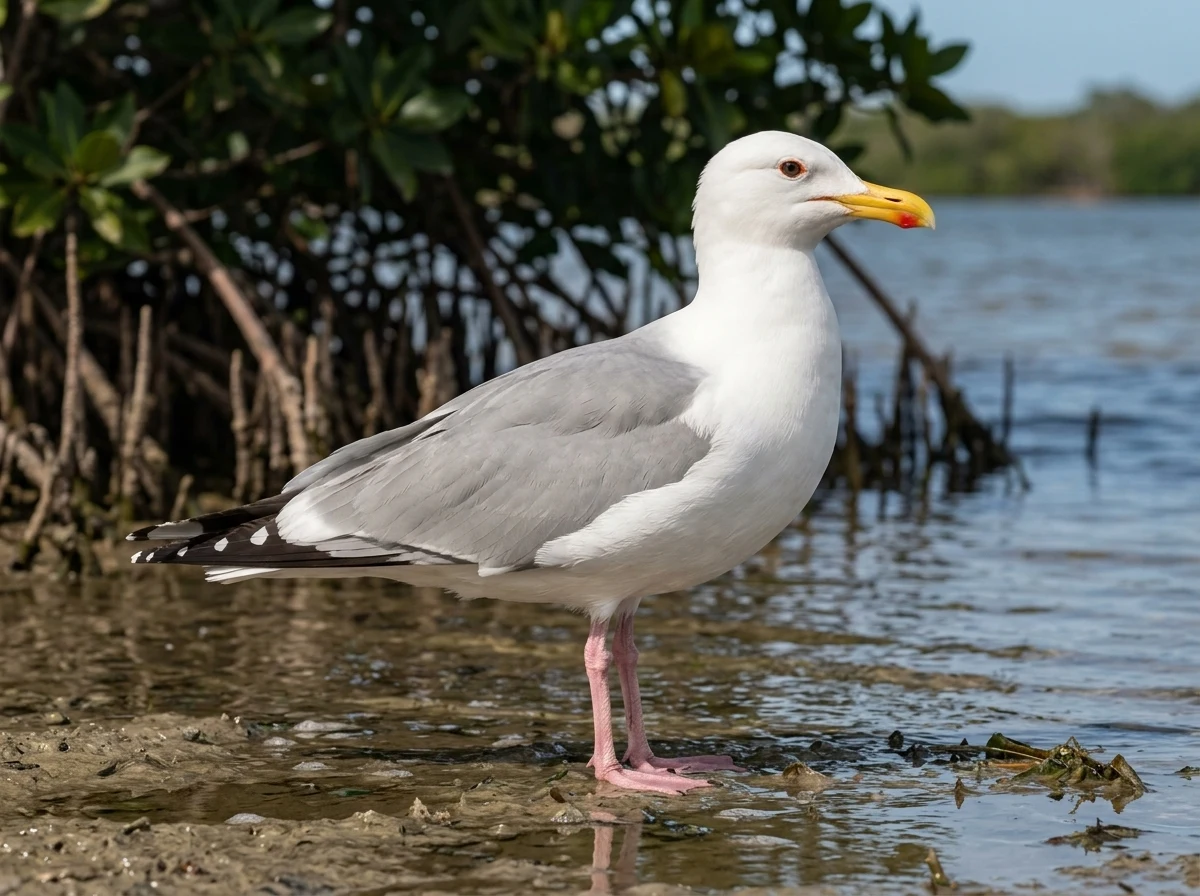 AI
AI AI
AI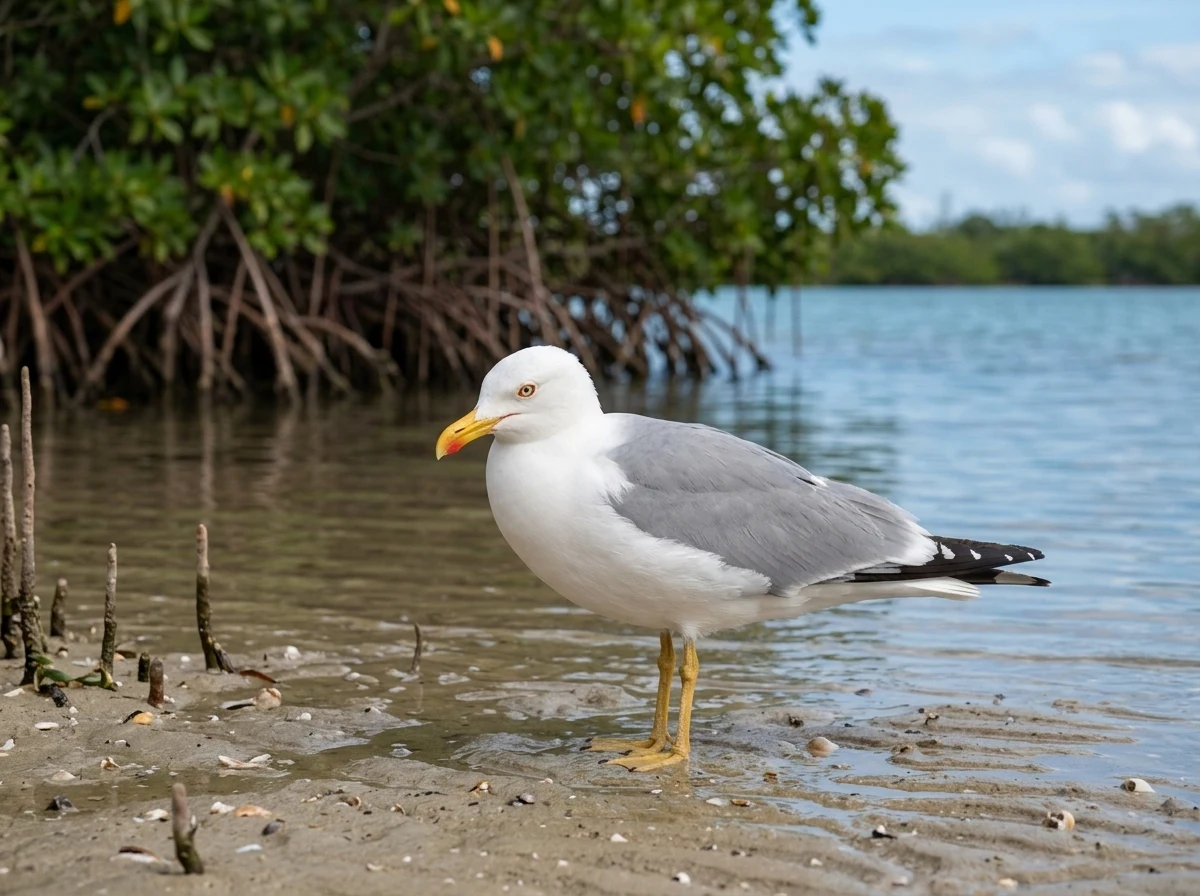 AI
AI AI
AI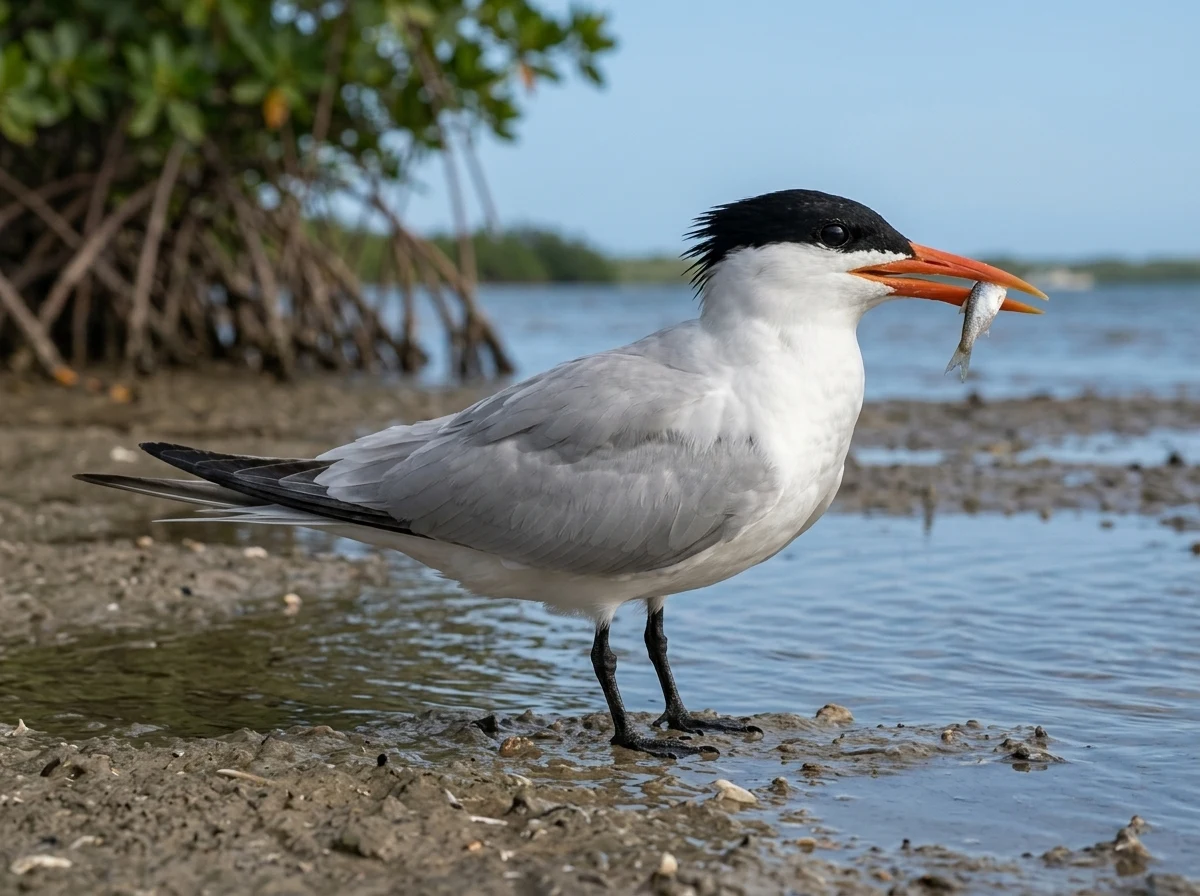

Evidence trail