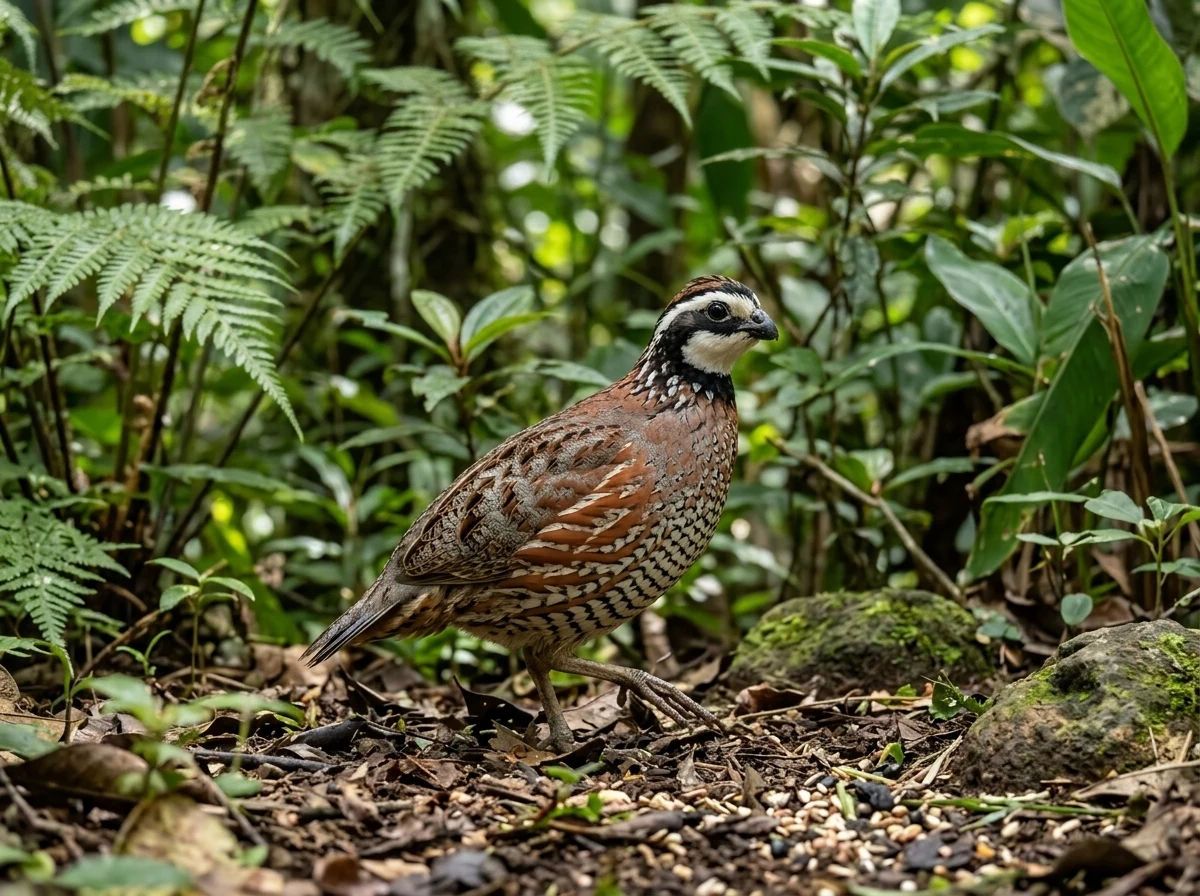
 AI
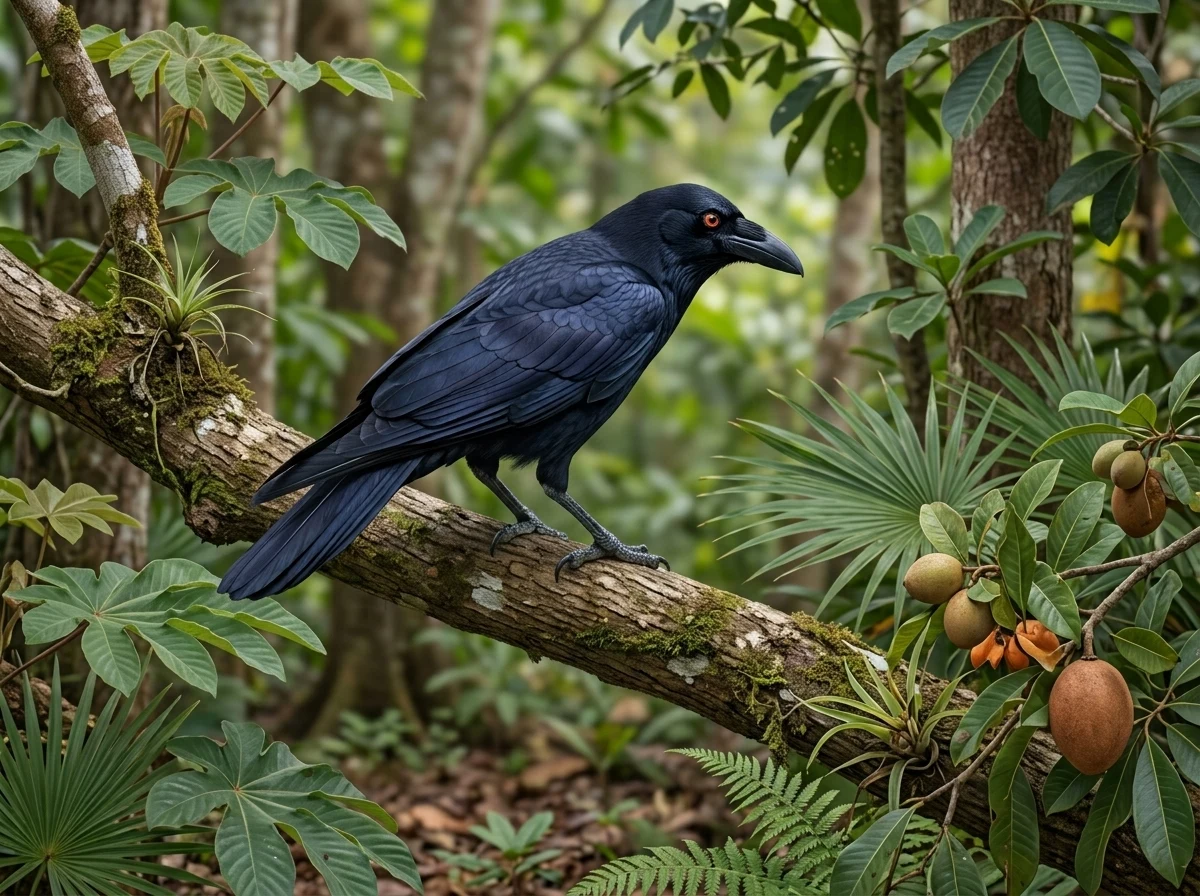
AIAI reconstruction created with Nano Banana 2 · 1K, grounded in the profile’s documented taxonomy, habitat, natural-history sources, and an open-license visual reference when available. It is an interpretive image, not documentary evidence. Image policy →
Northern Bobwhite
Codorniz de Virginia
Colinus virginianus
The northern bobwhite (Colinus virginianus), also known as the Virginia quail or (in its home range) bobwhite quail, is a ground-dwelling bird native to Canada, the United States, Mexico, and Cuba, with introduced populations elsewhere in the Caribbean, Europe, and Asia. It is a member of the group of species known as New World quail (Odontophoridae). They were initially placed with the Old World quail in the pheasant family (Phasianidae), but are not particularly closely related. The name "bobwhite" is an onomatopoeic derivation from its characteristic whistling call. Despite its secretive nature, the northern bobwhite is one of the most familiar quails in eastern North America, because it is frequently the only quail in its range. Habitat degradation has contributed to the northern bobwhite population in eastern North America declining by roughly 85% from 1966 to 2014. This population decline is apparently range-wide and continuing. There are 20 subspecies of northern bobwhite, many of which are hunted extensively as game birds. One subspecies, the masked bobwhite (Colinus virginianus ridgwayi), is listed as endangered with wild populations located in the northern Mexican state of Sonora and a reintroduced population in Buenos Aires National Wildlife Refuge in southern Arizona.
Sound archive
Hear its voice
Explore real songs and calls. The spectrogram turns each sound into a visual trace of time and frequency.

Play: call by Valerie Heemstra
Choose another recording
Sound recorded by Valerie Heemstra · XC776760 · CC BY-NC-SA 4.0. Visualization by Stichting Xeno-canto voor Natuurgeluiden.
Every recording retains the creator, catalogue number, and license published by Xeno-canto. Metadata via GBIF ↗
Island profile
About the Northern Bobwhite
This atlas includes Northern Bobwhite (Colinus virginianus) with atlas status “Introduced” within scope “Avibase inferred core 380.” Global trait data associate it primarily with woodland; consult the linked records to resolve its Puerto Rico habitat use.
Conservation
Near Threatened
IUCN NT
- Global IUCN
- NT
- Puerto Rico DNER
- No current listing in source crosswalk
- Federal ESA
- No current listing in source crosswalk
- Critical habitat
- Not identified in source crosswalk
Natural history
How it lives
- Habitat
- forests
- Elevation
- 0–2500 m
- Nest
- Scrape · Ground
- Clutch
- 10–15 eggs
- Social behavior
- Social / flocking
Keep exploring
This bird belongs to 6 paths through the atlas.
Related in the atlas
Where to fly next
Connected by taxonomy, habitat, occurrence, and conservation.
 AI
AI AI
AI AI
AI AI
AI AI
AI AI
AI
Evidence trail