 AI
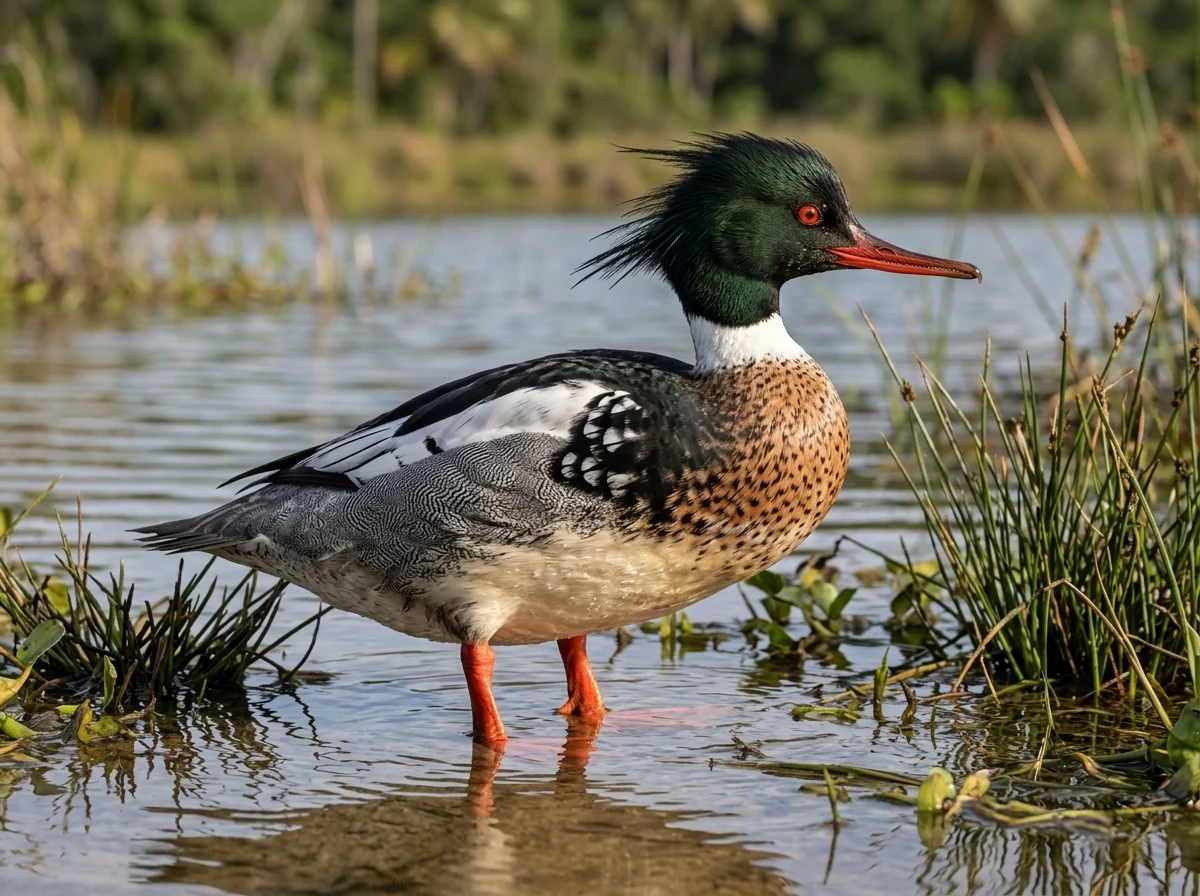
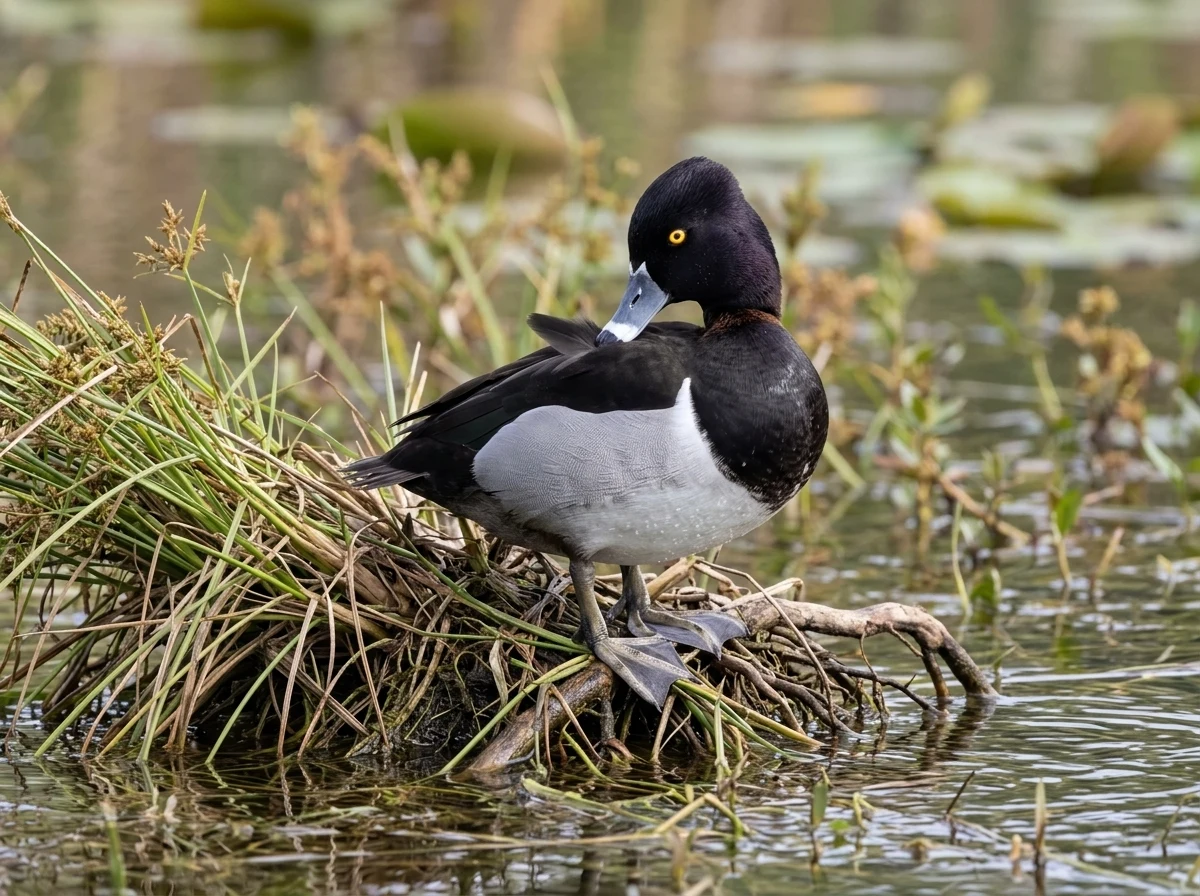
AIAI reconstruction created with Nano Banana 2 · 1K, grounded in the profile’s documented taxonomy, habitat, natural-history sources, and an open-license visual reference when available. It is an interpretive image, not documentary evidence. Image policy →
Red-breasted Merganser
Mergansa Piquilarga
Mergus serrator
The red-breasted merganser (Mergus serrator) is a duck species that is native to much of the temperate to subarctic Northern Hemisphere. The red breast that gives the species its common name is only displayed by males in breeding plumage. Individuals fly rapidly, and feed by diving from the surface to pursue aquatic animals underwater, using serrated bills to capture slippery fish. They migrate each year from breeding sites on lakes and rivers to their mostly coastal wintering areas, making them the most frequent species in the genus Mergus to frequent saltwater regularly. The worldwide population of this species is stable, though it is threatened in some areas by habitat loss and other factors.
Sound archive
Hear its voice
Explore real songs and calls. The spectrogram turns each sound into a visual trace of time and frequency.

Play: song, call by Sonothèque ADVL
Choose another recording
Sound recorded by Sonothèque ADVL · XC1092100 · CC0 1.0. Visualization by Stichting Xeno-canto voor Natuurgeluiden.
Every recording retains the creator, catalogue number, and license published by Xeno-canto. Metadata via GBIF ↗
Island profile
About the Red-breasted Merganser
This atlas includes Red-breasted Merganser (Mergus serrator) with atlas status “Accidental / vagrant” within scope “Avibase inferred core 380.” Global trait data associate it primarily with wetland; consult the linked records to resolve its Puerto Rico habitat use.
Conservation
Least Concern
IUCN LC
- Global IUCN
- LC
- Puerto Rico DNER
- No current listing in source crosswalk
- Federal ESA
- No current listing in source crosswalk
- Critical habitat
- Not identified in source crosswalk
Natural history
How it lives
- Habitat
- wetlands
- Elevation
- 0–Not resolved m
- Nest
- Scrape; Cup / bowl · Ground
- Clutch
- 6–14 eggs
- Social behavior
- Social / flocking
Keep exploring
This bird belongs to 6 paths through the atlas.
Related in the atlas
Where to fly next
Connected by taxonomy, habitat, occurrence, and conservation.
 AI
AI AI
AI AI
AI AI
AI AI
AI AI
AI
Evidence trail