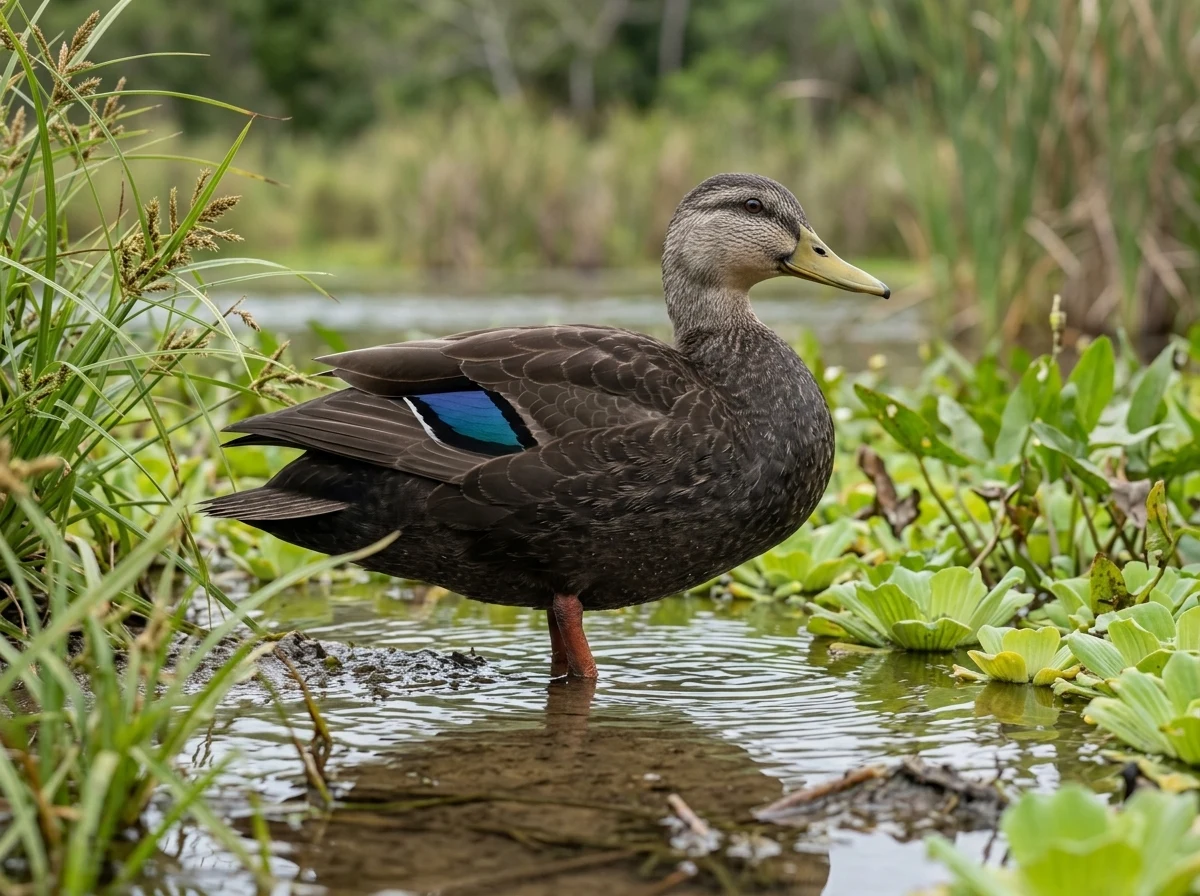
 AI
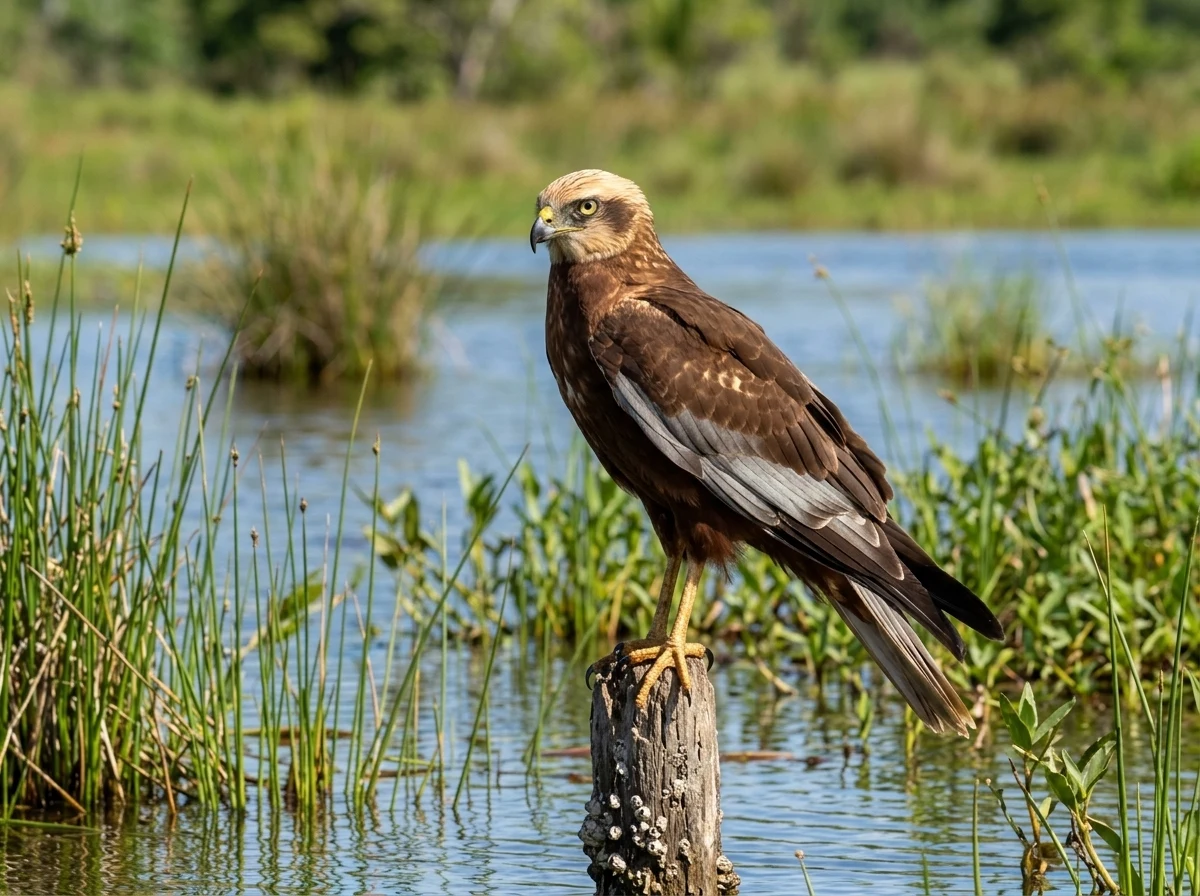
AIAI reconstruction created with Nano Banana 2 · 1K, grounded in the profile’s documented taxonomy, habitat, natural-history sources, and an open-license visual reference when available. It is an interpretive image, not documentary evidence. Image policy →
American Black Duck
Pato Oscuro
Anas rubripes
The American black duck (Anas rubripes) is a large dabbling duck in the family Anatidae. It was described by William Brewster in 1902. It is the heaviest species in the genus Anas, weighing 720–1,640 g (1.6–3.6 lb) on average and measuring 54–59 cm (21–23 in) in length with an 88–95 cm (35–37 in) wingspan. It somewhat resembles the female and eclipse male mallard in coloration, but has a darker plumage. The male and female are generally similar in appearance, but the male's bill is yellow while the female's is dull green with dark marks on the upper mandible. It is native to eastern North America. During the breeding season, it is usually found in coastal and freshwater wetlands from Saskatchewan to the Atlantic in Canada and the Great Lakes and the Adirondacks in the United States. It is a partially migratory species, mostly wintering in the east-central United States, especially in coastal areas. It interbreeds regularly and extensively with the mallard, to which it is closely related. The female lays six to fourteen oval eggs, which have smooth shells and come in varied shades of white and buff green. Hatching takes 30 days on average. Incubation usually takes 25 to 26 days, with both sexes sharing duties, although the male usually defends the territory until the female reaches the middle of her incubation period. It takes about six weeks to fledge. Once the eggs hatch, the hen leads the brood to rearing areas with abundant invertebrates and vegetation. The American black duck is considered to be a species of least concern by the International Union for Conservation of Nature (IUCN), although some populations of the species are in decline. It has long been valued as a game bird. Habitat loss due to drainage, global warming, filling of wetlands due to urbanization and rising sea levels are major reasons for the declining population of the American black duck. The United States Fish and Wildlife Service has been purchasing and managing the habitat of this species in many areas to support the migratory stopover, wintering and breeding populations. The Atlantic Coast Joint Venture also protects habitat through restoration and land acquisition projects, mostly within their wintering and breeding areas.
Sound archive
Hear its voice
Explore real songs and calls. The spectrogram turns each sound into a visual trace of time and frequency.

Play: flight call by Stanislas Wroza
Choose another recording
Sound recorded by Stanislas Wroza · XC1013353 · CC BY-NC-SA 4.0. Visualization by Stichting Xeno-canto voor Natuurgeluiden.
Every recording retains the creator, catalogue number, and license published by Xeno-canto. Metadata via GBIF ↗
Island profile
About the American Black Duck
This atlas includes American Black Duck (Anas rubripes) with atlas status “Accidental / vagrant” within scope “Avibase inferred core 380.” Global trait data associate it primarily with wetland; consult the linked records to resolve its Puerto Rico habitat use.
Conservation
Least Concern
IUCN LC
- Global IUCN
- LC
- Puerto Rico DNER
- No current listing in source crosswalk
- Federal ESA
- No current listing in source crosswalk
- Critical habitat
- Not identified in source crosswalk
Natural history
How it lives
- Habitat
- wetlands
- Elevation
- 0–Not resolved m
- Nest
- Scrape · Ground; Tree; Stump; Shrub / bush / vine
- Clutch
- 1–17 eggs
- Social behavior
- Social / flocking; Pairs / family groups
Keep exploring
This bird belongs to 6 paths through the atlas.
Guides featuring this bird
Follow this record beyond the profile.
Identification, sound, place, and explanatory guides connecting this species to larger questions.
Related in the atlas
Where to fly next
Connected by taxonomy, habitat, occurrence, and conservation.
 AI
AI AI
AI AI
AI AI
AI AI
AI AI
AI
Evidence trail