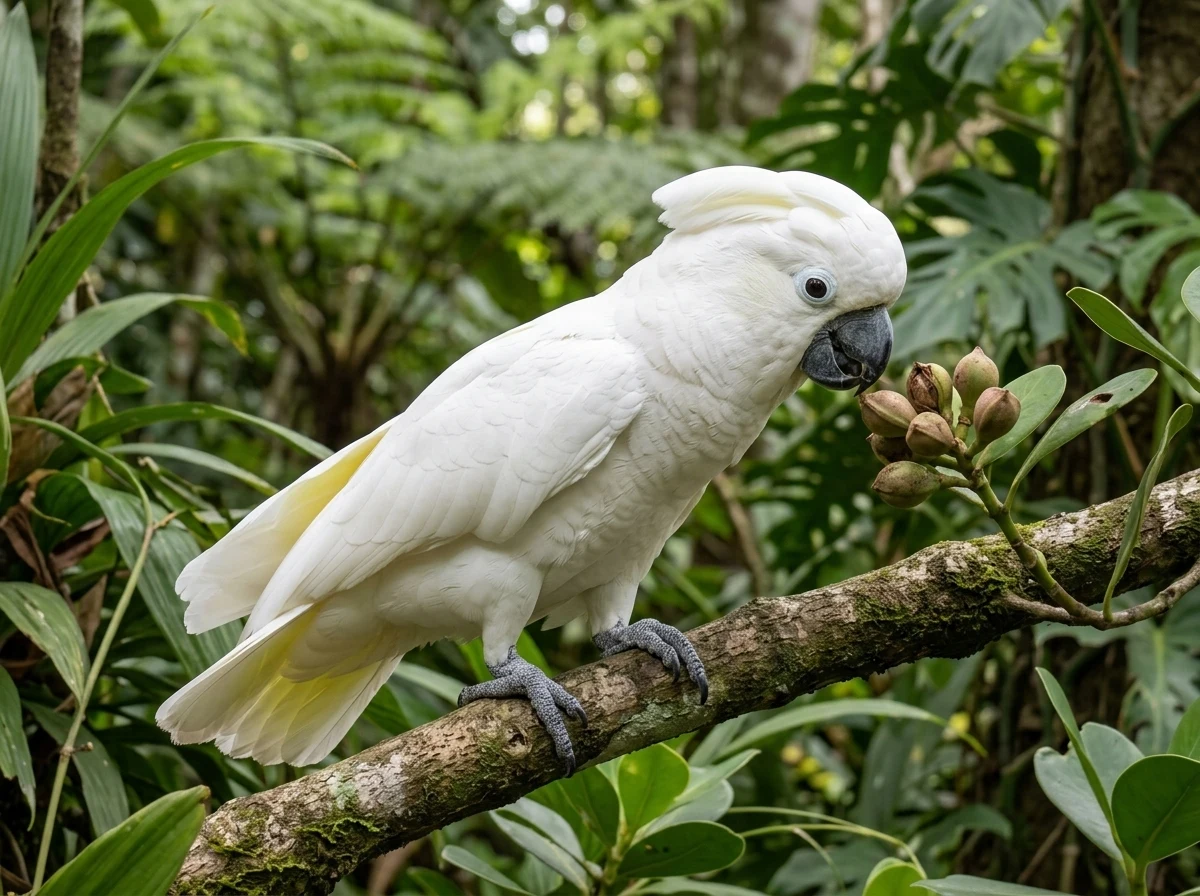
 AI
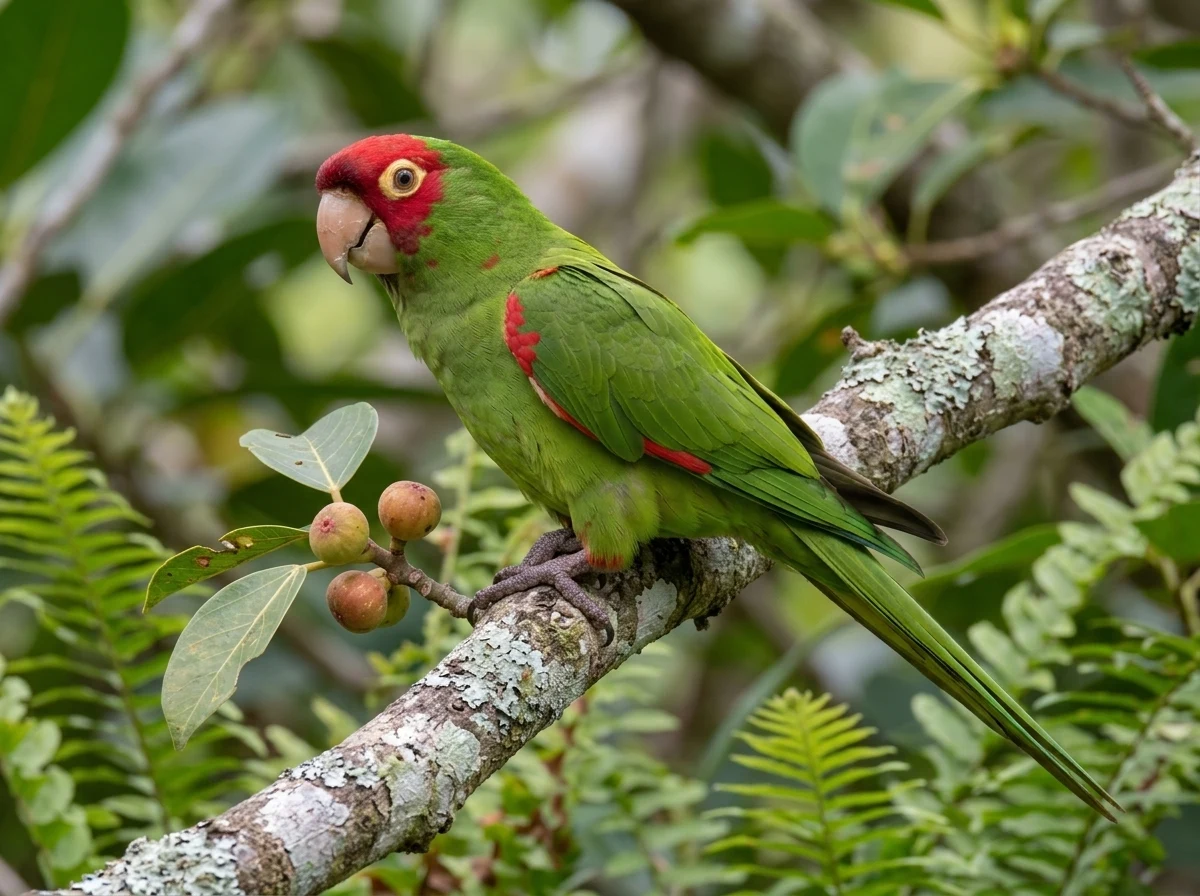
AIAI reconstruction created with Nano Banana 2 · 1K, grounded in the profile’s documented taxonomy, habitat, natural-history sources, and an open-license visual reference when available. It is an interpretive image, not documentary evidence. Image policy →

White Cockatoo
Cacatúa Blanca
Cacatua alba
The white cockatoo (Cacatua alba), also known as the umbrella cockatoo, is a medium-sized all-white cockatoo endemic to tropical rainforest on islands of Indonesia. When surprised, it extends a large and striking head crest, which has a semicircular shape (similar to an umbrella, hence the alternative name). The wings and tail have a pale yellow or lemon color which is exposed when they fly. It is similar to other species of white cockatoo such as yellow-crested cockatoo, sulphur-crested cockatoo, and salmon-crested cockatoo, all of which have yellow, orange or pink crest feathers instead of white.
Island profile
About the White Cockatoo
This atlas includes White Cockatoo (Cacatua alba) with atlas status “Introduced” within scope “Wikipedia supplemental record.” Global trait data associate it primarily with forest; consult the linked records to resolve its Puerto Rico habitat use.
Conservation
Endangered
IUCN EN
- Global IUCN
- EN
- Puerto Rico DNER
- No current listing in source crosswalk
- Federal ESA
- No current listing in source crosswalk
- Critical habitat
- Not identified in source crosswalk
Natural history
How it lives
- Habitat
- forests
- Elevation
- 0–900 m
- Nest
- Tree cavity · Tree
- Clutch
- 2–3 eggs
- Social behavior
- Pairs / family groups
Keep exploring
This bird belongs to 6 paths through the atlas.
Guides featuring this bird
Follow this record beyond the profile.
Identification, sound, place, and explanatory guides connecting this species to larger questions.
Related in the atlas
Where to fly next
Connected by taxonomy, habitat, occurrence, and conservation.
 AI
AI AI
AI AI
AI AI
AI AI
AI AI
AI
Evidence trail