 AI
AINames and silhouettes
Parrot vs. parakeet: the difference
Cotorra, perico, periquito, and guacamayo are not synonyms. In Puerto Rico each word points to a group with its own silhouette, size, and tail.
Reviewed:Short answer: look at the tail
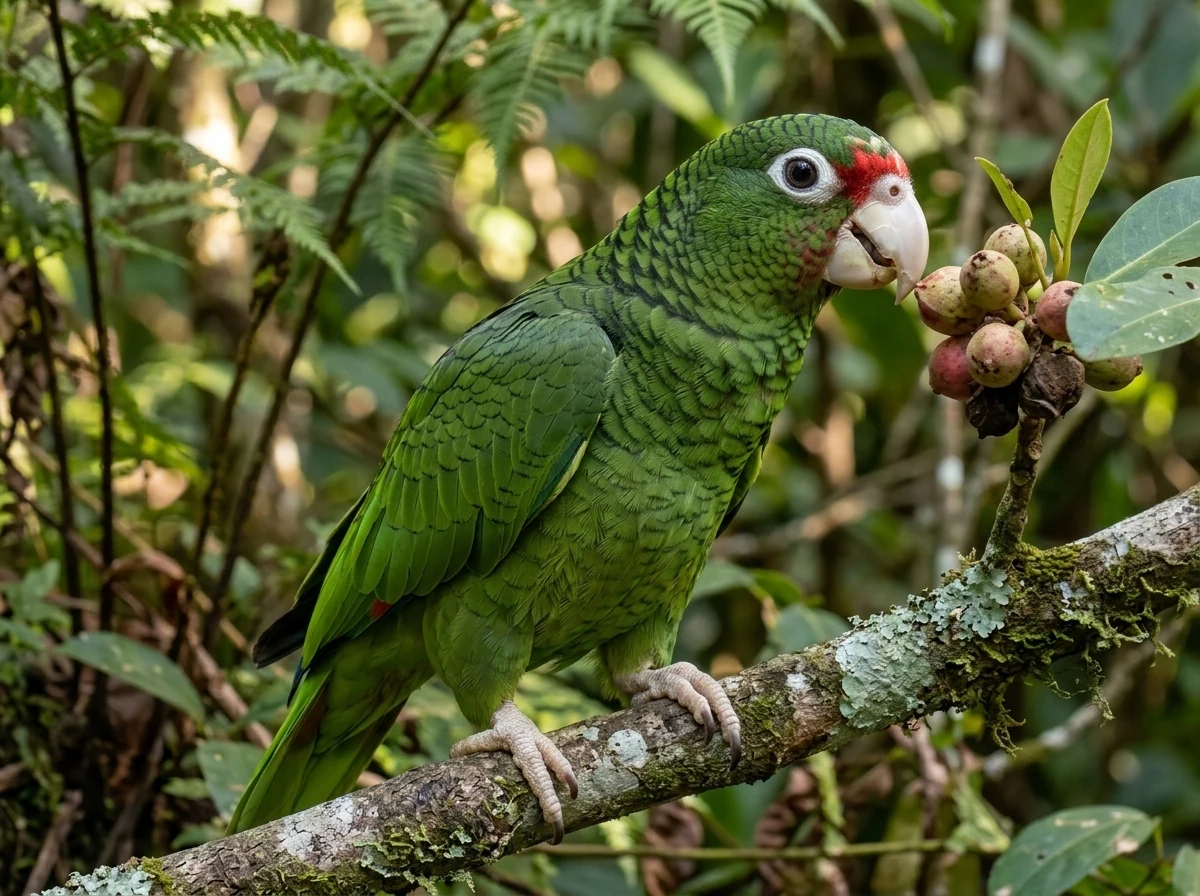
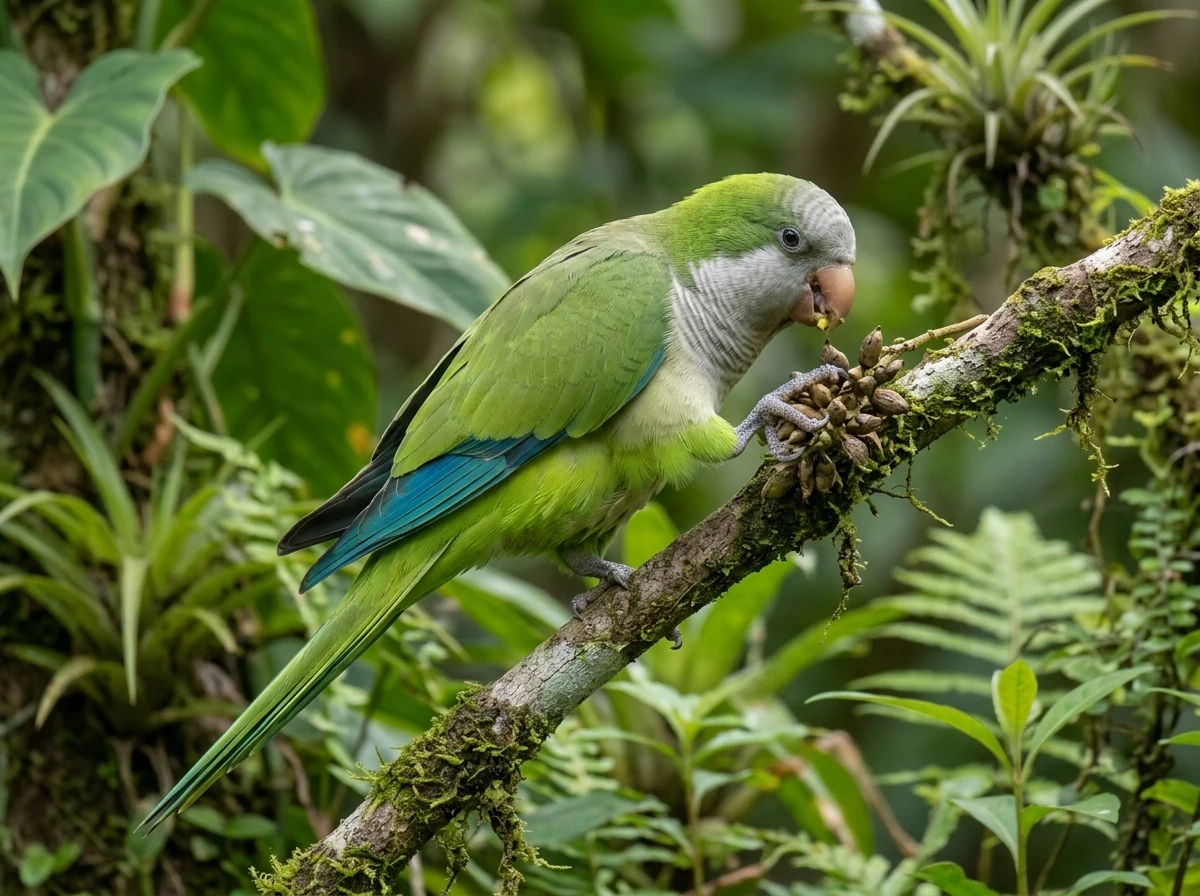
In Puerto Rico, cotorra refers to the amazon parrots (genus Amazona): stocky parrots of 200 to 500 grams with a short, square tail, like the Iguaca. Perico refers to smaller, slimmer parrots of 70 to 150 grams with a long, pointed tail, like the Monk Parakeet. The tail is the quickest way to separate them, even against the light.
The confusion is understandable: other Spanish-speaking countries use the words differently, and the pet trade adds names such as periquito or cotorra argentina. This guide uses the names on our species pages, based on the local list, and explains how to apply them in the field with examples of species seen on the island.
Names and silhouettes
Parrots and parakeets in numbers
209–517 gAmazon parrot massFrom White-fronted to Yellow-headed Amazon, per our species pages.
70–151 gParakeet massFrom White-winged to Red-masked Parakeet.
1Living native parrotThe Iguaca; the only native parakeet, the Puerto Rican Parakeet, is extinct.
01
What a cotorra is in Puerto Rico
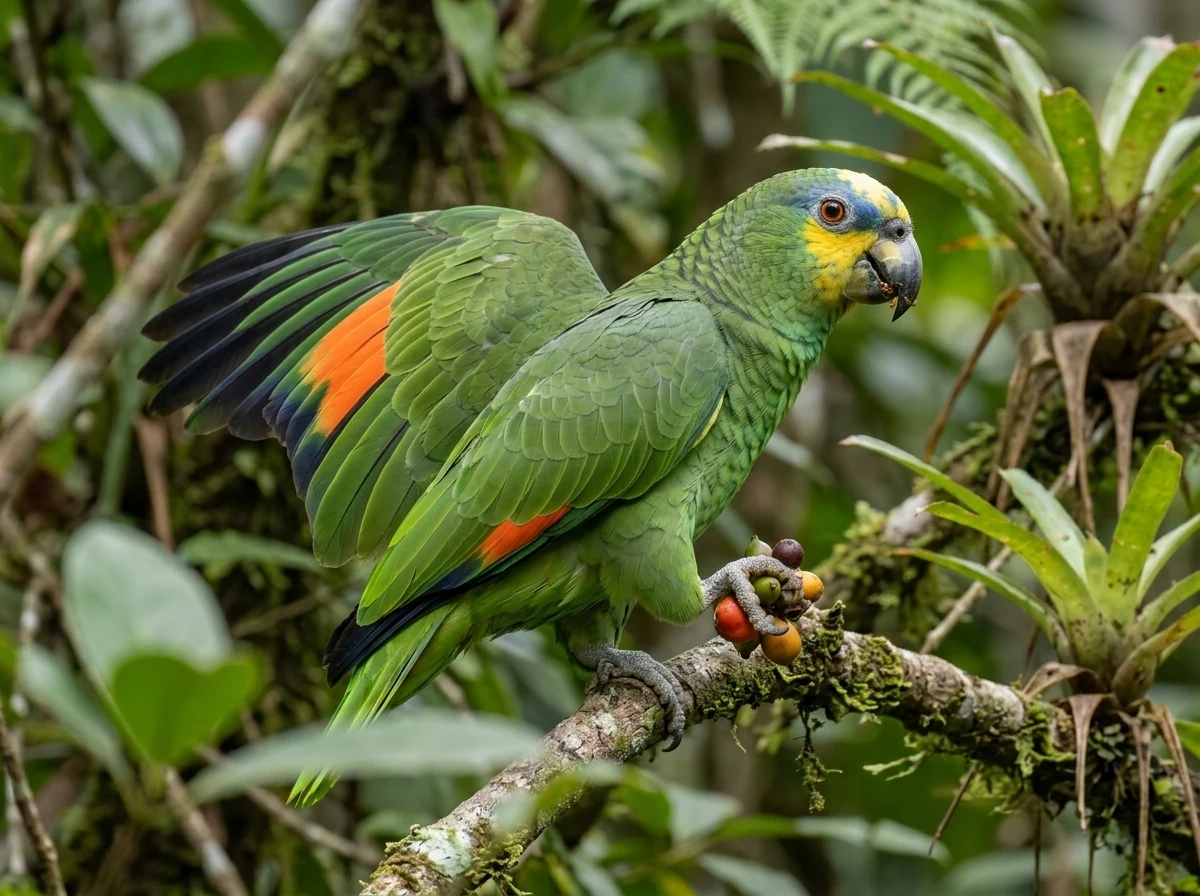
Cotorras are the amazons: compact birds with a large head, heavy bill, and short, square or slightly rounded tail. On our species pages, the cotorra name goes to the Puerto Rican Parrot, Hispaniolan Parrot, Orange-winged Amazon, Red-crowned Amazon, Yellow-headed Amazon, and White-fronted Amazon. They weigh roughly 209 to 517 grams.
In flight, amazons beat their wings in short, fast strokes and the tail looks short. They usually fly in pairs or small groups and call with loud squawks. The only native cotorra, the Iguaca, is recognized by its red forehead, white eye-ring, and deep blue primaries in flight.
02
What a perico is
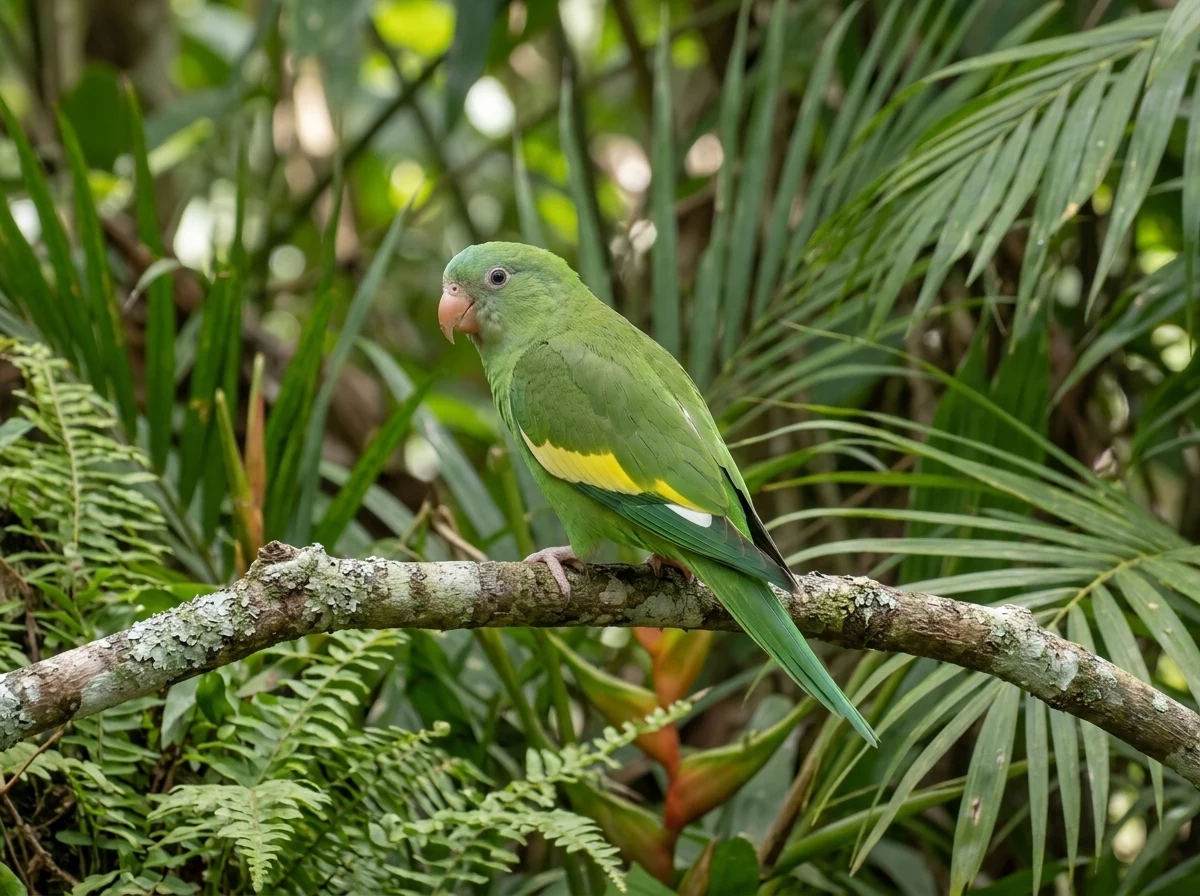
Parakeets are smaller, slimmer parrots with pointed wings and a long, graduated, pointed tail. On our species pages they include the White-winged, Monk, Orange-fronted, Red-masked, Brown-throated, Nanday, Green-cheeked, and Hispaniolan Parakeets. They weigh roughly 70 to 151 grams.
They fly fast and direct, often in noisy flocks, and the long tail is obvious even at a distance. All wild parakeets in Puerto Rico today are introduced: the only native one, the Puerto Rican Parakeet (Psittacara maugei), known from Mona and possibly the main island, went extinct in the nineteenth century.
03
Macaws, cockatoos, and budgies
Macaws (genus Ara) are a separate category: huge, 1.1 to 1.4 kilograms, with very long tails and bare facial skin. Cockatoos, such as the White Cockatoo, belong to another family (Cacatuidae) and are recognized by their erectile crest. Both groups occur in Puerto Rico only as introduced birds.
Periquito is often used for small cage birds such as the budgerigar (Melopsittacus undulatus) and lovebirds (Agapornis). Falcón and Tremblay note that these species, along with White-winged and Monk Parakeets, are among the most commonly sold, often online. They have been seen loose on the island, but their breeding in the wild is minimal or uncertain.
04
The name trap in other countries
The same word can mean a different bird depending on the country. In Spain, Argentina, and elsewhere, the Monk Parakeet is called cotorra argentina, even though by shape it is a long-tailed parakeet. Likewise, in other countries loro may be the general term and cotorra a term for smaller birds. So when you read about cotorras in a foreign source, check the scientific name.
In Puerto Rico, perico may also be used casually for any small parrot. When you report a sighting, the most useful thing is the species name and, if unsure, a description: size compared with a pigeon, tail shape, and the color of the forehead and wings.
05
Three steps to decide in the field
First, the tail: short and square is an amazon; long and pointed is a parakeet; extremely long on a huge bird is a macaw. Second, size: an amazon is roughly pigeon-sized, while a White-winged Parakeet is much smaller. Third, flight: amazons flap with short, stiff strokes; parakeets fly fast and light in flocks.
Once you know the group, look for species marks: the color of the forehead, face, and wing patches. A green amazon in the metro area is usually an introduced species; the Iguaca is concentrated in the Río Abajo, El Yunque, and Maricao forests. If you cannot see the forehead, record it as an unidentified amazon rather than guessing.
Linked profiles
Parrots, parakeets, and macaws to compare
Examples from each group: focus on tail and size.
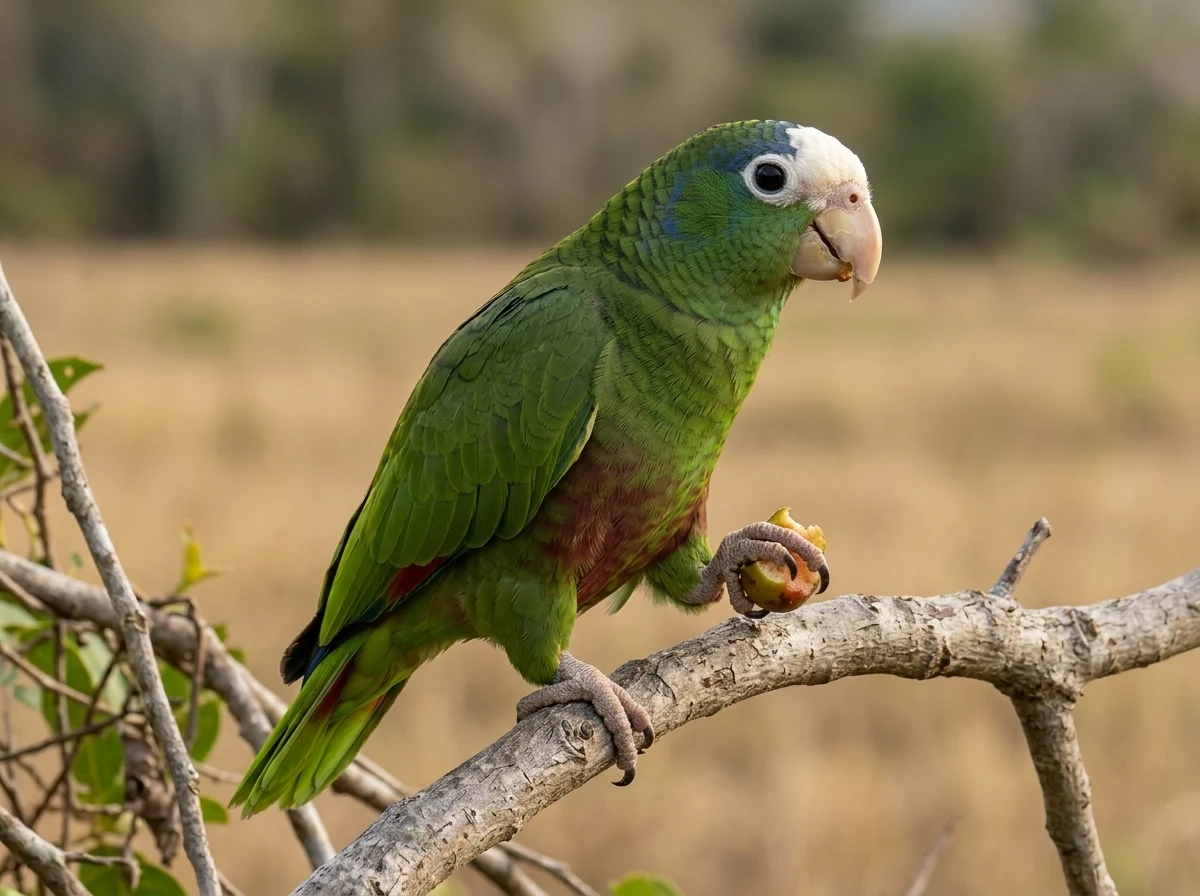
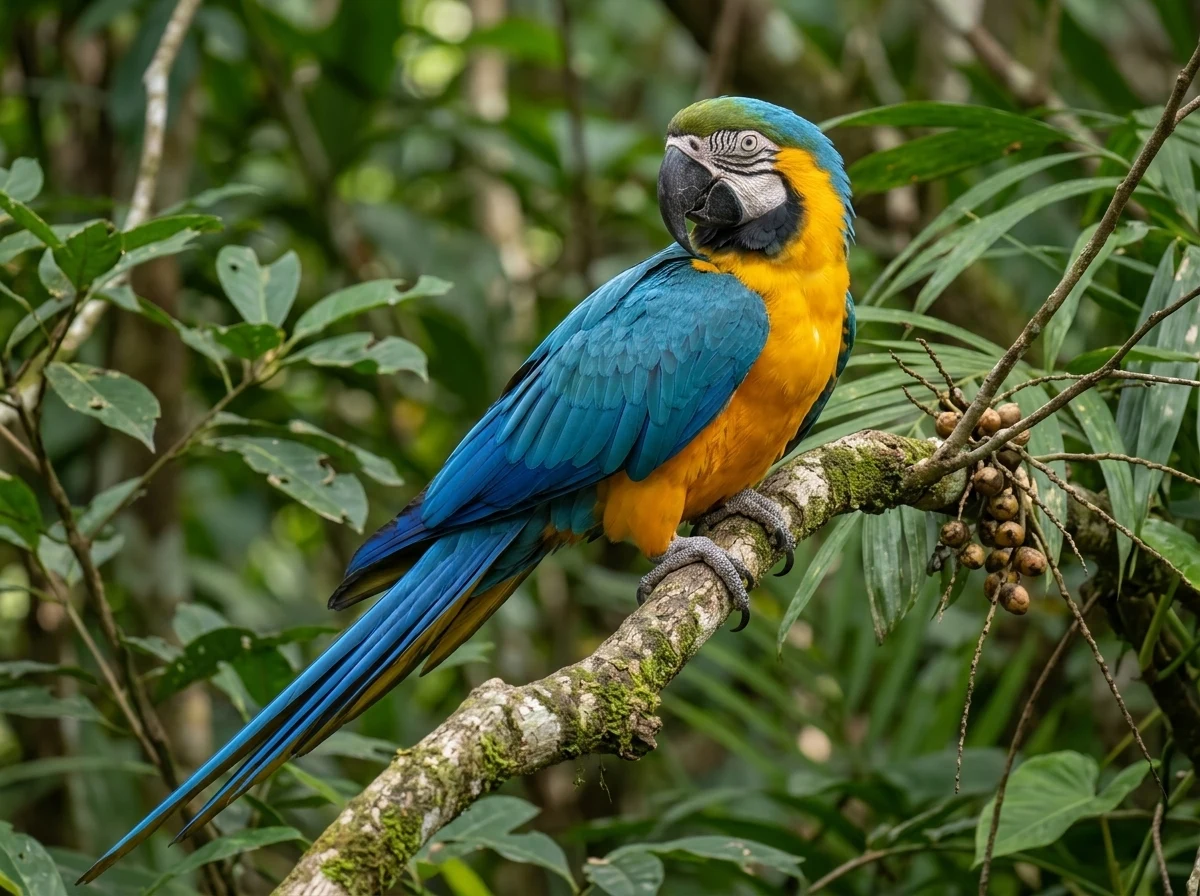
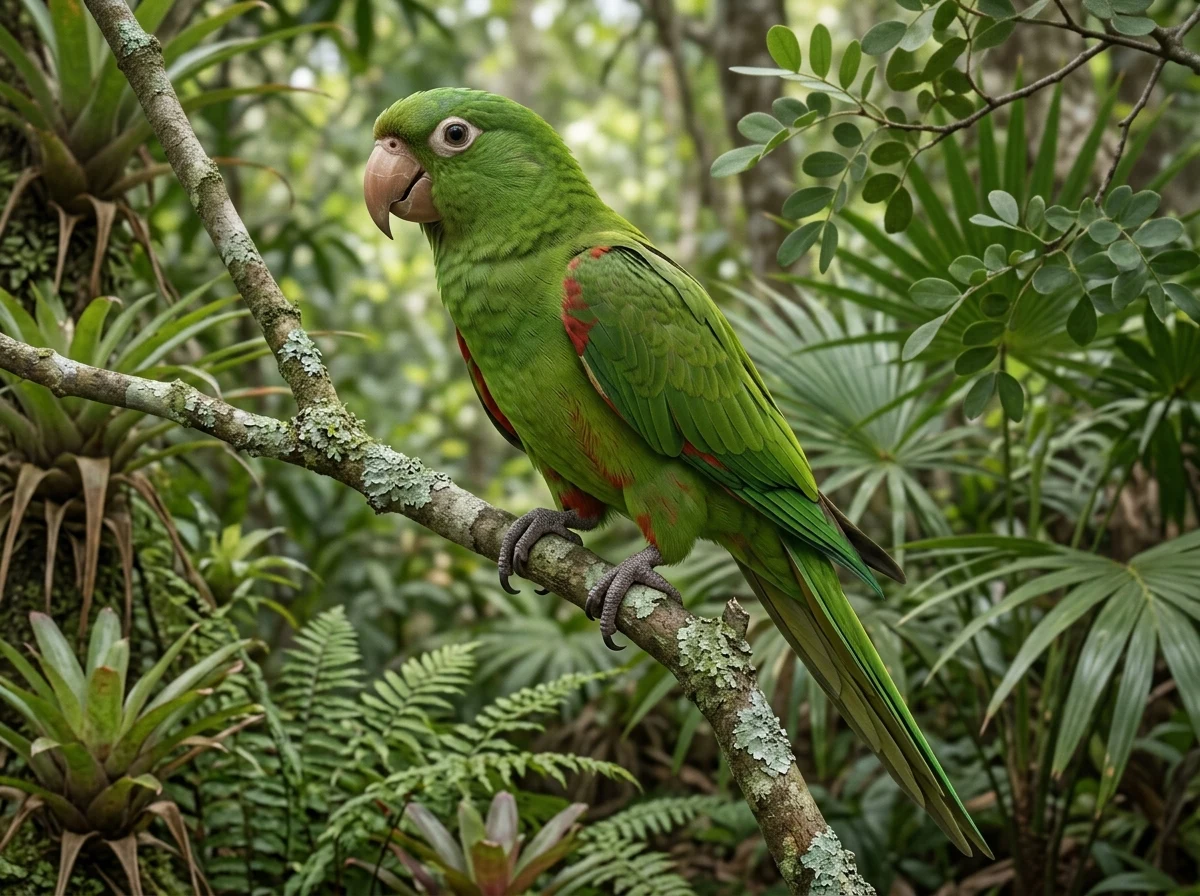
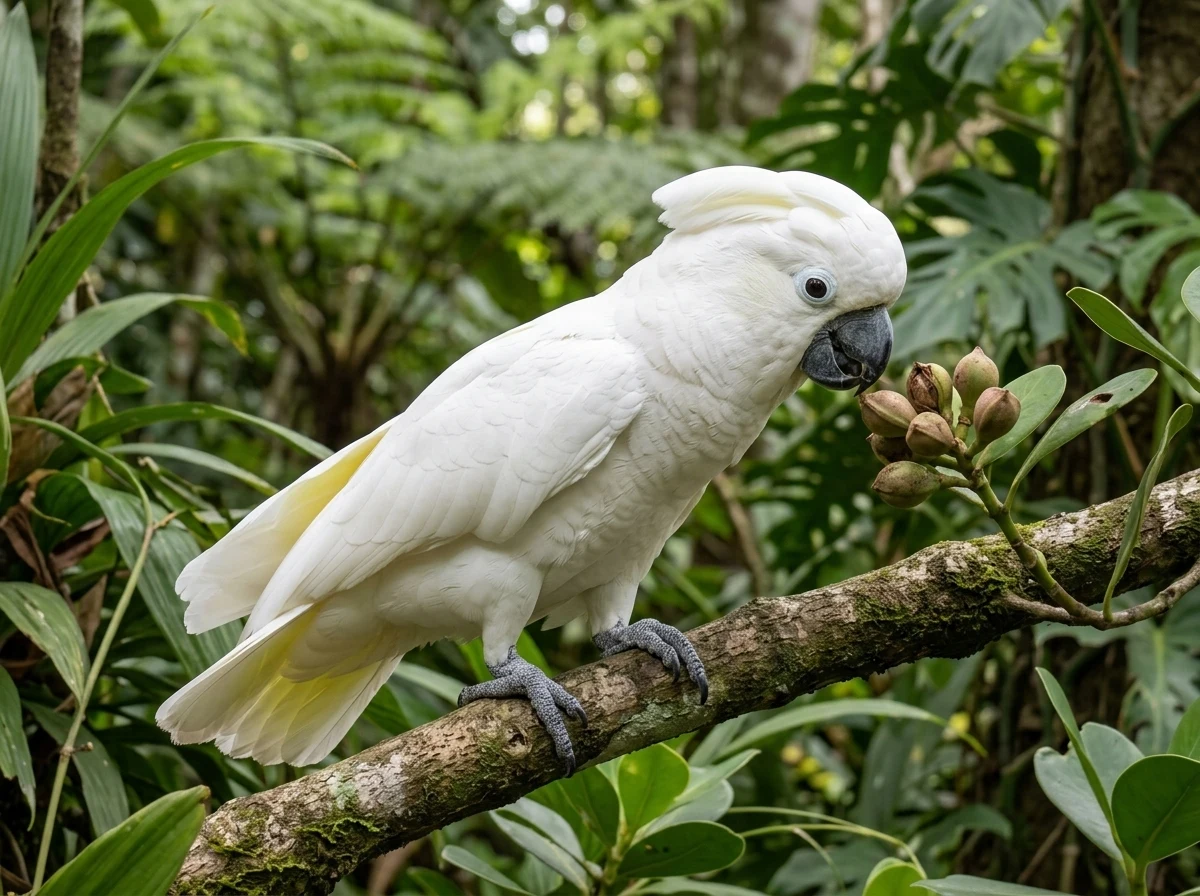
Sound archive
Hear its voice
Explore real songs and calls. The spectrogram turns each sound into a visual trace of time and frequency.
XC1082444Recording 1 of 3call, flight call

Play: call, flight call by Aladdin
Choose another recording
Sound recorded by Aladdin · XC1082444 · CC BY-NC-SA 4.0. Visualization by Stichting Xeno-canto voor Natuurgeluiden.
Every recording retains the creator, catalogue number, and license published by Xeno-canto. Metadata via GBIF ↗
01
What is the difference between a cotorra and a perico?
In Puerto Rico, a cotorra is an amazon parrot: stocky, 200 to 500 grams, with a short, square tail. A perico is a parakeet: smaller (70 to 150 grams), slim, with a long, pointed tail. The tail is the quickest mark for telling them apart.
02
What types of parrots are there in Puerto Rico?
The only native amazon is the Puerto Rican Parrot, or Iguaca. Introduced amazons recorded include the Orange-winged, Red-crowned, White-fronted, Yellow-headed, and Hispaniolan. In all, Falcón and Tremblay (2018) counted 46 parrot species on the island, including parakeets, macaws, and cockatoos.
03
Is the Monk Parakeet a parrot or a parakeet?
By shape it is a parakeet: small (about 114 g) with a long, pointed tail. In Spain and Argentina it is called cotorra argentina, but in Puerto Rico our pages call it Perico Monje. It is the only parrot on the island that builds communal stick nests.
04
Are there native parakeets in Puerto Rico?
Not today. The Puerto Rican Parakeet (Psittacara maugei), known from Mona and possibly the main island, went extinct in the nineteenth century. All wild parakeets today are species introduced through the pet trade.
05
How is a macaw different from an amazon parrot?
A macaw is much larger: it weighs 1.1 to 1.4 kilograms, about four times as much as an amazon, and has a very long tail and bare skin on the face. An amazon is compact, short-tailed, and fully feathered on the face. In Puerto Rico, macaws are introduced; the Iguaca is the only native amazon.
06
Why is Puerto Rico said to have so many exotic parrots?
Because, as far as is known, it has the highest number of wild-observed and established exotic parrot species in the world. Falcón and Tremblay (2018) documented 46 species, at least 12 with evidence of breeding in the wild, nearly all arriving through the pet trade.
07
What is a periquito?
It is a name often used for small cage parrots such as the budgerigar (Melopsittacus undulatus). It also appears in species names, such as the extinct Periquito de Puerto Rico. A loose one is most likely an escaped pet.
Keep exploring
Connected routes
Sources and review
The evidence is one link away.
These sources support the editorial scope of this guide. Bird profiles also retain their own taxonomy, occurrence, and conservation references.
Reviewed:
01↗02↗03↗04↗
Sociedad Ornitológica Puertorriqueña
Official bird list
Local names, occurrence categories, and the public summary of 17 endemics.PeerJ (Falcón & Tremblay 2018), via PubMed Central
From the cage to the wild: introductions of Psittaciformes to Puerto Rico
Inventory of 46 psittacines, invasion stage per species, eBird trends, history of White-winged and Monk Parakeets, macaws in San Juan and Orocovis, and Hurricane María effects.The Wilson Journal of Ornithology
History and fossils of the Puerto Rican Parakeet
Specimens, archaeological material, and distinction of the extinct parakeet.U.S. Fish and Wildlife Service
Puerto Rican Parrot recovery information
Current recovery context and the populations at Río Abajo and El Yunque.The atlas continues