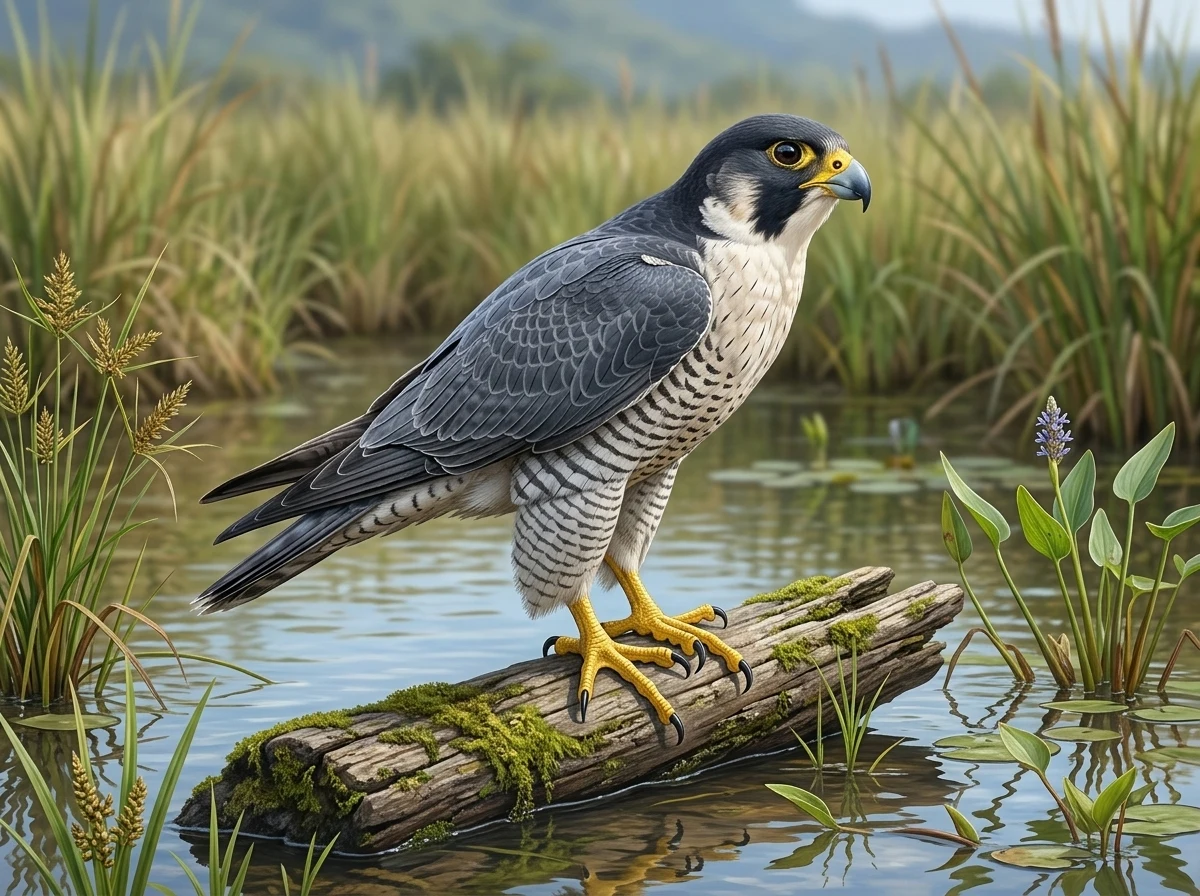
 AI
AIAI reconstruction created with Nano Banana 2 · 1K, grounded in the profile’s documented taxonomy, habitat, natural-history sources, and an open-license visual reference when available. It is an interpretive image, not documentary evidence. Image policy →
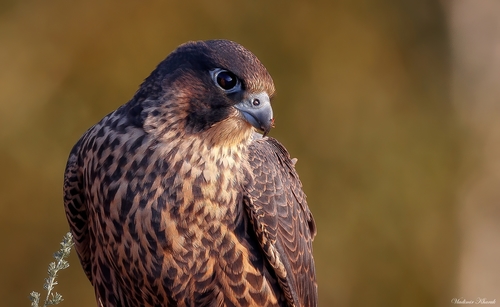
Peregrine Falcon
Halcón Peregrino
Falco peregrinus
The peregrine falcon (Falco peregrinus), also referred to simply as the peregrine, is a bird of prey (raptor) in the family Falconidae known for its speed. A large, crow-sized falcon, it has a blue-grey back, barred white underparts and a black head. As is typical for bird-eating (avivore) raptors, peregrine falcons are sexually dimorphic, with females being considerably larger than males. Historically, the bird has also been known as the "black-cheeked falcon" in Australia, and the "duck hawk" in North America. The breeding range includes land regions from the Arctic tundra to the tropics. It can be found nearly everywhere on Earth, except extreme polar regions, very high mountains, and most tropical rainforests. The only major ice-free landmass from which it is entirely absent is New Zealand. That makes it the world's most widespread raptor and one of the most widely found wild bird species. In fact, the only land-based bird species found over a larger geographic area, domestic and feral pigeons, owe their success to human-led introduction. Both are domesticated forms of the rock dove, and are a major prey species for peregrine populations. Due to their greater abundance in cities than most other birds, feral pigeons support many peregrine populations as a staple food source, especially in urban settings. The peregrine is a highly successful example of urban wildlife in much of its range, taking advantage of tall buildings as nest sites, and an abundance of prey such as pigeons and ducks. Both the English and scientific names of the species mean "wandering falcon", referring to the migratory habits of many northern populations. A total of 18 or 19 regional subspecies are accepted, which vary in appearance. Disagreement existed in the past over whether the distinctive Barbary falcon was represented by two subspecies of Falco peregrinus or was a separate species, F. pelegrinoides, and several of the other subspecies were originally described as species. However, the difference in their appearance is very small, as is their genetic difference, being only about 0.6–0.8% genetically differentiated. That indicates the divergence is relatively recent, occurring during the Last Ice Age, and all major ornithological authorities now treat the Barbary falcon as a subspecies. Although its diet consists almost exclusively of medium-sized birds, the peregrine will sometimes hunt small mammals, small reptiles, or even insects. Reaching sexual maturity at one year, it mates for life and nests in a scrape, normally on cliff edges or, in recent times, on tall human-made structures. The peregrine falcon became an endangered species in many areas because of the widespread use of various pesticides, especially DDT. Since the ban on DDT from the early 1970s, populations have recovered, supported by large-scale protection of nesting places and releases to the wild. The peregrine falcon is a well-respected falconry bird due to its strong hunting ability, high trainability, versatility, and availability via captive breeding. It is effective on most game bird species, from small to large. It has also been used as a religious, royal, or national symbol across many eras and civilizations.
Sound archive
Hear its voice
Explore real songs and calls. The spectrogram turns each sound into a visual trace of time and frequency.

Play: call by Robin et Julien SOURIOU
Choose another recording
Sound recorded by Robin et Julien SOURIOU · XC1083277 · CC BY-NC-SA 4.0. Visualization by Stichting Xeno-canto voor Natuurgeluiden.
Every recording retains the creator, catalogue number, and license published by Xeno-canto. Metadata via GBIF ↗
Island profile
About the Peregrine Falcon
This atlas includes Peregrine Falcon (Falco peregrinus) with atlas status “Native / natural occurrence” within scope “Avibase inferred core 380.” Puerto Rico context sources associate it with Coasts; wetlands; cliffs; urban and open landscapes.
Conservation
Least Concern
IUCN LC
- Global IUCN
- LC
- Puerto Rico DNER
- No current listing in source crosswalk
- Federal ESA
- No current listing in source crosswalk
- Critical habitat
- Not identified in source crosswalk
Natural history
How it lives
- Habitat
- Coasts; wetlands; cliffs; urban and open landscapes
- Elevation
- 0–4000 m
- Nest
- Scrape; Other bird's nest · Ground; Building; Rock
- Clutch
- 2–4 eggs
- Social behavior
- Solitary; Lekking
For kids and families
Turn this bird into your own artwork
Download a clean, print-ready coloring page, learn one quick fact, and color this Puerto Rico bird.
Keep exploring
This bird belongs to 9 paths through the atlas.
Guides featuring this bird
Follow this record beyond the profile.
Identification, sound, place, and explanatory guides connecting this species to larger questions.
See all related guides (13)
- Birding Etiquette and Ethics: Role Play
- Found an injured owl or bird in Puerto Rico? What to do
- Peregrine Falcon in Puerto Rico
- Falcons of Puerto Rico
- Raptors
- When to watch birds
- City pigeons in Puerto Rico: the Rock Pigeon
- Cabo Rojo and Laguna Cartagena
- Birds of Jobos Bay
- Birds of Vieques
- Migratory birds
- Birds of Mona Island
- Birds of Old San Juan
Related in the atlas
Where to fly next
Connected by taxonomy, habitat, occurrence, and conservation.
 AI
AI AI
AI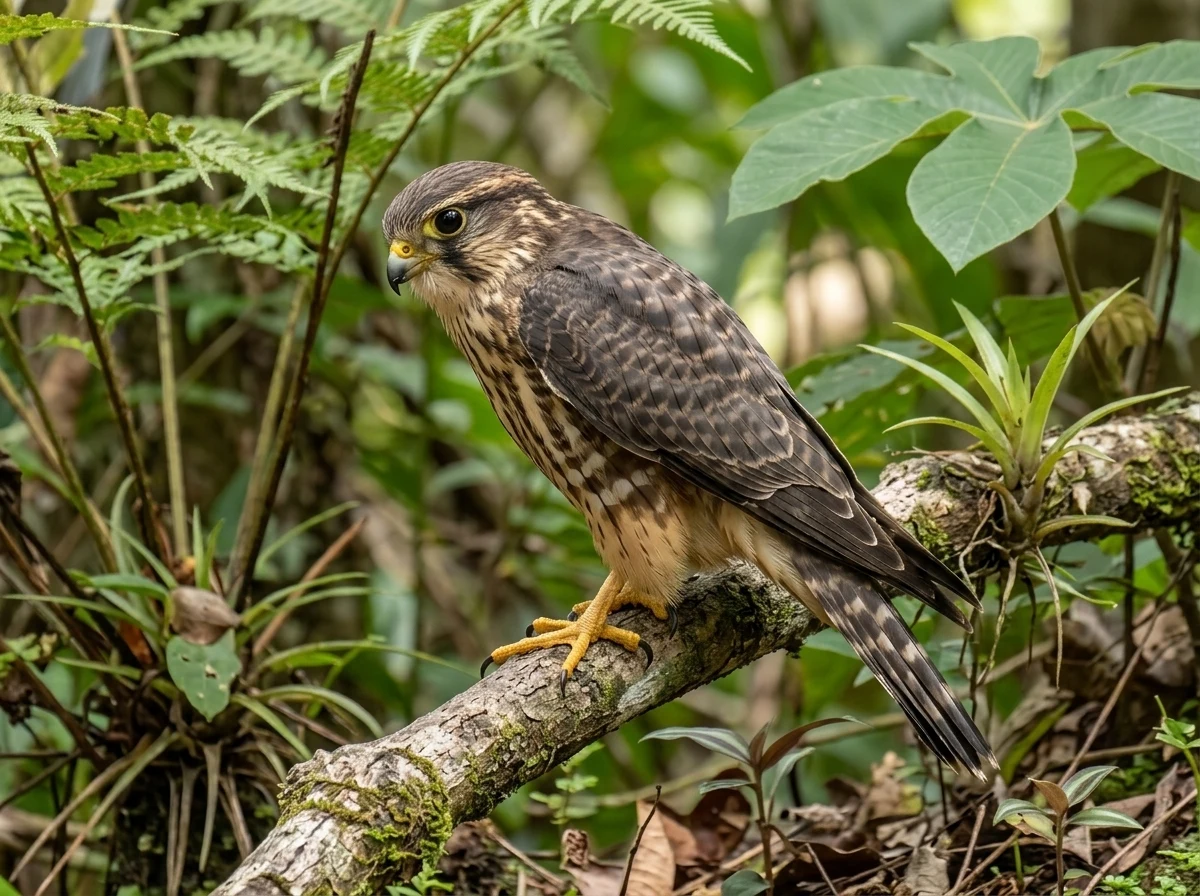 AI
AI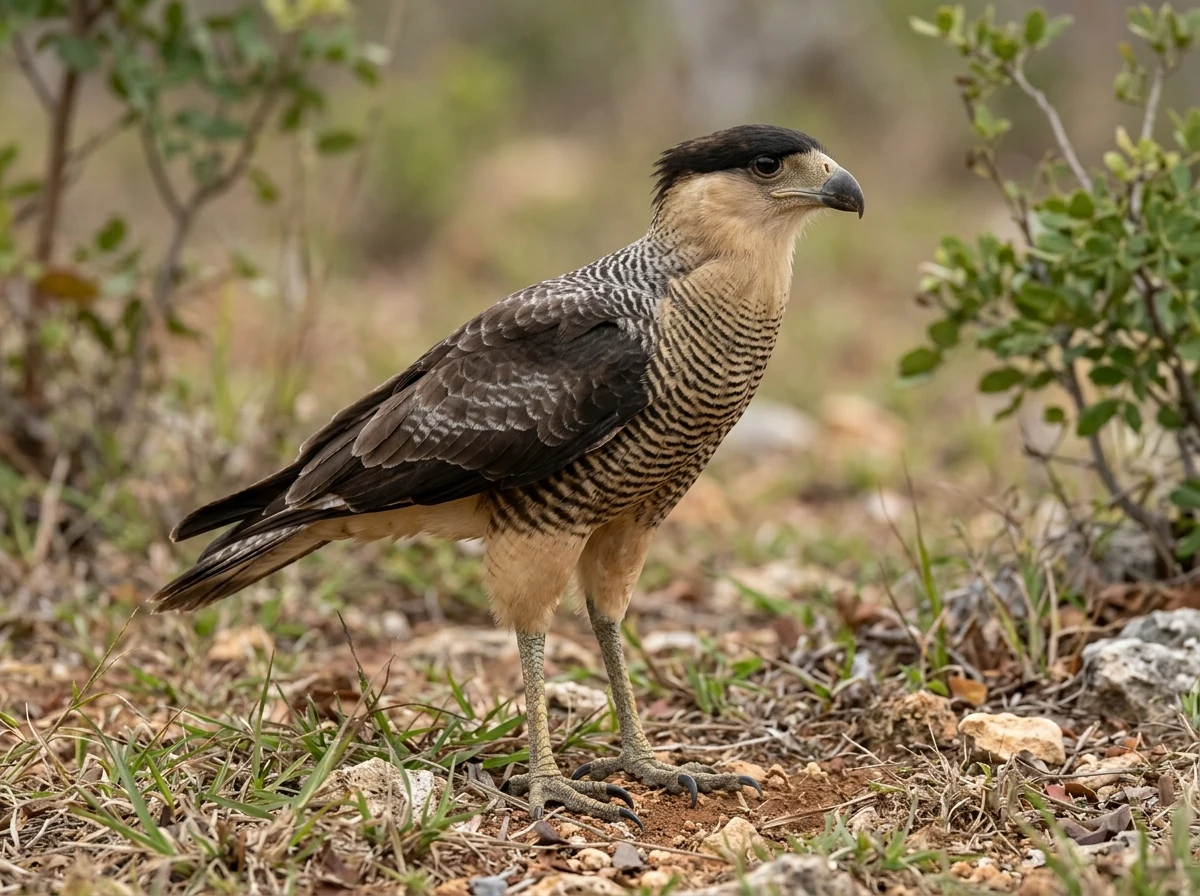 AI
AI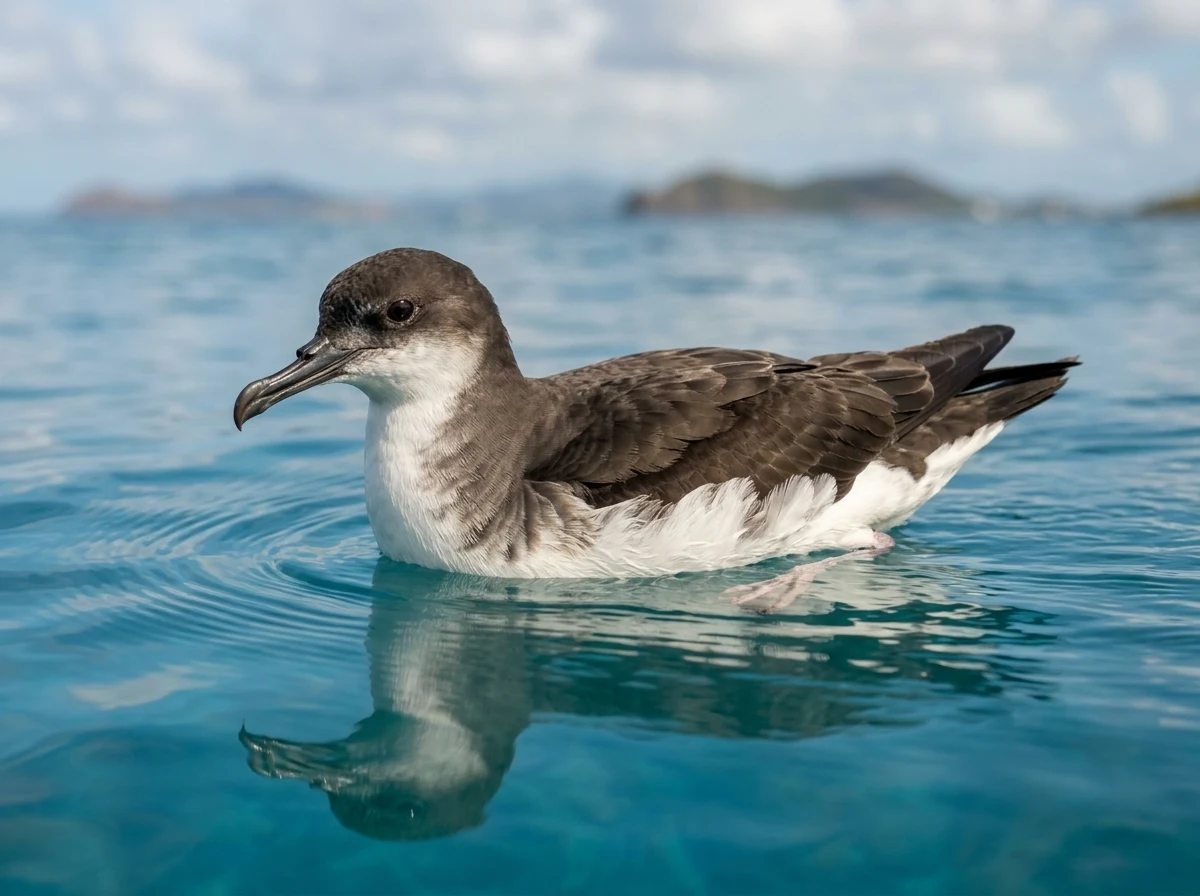 AI
AI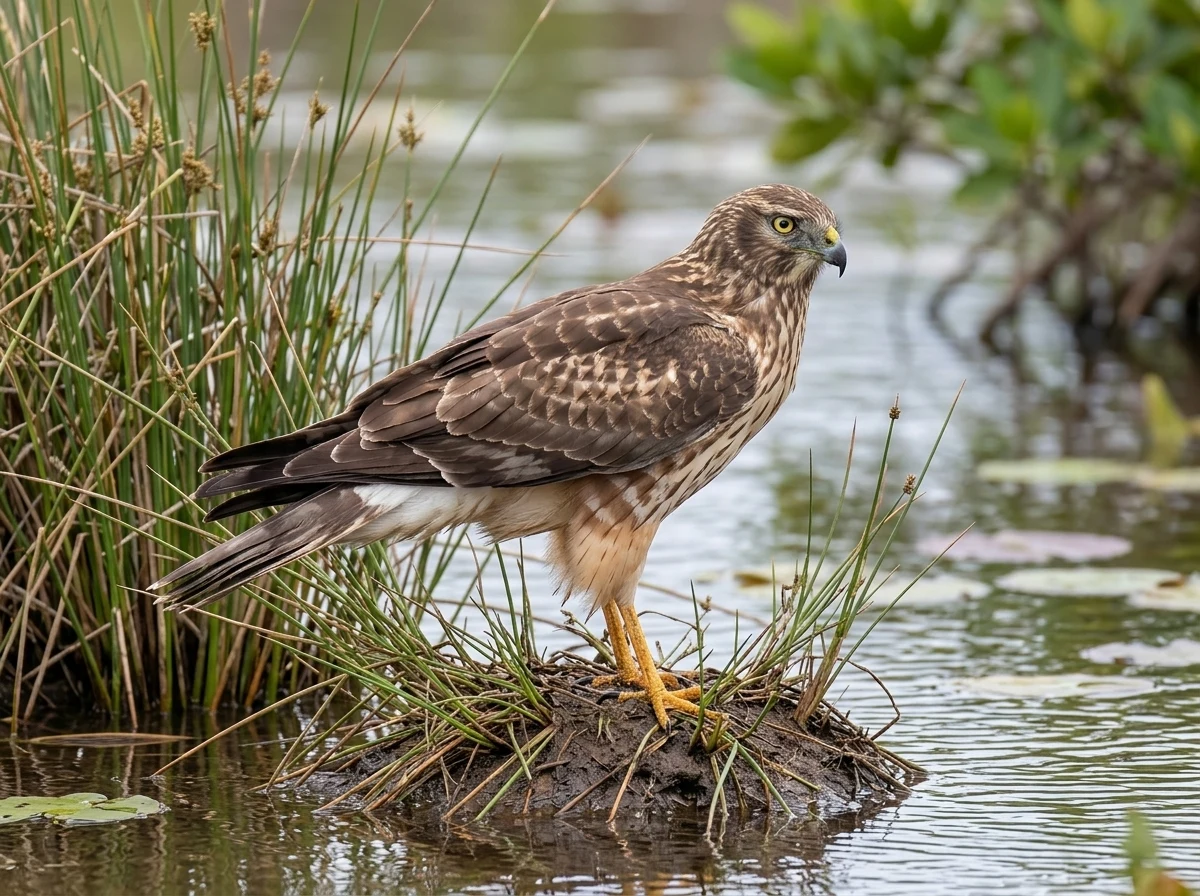 AI
AI
Evidence trail
Sources, media & further reading
Research note: 2004 Commonwealth entry applies to tundrius; retain as dated legacy status