 AI
AIPuerto Rico Bird Guides
How Birds Disperse Seeds
A practical guide to the mechanism of seed dispersal by birds, with two Puerto Rican species as case studies and a field observation exercise.
Reviewed:Prepared with AI assistance and linked sources. Illustrations are not field photographs.
Introduction: The Mechanism in One Sentence
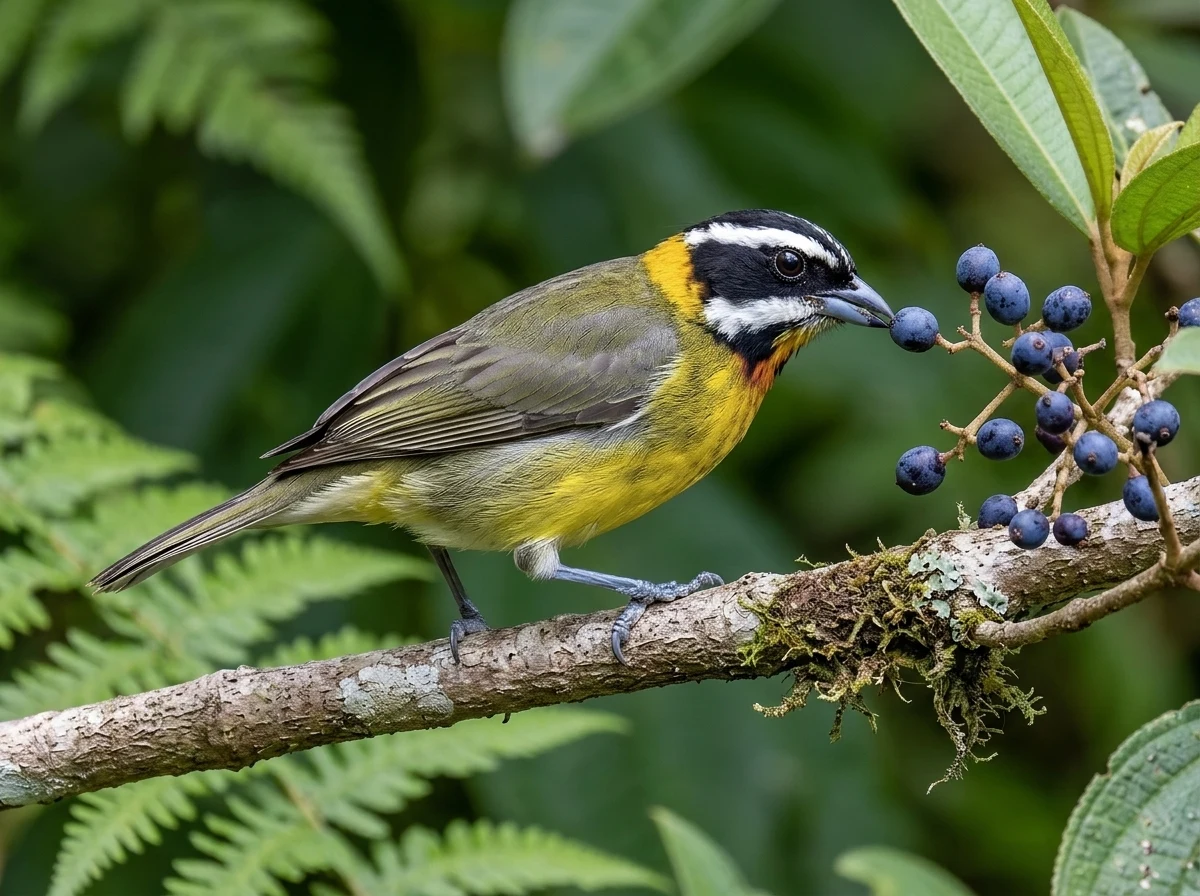
Seed dispersal by birds happens when a bird eats a fruit, digests the pulp, and then excretes or regurgitates the seed somewhere else, away from the parent plant. That transport, however casual it may seem, is a key ecological process for the reproduction of many plants. In Puerto Rico, two species illustrate this mechanism from different angles: the Puerto Rican Spindalis (Spindalis portoricensis), a specialized frugivore, and the Pearly-eyed Thrasher (Margarops fuscatus), an omnivorous generalist.
This guide explains how the mechanism works step by step, compares the role of both birds, and proposes an observation exercise you can do in your yard or a nearby forest. It is not a species list or an identification profile; it is an explanation of the process and why it matters for Puerto Rican ecosystems.
Puerto Rico Bird Guides
Three Key Takeaways
FrugivoríaThe Puerto Rican Spindalis is primarily frugivorousIts diet consists mainly of fruit, making it a key disperser.
OmnívoroThe Pearly-eyed Thrasher is omnivorous and generalistIts varied diet includes fruit, making it an opportunistic disperser.
EndémicaThe Puerto Rican Spindalis is endemic to Puerto RicoIts role as a disperser is unique to the Puerto Rican ecosystem.
01
The Mechanism Step by Step
The process begins when a bird finds a ripe fruit. The Puerto Rican Spindalis, described as frugivorous, feeds mainly on fruit and has a bill adapted for plucking it. The Pearly-eyed Thrasher, by contrast, is omnivorous and consumes a variety of foods, including fruit when available. In both cases, the bird swallows the fruit whole or in pieces.
Once ingested, the pulp is digested and the seed passes through the digestive tract or is regurgitated. Seeds that survive this process are expelled away from the parent plant. This transport can occur over short distances, within the same vegetation patch, or over longer distances if the bird moves before defecating. The result is a seed deposited in a new location, with the potential to germinate.
02
Comparison: Puerto Rican Spindalis and Pearly-eyed Thrasher
The Puerto Rican Spindalis is a specialized frugivore. Its main diet is fruit, and its role in seed dispersal is well documented in the species description, which notes that it helps in seed dispersal and plant reproduction. Being endemic to Puerto Rico, its function as a disperser is an integral part of the local ecosystem.
The Pearly-eyed Thrasher is an omnivorous generalist. The Cornell source describes it as a species with a varied diet and remarkable ecological plasticity, capable of shifting habitat, diet, and foraging techniques. This flexibility makes it an opportunistic disperser: when it eats fruit, it also transports seeds, but it does not depend on them. Its wide Caribbean distribution and its ability to move between islands make it a potential vector for long-distance dispersal, although in Puerto Rico it is considered common only in species-poor habitats.
03
Why It Matters for Puerto Rican Ecosystems
Seed dispersal by birds is an ecological service that links plant reproduction with animal movement. Without dispersers, many seeds would fall near the parent plant, where competition for light, water, and nutrients is intense. By being transported away, seeds have a chance to establish in new sites.
In Puerto Rico, the Puerto Rican Spindalis is an example of specialized dispersal within an island ecosystem. The Pearly-eyed Thrasher, for its part, represents generalist and opportunistic dispersal, which can connect vegetation patches and even islands. Both strategies contribute to forest dynamics and the regeneration of native vegetation.
04
Observation Exercise: Follow a Fruit
Choose a tree or shrub with ripe fruit in your yard or a nearby park. Watch the birds that come to feed. Note the species, the time, and the behavior: does it pluck the fruit and fly away? Does it swallow it whole? Does it carry it to a nearby branch? If you can, follow the bird with your eyes until it lands somewhere else. That destination point is a possible dispersal location.
You do not need to identify the plant or the seed for the exercise to be useful. What matters is recording the movement: where the bird takes the fruit from and where it moves to. Over time, this data can help you understand which birds disperse seeds in your area and how they do it.
Linked profiles
The Birds in This Guide
Two species that illustrate complementary seed dispersal strategies in Puerto Rico.
AI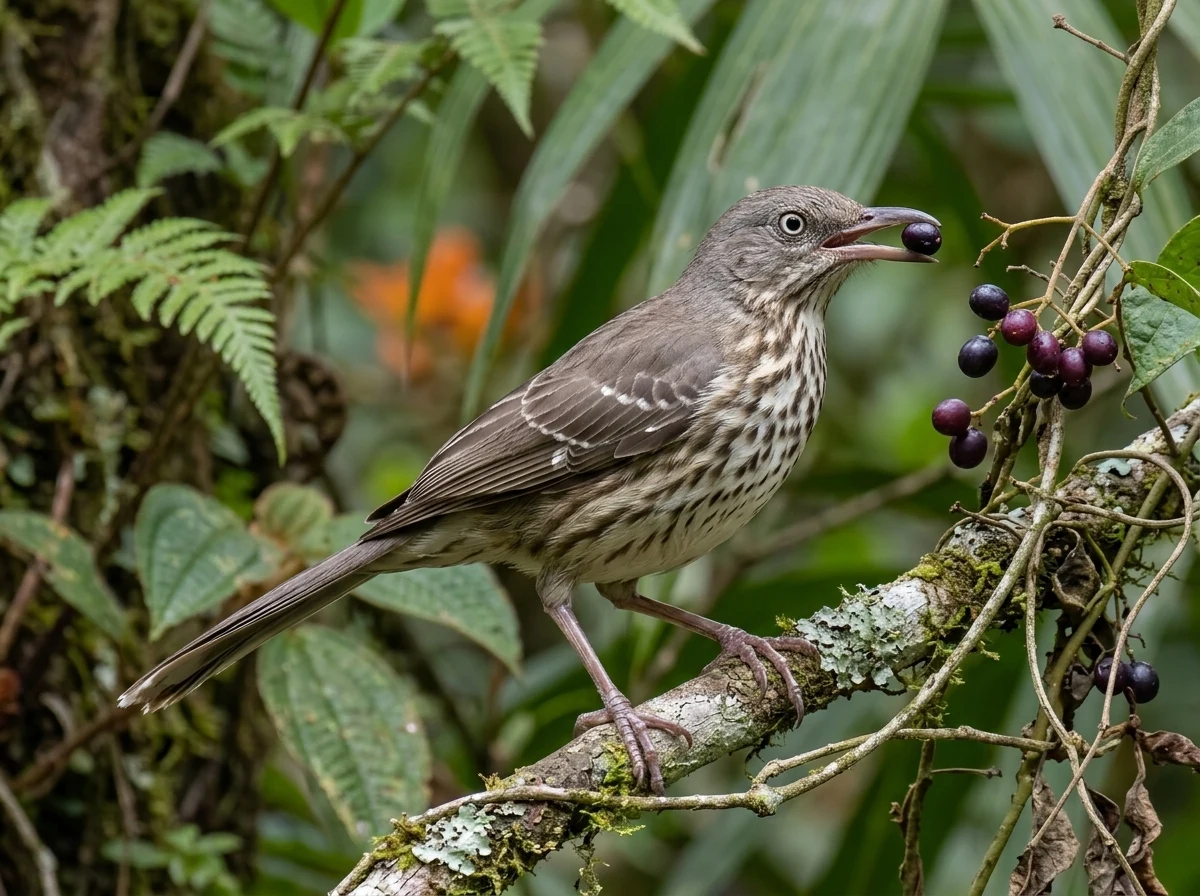 AI
AI01
What happens to the seed after the bird swallows it?
The seed passes through the digestive tract or is regurgitated. If it survives, it is expelled away from the parent plant and may germinate if conditions are suitable.
02
Do all birds disperse seeds the same way?
No. Specialized frugivores, like the Puerto Rican Spindalis, depend on fruit and disperse seeds more consistently. Generalist omnivores, like the Pearly-eyed Thrasher, do so opportunistically when they eat fruit.
03
Can I observe seed dispersal in my yard?
Yes. If you have a tree or shrub with ripe fruit, watch which birds approach and follow their movements. Note the species, the time, and where they take the fruit.
04
Does the Puerto Rican Spindalis eat only fruit?
Its diet is described as frugivorous, meaning mainly fruit. It is not documented here that it consumes exclusively fruit, but its main role in dispersal is tied to fruit.
Keep exploring
Connected routes
Sources and review
The evidence is one link away.
These sources support the editorial scope of this guide. Bird profiles also retain their own taxonomy, occurrence, and conservation references.
Reviewed:
01↗02↗
Cornell Lab of Ornithology — Birds of the World
Pearly-eyed Thrasher (Margarops fuscatus)
Evidence for cited sections; consult the original document.USDA Forest Service, International Institute of Tropical Forestry (Gen. Tech. Rep. IITF-27)
Adaptations of an avian supertramp: distribution, ecology, and life history of the pearly-eyed thrasher (Margarops fuscatus)
Evidence for cited sections; consult the original document.The atlas continues