 AI
AIBehavior guide
How Birds Rest on One Leg
A lifted leg is not an injury: it is a thermal and energy solution that many birds use daily.
Reviewed: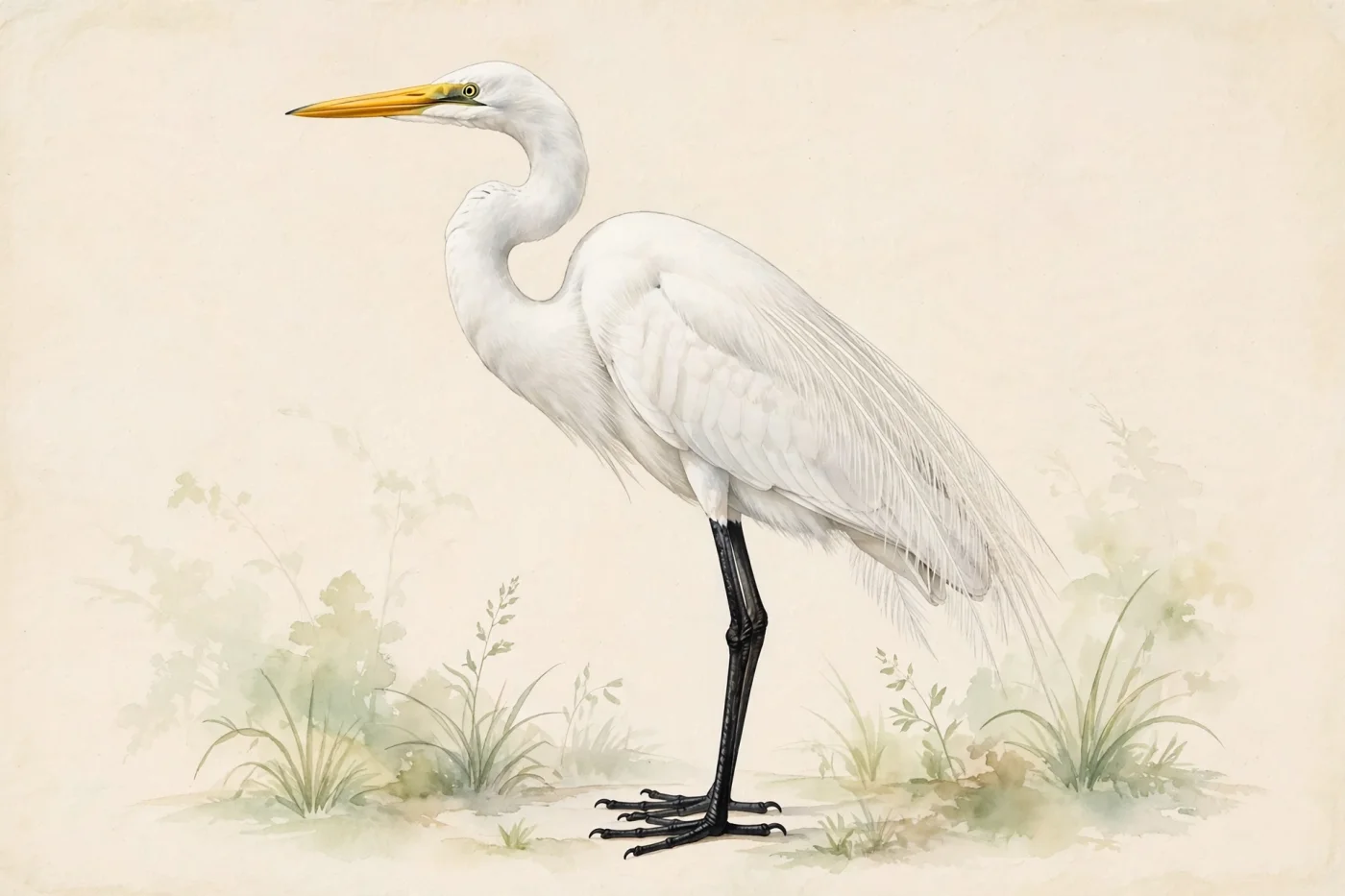
Prepared with AI assistance and linked sources. Illustrations are not field photographs.
The hidden leg
When a heron or a shorebird balances on one leg, the other leg has not disappeared: it is folded and tucked among the body feathers. The pose looks fragile, but it is common and deliberate. This guide explains what the bird gains from that shift of support and how to observe it without misreading it.
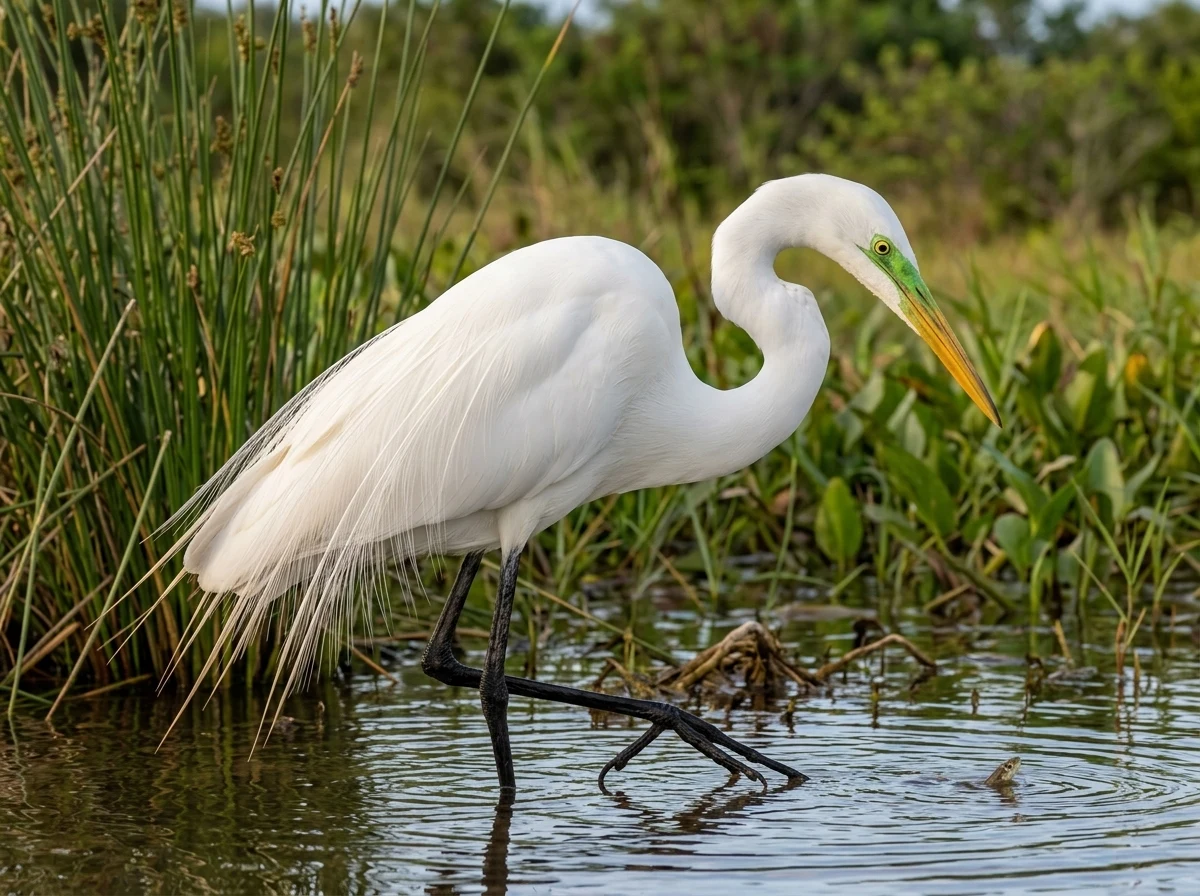
The short answer combines two ideas: reducing heat loss through unfeathered legs and resting one muscle while the bird stays alert. The Great Egret (Ardea alba) and the Black-necked Stilt (Himantopus mexicanus) appear in the Puerto Rico bird catalog and serve as examples of long, exposed legs.
Behavior guide
Three keys to remember
MitadLess exposed surfaceBy tucking one leg, the bird roughly halves the unfeathered skin exposed to the air.
Rete mirabileVessel network that conserves heatArteries and veins in contact exchange heat before blood returns to the body.
Cambia de pataAlternates supportWith patience, you will see the bird swap which leg bears the weight.
01
What the bird is actually doing
The leg that seems to be missing is folded upward and held inside the belly feathers. That movement is not a stumble or a sign of illness: it is a resting posture that many birds adopt while sleeping or waiting. The Smithsonian source describes it clearly: the other leg is tucked under the feathers, and there are no one-legged birds in its exhibits.
The result is a bird that remains standing, alert and ready to move, but with less bare skin facing the air. The pose may look unstable, yet in practice it works: the body balances on one leg while the other is protected by the warmth of the feathers.
02
Heat that is not lost
Bird legs have no feathers, so they are a direct route for heat loss. Audubon explains it with a simple image: the arteries carrying warm blood down to the leg lie in contact with the veins returning blood to the heart. That closeness lets the returning blood warm up and the outgoing blood cool down, so the feet stay closer to ambient temperature and the body spends less energy heating them.
The Smithsonian calls this exchange rete mirabile, Latin for wonderful web, and notes it has been observed in flamingos, herons, fish and even some mammals. It is not a trick exclusive to shorebirds: it is an adaptation shared by animals that live with limbs exposed to cold.
03
Rest and energy
Besides heat, there is a practical reason: rest. The Smithsonian notes that small shorebirds move constantly along the shore, and that bearing weight on one leg may be a way to give a tired muscle a break without losing the ability to move. The posture does not immobilize the bird: if something alerts it, it lowers the leg and walks or flies.
Audubon adds another advantage: by tucking one leg, the bird roughly halves the amount of heat it loses through its unfeathered limbs. In cold weather, that fraction matters. That is why the posture appears in herons, ducks, geese, hawks and gulls, not only in long-legged shorebirds.
04
Two Puerto Rico birds to compare
The Great Egret (Ardea alba) is a wetland bird with long black legs, listed in the Puerto Rico bird catalog as a native species of natural occurrence. Its size and upright posture make it easy to follow with binoculars when it rests at the water's edge. The Black-necked Stilt (Himantopus mexicanus) also appears in the catalog as native with natural occurrence and is a shorebird with very long pink legs, associated with wetlands.
Comparing the two helps separate the posture from the species. It is not that one rests and the other does not, but rather how each solves the same problem with legs of different lengths and in different microhabitats. The catalog does not provide local abundance, so this guide does not infer it: it only confirms that both species are recorded for Puerto Rico.
05
How to observe it without misreading it
When you see a bird on one leg, wait. The simplest test is time: if the bird swaps legs, walks or flies normally, there is no obvious injury. The Smithsonian recommends exactly that: watch long enough to see the shift of support. If the bird keeps the leg raised permanently, limps when walking or shows other signs, that is a different matter and conclusions should not be drawn from a distance.
A useful routine is this: first, locate the bird with binoculars and confirm that the visible leg bears the weight; second, look at the belly area to see whether there is a bulge of feathers where the other leg should be; third, wait one to three minutes to see whether it changes posture; fourth, note the time, habitat and behavior without trying to identify the species from the posture alone. That checklist turns curiosity into an orderly observation.
Linked profiles
Birds mentioned in this guide
Two species from the Puerto Rico catalog that illustrate the one-leg posture.
AI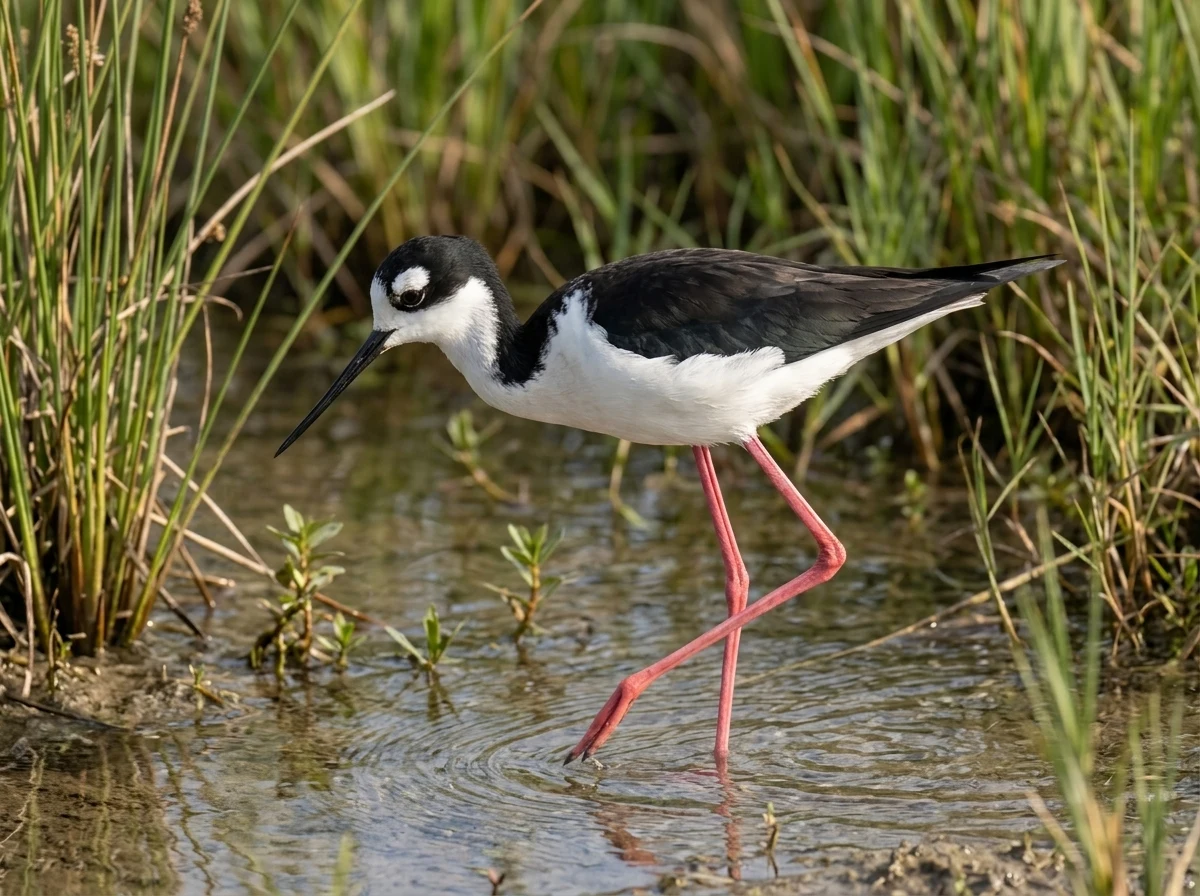 AI
AI01
Is a bird standing on one leg injured?
Not necessarily. Most often the other leg is folded and tucked among the body feathers. The Smithsonian states it this way: there are no one-legged birds in its exhibits. If the bird swaps legs, walks or flies normally, the posture is part of its rest.
02
What is the point of standing on one leg?
It helps conserve heat and rest. Audubon explains that by tucking one leg the bird roughly halves heat loss through its unfeathered limbs. The Smithsonian adds that it may also be a way to rest a tired muscle while staying alert.
03
What is the rete mirabile?
It is a network of blood vessels where the arteries going down to the leg and the veins returning to the body exchange heat. The Smithsonian describes it as an adaptation found in flamingos, herons, fish and some mammals. Thanks to that exchange, blood returning to the body does not arrive as cold and the bird loses less heat.
04
Do all birds do it?
Not all, but it is common in many. Audubon mentions long-legged herons, ducks, geese, hawks and gulls. The Smithsonian focuses on shorebirds such as those in its Delaware Bay exhibit. The posture appears in birds of different sizes and habitats, not only in shorebirds.
05
Can I identify a species just because it is standing on one leg?
No. The posture is a behavior shared by many birds and is not a diagnostic character. To identify, use size, bill shape, plumage color, legs and habitat. The posture can help you understand what the bird is doing, but not name it on its own.
Keep exploring
Connected routes
Sources and review
The evidence is one link away.
These sources support the editorial scope of this guide. Bird profiles also retain their own taxonomy, occurrence, and conservation references.
Reviewed:
The atlas continues