 AI
AIBehavior guide
How Flycatchers Catch Insects
A guide to understanding aerial insect hunting by flycatchers, comparing the Gray Kingbird and Puerto Rican Flycatcher, and practicing observation of their hunting sallies.
Reviewed: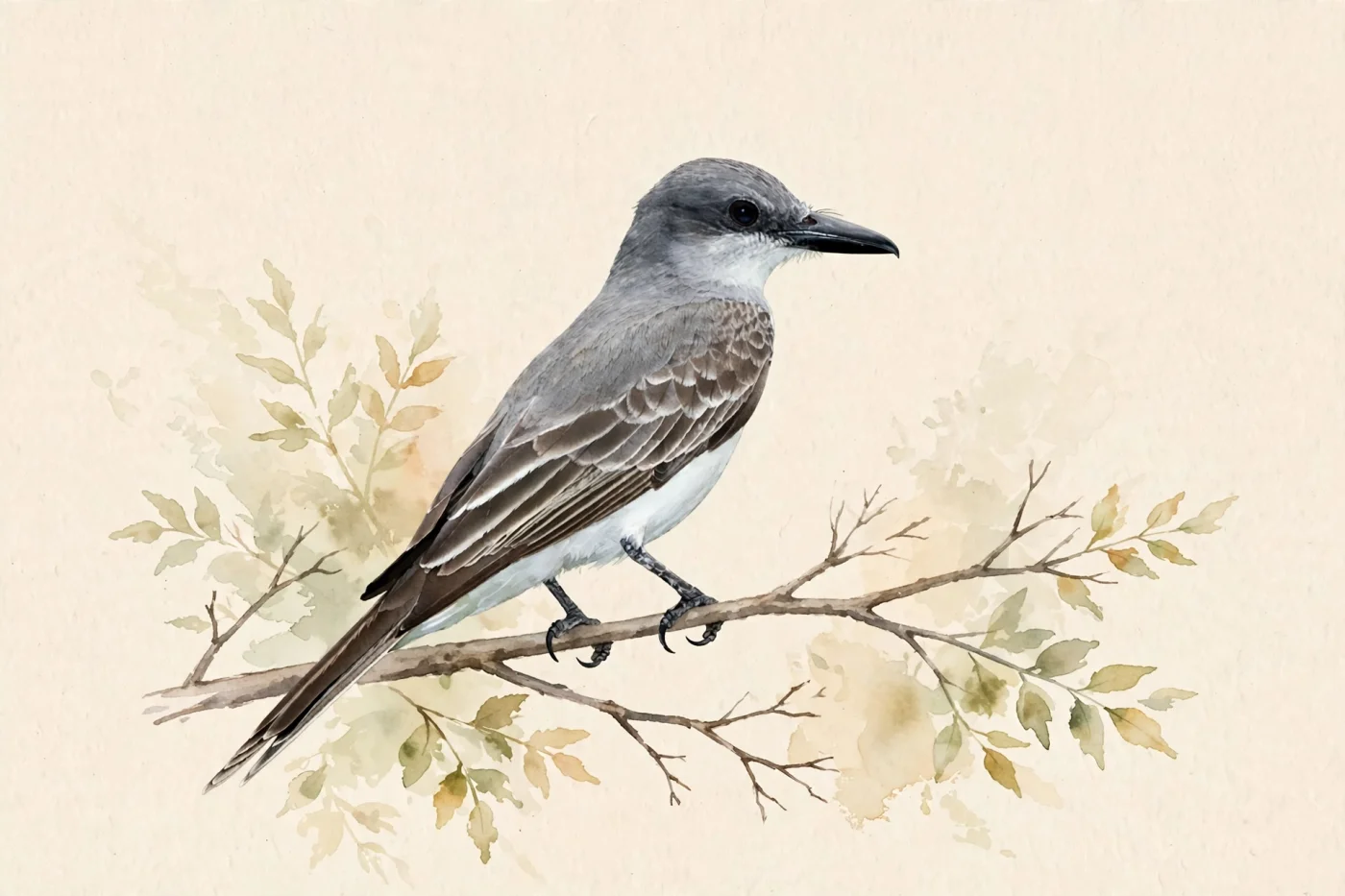
Prepared with AI assistance and linked sources. Illustrations are not field photographs.
The short answer
Flycatchers catch insects mainly through a technique called perch hunting: they sit on an exposed perch, watch the air, and fly out to grab their prey. This strategy is known as sallying or flycatching, and it is the reason for the family name Tyrannidae, the tyrant flycatchers.
In Puerto Rico, the Gray Kingbird and the Puerto Rican Flycatcher illustrate two versions of this technique. The Gray Kingbird is a conspicuous aerial hunter that often uses open perches, while the Puerto Rican Flycatcher, endemic to Puerto Rico and the Virgin Islands, lives in woodlands, mangroves, and coffee plantations, where it also catches insects in flight.
Behavior guide
Three keys to remember
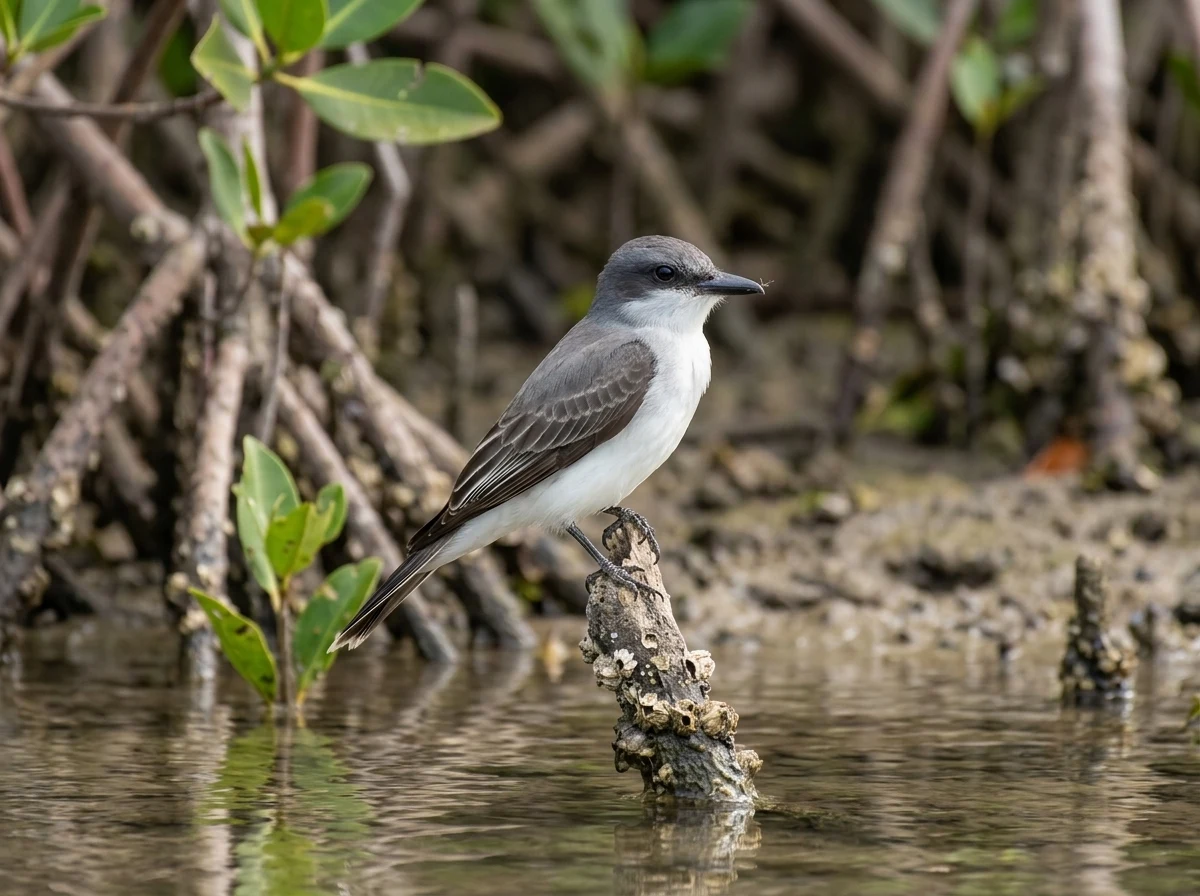
Percha y salidaMain techniqueThe Gray Kingbird forages by watching from an exposed perch and flying out to catch insects in the air.
JuíLocal nameThe Puerto Rican Flycatcher's local name, juí, comes from its call, traditionally considered a harbinger of good or bad news.
Dos especiesComparisonThe Gray Kingbird is native, and the Puerto Rican Flycatcher is endemic to Puerto Rico and the Virgin Islands.
01
The mechanism: perch, watch, and sally
Flycatcher hunting depends on three steps. First, the bird chooses a perch with good visibility, such as an open branch, a wire, or a post. Second, it watches the airspace with its head and eyes moving. Third, when it detects an insect, it launches a fast, direct flight to catch it, then usually returns to the same perch or a nearby one.
This method does not require chasing insects for long periods. The advantage lies in surprise and in the elevated position, which allows the bird to see prey against the sky or foliage. The Gray Kingbird, for example, may also hover and take insects or other items from foliage, and sometimes catches prey just above or at the surface of the water.
02
The Gray Kingbird: aerial hunter of open spaces
The Gray Kingbird (Tyrannus dominicensis) is a large, conspicuous flycatcher. According to Audubon, it forages by watching from an exposed perch and then flying out to catch insects in the air. Its diet includes beetles, wasps, bees, and other insects, some as large as dragonflies. It also eats small lizards and has been seen catching hummingbirds in the Caribbean.
In Puerto Rico, the Gray Kingbird appears in the catalog as a native, non-endemic species, present in coastal and forested environments. Abundance should not be inferred from this profile; what is documented is its behavior of aerial hunting from perches.
03
The Puerto Rican Flycatcher: endemic hunter of woodlands and mangroves
The Puerto Rican Flycatcher (Myiarchus antillarum) is endemic to Puerto Rico and the Virgin Islands. Its plaintive, descending call is often heard in wooded areas, mangroves, and coffee plantations. Though not considered a conservation priority, a long-term study in Guánica Forest suggests that its population is in decline.
The Puerto Rican Flycatcher belongs to the genus Myiarchus. Its presence in El Yunque is documented in the El Yunque National Forest wildlife list, which includes it among the forest's birds.
04
Comparison: two styles, one family
The Gray Kingbird and the Puerto Rican Flycatcher share the basic technique of aerial hunting, but differ in habitat and size. The Gray Kingbird is larger (22–25 cm in length, 40–50 g according to Audubon) and frequents open areas, coasts, and edges. The Puerto Rican Flycatcher is smaller (about 23.7 g) and prefers dry and moist woodlands, mangroves, forest edges, and gardens.
Both catch insects in flight, but the Gray Kingbird often does so from very exposed perches, while the Puerto Rican Flycatcher may hunt from perches more covered by foliage. This difference reflects their respective habitats: the Gray Kingbird in open spaces and the Puerto Rican Flycatcher in denser environments.
05
How to observe it: checklist and procedure
To observe flycatcher hunting, choose a spot with exposed perches and a good view of the sky. Sit or walk slowly and look for perched birds that make short flights and return to the same spot. Pay attention to the direction of the sally, the duration of the flight, and whether the bird returns with or without visible prey.
Checklist: 1) identify the species calmly; 2) note the height and type of perch; 3) record how many sallies it makes in an interval you choose, for example 5 minutes; 4) observe whether it catches prey in the air or in foliage; 5) note the time and weather. You do not need special equipment, but binoculars help. Avoid getting too close so you do not interrupt its hunting.
Linked profiles
The species in this guide
Two Puerto Rican flycatchers that illustrate catching insects in flight.
AI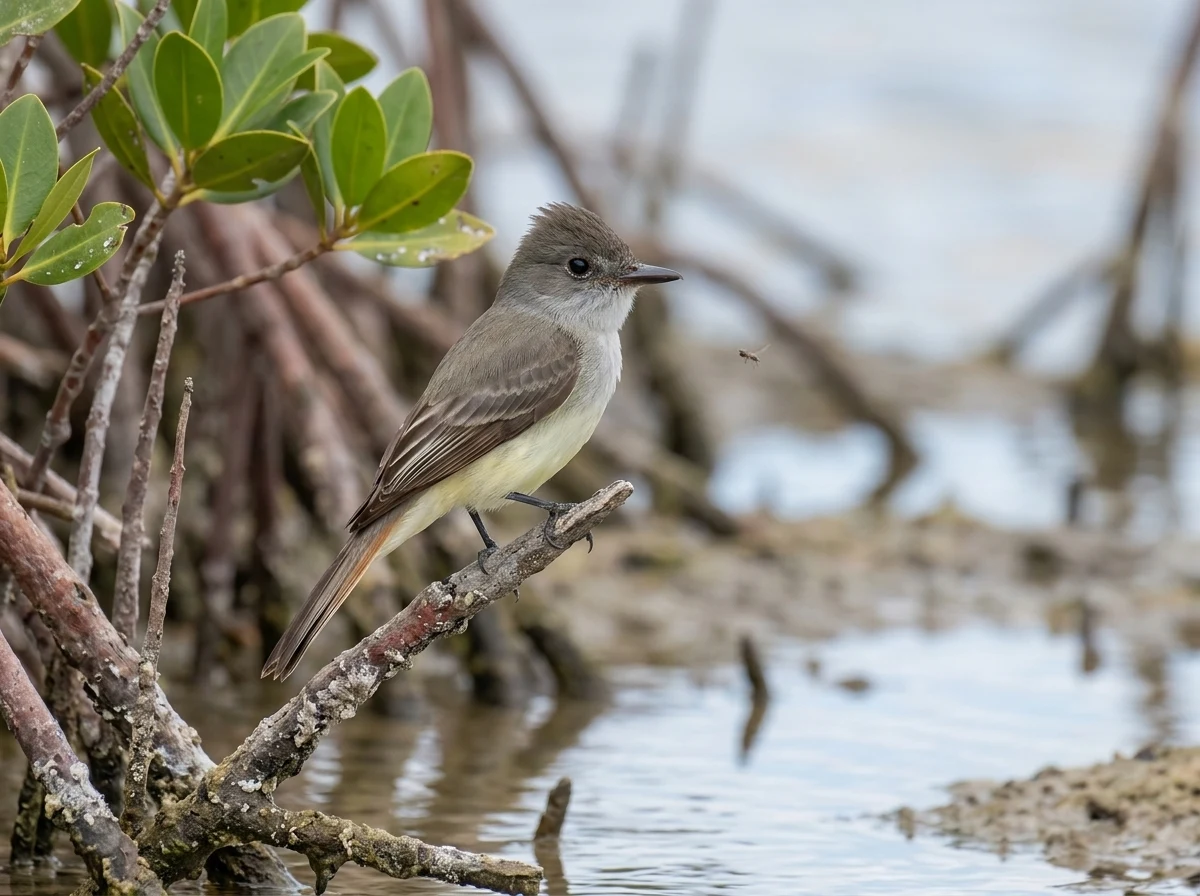 AI
AI01
Do all flycatchers catch insects the same way?
Not exactly. The basic technique of watching from a perch and sallying out to catch insects in flight is common in the family, but each species adapts the method to its habitat. The Gray Kingbird often uses very exposed perches, while the Puerto Rican Flycatcher may hunt from perches more covered by foliage.
02
What does the Gray Kingbird eat besides insects?
According to Audubon, the Gray Kingbird eats a variety of insects, including beetles, wasps, and bees, some as large as dragonflies. It also eats small lizards and has been seen catching hummingbirds in the Caribbean. At some seasons, berries and small fruits may make up more than one-fifth of its diet.
03
Where can I see the Puerto Rican Flycatcher?
The Puerto Rican Flycatcher is endemic to Puerto Rico and the Virgin Islands. It is found in wooded areas, mangroves, and coffee plantations. Its presence in El Yunque is documented in the El Yunque National Forest wildlife list. Abundance should not be inferred from these references.
04
Do I need special equipment to observe flycatcher hunting?
It is not essential, but binoculars help you see the details of the sally and the catch. The most important thing is to choose a spot with exposed perches, keep your distance, and note what you observe. A notebook or a note on your phone is enough to record the behavior.
Keep exploring
Connected routes
Sources and review
The evidence is one link away.
These sources support the editorial scope of this guide. Bird profiles also retain their own taxonomy, occurrence, and conservation references.
Reviewed:
01↗02↗03↗
National Audubon Society
Gray Kingbird | Audubon Field Guide
Evidence for cited sections; consult the original document.Cornell Lab of Ornithology, Birds of the World
Puerto Rican Flycatcher Myiarchus antillarum
Evidence for cited sections; consult the original document.USDA Forest Service
Animals - El Yunque National Forest
Evidence for cited sections; consult the original document.The atlas continues