 AI
AIHabitats guide
Insect-eating Birds on Farms: Benefits and Limits
A practical guide to the real role of insect-eating birds on farms, without exaggerated promises or conclusions the sources do not support.
Reviewed: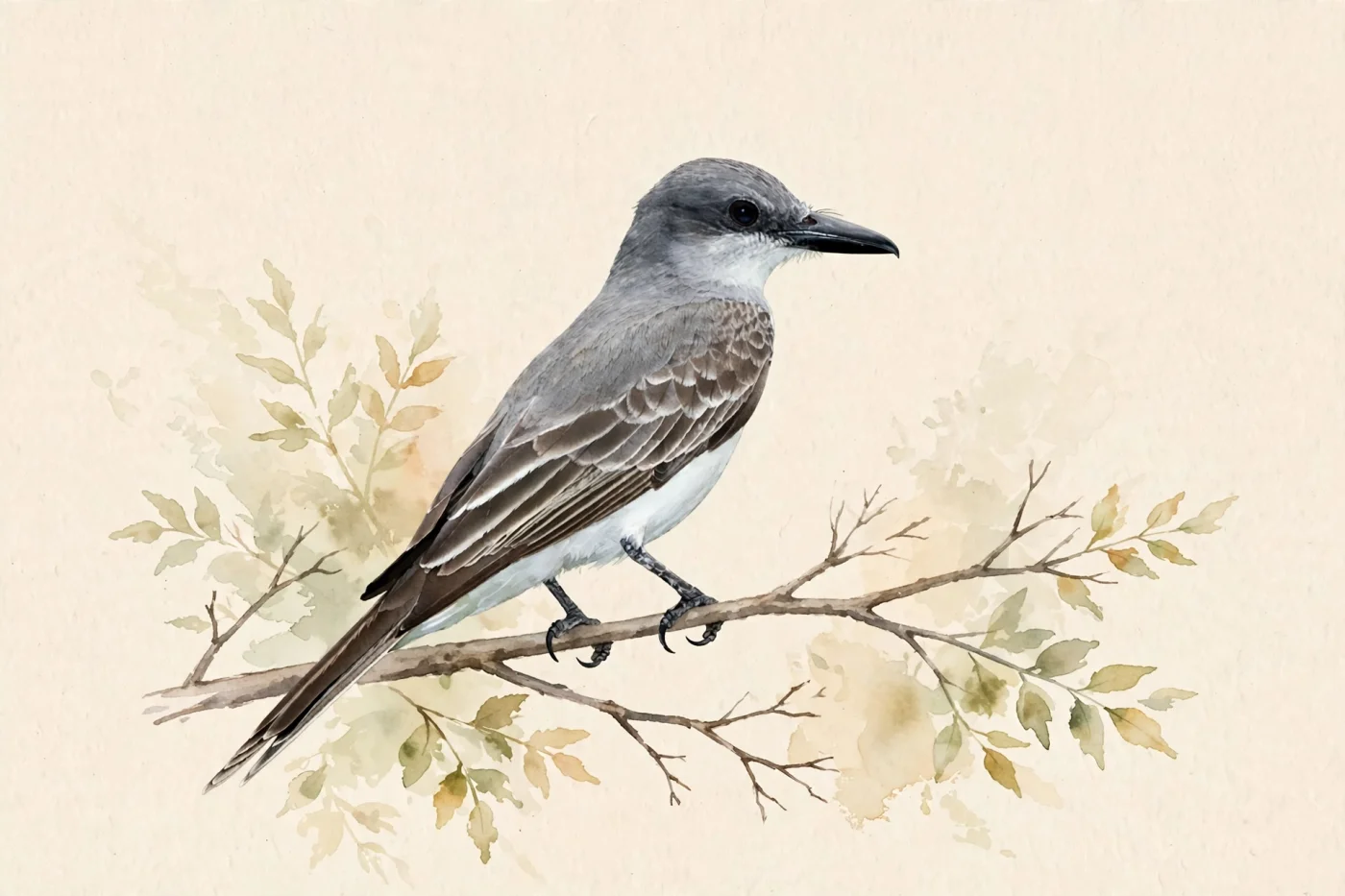
Prepared with AI assistance and linked sources. Illustrations are not field photographs.
The core question
In Puerto Rico, as elsewhere, it is often said that insect-eating birds control pests and benefit farms. The available evidence supports a more nuanced version: birds can eat insects, but the net effect depends on the type of farm, the surrounding habitat, and the mix of species present. A farm surrounded by forest or scrub is not the same as a field with no nearby natural vegetation.
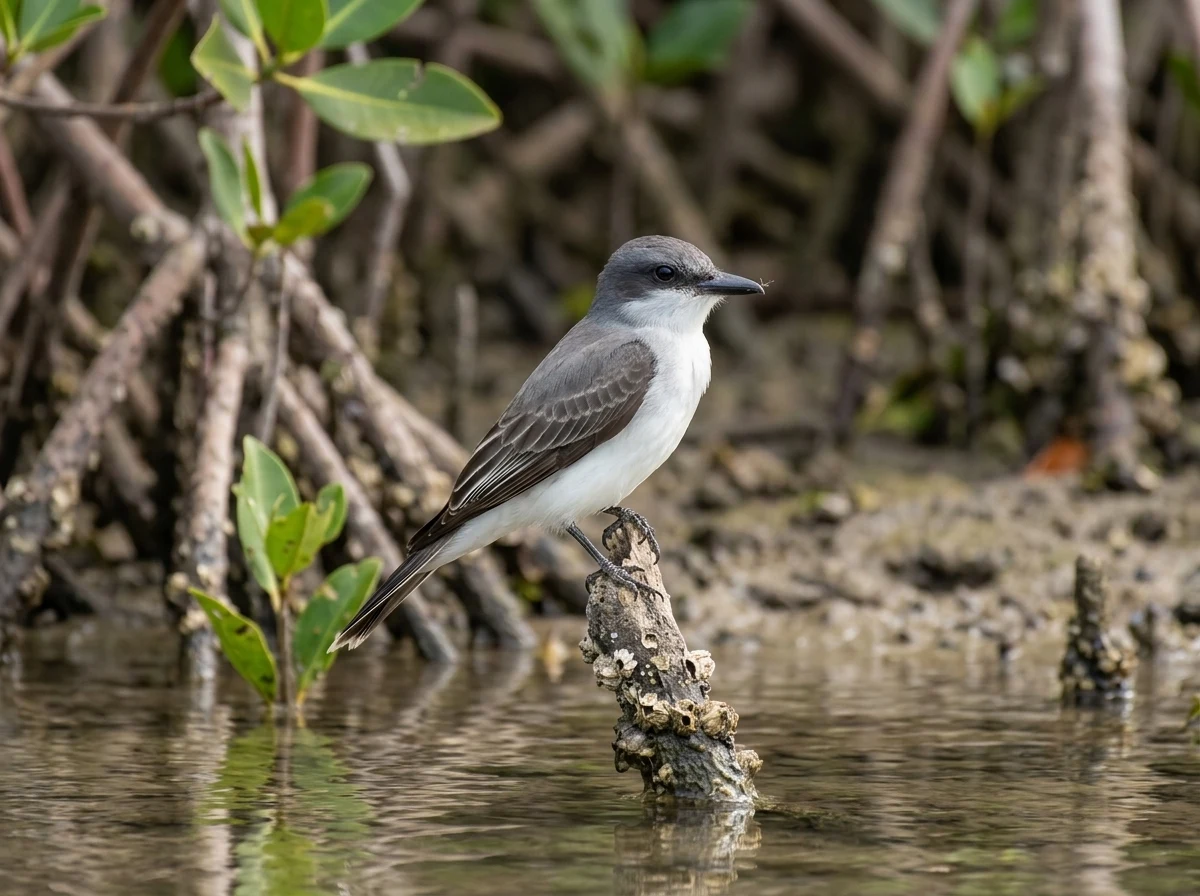
This guide answers a concrete question: what benefits and what limits do insect-eating birds have on farms? We use two Puerto Rico species as examples: the Puerto Rican Woodpecker (Melanerpes portoricensis), endemic to the archipelago, and the Gray Kingbird (Tyrannus dominicensis), native to the island. With them we illustrate how insect consumption is observed and why generalizations are risky.
Habitats guide
Three key ideas
Depends on habitatNatural habitat around the farmIn the cited study, the amount of natural habitat was the most important factor in whether birds offered more benefits than costs.
Not automaticBirds are not a guaranteed pesticideThe net effect varies by species, crop, and landscape; some birds also eat fruit or can damage crops.
Can be observedInsect consumption can be documentedThe Puerto Rican Woodpecker is omnivorous and eats arthropods and fruits; the Gray Kingbird has an invertebrate diet according to the catalog.
01
What the evidence says about benefits
The main available source is a study on strawberry farms in California, not Puerto Rico. Its results should not be automatically transferred to the tropics, but they do offer a useful framework. In that study, farms with more natural habitat around them were more likely to host species considered beneficial to growers, such as Barn Swallow and Black Phoebe. By contrast, farms without those natural features attracted more species that form large flocks and damage crops.
The mechanism is clear: insect-eating birds consume arthropods. In Puerto Rico, the Puerto Rican Woodpecker is omnivorous and eats a wide variety of arthropods and fruits. The Gray Kingbird, according to the catalog, has an invertebrate diet. That means both species can capture insects on farms, but it does not by itself prove they reduce a pest to economically useful levels. The available evidence does not quantify that effect on Puerto Rican farms.
02
The limits: what birds do not guarantee
The California study found that on farms without natural areas, birds ate up to twice as many strawberries, causing significant damage. It also notes that birds can be a package deal: some eat insects, but others eat crops or beneficial insects. So calling insect-eating birds a universal solution is incorrect. The benefit depends on which species are present and what alternative foods they find.
Another limit is scale. The evidence does not show that a few birds eliminate an infestation. Nor do the supplied sources quantify economic savings in Puerto Rico. The practical conclusion is that birds can contribute to insect control, but they do not replace integrated pest management.
03
Two Puerto Rico examples: woodpecker and kingbird
The Puerto Rican Woodpecker is endemic to the archipelago. The Birds of the World source states it can be found in all treed habitats on the islands of Puerto Rico and Vieques. It is omnivorous and eats arthropods and fruits. Its presence on farms with trees is expected, but its diet is not exclusively insectivorous. That makes it a useful example to show that the term 'insect-eating bird' does not always describe a strict diet.
The Gray Kingbird is native to Puerto Rico. The catalog indicates it is a partially migratory short-distance species that breeds in the southeastern United States, the Antilles, and northern South America, and that northern populations winter in Hispaniola, Puerto Rico, the Lesser Antilles, Panama, and northern South America. Its diet, according to the catalog, is invertebrates. It is a tyrant flycatcher that captures insects in flight or from perches. On a farm, it can be observed at edges, fences, and trees. However, the catalog does not indicate abundance or effect on pests. Therefore, one should not claim that the Gray Kingbird controls pests on Puerto Rican farms; one can only say that it consumes invertebrates and is native to the island.
04
How to observe it on your farm or yard
A simple way to explore the topic is structured observation, without capturing birds. Choose a fixed point with good visibility, preferably near trees, hedges, or crop edges. For 20 minutes, note each bird you see, the time, the substrate where it is (ground, trunk, branch, air), and what it does (pecks, catches in flight, searches bark). You do not need to identify insects; just record foraging behavior.
Repeat this observation under two conditions: one day at an edge with natural vegetation and another in an area without nearby vegetation. Compare how many insect-eating birds you observed and how many times you saw them catching something. This activity does not prove pest control, but it helps you see local patterns. If you use eBird, you can contribute your lists. As a reference, the Cafeicanto program, developed by Cafiesencia in collaboration with the Puerto Rican Ornithological Society (SOPI) and with eBird as a database, identified 43 species, 12 of them endemic, on 15 selected shade coffee farms; that figure comes from the program description, not from this activity.
Linked profiles
The two birds in this guide
The Puerto Rican Woodpecker and the Gray Kingbird illustrate two different insect-eating diets and two foraging styles.
AI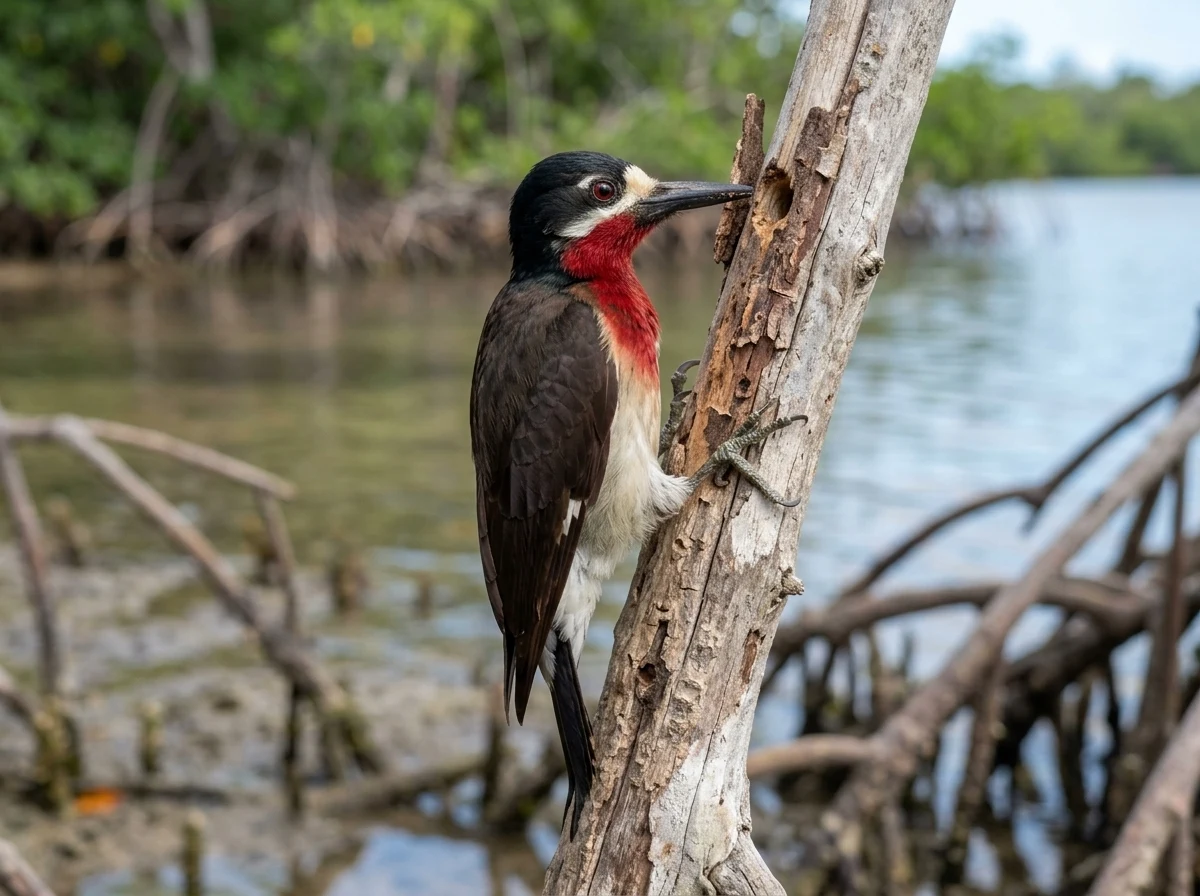 AI
AI01
Do insect-eating birds eliminate pests on a farm?
There is no evidence in the supplied sources that they eliminate pests. The cited study shows that the net effect depends on habitat and the species present. Birds can consume insects, but they do not replace integrated pest management.
02
What happens if the farm has no natural vegetation nearby?
In the California study, farms without natural areas attracted more crop-damaging species and birds ate up to twice as many strawberries. This cannot be generalized to Puerto Rico, but it suggests that nearby natural vegetation influences the balance.
03
Is the Puerto Rican Woodpecker only insectivorous?
No. The Birds of the World source states it is omnivorous and eats a wide variety of arthropods and fruits. It is an example that 'insect-eating bird' does not always mean an exclusive insect diet.
04
Does the Gray Kingbird control pests on Puerto Rico farms?
The catalog indicates its diet is invertebrates and that it is native to Puerto Rico, but it does not quantify its effect on pests. One should not claim it controls pests; only that it consumes invertebrates.
05
How can I contribute bird data on farms?
You can use eBird to record your observations. In Puerto Rico, the Cafeicanto program, developed by Cafiesencia in collaboration with the Puerto Rican Ornithological Society (SOPI) and with eBird as a database, identified 43 species, 12 endemic, on 15 selected shade coffee farms.
Keep exploring
Connected routes
Sources and review
The evidence is one link away.
These sources support the editorial scope of this guide. Bird profiles also retain their own taxonomy, occurrence, and conservation references.
Reviewed:
01↗02↗03↗
Audubon Magazine
Farms With Natural Habitat Gain More Benefits From Birds
Evidence for cited sections; consult the original document.Cornell Lab of Ornithology
Puerto Rican Woodpecker — Diet and Foraging (Birds of the World)
Evidence for cited sections; consult the original document.eBird Puerto Rico (Cornell Lab of Ornithology)
Among Birds and Coffee
Evidence for cited sections; consult the original document.The atlas continues