 AI
AIA single resident species
Are there woodpeckers in Puerto Rico?
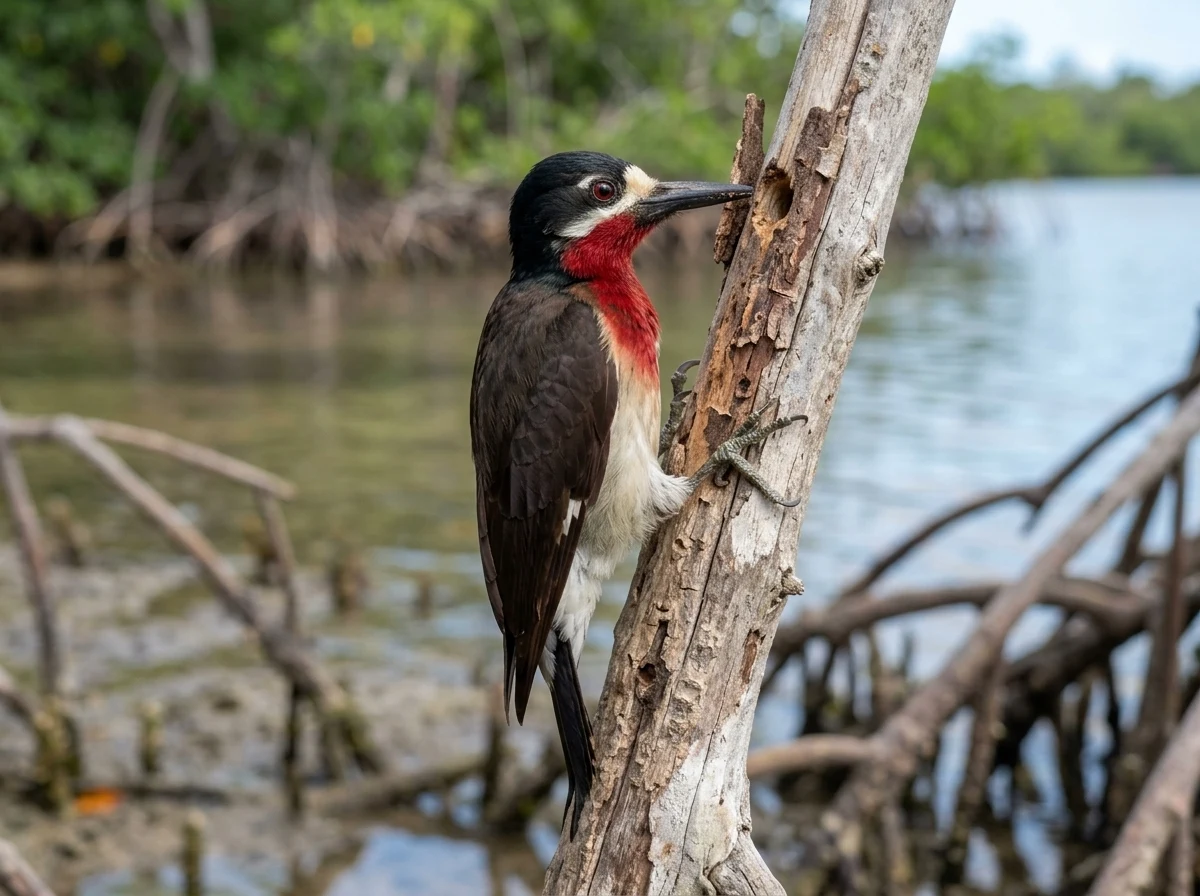
White forehead, red breast, and a "pik!" you hear before you see it: Puerto Rico's only resident woodpecker lives almost anywhere with trees.
Reviewed:Yes: one, and it is endemic.
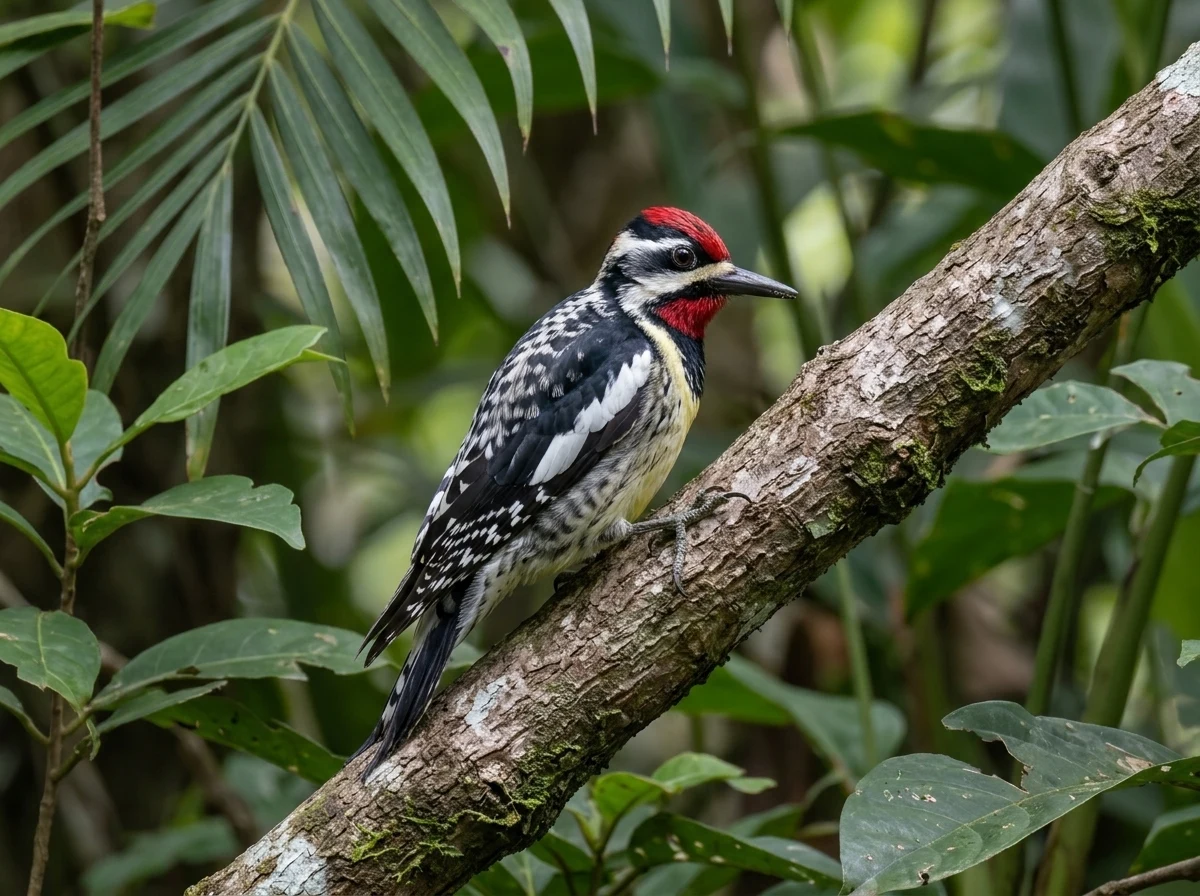
Yes, Puerto Rico has woodpeckers, but only one species lives here: the Puerto Rican Woodpecker (Melanerpes portoricensis), endemic to the archipelago and found on the main island and Vieques. Other woodpeckers, such as the Yellow-bellied Sapsucker, show up only occasionally as winter visitors.
Far from rare, it is one of the easiest endemics to see: the Breeding Bird Atlas found it in 81 percent of surveyed hexagons, from mangroves and coffee farms to city parks. It weighs about 60 grams (2 ounces), has a red throat and breast, black back, and white forehead, and eats both insects and fruit.
This guide covers how to recognize it, where and when it nests, which other birds reuse its holes, and how to separate it from the migrant woodpecker that sometimes appears in winter.
A single resident species
The woodpecker by the numbers
1resident woodpeckerThe Puerto Rican Woodpecker is the only member of its family living on the island.
81 %of Atlas hexagons388 of 479 hexagons, with 814 records from 2004 to 2009.
~60 gapproximate weightFrom the trait data in its profile in our catalog.
01
How to recognize the Puerto Rican Woodpecker
It has a bright red throat and breast, a black back with a glossy dark-blue sheen, and a white forehead. No other bird on the island combines that dark back with that rosy-red front, so identification is easy once it shows itself. Like any woodpecker it clings to trunks and branches braced on its tail, and it often travels in pairs or small groups.
It is confused more by sound than by looks. Its most common call is an emphatic "pik!" that it repeats, sometimes in an accelerating series, and it drums softly. It is noisy enough that you often hear it before you see it, so it pays to learn the call and compare it with the recordings on its profile.
02
Where it lives: from mangroves to parks
It lives in every treed habitat on Puerto Rico and Vieques. It is most common in forested hills and lowlands, mangroves, and shade coffee farms, but it also uses palm groves, parks, yards, and woodlots from the coast to the mountains. The Atlas recorded it in 388 of 479 hexagons; on Vieques it is described as fairly common.
That breadth is why it appears in guides to El Yunque, Guánica Dry Forest, the karst, and coffee farms. If you are just starting, a park with large trees or palms in the morning is enough to find one. In shade coffee and secondary forest it is often one of the first endemics you hear.
03
What it eats: insects, and fruit too
Like other woodpeckers, it drills into wood to reach insects. Unlike most, though, it is omnivorous, eating a wide variety of arthropods as well as fruit. You may see it hammering a dead trunk one moment and feeding in a fruiting tree or palm the next.
That flexible diet helps it live in very different landscapes, from mature forest to urban areas with fruit trees. If one visits a tree in your yard, it is most likely looking for insects under the bark or for fruit; it does not need artificial feeding to thrive.
04
Nesting: holes that other birds reuse
It excavates cavities in tall trees or palms in January or February and lays eggs later, with fledglings reported from late March to June. The Atlas found breeding throughout the year, with the most activity from March to June and a peak in May. Both parents care for the young and keep feeding them for weeks after they leave the nest.
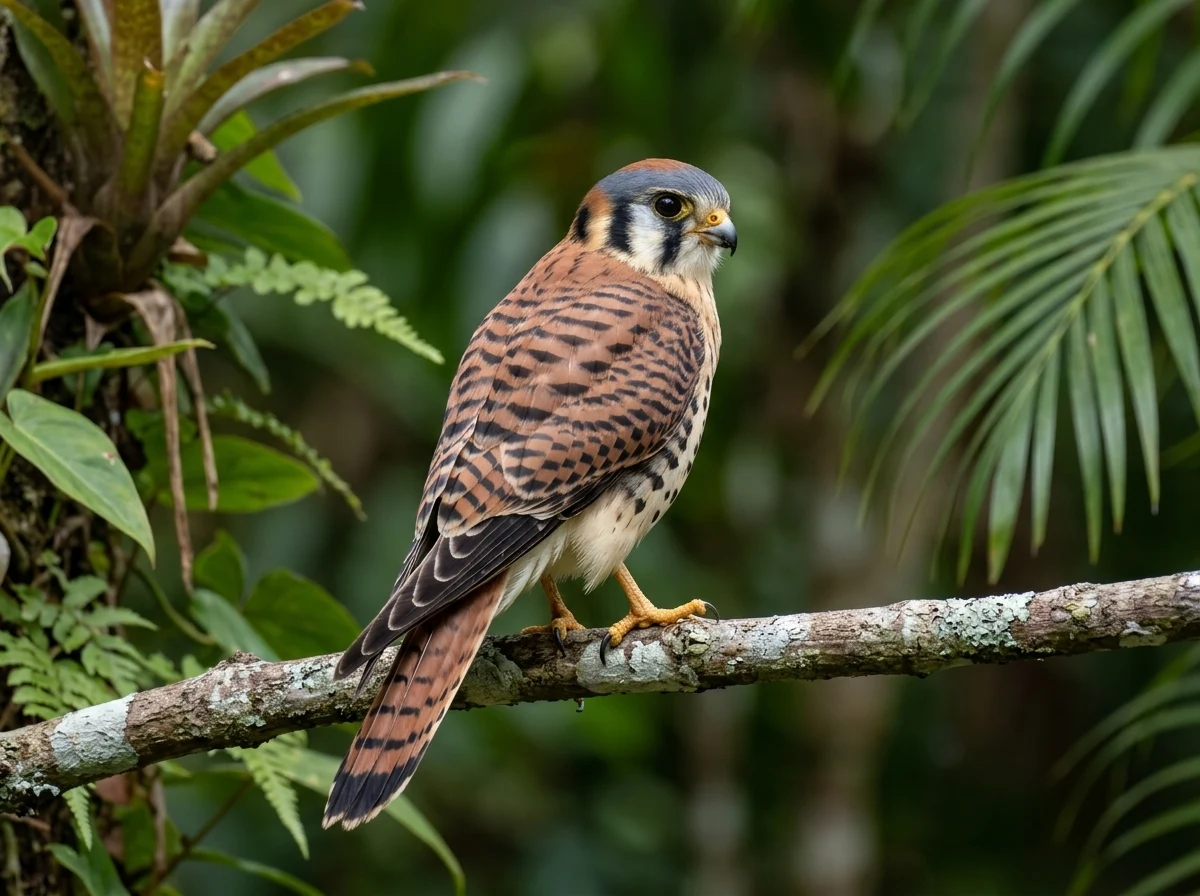
Its old holes get a second life: the Atlas notes they are reused by other cavity nesters such as American Kestrel, Caribbean Martin, and Puerto Rican Flycatcher. That is why keeping standing dead trees, where they pose no hazard, helps several species at once.
05
Other woodpeckers: rare winter visitors
Yellow-bellied Sapsucker is one of North America's most migratory woodpeckers and winters south to the West Indies; in Puerto Rico it sometimes appears in winter. It has a bold black-and-white face, a red forehead, and a white stripe along the folded wing. It drills neat rows of small holes in bark to drink sap, a sign that gives it away.
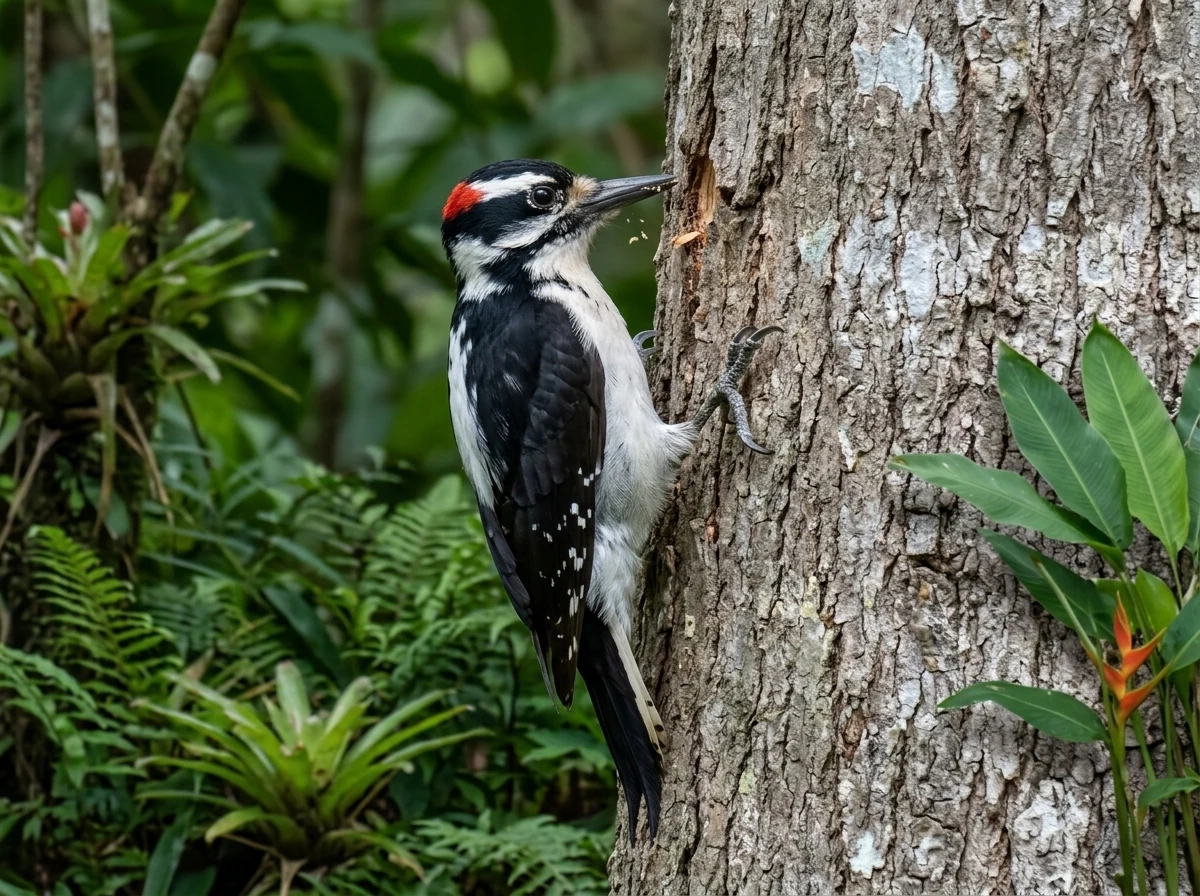
Hairy Woodpecker appears in our catalog only as an accidental. Neither has the endemic's red breast and plain black back, so a woodpecker with black-and-white wings in December or January deserves photos and a careful report.
06
Is it threatened?
No. The Puerto Rican Woodpecker has a stable population and is rated Least Concern by the IUCN; it is not in any threatened category of the DNER or the U.S. Fish and Wildlife Service. It is one of the few endemics that adapt well to landscapes with people.
Even so, it depends on large trees and dead wood for nest holes. Hurricanes, removal of old trees, and clearing every dead trunk reduce the sites available to it and to the birds that inherit its cavities. Recording where it nests, without advertising nests to strangers, helps show how it responds to those changes.
Linked profiles
The woodpecker, the visitors, and the tenants of its holes
The endemic comes first, then the migrant woodpeckers and the birds that reuse its cavities.
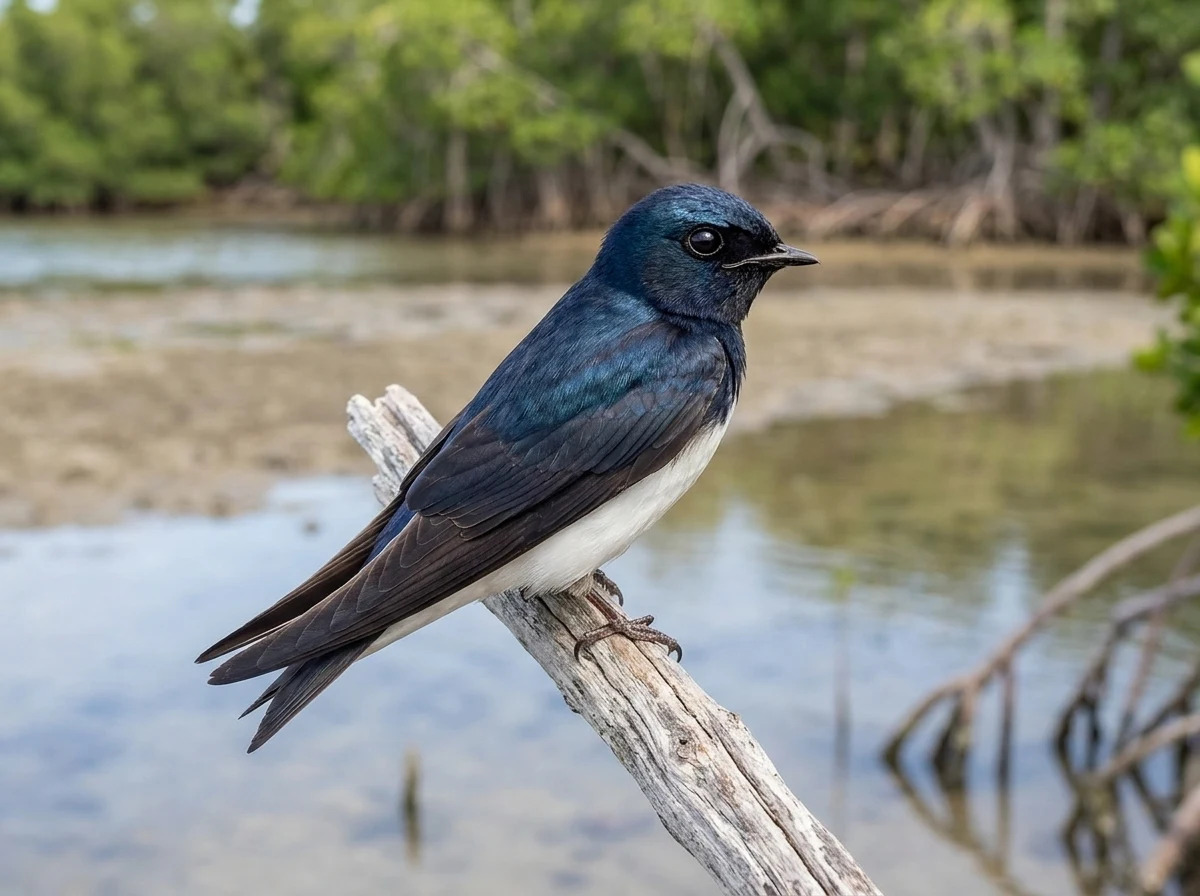
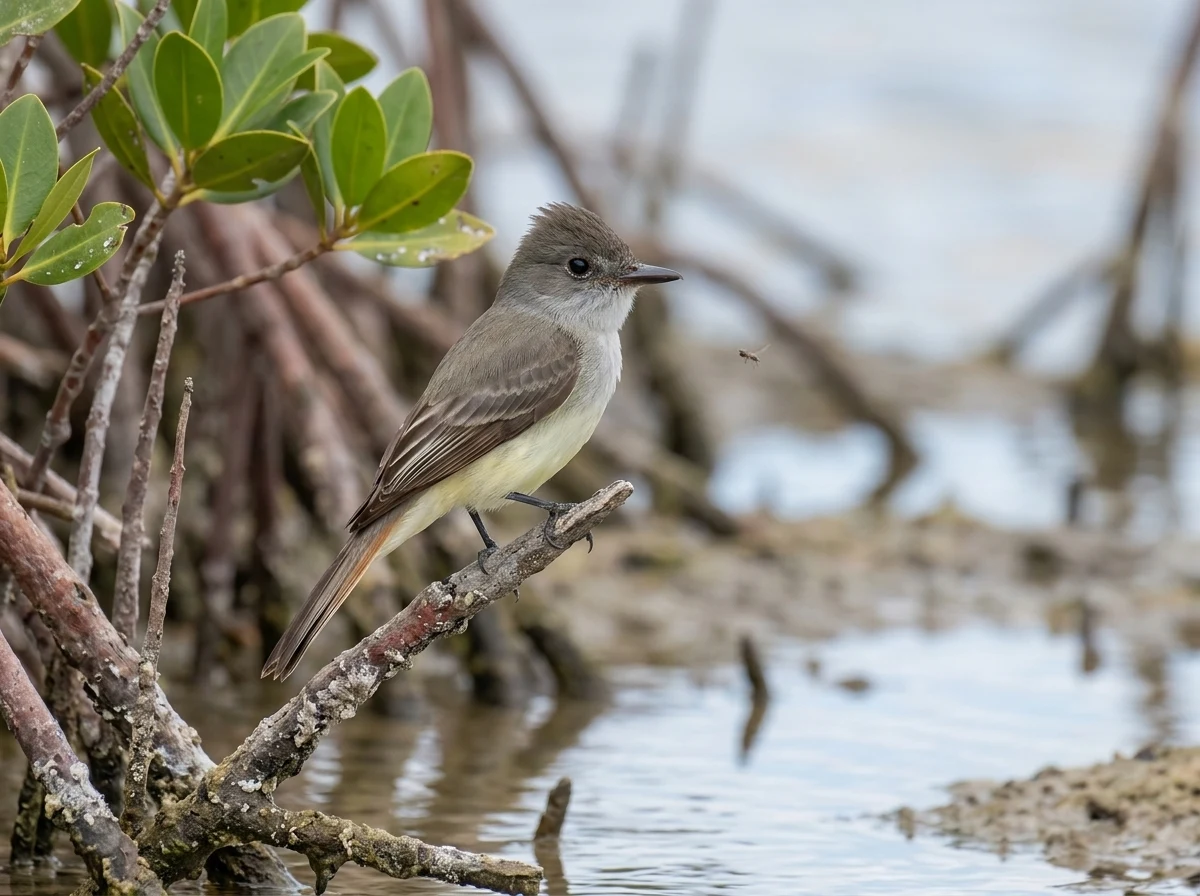
Sound archive
Hear its voice
Explore real songs and calls. The spectrogram turns each sound into a visual trace of time and frequency.
XC737109Recording 1 of 3call

Play: call by David Vander Pluym
Choose another recording
Sound recorded by David Vander Pluym · XC737109 · CC BY-NC-SA 4.0. Visualization by Stichting Xeno-canto voor Natuurgeluiden.
Every recording retains the creator, catalogue number, and license published by Xeno-canto. Metadata via GBIF ↗
01
Are there woodpeckers in Puerto Rico?
Yes. The Puerto Rican Woodpecker (Melanerpes portoricensis) is the only resident woodpecker and is endemic to the archipelago, living on the main island and Vieques. Yellow-bellied Sapsucker sometimes visits in winter, and Hairy Woodpecker is accidental.
02
Is the Puerto Rican Woodpecker endemic?
Yes. It exists only on Puerto Rico and Vieques and is one of the most common and easiest endemics to see: the Breeding Bird Atlas found it in 81 percent of surveyed hexagons.
03
What does the Puerto Rican Woodpecker eat?
It is omnivorous, eating a wide range of insects and other arthropods it digs from wood, plus fruit. That mixed diet lets it live in forests, coffee farms, mangroves, and city parks.
04
Where can I see the Puerto Rican Woodpecker?
Almost anywhere with trees: hill and lowland forest, mangroves, shade coffee, palm groves, parks, and yards from the coast to the mountains. Early in the morning, listen for its "pik!" call and look for a red-breasted bird on trunks and palms.
05
Is the Puerto Rican Woodpecker endangered?
No. Its population is stable, the IUCN rates it Least Concern, and it is not on DNER or federal threatened species lists. It still needs large trees and dead wood to nest.
06
What does the Puerto Rican Woodpecker sound like?
Its most common call is a loud, emphatic "pik!" that it repeats, sometimes in accelerating series. It also drums, but softly. Its profile has field recordings you can play.
Keep exploring
Connected routes
Sources and review
The evidence is one link away.
These sources support the editorial scope of this guide. Bird profiles also retain their own taxonomy, occurrence, and conservation references.
Reviewed:
01↗02↗03↗04↗05↗06↗07↗
U.S. Forest Service Research and Development
Puerto Rico Breeding Bird Atlas
Distribution and breeding timing for 130 species breeding in Puerto Rico and its satellite islands.Birds of the World / Cornell Lab of Ornithology
Puerto Rican Woodpecker
Range on Puerto Rico and Vieques, omnivorous diet, and shared care of young.BirdsCaribbean
Puerto Rican Woodpecker education sheet
Red throat and breast, black back, white forehead, and fruit in the diet.Birding PR
Puerto Rican Woodpecker field notes
Its 'pik' call, soft drumming, small groups, and the Yellow-bellied Sapsucker as a winter visitor.National Audubon Society
Yellow-bellied Sapsucker field guide
Red forehead, white wing stripe, rows of sap wells, and wintering in the West Indies.Sociedad Ornitológica Puertorriqueña
Official bird list
Local names, occurrence categories, and the public summary of 17 endemics.U.S. Forest Service Research and Development
Effects of Irma and Maria on birds
Counts before and after the hurricanes in the northeast.The atlas continues