 AI
AIHabitat guide
What Bird Friendly Coffee Certification Means
A clear explanation of the shade, tree-diversity and organic-management criteria behind the Bird Friendly seal, and of what the seal does not guarantee.
Reviewed:Prepared with AI assistance and linked sources. Illustrations are not field photographs.
A label with verifiable criteria
Bird Friendly coffee certification was developed by scientists at the Smithsonian Migratory Bird Center in the late 1990s to conserve habitat and protect migratory songbirds. It is not a marketing label: it is a set of biophysical and management norms a farm must meet to use the name and seal.
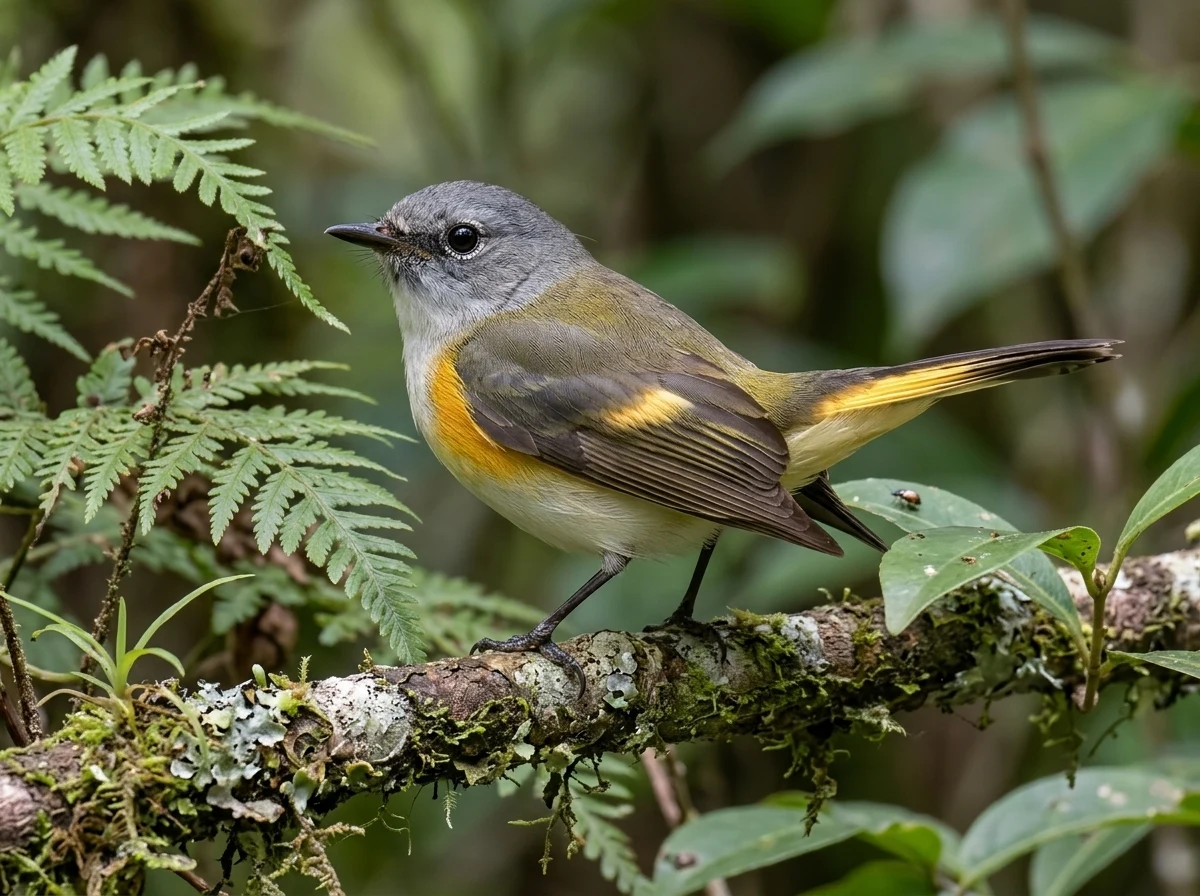
This guide answers one specific question: what that certification actually means. To do so, we separate three things that are often confused: what the standard requires, what research has observed on shade coffee farms, and what the Puerto Rico bird catalog records for species such as the American Redstart and Black-throated Blue Warbler.
Habitat guide
Three keys to the certification
40%Minimum canopy coverThe standard requires at least 40 percent cover, even after pruning.
12 mMinimum main canopy heightThe main canopy must reach at least 12 meters in height.
100%Organic requiredOrganic certification is a prerequisite for Bird Friendly.
01
What the standard actually requires
The certification starts with a prerequisite: the farm must hold organic certification. On that basis, the standard requires at least 40 percent canopy cover, even after pruning, and enough tree foliage year-round to create a microclimate that protects the coffee soil from rain, wind and sun.
The canopy cannot be uniform. It must have clearly visible strata: a lower stratum below the main canopy and an upper stratum made of trees at least 15 meters tall, composed of native species. The main canopy, usually of backbone species, must be a minimum of 12 meters high. The predominant species may occupy no more than 60 percent of shade trees; the remaining 40 percent must include at least 10 different species, each making up at least 1 percent of the total. Vegetational buffer zones must also be maintained next to rivers, streams and lakes, and living fences or border strips along roads and other edges.
02
Why those criteria matter for birds
The Smithsonian Migratory Bird Center states that Bird Friendly does more than any other certification to conserve habitat for birds. Bird Friendly habitat ensures a mix of foliage cover, tree height and biodiversity that creates quality habitat for birds and other wildlife. The certification also prohibits harmful pesticides, because Bird Friendly farms are 100 percent certified organic.
The context is serious: according to the Smithsonian, bird populations in the United States and Canada have declined by almost 30 percent, a loss of 3 billion birds, since 1970, with habitat loss as a driving force. In addition, 75 percent of the world's coffee is farmed with practices that leave no place for birds or that actively destroy forest habitat. When forests disappear, migratory songbirds disappear too.
03
What has been observed on shade coffee farms
A study published in the Journal of Caribbean Ornithology examined sexual segregation of migratory warblers along a shade gradient on Jamaican coffee farms. The authors found that the proportion of males among all wintering warbler species was positively correlated with percent canopy cover. Male proportions of American Redstart (Setophaga ruticilla), Black-throated Blue Warbler (S. caerulescens) and Prairie Warbler (S. discolor) showed positive correlations with canopy cover, though small sample sizes limited statistical power.
The authors note that their results are not strong: the small number of sites limited statistical power, and the small number of individuals of some species reduced precision. Nevertheless, they conclude that the observed patterns are consistent with the hypothesis that shade coffee provides better wintering habitat than sun coffee, and that the proportion of males could serve as an index of habitat quality, pending more controlled studies.
04
How it compares with other labels
Audubon explains that both Rainforest Alliance Certified and Bird Friendly require farmers to maintain or restore some level of canopy cover and prohibit harmful pesticides. However, Audubon describes the Bird Friendly certification, developed by the Smithsonian Migratory Bird Center, as a somewhat more rigorous standard from a conservation perspective, with stricter rules on canopy cover, pesticide use and product purity.
Audubon also notes that certified shade-grown coffees make up only a small part of the global market: around 5.6 percent for Rainforest Alliance and about 1 percent for Bird Friendly. If only organic coffee is available, it is still a better option than conventional coffee, although organic certification alone does not require canopy cover.
05
Practical exercise: reading a label with criteria
Next time you see a coffee package, try this three-step exercise. First, look for the Bird Friendly seal and verify that the farm holds organic certification, because it is a prerequisite. Second, ask whether the coffee is arabica or robusta: Audubon indicates that arabica is more commonly grown under at least partial shade, while robusta is typically grown in more intensively managed systems with little canopy cover. Third, if there is no seal, look for information about the community or farm of origin; Audubon describes 'relationship' coffees as those where small roasters form ties with coffee-growing communities.
This exercise requires no special equipment and no farm visit. It is a way to connect a purchasing decision with verifiable habitat criteria. Remember that the Bird Friendly seal certifies farm management, not the presence of a particular species on a given day. The occurrence of birds such as the American Redstart or Black-throated Blue Warbler in Puerto Rico is documented in the bird catalog, but that is an occurrence record, not a guarantee they will be seen at a specific coffee farm.
Linked profiles
The birds mentioned in the evidence
Two migratory warblers whose occurrence in Puerto Rico is documented in the catalog, and which appear in Caribbean shade coffee research.
AI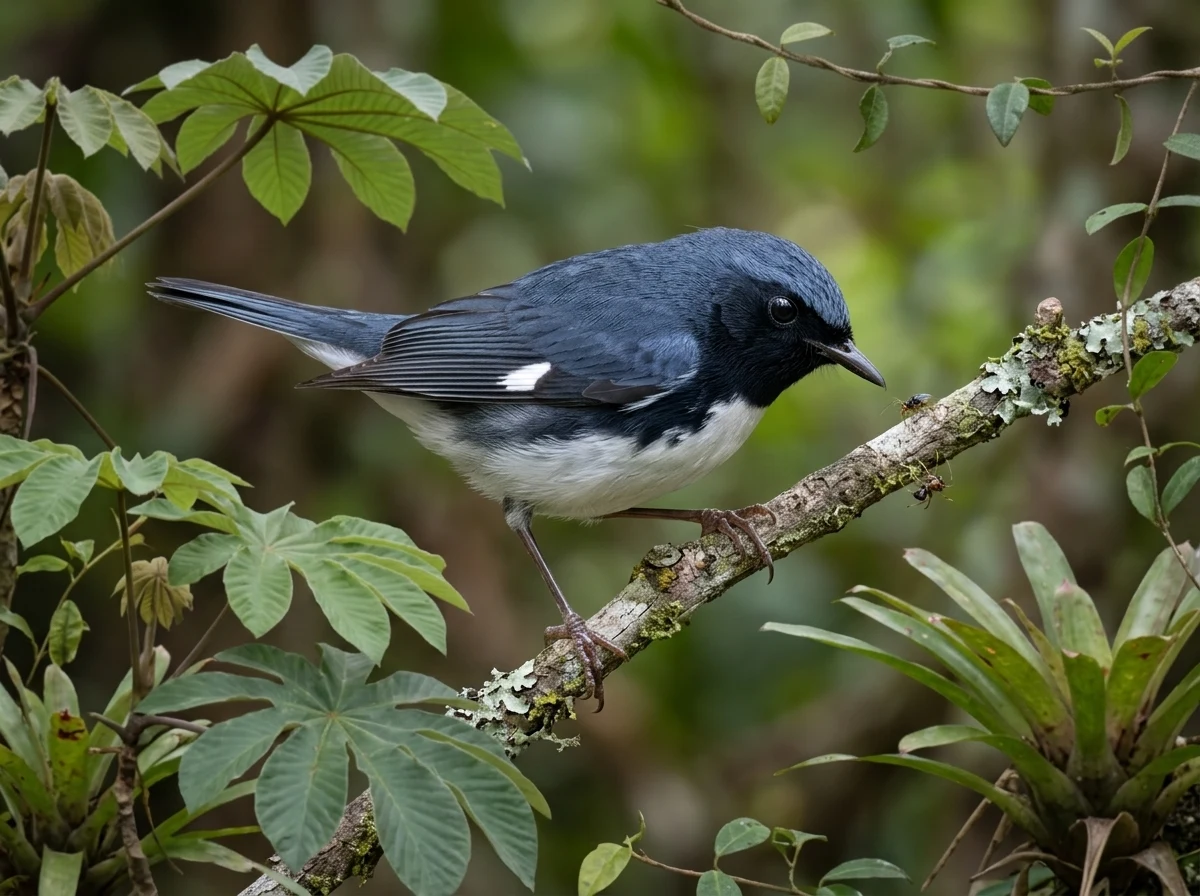 AI
AI01
Is Bird Friendly the same as shade-grown coffee?
Not exactly. Bird Friendly is a specific certification developed by the Smithsonian Migratory Bird Center that requires organic shade-grown coffee and meets detailed biophysical criteria. 'Shade-grown' is a broader term that can be used without verifiable certification.
02
What does it mean that a Bird Friendly farm is 100 percent organic?
It means that organic certification is a prerequisite for Bird Friendly. The standard states that any person or producer group wishing to certify their coffee as Bird Friendly must have organic certification, and that prevailing international organic certification norms govern production, processing and marketing.
03
Does the certification guarantee I will see migratory birds at a coffee farm?
No. The certification verifies farm management and the presence of quality habitat, not the presence of a particular species at a given moment. The Puerto Rico bird catalog records the occurrence of the American Redstart and Black-throated Blue Warbler, but that is an occurrence record, not a guaranteed observation at a specific coffee farm.
04
What did the Jamaican study find about warblers and shade?
The study found that the proportion of males among all wintering warbler species was positively correlated with percent canopy cover. Male proportions of American Redstart, Black-throated Blue Warbler and Prairie Warbler showed positive correlations, though the authors caution that sample size limited statistical power and that the results are not strong.
05
Is Bird Friendly stricter than Rainforest Alliance?
Audubon describes the Bird Friendly certification as a somewhat more rigorous standard from a conservation perspective, with stricter rules on canopy cover, pesticide use and product purity. Both certifications require maintaining or restoring some level of canopy cover and prohibit harmful pesticides.
Keep exploring
Connected routes
Sources and review
The evidence is one link away.
These sources support the editorial scope of this guide. Bird profiles also retain their own taxonomy, occurrence, and conservation references.
Reviewed:
01↗02↗03↗04↗
Smithsonian's National Zoo & Conservation Biology Institute (Smithsonian Migratory Bird Center)
About Bird Friendly Coffee
Evidence for cited sections; consult the original document.Smithsonian Migratory Bird Center, National Zoo
Norms for Production, Processing and Marketing of "Bird Friendly" Coffee
Evidence for cited sections; consult the original document.National Audubon Society
How to Choose a Bird-Friendly Coffee
Evidence for cited sections; consult the original document.Journal of Caribbean Ornithology (BirdsCaribbean)
Sexual habitat segregation in migrant warblers along a shade coffee gradient
Evidence for cited sections; consult the original document.The atlas continues