 AI
AIBehavior
Why Birds Sunbathe with Open Wings
A bird with wings spread in the sun is not posing: it is warming up, drying off, or fighting parasites. Here is what the science says and how to observe it.
Reviewed:Prepared with AI assistance and linked sources. Illustrations are not field photographs.
The Sun as a Tool
Seeing a bird with wings spread under the sun may look odd, but it is a documented behavior in more than 50 bird families, from raptors to swallows and doves. Ornithologists call it sunbathing or sunning. It is not an accident or a pose: it is a maintenance behavior that serves several functions at once.
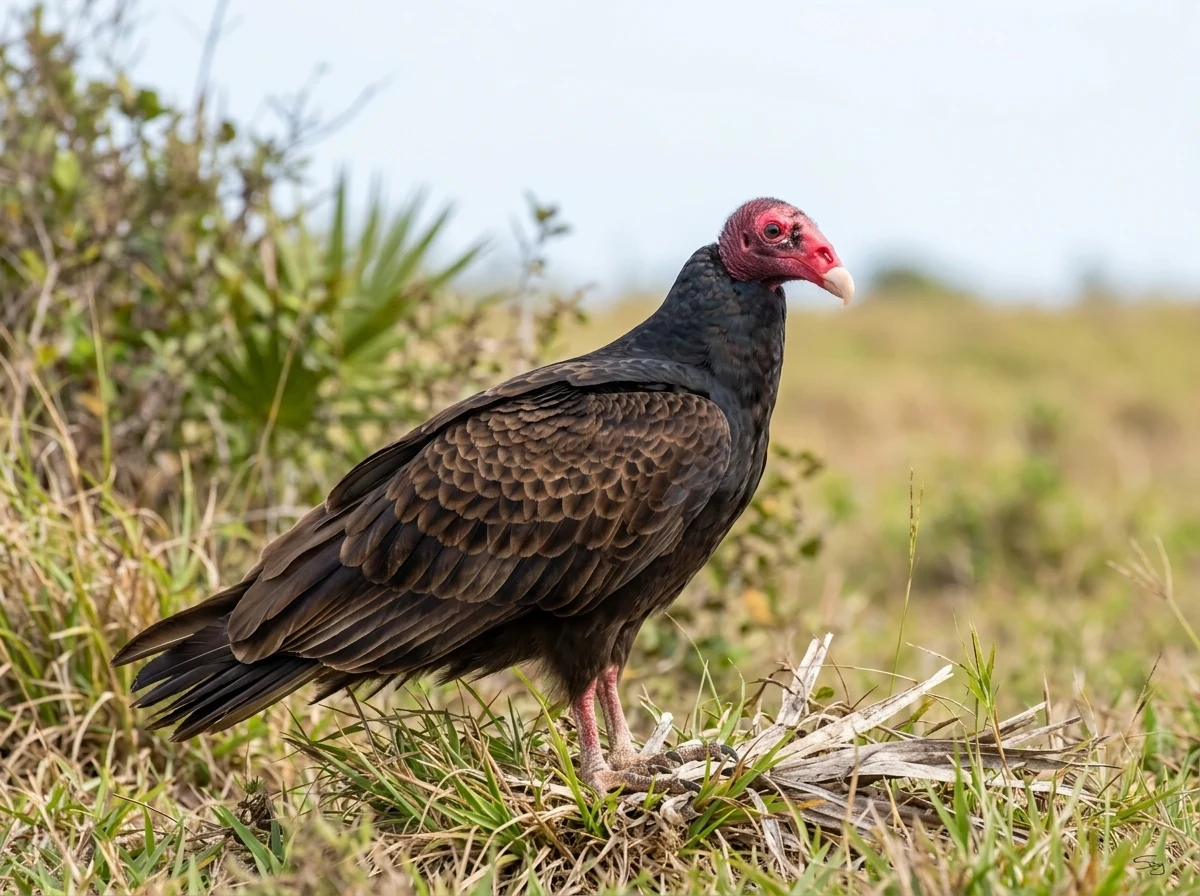
In Puerto Rico, the Turkey Vulture (Cathartes aura) is a familiar example. The catalog records it as introduced on the island. Understanding why birds sunbathe helps us interpret what we see and distinguish sunbathing from other behaviors.
Behavior
Three Key Points
Más de 50bird familiesSunbathing has been documented in more than 50 families.
9 %of time on maintenanceBirds spend about 9% of their time on maintenance behaviors, including sunbathing.
140–160 °Ftemperatures that can kill liceIn experiments with Black Noddy feathers on model wings, the sun heated feathers to 140–160 °F; lice died in most trials, but not all.
01
Warmth and Drying: The Most Direct Reasons
On cold mornings, birds like the Turkey Vulture may perch and spread their wings so the first rays of sun chase away the night's chill. This use of the sun as a heat source is one of the most accepted and easily observed explanations. It also happens after rain or dew: many birds expose themselves to the sun to dry wet plumage, sometimes in groups.
These practical functions do not require a complicated explanation. If you see a bird with wings spread on a cool morning or after rain, it is likely regulating its temperature or drying off. Sunbathing is not exclusive to warm climates; it has been observed in various conditions and times of day.
02
Parasite Control: The Hypothesis with the Most Evidence
One of the best-supported explanations is that sunbathing helps control ectoparasites, such as feather lice. In 1993, researchers sprayed swallows with pesticide and found they spent less time sunning than untreated birds, suggesting the behavior responds to parasite load. Later studies with Black Noddy feathers on model wings and lice showed that direct sunlight can heat feathers to 140–160 °F in about 10 minutes; in those trials lice died in most cases, but not all.
A 2020 study of Hooded Vultures in Guinea-Bissau found that after three minutes of sun exposure at 140 °F, about 84% of lice died; survivors perished only at 158 °F. Heat may also drive lice out of hiding, making them easier to preen. However, not all birds respond the same way: an experiment with Mourning Doves found no evidence that sunlight increased preening frequency or effectiveness. This suggests sunbathing has multiple functions and its effect on parasites varies by species and conditions.
03
The Turkey Vulture: A Case to Observe in Puerto Rico
The Turkey Vulture (Cathartes aura) is a scavenger widely distributed across the Americas. In Puerto Rico, the catalog records it as introduced, not as a native resident. Although it is not endemic or a regular migrant, it can be seen soaring or perched in open and semi-open areas. Its dark plumage and large wingspan make it easy to recognize in flight.
The Turkey Vulture is a classic example of a bird that warms up in the sun. On cold mornings, it may perch with wings spread to absorb heat before taking flight. This behavior is not exclusive to the species, but its size and posture make it visible. Observing it offers a chance to connect sunbathing theory with a species found on the island.
04
How to Observe Without Misinterpreting
To study sunbathing, choose a spot with good visibility and sit at a distance. Use binoculars to avoid disturbing the bird. Record the time, weather (approximate temperature, direct sun or clouds), and describe the posture: wings spread, tail open, bill open? Note whether the bird is on the ground or perched, and if other birds are doing the same. Avoid conclusions about species or abundance based on a single observation.
A useful checklist for your notebook: 1) date and time; 2) sky conditions and perceived temperature; 3) species (if known) or description; 4) exact posture; 5) approximate duration; 6) behavior before and after. This practice will help you distinguish sunbathing from other behaviors like preening or resting. Remember that not all birds with open wings are sunbathing; some do it for balance, display, or shading.
Linked profiles
Bird Mentioned
The Turkey Vulture is an example of a bird that warms up in the sun. In Puerto Rico, the catalog records it as introduced.
AI01
Do all birds sunbathe?
Not all, but it has been documented in more than 50 families. Each species may do it at different times and for different reasons.
02
Does sunbathing kill parasites?
Experimental evidence suggests that solar heat can kill feather lice, but the effect varies by species and conditions. It is not the only purpose of the behavior.
03
Why do they open their wings instead of just perching in the sun?
By spreading their wings, they increase the surface exposed to the sun, which helps absorb heat and dry plumage. It may also expose parasites hiding among the feathers.
04
Is the Turkey Vulture native to Puerto Rico?
According to the catalog, it is recorded as introduced in Puerto Rico, not as a native resident. Its presence on the island should not be confused with endemic species.
Keep exploring
Connected routes
Sources and review
The evidence is one link away.
These sources support the editorial scope of this guide. Bird profiles also retain their own taxonomy, occurrence, and conservation references.
Reviewed:
01↗02↗
Audubon Magazine
Hot, Bothered, and Parasite-free: Why Birds Sun Themselves
Evidence for cited sections; consult the original document.Journal of Avian Biology / PMC (NIH)
Does sunlight enhance the effectiveness of avian preening for ectoparasite control?
Evidence for cited sections; consult the original document.The atlas continues