 AI
AILook up
Birds Circling in the Sky in Puerto Rico: A Silhouette Guide
Circling birds are not waiting for something to die; they are riding warm air. Their silhouettes tell you who is who.
Reviewed:Five silhouettes solve almost every case.
The large birds circling over Puerto Rico are usually the Turkey Vulture (wings in a wobbling V), the Red-tailed Hawk (broad wings and rusty tail), or, near the coast, the Magnificent Frigatebird (angular wings and forked tail). They circle to climb on thermals, columns of warm air, and gain height without spending energy.
Identifying them is a silhouette exercise: against the light, color disappears, but wing shape, tail length, head size, and gliding style remain. This guide gives you five main profiles and a few rarities, with what to look for in each.
One tip before you start: watch the bird through several full turns. In a single instant most look alike; over 15 seconds each reveals its style.
Look up
Wingspans to compare
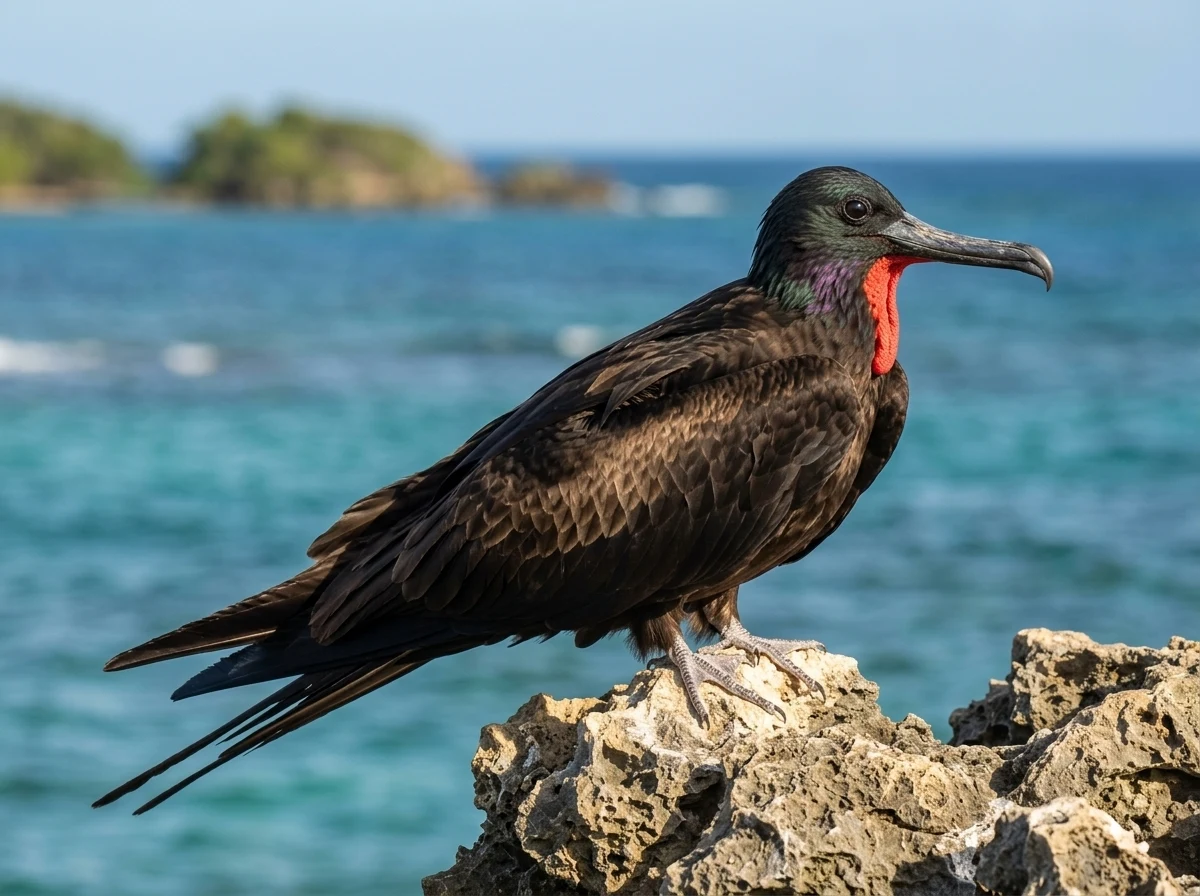
2,3–2,4 mFrigatebird (female)The largest soaring bird you will see from shore.
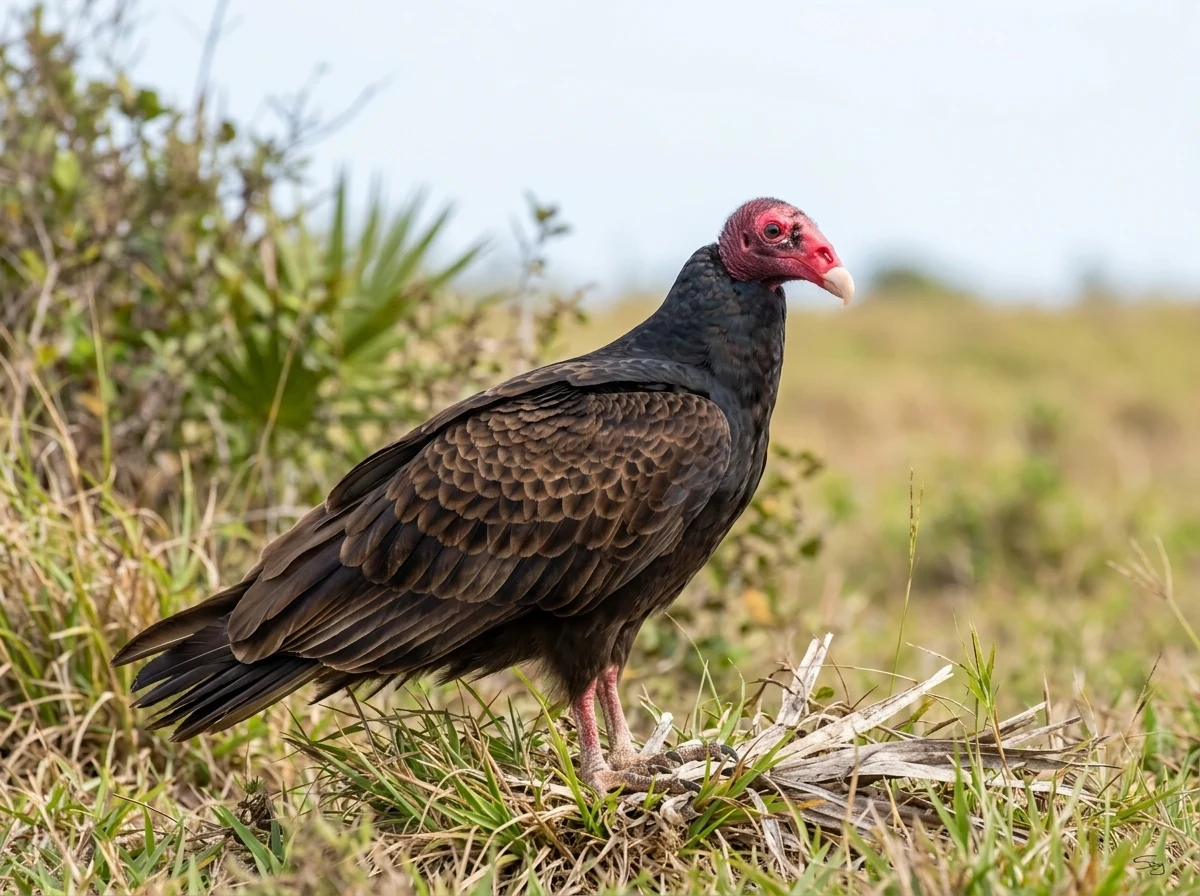
1,7–1,8 mTurkey VultureAbout six feet, wings in a V.
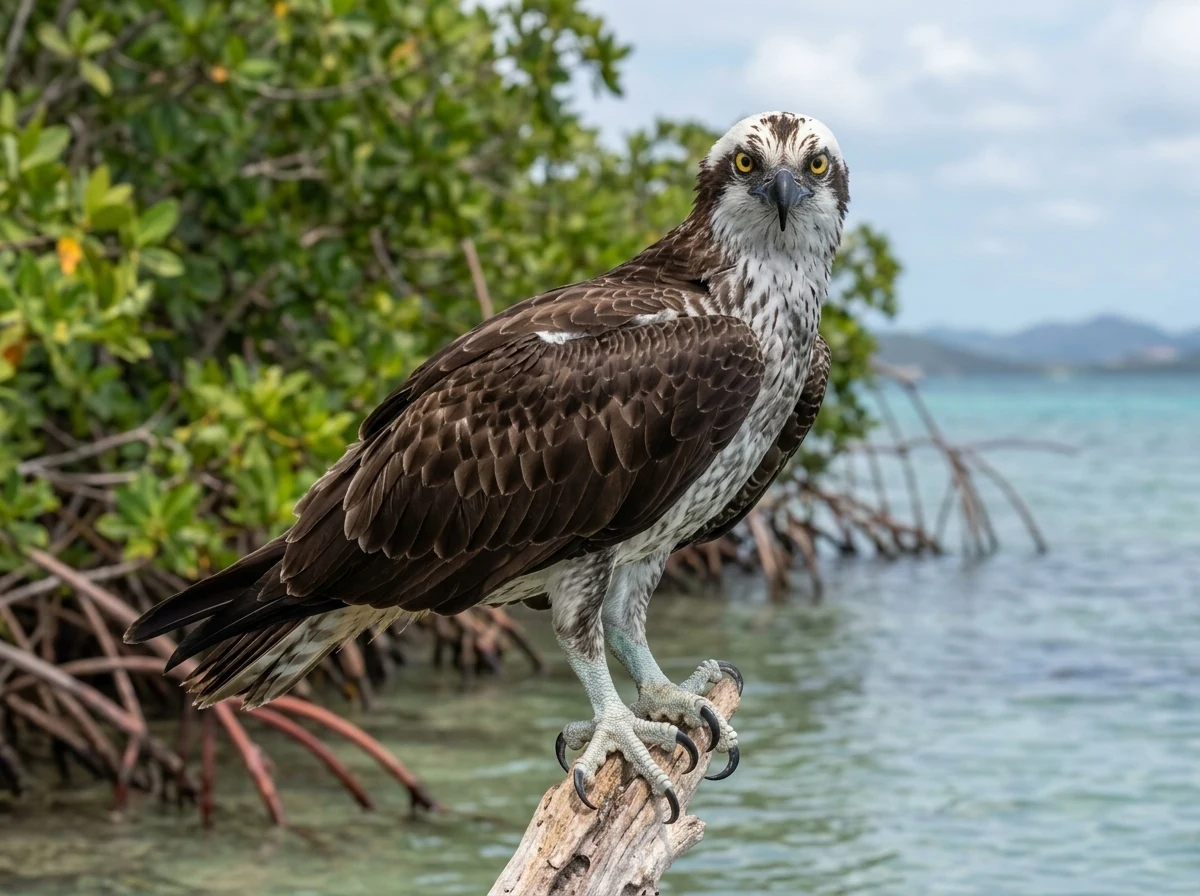
1,5–1,8 mOspreyFive to six feet, wings crooked in an M.
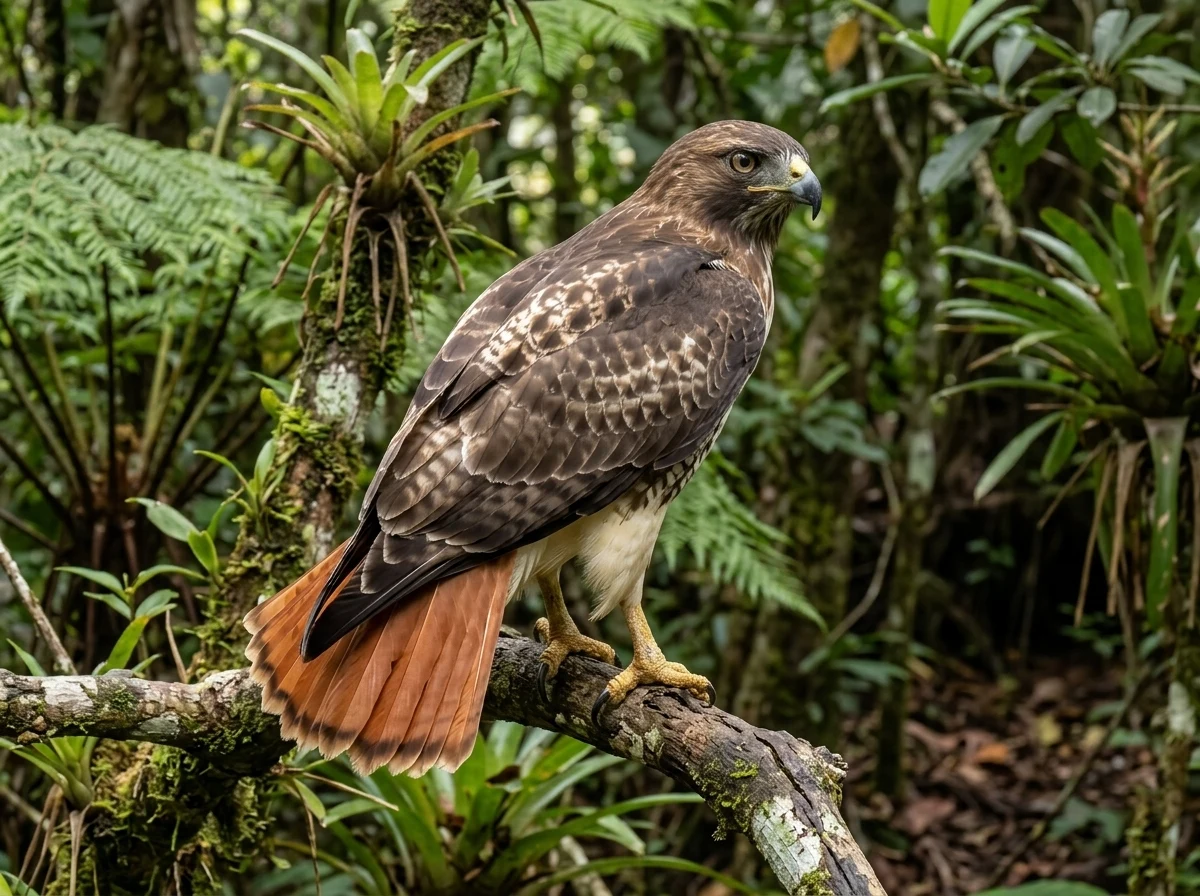
~1,2 mRed-tailed Hawk45 to 52 inches, broad rounded wings.
01
Why birds fly in circles
When the sun heats the ground, air rises in columns called thermals. Broad-winged birds circle inside those columns to gain height with almost no flapping, then glide to the next one. That is why circling birds appear in mid-morning and midday and are scarcer early or in rain.
The Turkey Vulture uses thermals to travel with almost no flapping, and when rising air is weak it is common to see it perched, sometimes with wings spread to the sun. Circling birds do not necessarily mean something has died; often they are simply traveling or scanning for food from above, over roads, pastures, and hills. The Magnificent Frigatebird is the extreme case: it rarely flaps at all and rides rising air over the coast for long stretches. Whatever the species, write down three details as you watch (wing posture, tail shape, and whether the bird flaps), because together they let you or a reviewer confirm the identification later.
02
Turkey Vulture: the wobbling V
This is the bird that circles most over the southwest and south-central regions. Look for wings raised in a shallow V, constant side-to-side wobble, a tiny head, a long tail, and a two-toned underwing: black in front and silvery gray behind. It almost never flaps while circling.
It often travels in loose groups sharing the same thermal and sometimes drops very low over roads. If the group has several dark birds rocking in the air and you are between Ponce and Cabo Rojo, they are most likely Turkey Vultures. Up close, the red head confirms it.
03
Red-tailed Hawk and Broad-winged Hawk
The Red-tailed Hawk is the island's most widespread large raptor. It circles steadily on broad, rounded wings, with a visible feathered head and, in adults, a rusty tail that flashes as it turns. You often hear it before you see it: a hoarse, descending keeeeer.
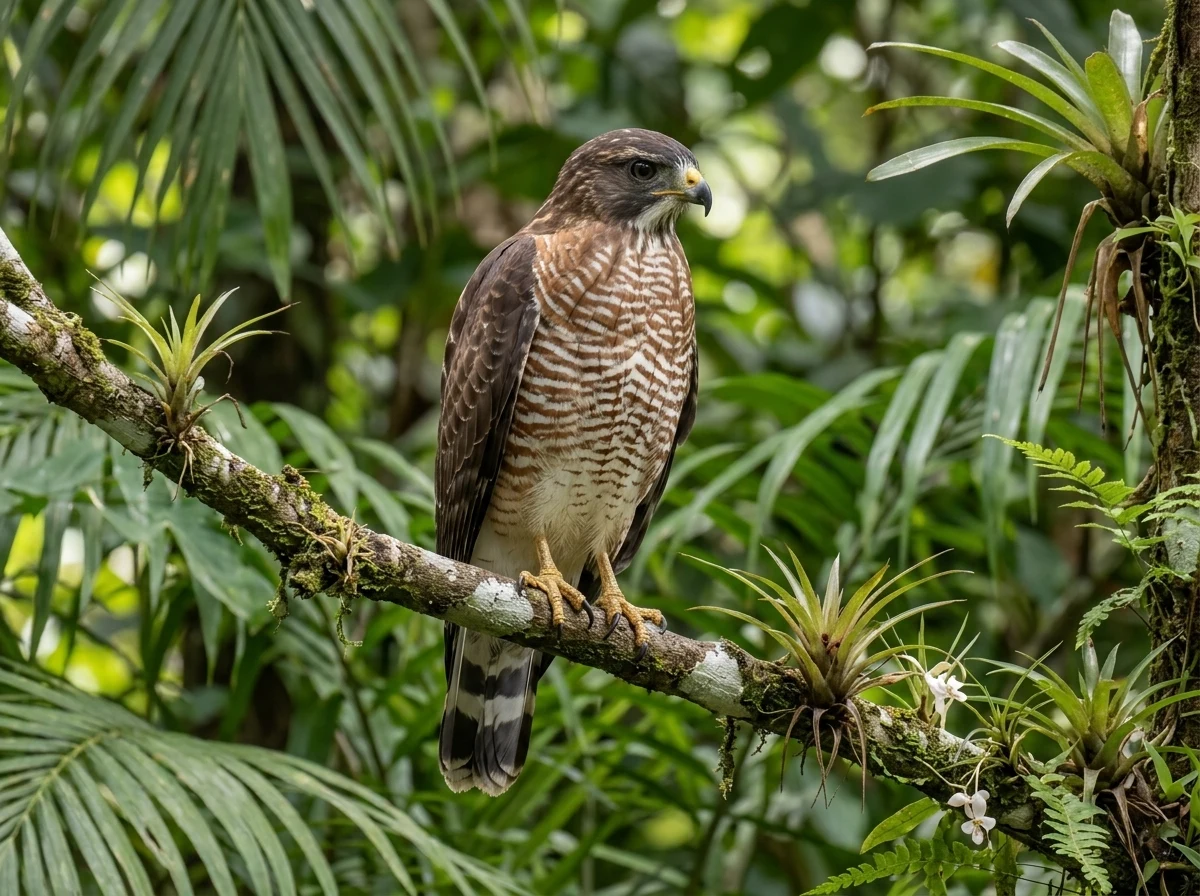
The Broad-winged Hawk is much smaller, about crow-sized, with broad dark tail bands and a thin, high whistle. It lives in montane wet forest and is critically endangered, so a small hawk circling over a coastal plain is probably not this species.
04
Frigatebird and Osprey: the ones circling over water
The Magnificent Frigatebird is the largest soaring bird on the coast, with females spanning 2.3–2.4 m. It has long, narrow, angular wings and a long, pointed, forked tail that inspired its local name, tijereta (little scissors). It soars with almost no flapping, never swims, and steals food from other birds. Puerto Rico's DNER lists it as vulnerable.
The Osprey bends its wings at the wrist into an M shape; at a distance it resembles a large gull. It has white underparts, dark wrist patches, and a black stripe through the face. It flies low over water, hovers when it spots a fish, and plunges feet-first.
05
The rarities: Black Vulture and Swallow-tailed Kite
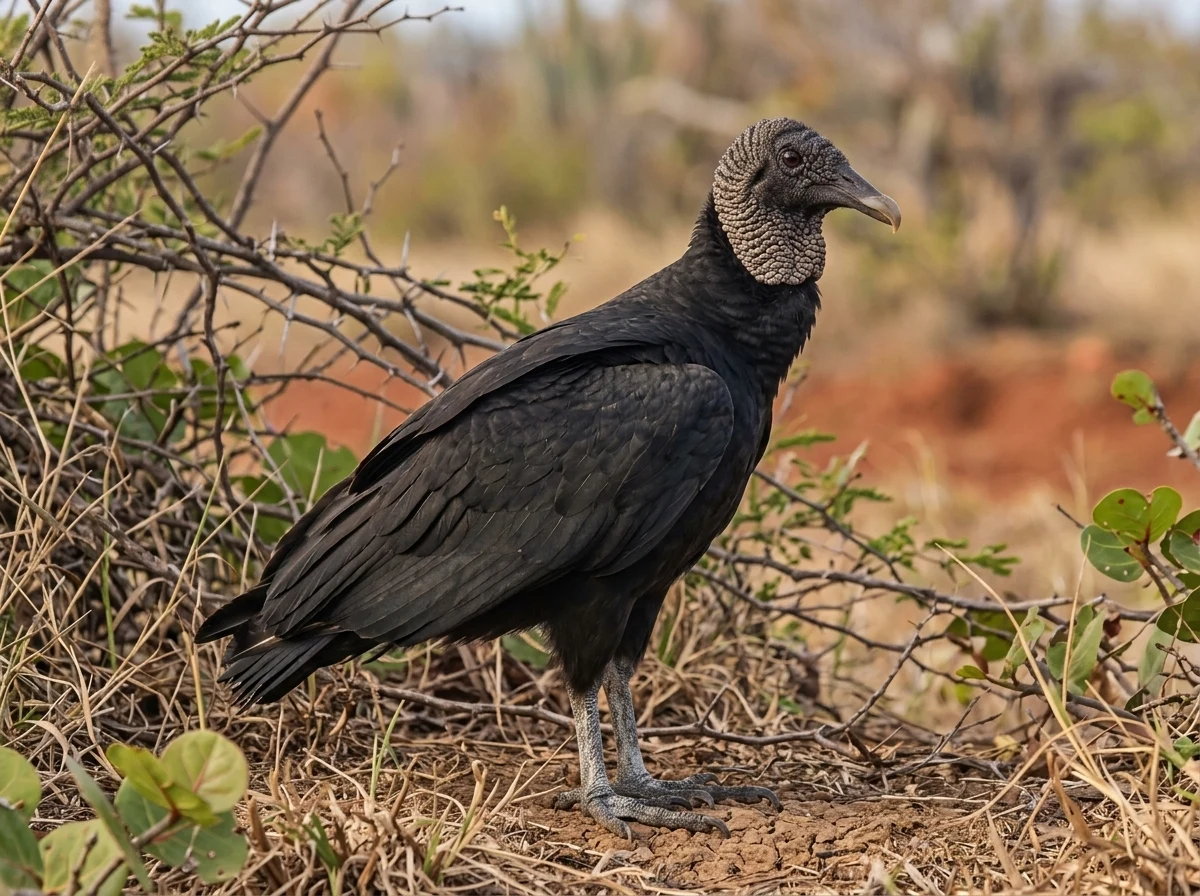
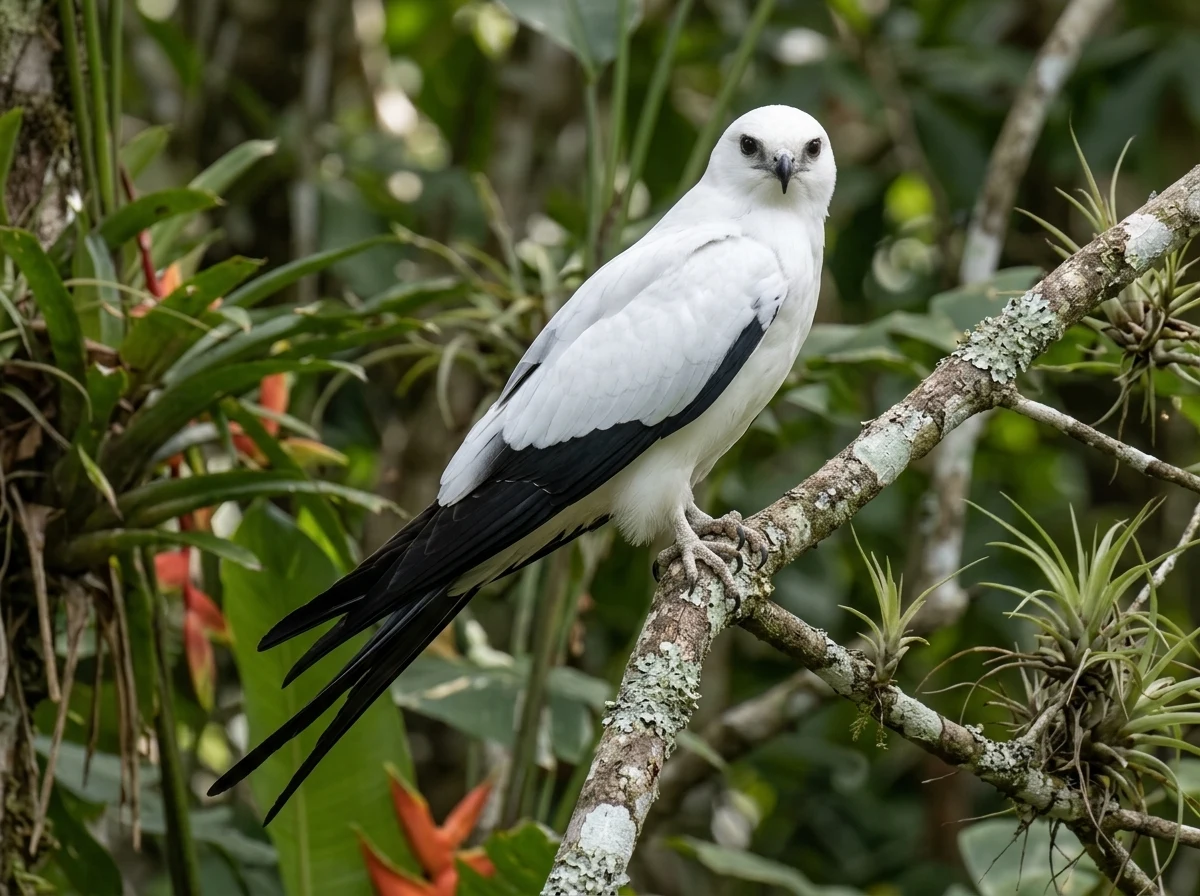
Two silhouettes are possible but exceptional in Puerto Rico. The accidental Black Vulture has a short tail, flat wings, and whitish wingtips, and alternates quick flaps with glides. The Swallow-tailed Kite, known elsewhere in Spanish as gavilán tijerilla or halcón tijereta, is also accidental: white below, black above, with a long, deeply forked black tail.
The kite measures 56–61 cm long and spans about 1.3 m; it catches insects in midair with acrobatic flight. Do not confuse it with the Magnificent Frigatebird, which is all dark (apart from the white chest of females and white head of juveniles) and tied to the sea. Any of these rarities deserves photos and an eBird report.
Linked profiles
Seven silhouettes of the Puerto Rico sky
From most common to rarest: open each profile to compare photos and status.
Sound archive
Hear its voice
Explore real songs and calls. The spectrogram turns each sound into a visual trace of time and frequency.
XC998695Recording 1 of 3flight call

Play: flight call by GABRIEL LEITE
Choose another recording
Sound recorded by GABRIEL LEITE · XC998695 · CC BY-NC-SA 4.0. Visualization by Stichting Xeno-canto voor Natuurgeluiden.
Every recording retains the creator, catalogue number, and license published by Xeno-canto. Metadata via GBIF ↗
01
What bird flies in circles in the sky in Puerto Rico?
Usually a Turkey Vulture, a Red-tailed Hawk, or, near the coast, a Magnificent Frigatebird. The vulture holds its wings in a wobbling V; the hawk has broad wings and a rusty tail; the frigatebird has angular wings and a forked tail.
02
Why do vultures circle in the sky?
They circle inside thermals, columns of warm air, to gain height without flapping. From above they search for food by sight and smell. Circling does not necessarily mean there is a dead animal below.
03
What is a gavilán tijereta?
It most likely refers to the Swallow-tailed Kite (Elanoides forficatus), also called gavilán tijerilla or halcón tijereta, a black-and-white raptor with a long, deeply forked tail. In Puerto Rico it is accidental. It should not be confused with the tijereta, the dark Magnificent Frigatebird.
04
What is the largest soaring bird in Puerto Rico?
Among common species, the Magnificent Frigatebird, whose females span 2.3–2.4 m. Next come the Turkey Vulture at about 1.7–1.8 m and the Osprey at 1.5–1.8 m. The Red-tailed Hawk spans about 1.2 m.
05
What time of day are soaring birds easiest to see?
Mid-morning to midday, once the sun has warmed the ground and thermals form. Before thermals form, Turkey Vultures are more often seen perched. In rain or heavy cloud, fewer birds circle.
Keep exploring
Connected routes
Sources and review
The evidence is one link away.
These sources support the editorial scope of this guide. Bird profiles also retain their own taxonomy, occurrence, and conservation references.
Reviewed:
01↗02↗03↗04↗05↗06↗07↗08↗09↗10↗11↗12↗
National Audubon Society
Field guide: Turkey Vulture
Measurements, two-toned underwing, V-shaped soaring, smell, nesting, and voice (hisses and grunts).National Audubon Society
Field guide: Red-tailed Hawk
Adult reddish tail, barred juvenile tail, measurements, descending scream, and diet.National Audubon Society
Field guide: Magnificent Frigatebird
Wingspan, long angular wings, forked tail, and soaring with almost no flapping.National Audubon Society
Field guide: Osprey
Long wings crooked at the wrist (M shape), white underparts, dark wrist patches, and feet-first fishing dives.National Audubon Society
Field guide: Swallow-tailed Kite
Long forked black tail, black-and-white contrast, measurements, and acrobatic flight.Sociedad Ornitológica Puertorriqueña
Official bird list
Local names, occurrence categories, and the public summary of 17 endemics.Wikipedia
Turkey vulture
Side-to-side tilting flight, detection of ethyl mercaptan, urohidrosis, defensive regurgitation, and longevity.Birds of Puerto Rico
Turkey Vulture (Cathartes aura)
Local distribution (south-central and southwest, especially Ponce to Cabo Rojo), habitat, April–May nesting, and introduction from Cuba in the late 19th century.National Audubon Society
Field guide: Broad-winged Hawk
Crow-sized body, broad tail bands, and thin high whistle.Programa Sea Grant de Puerto Rico
Seabirds of Puerto Rico
Puerto Rico educational publication devoted to the archipelago's seabirds.National Audubon Society
Field guide: Black Vulture
Stocky silhouette, short tail, whitish wingtip patches, and quick flaps with flat-winged glides.Wikipedia (basada en Bird Checklists of the World / Avibase)
List of birds of Puerto Rico
Lists Black Vulture as accidental (A) and Turkey Vulture as introduced (I).The atlas continues