 AI
AIIntroduced scavenger
Turkey Vulture in Puerto Rico: What It Is and How to Recognize It
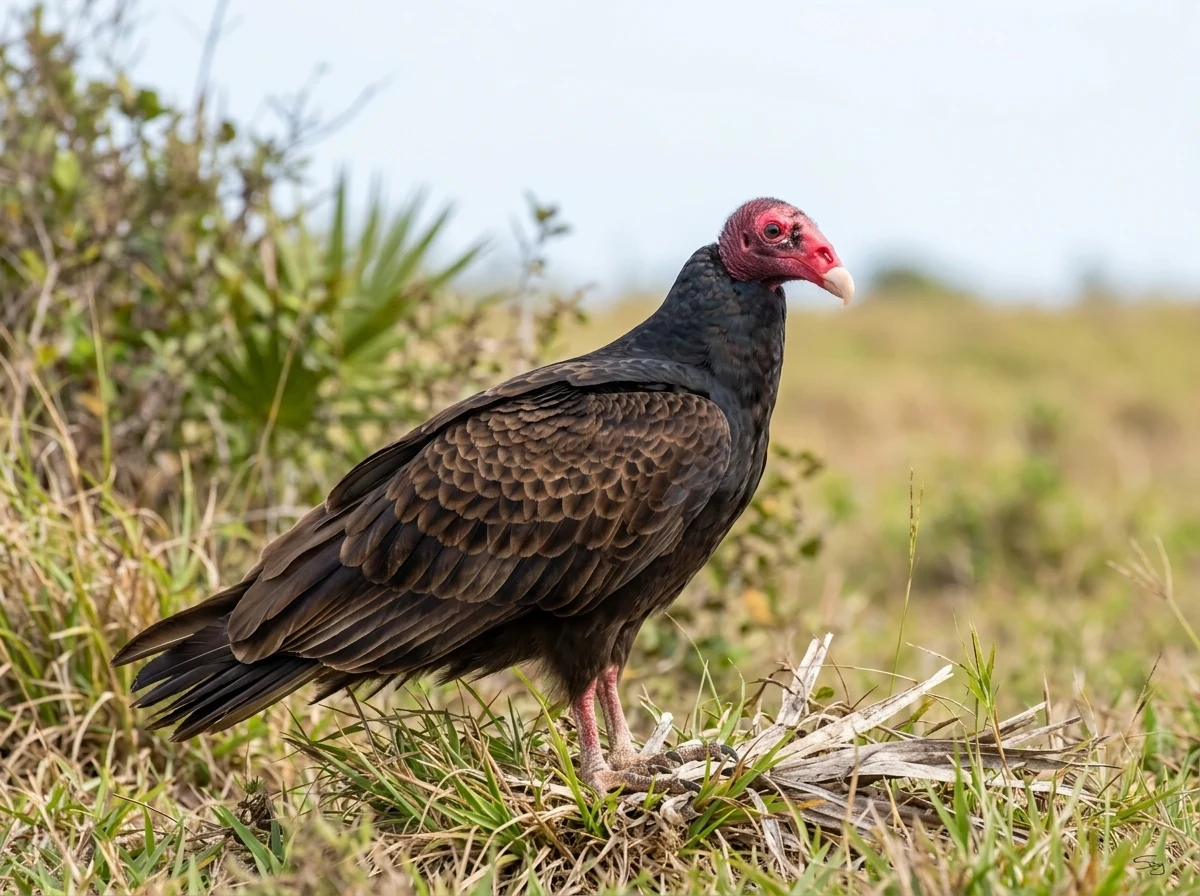
Bare red head, wings in a V, and a teetering glide: the big bird patrolling southern roads and pastures is not a hawk.
Reviewed:A New World vulture that arrived with human help.
The Turkey Vulture (Cathartes aura), called aura tiñosa in Puerto Rico, is a large scavenging vulture with dark brown plumage and a bare red head, and on the island it is an introduced species brought from Cuba in the late 19th century. Today it is most common in the south-central and southwestern regions, especially between Ponce and Cabo Rojo.
It belongs to the family Cathartidae, the New World vultures, which are not closely related to the vultures of Europe, Africa, and Asia even though convergent evolution made them look alike. It is the most widespread vulture in the Americas, from southern Canada to the tip of South America, and it feeds almost exclusively on carrion.
This guide gathers what helps in the field: how to recognize it perched and in flight, where it came from, where you are most likely to see it, how it nests, and what sounds it makes. To separate it from the Red-tailed Hawk or other soaring birds, follow the links at the end.
Introduced scavenger
Turkey Vulture by the numbers
1878official documentAn official notice from that year describes it as recently brought from Cuba and bans hunting it.
170–183 cmwingspanAbout six feet tip to tip; body length is 64 to 81 cm (25–32 in).
0,85–2,26 kgweightLots of wing for little weight, which is why it soars with so few flaps.
1–2eggs per clutchIncubation lasts 36 to 42 days, with no built nest.
01
How to recognize a perched Turkey Vulture
Up close, the Turkey Vulture is unmistakable: a large dark body, a small bare purplish-red head, and a short, hooked, ivory-colored bill. The featherless head is not a disease; it is a scavenger's adaptation that keeps the skin clean when the bird reaches into a carcass.
Juveniles confuse many people because their heads are dark gray, not red. If you see a bird of the same size and shape with a grayish head next to red-headed adults, it is most likely a young Turkey Vulture rather than another species. They often perch on dead trees, utility poles, or cliffs and spread their wings to the sun, a posture that helps dry the feathers and warm the body.
02
The key mark: wings in a V and a teetering flight
In the air, the Turkey Vulture holds its wings raised in a shallow V (a dihedral) and tips from side to side as if struggling to keep its balance. It barely flaps, using rising warm air (thermals) to climb and travel. When it does flap, especially on takeoff from the ground, the wingbeats are deep and labored.
From below, the wing looks two-toned: black wing linings against gray flight feathers that can look silvery in backlight. Add a long tail and a tiny head that barely projects. That mix of V-shape, teetering, and two-toned underwing separates it from nearly every Puerto Rico raptor at hundreds of meters.
03
From Cuba to Puerto Rico: the story of an introduction
For years people debated whether the Turkey Vulture was native. In 1998, Eugenio Santiago-Valentín published in the Caribbean Journal of Science an official document from 1878 that describes the species as recently introduced from Cuba and prohibits hunting it. The accepted reading is that it was brought for sanitary reasons, as a carrion cleaner.
That is why Puerto Rico bird lists classify it as introduced rather than native. Being introduced does not make it invasive in the harmful sense that applies to some species; it simply explains why its distribution on the island is uneven and why it is absent from older records. Today it is established and breeds on the island.
04
Where to see Turkey Vultures in Puerto Rico
The Turkey Vulture is most abundant in the south-central and southwestern regions, especially from Ponce to Cabo Rojo, and becomes less common eastward along the south coast. It prefers open country: pastures, coasts, dry forest, farmland, and even landfills. In those areas it is normal to see it gliding low over roads or perched in groups.
To look for it, drive the southwest in mid-morning, when the sun warms the ground and thermals form to carry them. The Cabo Rojo and Laguna Cartagena refuges, and the dry landscape between Guánica and Ponce, are good settings to watch it alongside Red-tailed Hawks and frigatebirds.
05
Nesting, chicks, and sounds
In Puerto Rico the Turkey Vulture nests in April and May, mostly in the subtropical dry forest zone. It builds no nest: it lays one or two eggs directly in caves, cliff crevices, hollow logs, or dense thickets, and both parents feed the chicks by regurgitation for about 10 to 11 weeks. Incubation lasts 36 to 42 days.
If you are looking for the Turkey Vulture's call, the answer is surprising: it does not sing. It lacks a syrinx, the vocal organ of birds, so it only makes hisses and low grunts, usually while feeding or at the nest. What you will hear most is air rushing through its wings. The recordings linked on this page capture those grunts.
Linked profiles
The Turkey Vulture and its lookalikes
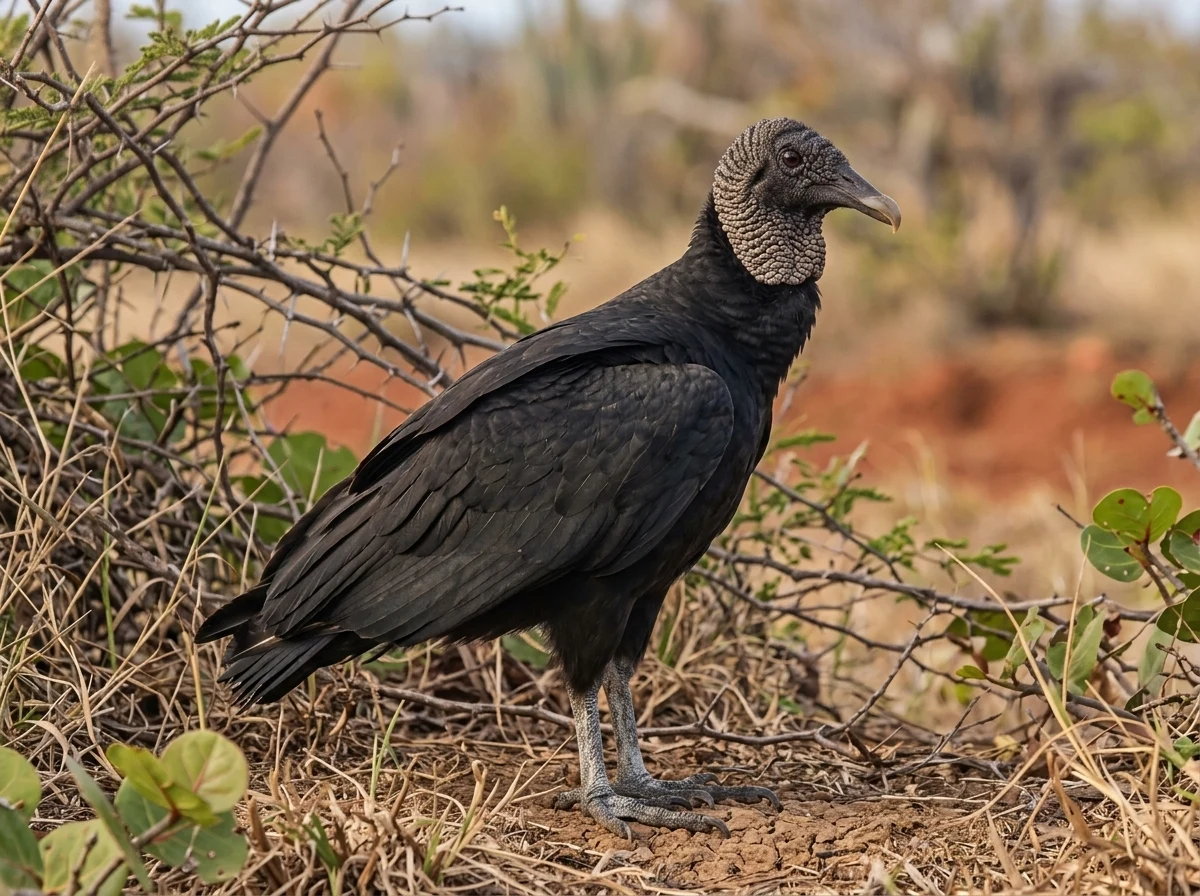
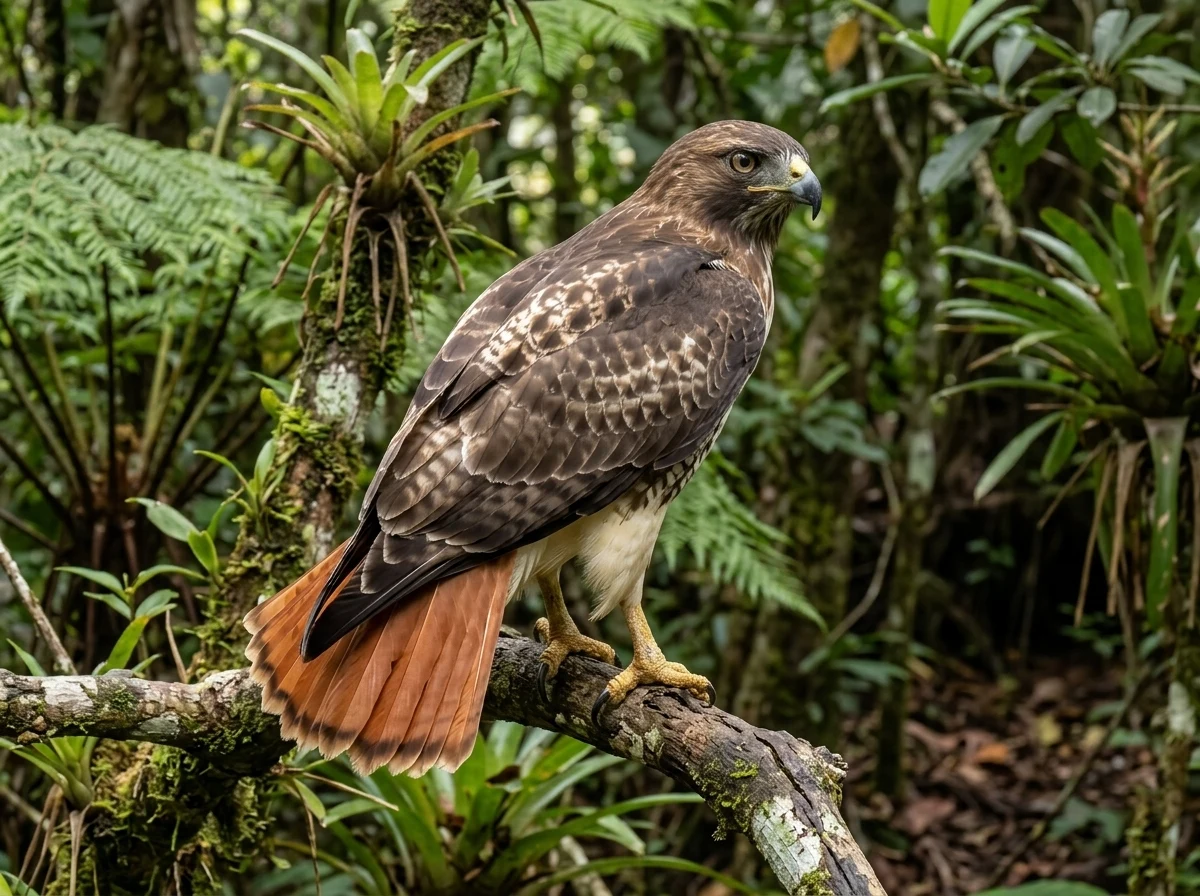
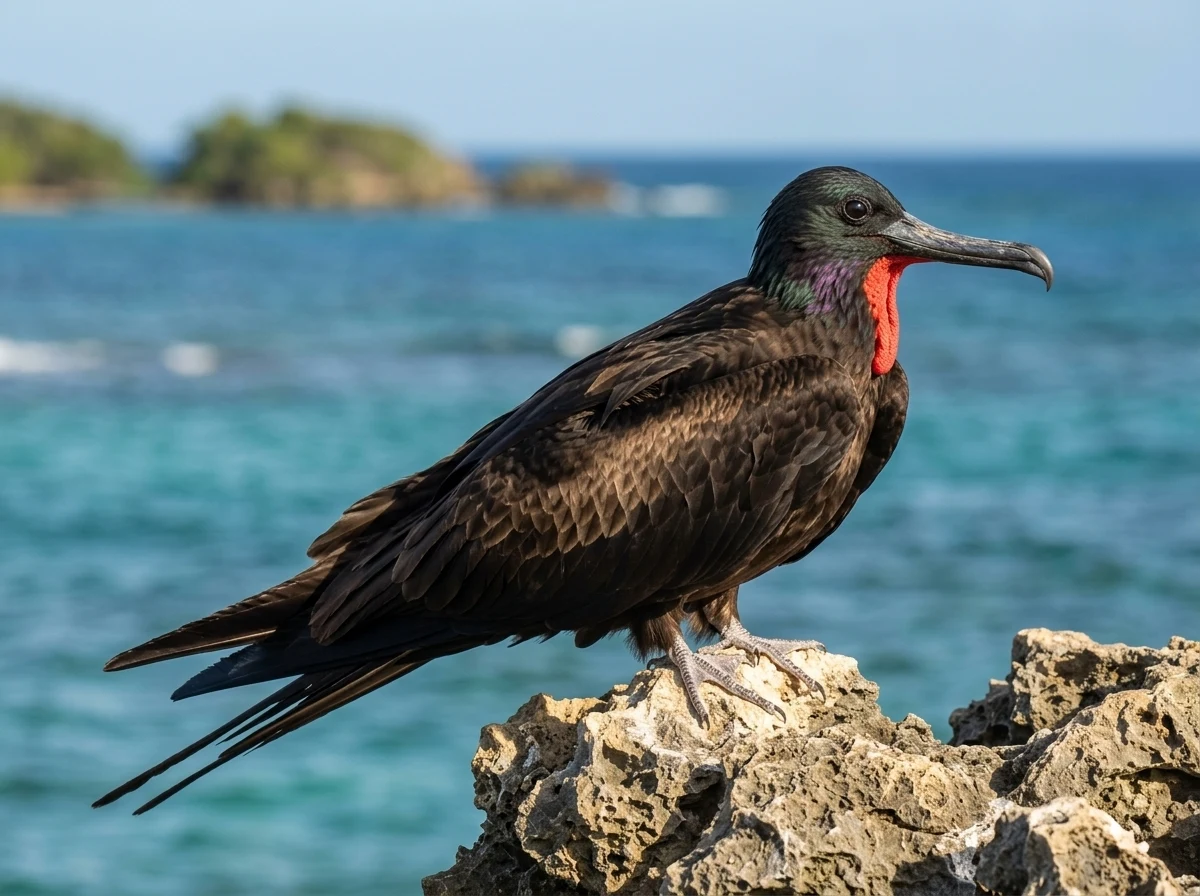
Compare the Turkey Vulture with the accidental Black Vulture and the raptors and seabirds that also soar.
Sound archive
Hear its voice
Explore real songs and calls. The spectrogram turns each sound into a visual trace of time and frequency.
XC989811Recording 1 of 3call

Play: call by Ed Pandolfino
Choose another recording
Sound recorded by Ed Pandolfino · XC989811 · CC BY-NC-SA 4.0. Visualization by Stichting Xeno-canto voor Natuurgeluiden.
Every recording retains the creator, catalogue number, and license published by Xeno-canto. Metadata via GBIF ↗
01
What is an aura tiñosa?
It is the Puerto Rican and Cuban name for the Turkey Vulture (Cathartes aura), a carrion-eating vulture in the family Cathartidae. It measures 64–81 cm long, spans about six feet, and has a bare red head. In Puerto Rico it was introduced from Cuba in the 19th century.
02
Is the Turkey Vulture native to Puerto Rico?
No. An official 1878 document, published by Santiago-Valentín in 1998, describes it as recently brought from Cuba. Island lists therefore classify it as introduced, although it is now established and breeds here.
03
Where are Turkey Vultures found in Puerto Rico?
They are most common in the south-central and southwest, especially from Ponce to Cabo Rojo, and become scarcer to the east. They use pastures, coasts, dry forest, farms, and landfills. Look for them soaring in mid-morning, once thermals form.
04
What sound does a Turkey Vulture make?
Almost none. It lacks a syrinx, the organ birds sing with, so it only hisses and grunts softly, mostly while feeding or at the nest. It is a silent bird compared with the Red-tailed Hawk, which gives a hoarse, descending scream.
05
Why does a young Turkey Vulture have a gray head?
Juveniles have dark gray head skin that turns red as they mature. A gray-headed bird among red-headed adults is therefore not another species. The Black Vulture also has a dark gray head, but its silhouette is shorter and stockier.
06
How does a Turkey Vulture find food?
It combines eyesight and smell, which is rare among birds. It flies low to detect ethyl mercaptan, a gas produced as a dead animal begins to decay. That lets it find fresh carrion even beneath trees.
Keep exploring
Connected routes
Sources and review
The evidence is one link away.
These sources support the editorial scope of this guide. Bird profiles also retain their own taxonomy, occurrence, and conservation references.
Reviewed:
01↗02↗03↗04↗05↗06↗07↗08↗
Birds of Puerto Rico
Turkey Vulture (Cathartes aura)
Local distribution (south-central and southwest, especially Ponce to Cabo Rojo), habitat, April–May nesting, and introduction from Cuba in the late 19th century.Caribbean Journal of Science 34:160–162 (Santiago-Valentín, 1998)
Confirmation of the Turkey Vulture's introduction to Puerto Rico
An official 1878 document describing the Turkey Vulture as recently brought from Cuba and prohibiting its hunting.National Audubon Society
Field guide: Turkey Vulture
Measurements, two-toned underwing, V-shaped soaring, smell, nesting, and voice (hisses and grunts).Wikipedia
Turkey vulture
Side-to-side tilting flight, detection of ethyl mercaptan, urohidrosis, defensive regurgitation, and longevity.Wikipedia (basada en Bird Checklists of the World / Avibase)
List of birds of Puerto Rico
Lists Black Vulture as accidental (A) and Turkey Vulture as introduced (I).U.S. Fish and Wildlife Service
Cabo Rojo National Wildlife Refuge
Habitats, focal birds, conservation, trails, and official refuge notices.U.S. Fish and Wildlife Service
Laguna Cartagena National Wildlife Refuge
Importance of the freshwater wetland for resident and migratory waterbirds.Xeno-canto Foundation / GBIF
Xeno-canto recordings published through GBIF
Metadata, authorship, licenses, and catalogue records for field recordings used by the atlas.The atlas continues