 AI
AIBehavior guide
Why Gray Kingbirds Chase Larger Birds
A direct explanation of the Gray Kingbird's defensive mobbing, with comparisons and an observation routine.
Reviewed: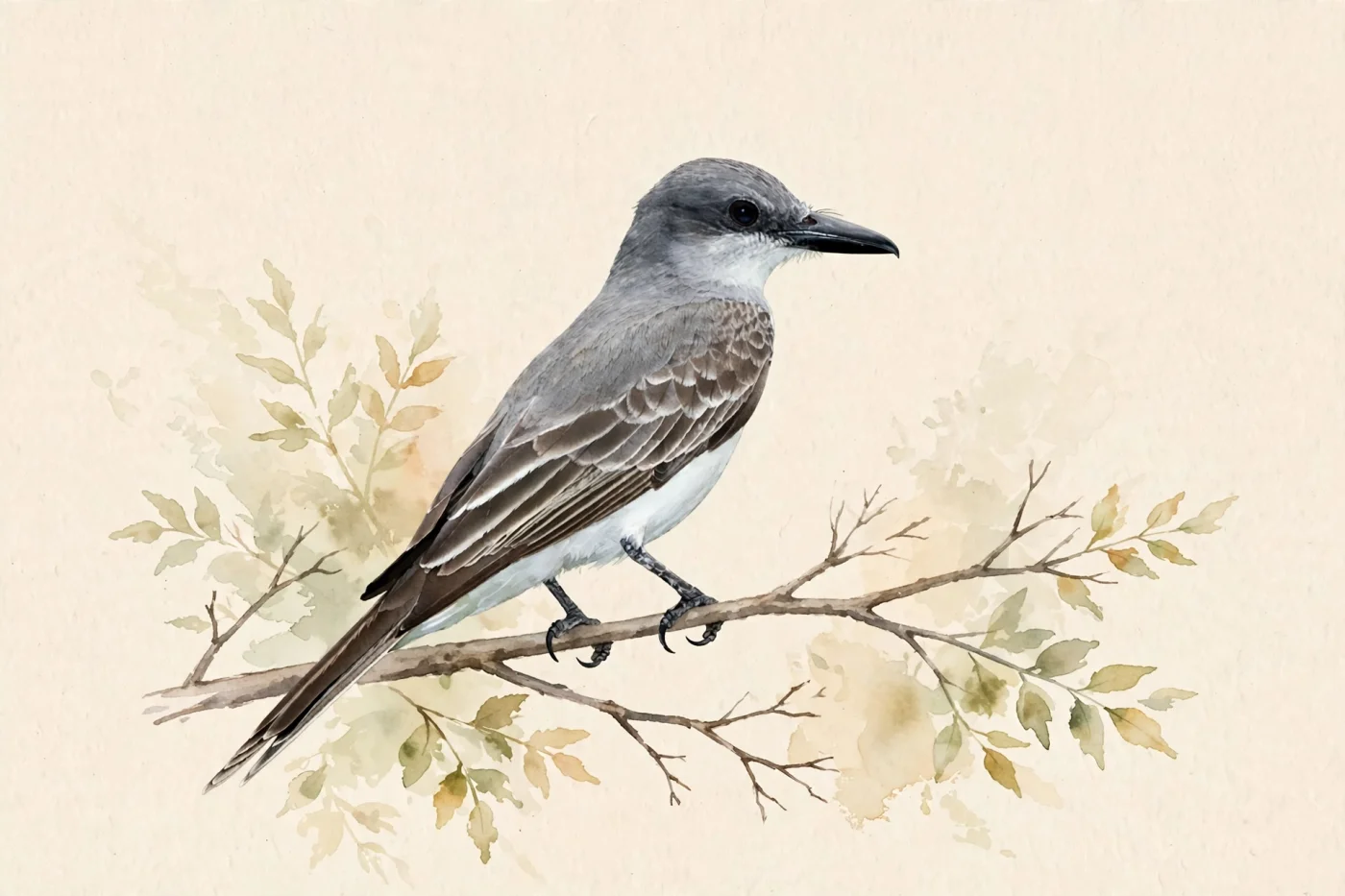
Prepared with AI assistance and linked sources. Illustrations are not field photographs.
The short answer
The Gray Kingbird (Tyrannus dominicensis) chases larger birds because it is defending its territory and, above all, its nest and young. It is not competing for food or trying to win a fight: it is trying to make the intruder leave. The Audubon/BirdNote source describes this behavior, called mobbing, as a strategy in which smaller birds join forces to harass larger birds, and notes that the best time to observe it is spring and early summer, when birds are breeding.
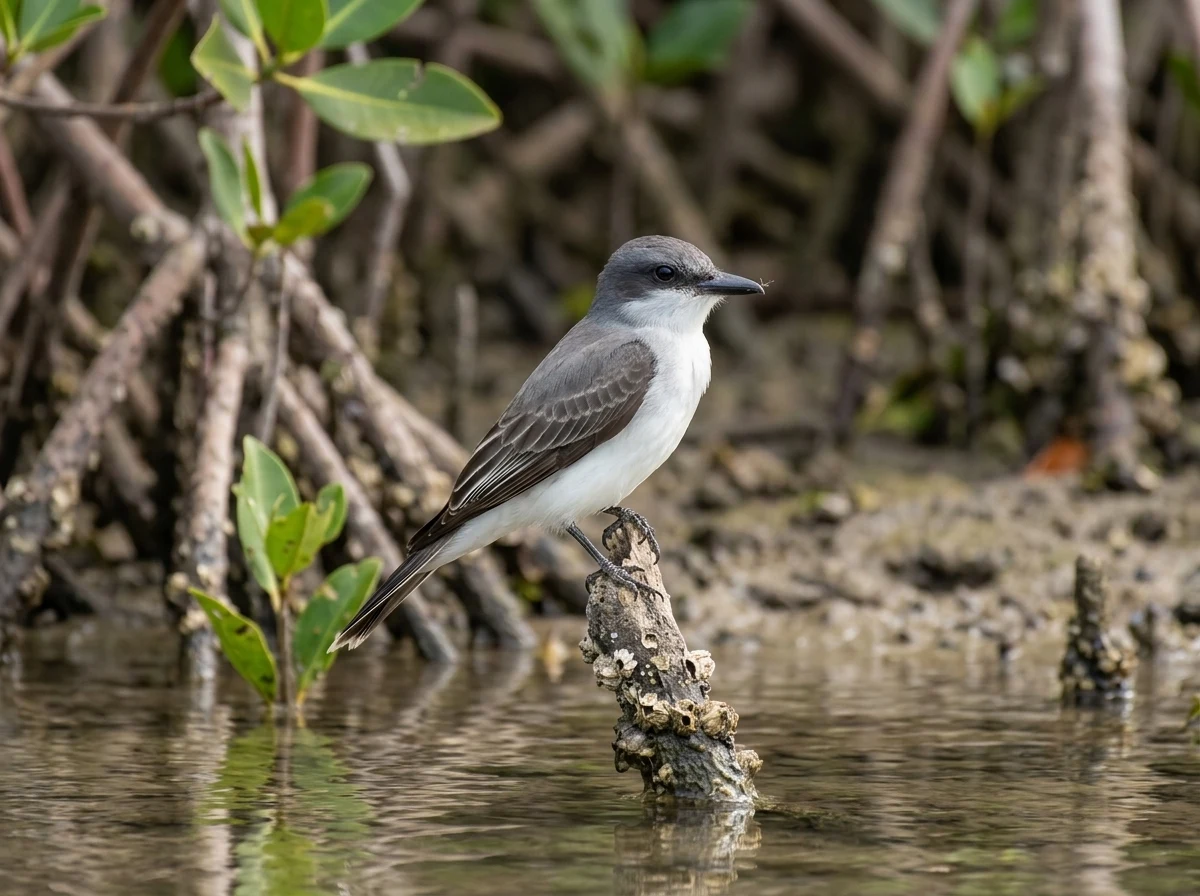
The Gray Kingbird is a large, conspicuous, boisterous tyrant flycatcher. The Birds of the World source describes it as having a feisty disposition, whose petulant voice and aggressive character have given it almost folk-hero status on Caribbean islands. The same source notes that it builds its nest in branches near human dwellings and perches in the open, where it snaps up flying insects. That combination — nests near people, visible perches, and an aggressive temperament — explains why its chases are so easy to notice in Puerto Rico.
Behavior guide
Three keys to remember
DefensaThe main reasonMobbing protects territory and nest, not food.
Primavera y veranoWhen it is seen mostThe Audubon/BirdNote source states mobbing is most frequent during the breeding season.
23 cmGray Kingbird sizeThe Gray Kingbird measures about 23 cm and weighs 37–52 g, according to the Wikipedia source.
01
What mobbing is
Mobbing occurs when smaller birds join forces to harass larger birds. The Audubon/BirdNote source describes it as behavior like calling family members for help, and notes that many species use it. The classic example is crows dive-bombing a hawk or an eagle to make it leave their breeding territory. The same source mentions starlings or blackbirds doing the same to crows, and Barn Swallows mobbing intruders near their nests, such as a housecat.
In the Gray Kingbird's case, the Wikipedia source states that the species mobs Crested Caracaras, Red-tailed Hawks, and Broad-winged Hawks, and an image caption shows Gray Kingbirds mobbing an American Kestrel in Puerto Rico. The Birds of the World source adds that the Gray Kingbird is a boisterous and feisty tyrant flycatcher, and that its petulant voice and aggressive disposition have given it almost folk-hero status on Caribbean islands. Mobbing is not an accident or a game: it is a coordinated defensive response.
02
Why the Gray Kingbird does it
The main reason is defense of the nest and young. The Audubon/BirdNote source explains that the best time to observe mobbing is spring and early summer, precisely when birds are trying to protect their nests and young. If a Gray Kingbird perceives a threat in its nesting territory, it responds with alarm calls and chases. The Birds of the World source notes that the Gray Kingbird builds a twig nest near human dwellings, which increases the likelihood that we will see these episodes.
The Birds of the World source also states that the Gray Kingbird perches in the open and snaps up flying insects in the territories it claims. In other words, the bird uses open perches for feeding and also harasses animals it perceives as intruders. The chase is not meant to kill the larger bird, but to make it leave as quickly as possible.
03
Comparison: Gray Kingbird and Red-tailed Hawk
The size contrast is enormous. The Wikipedia source states that the Gray Kingbird measures about 23 cm and weighs 37–52 g. The bird catalog for this guide records the Red-tailed Hawk (Buteo jamaicensis) at approximately 1,072.8 g. That means the Red-tailed Hawk can weigh many times more than a Gray Kingbird. This difference explains why the kingbird's strategy is not direct combat, but persistent harassment.
The Wikipedia source specifically states that the Gray Kingbird mobs Red-tailed Hawks. The Audubon/BirdNote source describes the same pattern in other birds: crows mob hawks and eagles, and starlings or blackbirds mob crows. In every case, the smaller bird does not try to bring down the intruder, but to make it uncomfortable until it leaves. The comparison helps explain that size does not determine who wins: persistence and knowledge of the territory do.
04
How to observe it without disturbing
Observing mobbing requires patience and distance. The Audubon/BirdNote source states that mobbing is most frequent in spring and early summer. Look for a Gray Kingbird perched in an open, visible spot, and stay at a distance that does not trigger alarm. If the bird starts staring at you, calling insistently, or flying toward you, you are too close: back away. The Birds of the World source notes that the Gray Kingbird is tame and tolerant of humans, but that does not mean we should approach its nest.
A useful routine is: (1) choose a fixed point with good visibility; (2) watch for 10–15 minutes without moving; (3) note the time, habitat type, and whether nests or young are nearby; (4) if you see a chase, record how many birds participate, where the intruder flies, and how long the episode lasts; (5) do not chase the bird or try to photograph the nest. This routine turns a casual observation into a useful record without altering natural behavior.
05
Checklist for your next outing
Before heading out, review these points: (1) Is it spring or early summer? The Audubon/BirdNote source states this is the best season to see mobbing. (2) Are there Gray Kingbirds perched in open spots? The Birds of the World source says they perch in the open and are conspicuous. (3) Are there large birds in the area, such as Red-tailed Hawks? The Wikipedia source states that the Gray Kingbird mobs Red-tailed Hawks. (4) Are you keeping enough distance to avoid triggering alarms? (5) Do you have a notebook or recorder to note time, duration, and participants?
During observation, remember that mobbing is a defensive response, not a spectacle. Do not approach the nest, do not use playback to provoke reactions, and do not interfere if the larger bird perches nearby. The Audubon/BirdNote source describes mobbing as a natural protective behavior; our job is to document it without altering it. If you have identification doubts, consult the related guides on flycatchers and kingbirds, raptors, and large birds of Puerto Rico.
Linked profiles
Birds in this guide
The Gray Kingbird is the chaser; the Red-tailed Hawk is one of the larger birds that may be chased.
AI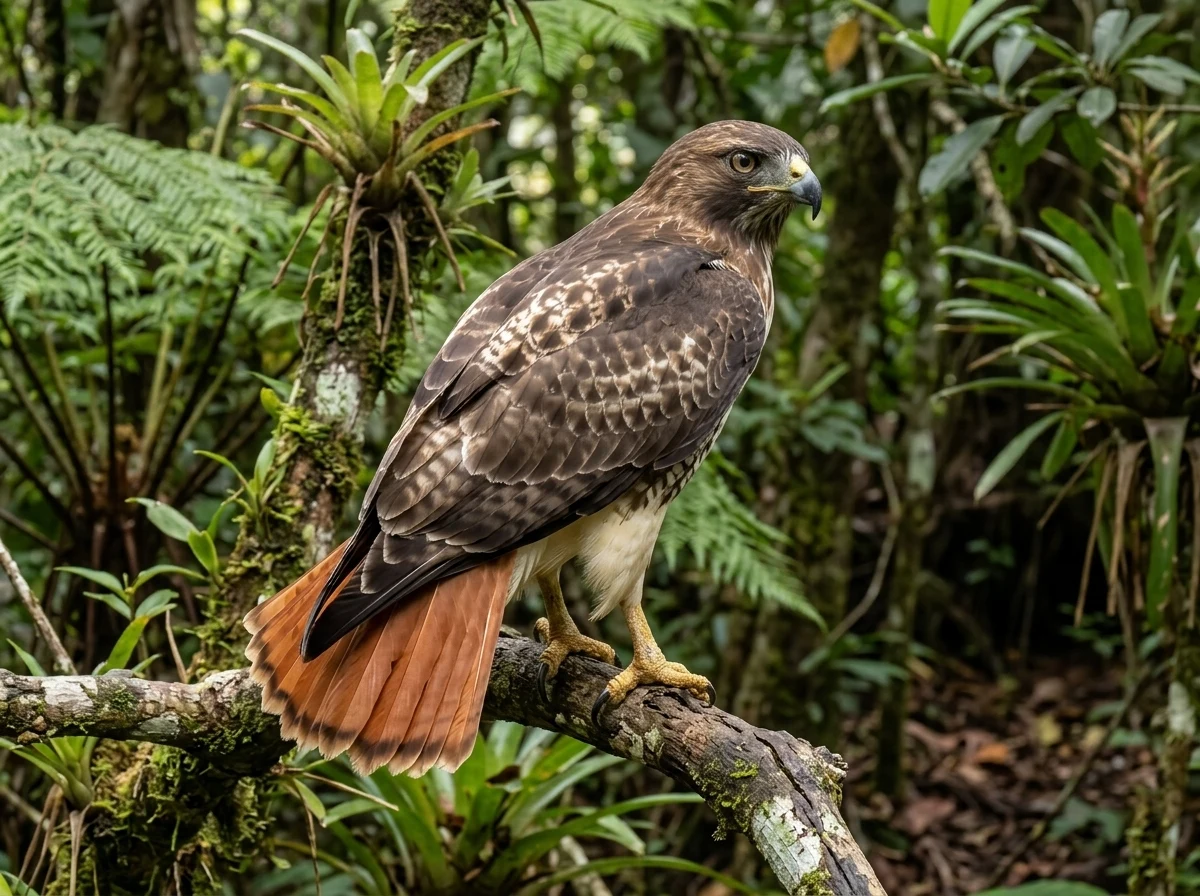 AI
AI01
Does the Gray Kingbird chase larger birds to eat them?
No. The Audubon/BirdNote source describes mobbing as a defensive strategy to protect territory and nest. The Wikipedia source states that the Gray Kingbird mobs birds such as Crested Caracaras and Red-tailed Hawks, but does not indicate that it kills them for food.
02
What time of year is it most likely to see a Gray Kingbird chasing larger birds?
The Audubon/BirdNote source states that the best time to observe mobbing is spring and early summer, when birds are breeding and protecting their nests and young.
03
Is the Gray Kingbird generally an aggressive bird?
The Birds of the World source describes it as a boisterous and feisty tyrant flycatcher, with a petulant voice and an aggressive disposition that has given it almost folk-hero status. The Wikipedia source adds that, like other kingbirds in the genus Tyrannus, it aggressively defends its territory against intruders, including mammals and much larger birds such as Crested Caracaras, Red-tailed Hawks, and Broad-winged Hawks, by mobbing.
04
What should I do if I see a Gray Kingbird chasing a Red-tailed Hawk?
Observe from a distance that does not trigger alarm. Note the time, habitat, how many birds participate, and how long the episode lasts. Do not approach the nest or use playback to provoke reactions. The Audubon/BirdNote source describes mobbing as a natural protective behavior; our job is to document it without altering it.
Keep exploring
Connected routes
Sources and review
The evidence is one link away.
These sources support the editorial scope of this guide. Bird profiles also retain their own taxonomy, occurrence, and conservation references.
Reviewed:
01↗02↗03↗
National Audubon Society / BirdNote
Mobbing: When Smaller Birds Join Forces to Fend Off Larger Birds
Evidence for cited sections; consult the original document.Cornell Lab of Ornithology
Gray Kingbird (Tyrannus dominicensis), Birds of the World
Evidence for cited sections; consult the original document.Wikipedia
Gray kingbird
Evidence for cited sections; consult the original document.The atlas continues