 AI
AIIdentification
Green Heron vs Least Bittern
Two small herons that hide in vegetation, but separate well by size, posture, wings and habitat.
Reviewed: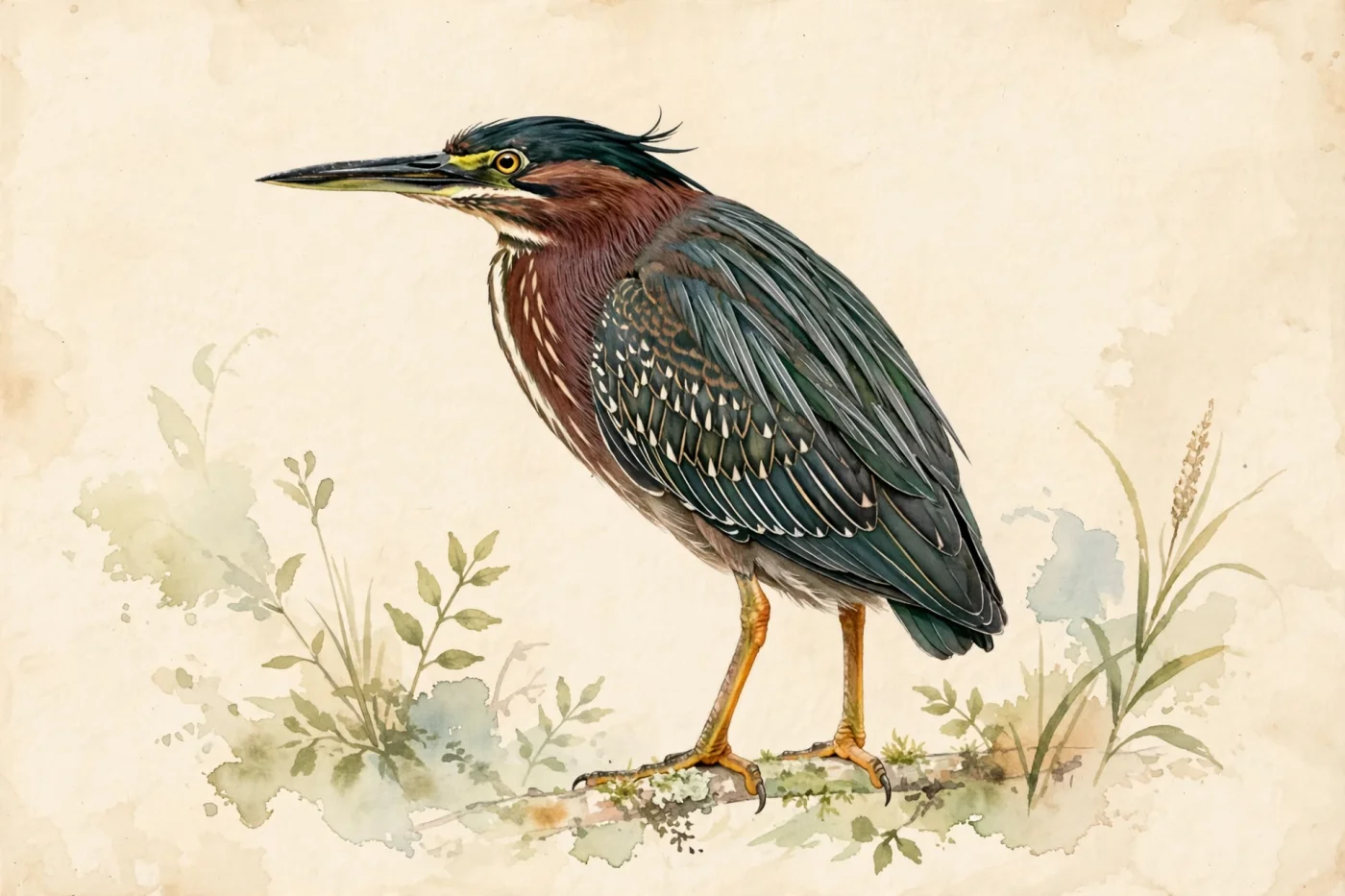
Prepared with AI assistance and linked sources. Illustrations are not field photographs.
Two small herons, two different strategies
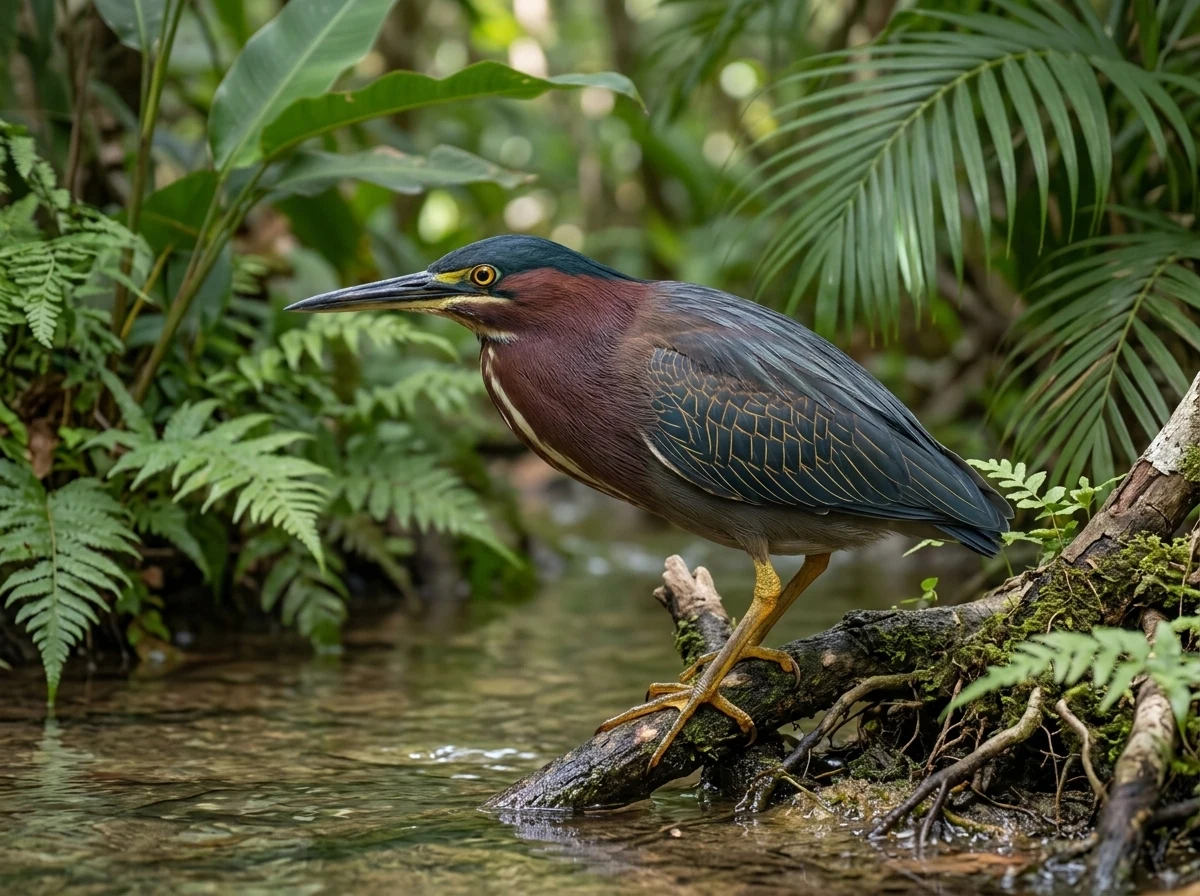
The Green Heron (Butorides virescens) and the Least Bittern (Botaurus exilis) are two small herons that share wetlands, but not the same way of life. The Green Heron is a compact, dark, crested bird common in wetland thickets; the Least Bittern is one of the smallest herons in the world, adapted to climbing among cattails and reeds rather than wading in open water.
This guide answers a specific question: how to tell them apart when you see or hear them in vegetation. It does not repeat each species' general profile; it focuses on the traits that separate the Green Heron from the Least Bittern and on an observation procedure you can apply in the field.
Identification
Three quick keys
TamañoThe Least Bittern is much smallerThe Least Bittern measures 28–36 cm and weighs 45–96 g; the Green Heron is a compact wetland bird, clearly larger.
PosturaClimbing vs. wadingThe Least Bittern climbs among reeds and cattails with its long toes; the Green Heron usually walks or waits in shallow water.
AlasPale patches on the Least BitternThe Least Bittern shows large buff patches on the inner wings, visible perched and in flight; juvenile Green Herons can look brown but lack those patches.
01
Size and proportions: the first separation
The Least Bittern is one of the smallest herons in the world. Audubon's published measurements give a length of 28–36 cm, a wingspan of 41–46 cm and a weight of 45–96 g. The Green Heron, by contrast, is described in Birds of the World as a relatively small, dark, compact, crested wading bird, but it does not share the Least Bittern's minimal proportions.
In practice, if the bird looks tiny, narrow-bodied and short-tailed, and moves among vertical stems, think Least Bittern first. If it is more robust, with a neck that can be pulled in and a compact small-heron silhouette, think Green Heron. Size difference is not always easy at a distance, so combine it with posture and habitat.
02
Posture and behavior: climbing or wading
The Least Bittern is adapted for life in dense marshes. Rather than wading in the shallows like most herons, it climbs about in cattails and reeds, clinging to the stems with its long toes. Its narrow body allows it to slip through tangled vegetation. It searches for food by clambering about in vegetation above water and jabbing downward with its long bill to capture prey at the water's surface; it sometimes flicks its wings open and shut, which may startle prey into motion.
The Green Heron is a bird of wetland thickets that can be seen stalking slowly through the water, perched quietly atop a branch, or flying with slow wingbeats through the gathering dusk. It feeds day or night, standing patiently in shallow water waiting for fish or slowly stalking them through the shallows. That behavioral difference is one of the most useful clues: the Least Bittern is rarely seen walking in open water, while the Green Heron can be.
03
Plumage and wings: the patches that separate
The Least Bittern is mostly buff-colored, with a dark cap and a brown back in the female or black in the male. Its large buff patches on the inner wings are distinctive and are visible both when perched and in flight. Juvenile Green Herons can appear similarly brown but lack those bold wing patches.
The Green Heron is a dark, crested bird with a compact silhouette. Its flight is slow and its flight call, an assertive skeow, typifies temperate and tropical wetlands of the Americas. That call is one of the surest ways to detect it even when it stays hidden. The Least Bittern, by contrast, gives a soft coo-coo-coo that is easily overlooked, although its clucking calls are heard frequently at dawn and dusk, and sometimes at night.
04
Habitat and overlap in Puerto Rico
The Least Bittern lives in fresh marshes and reedy ponds, mostly freshwater marsh but also brackish marsh, in areas with tall, dense vegetation standing in water. It may be over fairly deep water, because it mostly climbs in reeds rather than wading. It is sometimes found in salt marsh or in mangroves. The Green Heron is a common species of wetland thickets throughout much of North America, and in the catalog it is associated with forests and wetlands.
Both species appear in the Puerto Rico bird catalog as native or natural occurrence, with range inferred by Avibase. It is important to separate that catalog presence from each species' global biology: a species being listed for Puerto Rico does not mean it is abundant or easy to see. Overlap in wetlands with dense vegetation is real, so identification should rest on several traits at once, not just one.
05
Observation procedure and checklist
When you see a small heron in vegetation, follow this procedure. First, stay still and locate the bird without approaching: both species are shy and may slip away. Second, assess relative size and body shape: narrow and tiny suggests Least Bittern; compact and more robust suggests Green Heron. Third, watch posture: is it climbing among vertical stems or walking in shallow water? Fourth, look for the buff patches on the inner wings, visible perched and in flight. Fifth, listen: an assertive skeow points to Green Heron; a soft, repeated coo-coo-coo points to Least Bittern. Sixth, note the exact habitat: dense marsh with reeds or cattails versus wetland thicket and shallow water.
Checklist to take into the field: (1) estimated size compared with a known heron; (2) body shape and tail length; (3) posture and the substrate it perches on; (4) presence or absence of buff wing patches; (5) color of the cap and back; (6) call heard; (7) vegetation type and water depth. If you can, take a photo or a written note at the moment, because memory for details fades quickly. This exercise does not replace a field guide, but it organizes what you see and reduces rushed identifications.
Linked profiles
The two species in this guide
Green Heron and Least Bittern: names, science and presence in the Puerto Rico catalog.
AI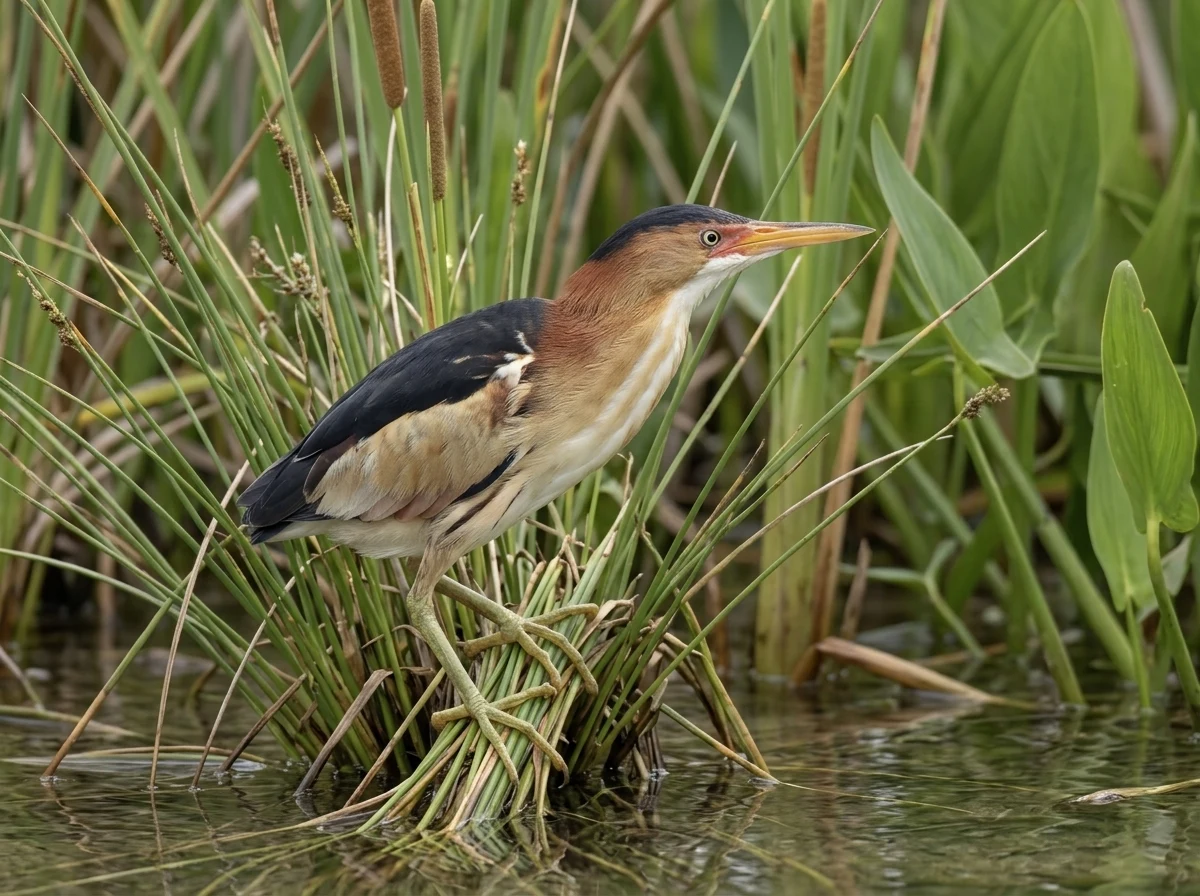 AI
AI01
What is the quickest difference between the Green Heron and the Least Bittern?
Size and posture. The Least Bittern is one of the smallest herons in the world (28–36 cm) and climbs among reeds and cattails; the Green Heron is more robust and usually wades or waits in shallow water. If you can see the buff patches on the inner wings, those confirm the Least Bittern.
02
Can juvenile Green Herons be confused with the Least Bittern?
Yes, in color they can appear similarly brown, but juvenile Green Herons lack the large buff patches on the inner wings that the Least Bittern has. That is the most useful separation when the overall color looks similar.
03
What sound should I listen for to tell them apart?
The Green Heron gives an assertive flight call, a skeow, that typifies temperate and tropical wetlands of the Americas. The Least Bittern gives a soft coo-coo-coo that is easily overlooked, although its clucking calls are heard frequently at dawn and dusk, and sometimes at night.
04
Are both species confirmed in Puerto Rico?
The catalog presents them as native or natural occurrence, with range inferred by Avibase. That is distinct from each species' global biology and does not imply they are abundant or easy to see. Treat local presence as a catalog datum, not a field observation.
05
Where are they most likely to be found?
The Least Bittern favors fresh marshes and reedy ponds, with tall, dense vegetation standing in water, and sometimes salt marsh or mangroves. The Green Heron is associated with wetland thickets and shallow water. Search wetlands with dense vegetation and move slowly, because both species are shy.
Keep exploring
Connected routes
Sources and review
The evidence is one link away.
These sources support the editorial scope of this guide. Bird profiles also retain their own taxonomy, occurrence, and conservation references.
Reviewed:
The atlas continues