 AI
AIIdentification
Prairie Warbler vs Palm Warbler
Two yellowish warblers that get confused: one wears dark side streaks; the other shows a pale eyebrow and a tail that never stops moving.
Reviewed: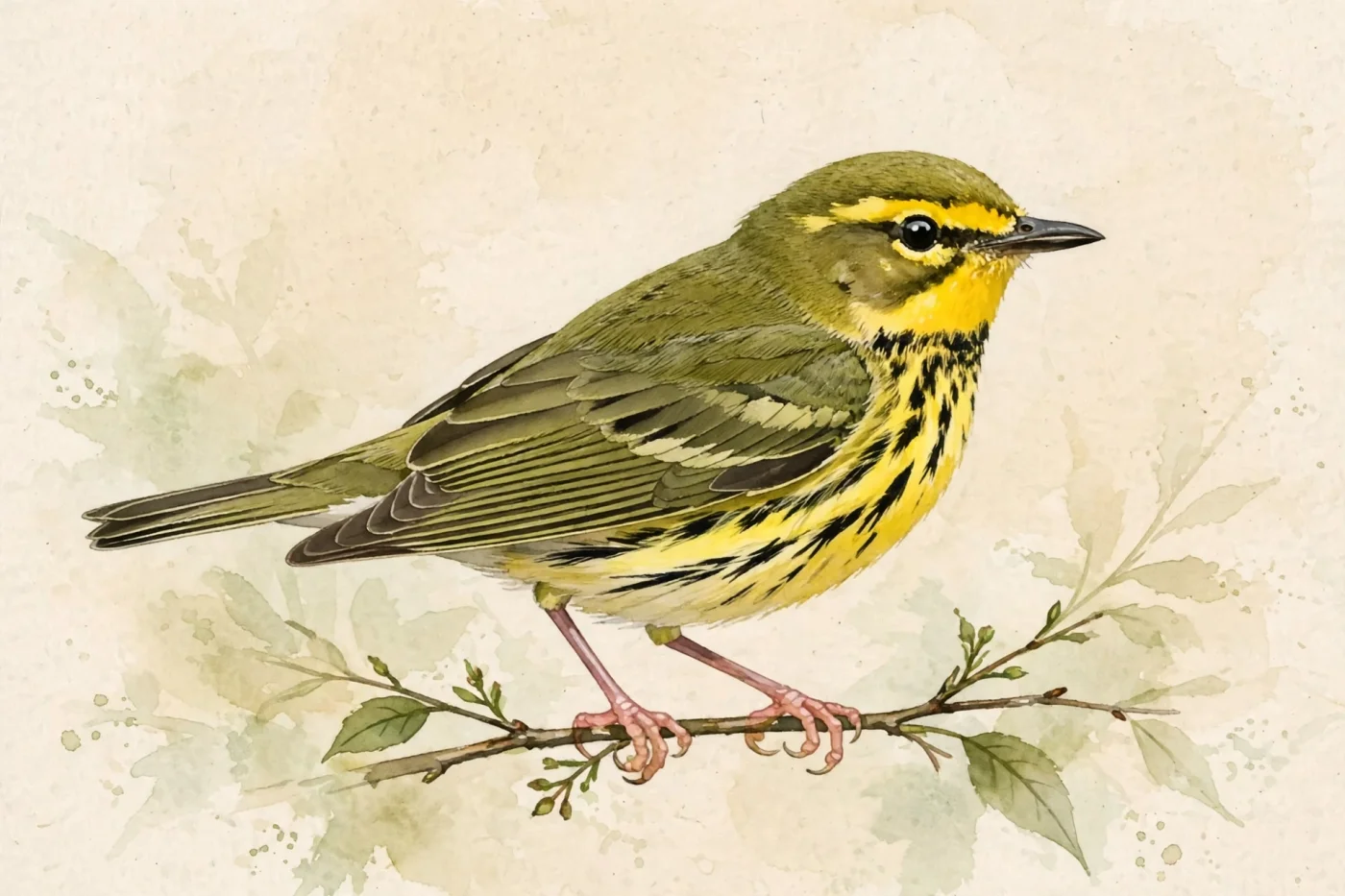
Prepared with AI assistance and linked sources. Illustrations are not field photographs.
The direct answer
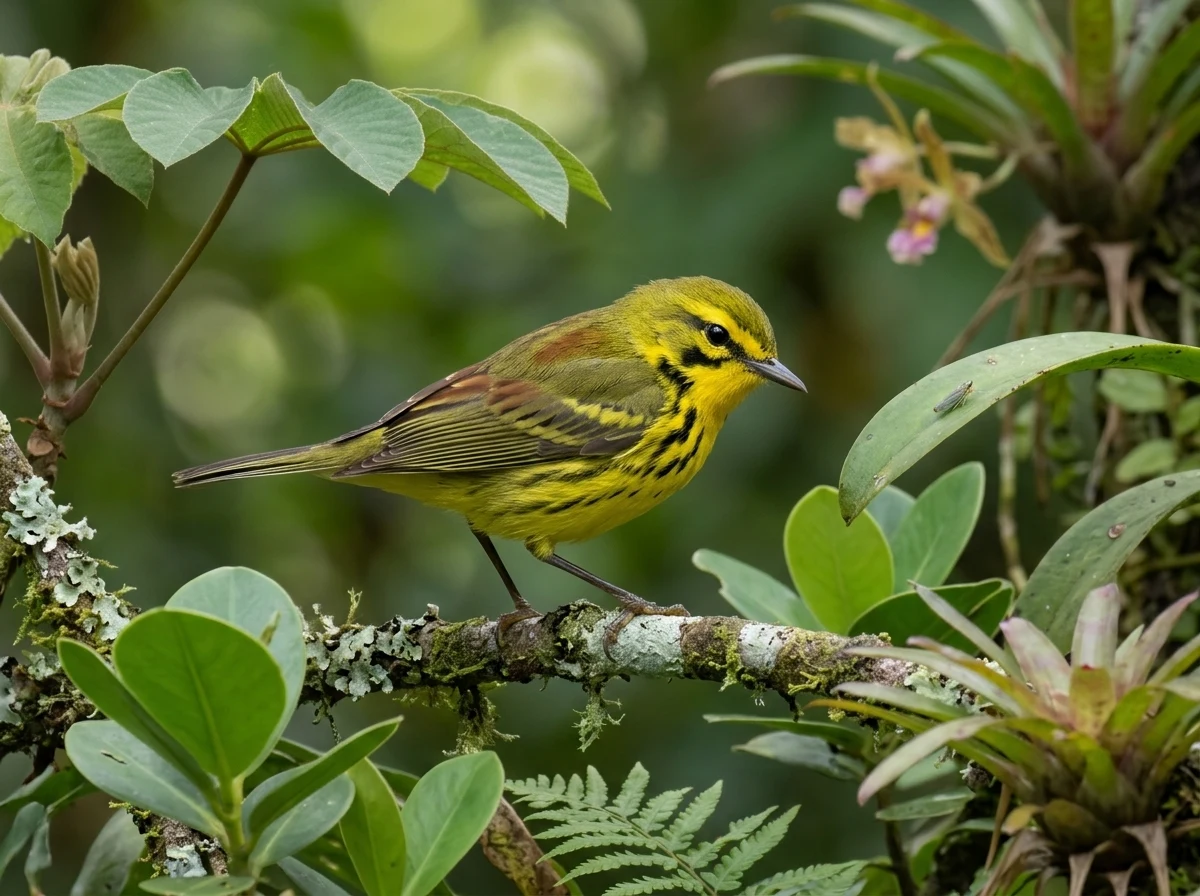
The Prairie Warbler (Setophaga discolor) and the Palm Warbler (Setophaga palmarum) can both look yellowish and small, but they are not identified the same way. The Prairie is recognized by dark streaks running along its sides over a yellow background, a yellow stripe above the eye and another below it, and by its habit of bobbing its tail while foraging. The Palm is recognized by a well-defined pale eyebrow, yellow undertail coverts and constant tail-bobbing, plus a chestnut crown in breeding plumage that turns brown in winter.
In Puerto Rico, the Prairie Warbler is listed as a native species of natural occurrence in the consulted catalog, while the Palm Warbler is listed as native natural occurrence and also as accidental or vagrant. That status difference should not be read as abundance: the catalog does not measure how many individuals there are or how often they appear. What it does allow is a comparison of marks and behavior supported by the identification sources.
Identification
Three keys to remember
Manchas vs. franjasSidesThe Prairie shows dark side streaks; the Palm does not show them as a main mark.
Ceja pálidaFaceThe Palm has a well-defined pale eyebrow; the Prairie has yellow stripes above and below the eye.
Cola en movimientoBehaviorBoth bob their tails, but in the Palm it is constant and helps identify it.
01
Streaks and stripes: what to look at first
The most useful mark on a Prairie Warbler is the dark streaking on the sides. BirdsCaribbean describes a male seen in Jamaica with yellow underparts, distinctive black side streaks, a yellow eyebrow stripe and a yellow patch below the eye, and adds that it bobs its tail while foraging. That combination — streaked sides, yellow-striped face and active tail — separates the Prairie from other yellowish warblers.
The Palm Warbler is not identified by side streaks. Audubon notes that in all Palm Warblers you should notice the yellow undertail coverts, the tail-bobbing behavior and a well-defined pale eyebrow. The crown is chestnut in breeding plumage and brown in winter. In other words, the Palm is read by eyebrow, tail and rear underparts; the Prairie is read by streaked sides and yellow face.
02
The tail: shared behavior, different emphasis
Both species bob their tails, so the movement alone does not decide the identification. The difference is how it combines with other marks. BirdsCaribbean presents the Palm Warbler as a habitual tail-pumper and notes that the Prairie Warbler also bobs its tail while foraging. Audubon, describing the Palm, sums it up as recognizable by the constant bobbing of its tail.
In practice, if you see a yellowish bird bobbing its tail nonstop, check the face and sides before concluding. If it has a well-defined pale eyebrow and yellow undertail coverts, it points to Palm. If it has streaked sides and yellow facial stripes, it points to Prairie. Behavior opens the question; marks resolve it.
03
Status in Puerto Rico: what the catalog says and what it does not
The consulted catalog records the Prairie Warbler as a native species of natural occurrence, not resident, not breeding and not marked as migratory or vagrant in that summary. The Palm Warbler appears as native natural occurrence and also as accidental or vagrant, not resident and not breeding. These labels describe presence categories, not abundance.
They should not be turned into claims about how many birds there are or how likely you are to see them at a specific place. The identification sources used here — Audubon and BirdsCaribbean — describe marks and behavior, and BirdsCaribbean mentions a Palm Warbler observation in Puerto Rico and a Prairie Warbler observation in Jamaica, but that is not equivalent to a local census. For status, the reference is the catalog; for marks, the identification guides.
04
Field exercise: a two-column card
Before heading out, make a card with two columns: “Prairie” and “Palm.” In the Prairie column write: dark streaks on the sides, yellow stripe above the eye, yellow patch below the eye, tail bobbed while foraging. In the Palm column write: well-defined pale eyebrow, yellow undertail coverts, constantly bobbed tail, chestnut crown in breeding plumage and brown in winter.
When you observe a yellowish bird, do not try to decide immediately. First note which column matches on at least two marks. Then check whether the bird is on or near the ground, as the Palm often is according to Audubon, or foraging among branches. Finally, write a note about light and angle, because a pale eyebrow can disappear against the light. This procedure does not replace a field guide, but it orders the observation and prevents conclusions from a single mark.
Linked profiles
The two species
Side-by-side profiles of the Prairie Warbler and the Palm Warbler.
AI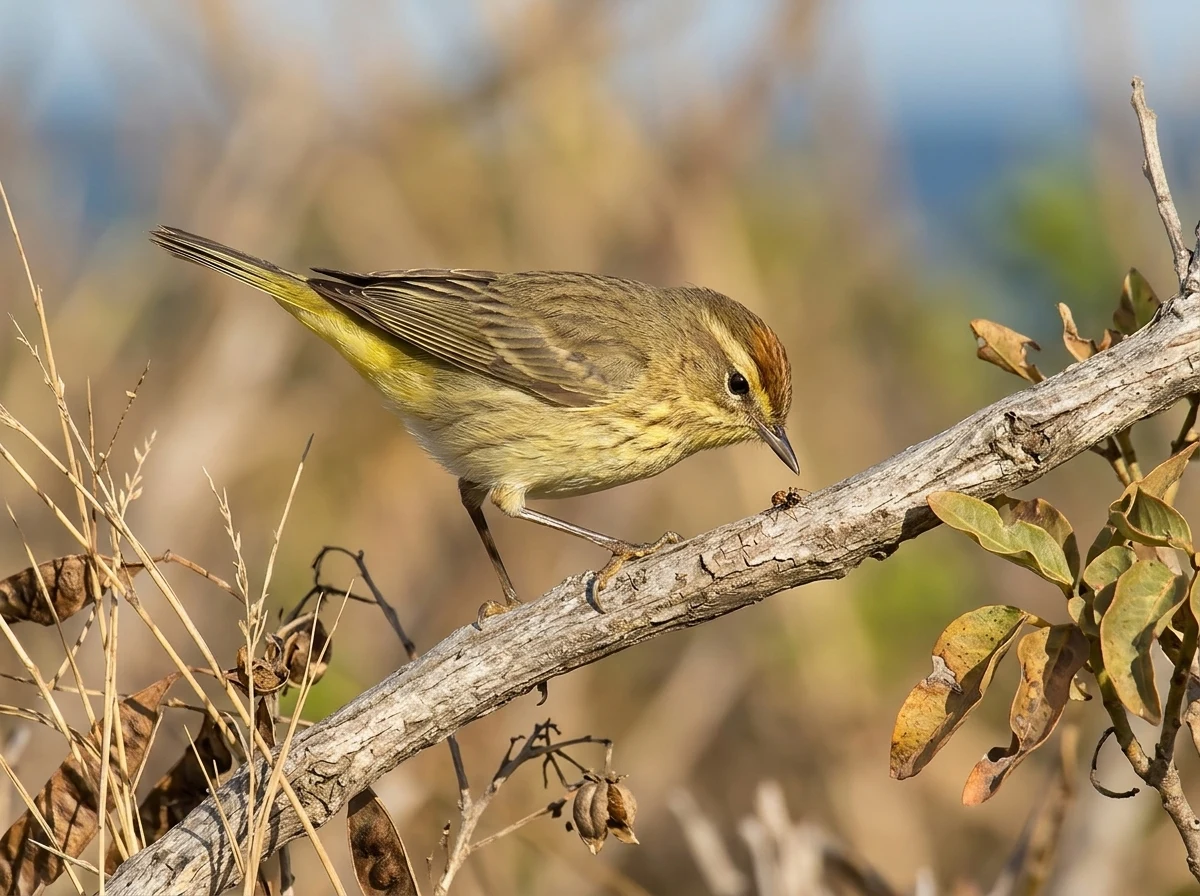 AI
AI01
What is the fastest difference between the Prairie Warbler and the Palm Warbler?
The sides. The Prairie shows dark streaks over a yellow background; the Palm does not show them as a main mark and is better recognized by its pale eyebrow and yellow undertail coverts.
02
Do both bob their tails?
Yes. BirdsCaribbean notes that the Prairie bobs its tail while foraging and presents the Palm as a habitual tail-pumper. Audubon highlights the constant tail movement in the Palm. So movement alone is not enough: you must look at the face and sides.
03
What does it mean that the Palm Warbler is accidental or vagrant in Puerto Rico?
It is a presence category from the consulted catalog, not a measure of abundance. It indicates that the species is not resident or breeding there and is recorded as accidental or vagrant, without stating how many individuals there are or how often they appear.
04
Can I identify a Palm Warbler by its crown alone?
It is not advisable. Audubon notes that the crown is chestnut in breeding plumage and brown in winter, so it changes. The more stable marks it mentions are the pale eyebrow, the yellow undertail coverts and the tail-bobbing.
Keep exploring
Connected routes
Sources and review
The evidence is one link away.
These sources support the editorial scope of this guide. Bird profiles also retain their own taxonomy, occurrence, and conservation references.
Reviewed:
The atlas continues