 AI
AIIdentification
Spotted Sandpiper vs Solitary Sandpiper
Two gray-and-white shorebirds that overlap in the Caribbean don't have to confuse you: here are the marks and behavior clues that actually separate them.
Reviewed:Prepared with AI assistance and linked sources. Illustrations are not field photographs.
Two similar shorebirds that are not the same
The Spotted Sandpiper (Actitis macularius) and the Solitary Sandpiper (Tringa solitaria) are two small scolopacid shorebirds that overlap in the non-breeding season. Both are grayish above and pale below, with medium-length bills, so confusion is common. The good news is that specific marks and distinct behaviors resolve most cases.
This guide focuses on the practical question: what do I look at first, and what should I expect to see? It uses Audubon and BirdsCaribbean descriptions as its basis and links to the general shorebird and migratory bird guides for Puerto Rico context.
Identification
Three keys to remember
Alas pálidas vs. oscurasUnderwing color in flightSpotted shows pale underwings; Solitary shows dark underwings.
Balanceo vs. cabeceoBehavior while walkingSpotted teeters almost constantly; Solitary bobs occasionally.
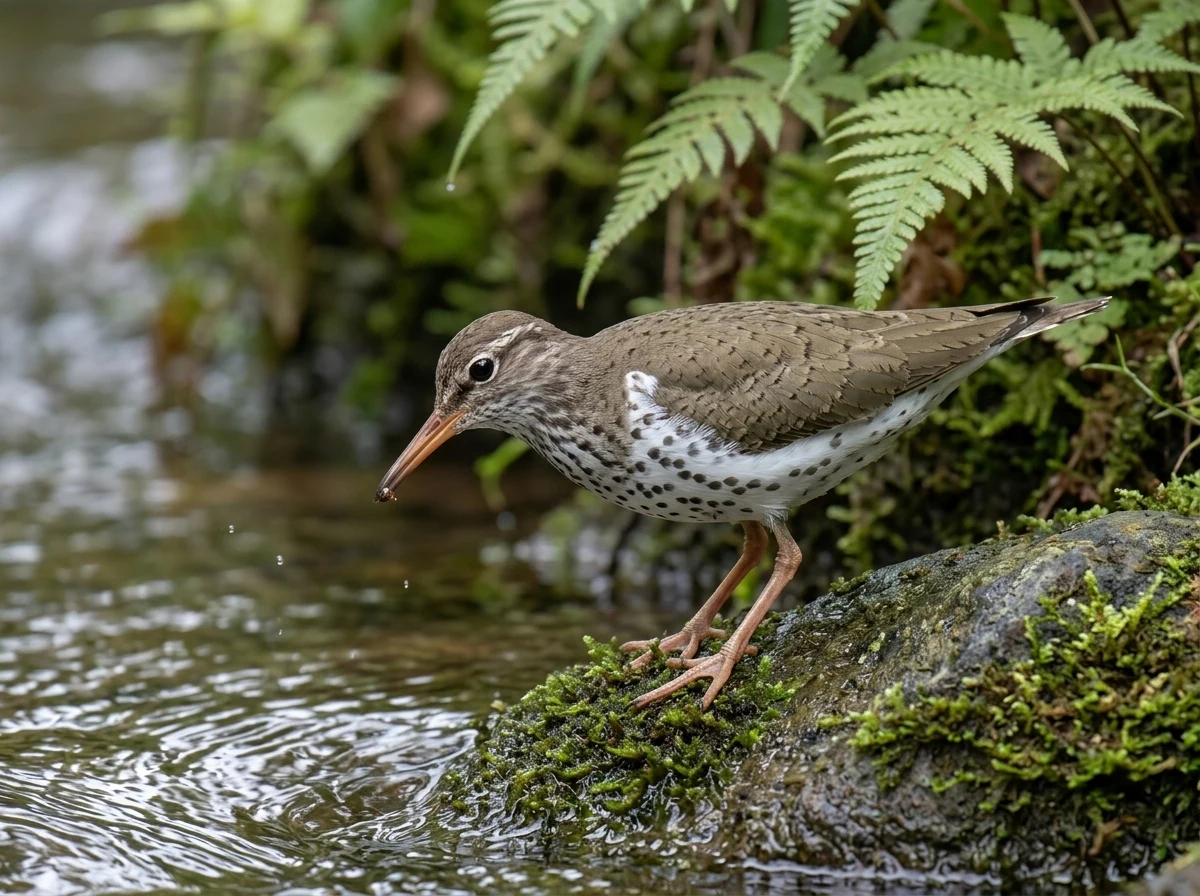
Hombro blancoShoulder markSpotted has a white shoulder patch that Solitary lacks.
01
Key marks: what to look at, and in what order
Start with the head. The Solitary Sandpiper has a more obvious white eye-ring, often described as 'spectacles.' The Spotted Sandpiper does not show such an obvious ring. Then look at the shoulder: the Spotted Sandpiper has a white wedge or patch on the shoulder that the Solitary lacks. That mark is especially useful when the bird is in profile or walking.
If the bird flies, watch the wings. The Solitary Sandpiper shows dark underwings; the Spotted Sandpiper has pale underwings. On the tail, the Solitary shows a dark center with white outer edges, while the Spotted has a different pattern. The Solitary is also described as darker overall and more slender, with a thin, straight bill. In breeding plumage, the Spotted develops dark spots on the breast and belly, but in the non-breeding season both are gray and white, so flight marks and behavior carry more weight.
02
Behavior: the teeter that gives it away
The Spotted Sandpiper teeters almost continuously as it walks, moving its rear end up and down. That constant teetering is one of the most useful behavioral clues. The Solitary Sandpiper may also bob its head when excited, but it does not teeter as much or as insistently. BirdsCaribbean puts it this way: the Solitary 'doesn't dip and teeter quite so much' as the Spotted.
The Solitary's name reflects its tendency to appear alone, along shady creeks and freshwater edges. Audubon notes that if approached, it bobs nervously and then flies away with sharp whistled cries. The Spotted Sandpiper can also be seen alone or in pairs, but its teetering is more constant and visible. In flight, the Solitary has a direct flight and runs; the Spotted also runs, but its teetering behavior on land is more striking.
03
Habitat and context in Puerto Rico
The Solitary Sandpiper prefers shady streams, wooded swamps, ponds, riverbanks, and narrow channels in marshes. Audubon notes it generally avoids tidal flats and salt marsh, though it sometimes appears along the edges of open mudflats. BirdsCaribbean adds that it is not fussy: it may appear at streams, lakes, pond edges, mangroves, roadside ditches, and even puddles in flooded agricultural areas. In Puerto Rico, both species are recorded as native in the catalog, but abundance is not inferred from that.
The Spotted Sandpiper is also a bird of shorelines and wetlands, and its presence in Puerto Rico is supported by the catalog. It is not a resident and does not breed in Puerto Rico according to the available data; it is migratory. For local context, see the shorebird and migratory bird guides. The key is not to assume abundance: occurrence is documented, but relative frequency is not derived from these sources.
04
Field exercise: separate the two species step by step
When you find a gray-and-white sandpiper, follow this routine. First, watch behavior for at least 30 seconds without getting distracted by plumage: does it teeter constantly or only bob occasionally? Second, look at the shoulder: is a white wedge visible? Third, check the head: is the white eye-ring striking? Fourth, if the bird flies, watch the wings: are they pale or dark underneath? Fifth, note the habitat: is it at a shady creek or a more open shore?
This sequence requires no special equipment, just patience and a notebook or a phone note. If you can, take a photo or a short video to review the teetering and marks later. You don't need to capture the bird or get too close. The combination of behavior, shoulder, eye-ring, and underwings resolves most observations. If you are still unsure, it is valid to leave it as 'sandpiper sp.' and document what you saw.
Linked profiles
The two species in this guide
Reference profiles for the Spotted Sandpiper and the Solitary Sandpiper.
AI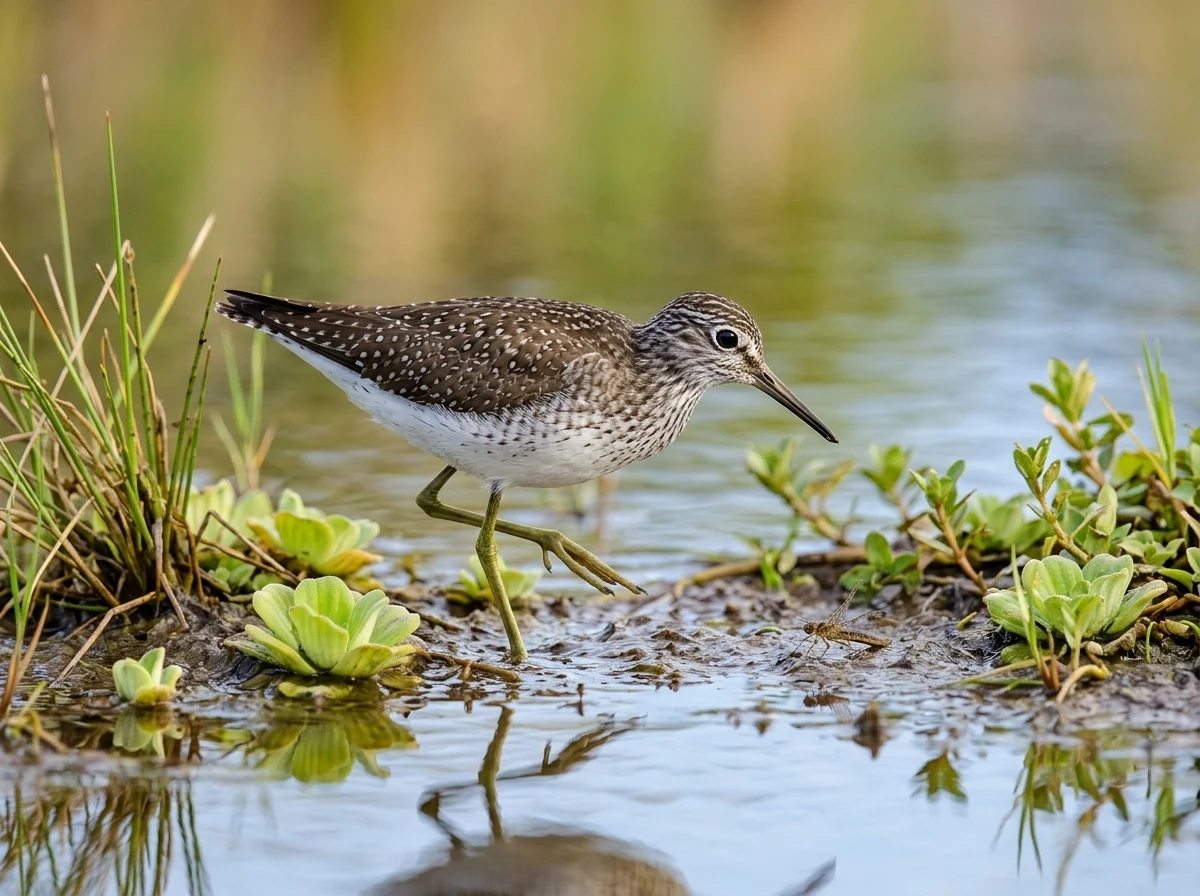 AI
AI01
What is the easiest difference to see between the Spotted and Solitary Sandpipers?
Behavior: the Spotted Sandpiper teeters almost constantly as it walks, while the Solitary Sandpiper bobs occasionally but does not teeter as much. If you can watch the bird for a few seconds, that is the fastest clue.
02
What flight mark should I look for?
The underwings: the Solitary Sandpiper has dark underwings, while the Spotted Sandpiper has pale underwings. Also on the tail, the Solitary shows a dark center with white outer edges.
03
Does the Spotted Sandpiper have a white shoulder patch?
Yes. The Spotted Sandpiper has a white wedge or patch on the shoulder that the Solitary Sandpiper lacks. It is a useful mark when the bird is in profile or walking.
04
Are both species seen in Puerto Rico?
Yes, both are recorded as native occurrence in the Puerto Rico bird catalog. They are not residents and do not breed there according to the available data; they are migratory. Occurrence is documented, but abundance should not be inferred from these sources.
05
What habitat does the Solitary Sandpiper prefer?
Shady streams, wooded swamps, ponds, riverbanks, and narrow channels in marshes. It generally avoids tidal flats and salt marsh, though it sometimes appears along the edges of open mudflats. It can also be seen in mangroves, ditches, and puddles in flooded agricultural areas.
Keep exploring
Connected routes
Sources and review
The evidence is one link away.
These sources support the editorial scope of this guide. Bird profiles also retain their own taxonomy, occurrence, and conservation references.
Reviewed:
01↗02↗03↗
National Audubon Society
Solitary Sandpiper | Audubon Field Guide
Evidence for cited sections; consult the original document.BirdsCaribbean
Migratory Bird of the Day: Solitary Sandpiper (Birds Connect Our World – Day 77)
Evidence for cited sections; consult the original document.Cornell Lab of Ornithology / Sociedad Ornitológica Puertorriqueña / Para La Naturaleza
Puerto Rico — eBird
Evidence for cited sections; consult the original document.The atlas continues