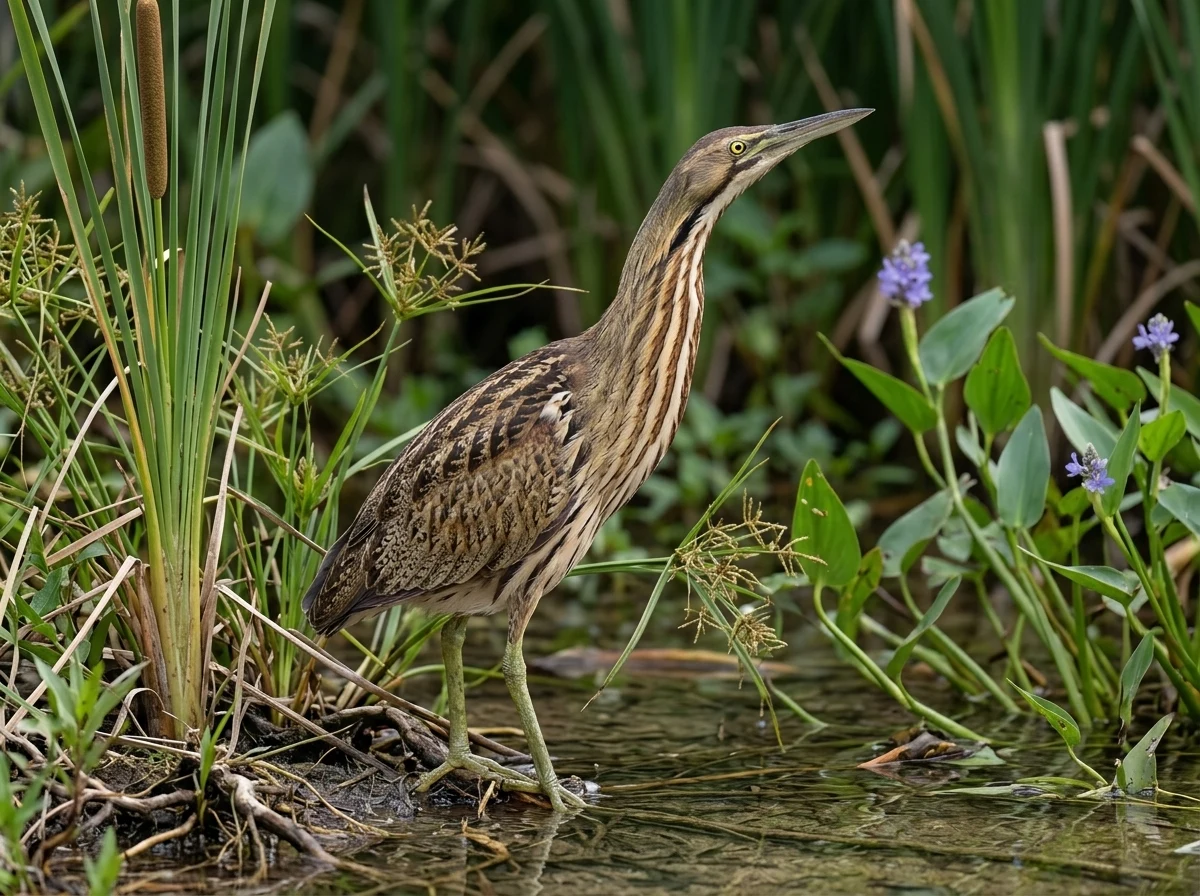
 AI
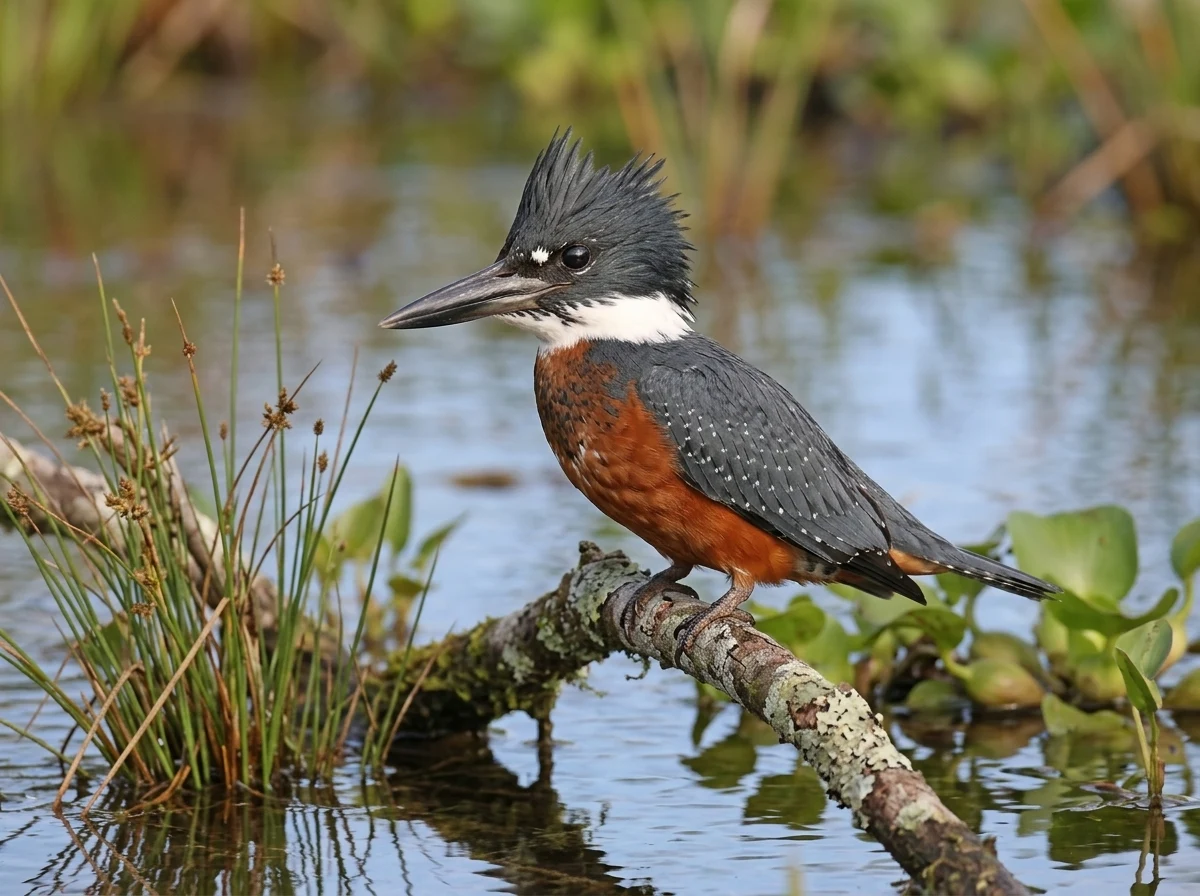
AIAI reconstruction created with Nano Banana 2 · 1K, grounded in the profile’s documented taxonomy, habitat, natural-history sources, and an open-license visual reference when available. It is an interpretive image, not documentary evidence. Image policy →
American Bittern
Yaboa Americana
Botaurus lentiginosus
The American bittern (Botaurus lentiginosus) is a species of wading bird in the heron family. It has a Nearctic distribution, breeding in Canada and the northern and central parts of the United States, and wintering in the U.S. Gulf Coast states, all of Florida into the Everglades, the Caribbean islands and parts of Central America. It is a well-camouflaged, solitary brown bird that unobtrusively inhabits marshes and the coarse vegetation at the edge of lakes and ponds. In the breeding season it is chiefly noticeable by the loud, booming call of the male. The nest is built just above the water, usually among bulrushes and cattails, where the female incubates the clutch of olive-colored eggs for about four weeks. The young leave the nest after two weeks and are fully fledged at six or seven weeks. The American bittern feeds mostly on fish but also eats other small vertebrates as well as crustaceans and insects. It is fairly common over its wide range, but its numbers are thought to be decreasing, especially in the south, because of habitat degradation. However the total population is large, and the International Union for Conservation of Nature has assessed its conservation status as being of "Least Concern".
Sound archive
Hear its voice
Explore real songs and calls. The spectrogram turns each sound into a visual trace of time and frequency.

Play: nocturnal flight call by David Tattersley
Choose another recording
Sound recorded by David Tattersley · XC807455 · CC BY-NC-SA 4.0. Visualization by Stichting Xeno-canto voor Natuurgeluiden.
Every recording retains the creator, catalogue number, and license published by Xeno-canto. Metadata via GBIF ↗
Island profile
About the American Bittern
This atlas includes American Bittern (Botaurus lentiginosus) with atlas status “Accidental / vagrant” within scope “Avibase inferred core 380.” Global trait data associate it primarily with wetland; consult the linked records to resolve its Puerto Rico habitat use.
Conservation
Least Concern
IUCN LC
- Global IUCN
- LC
- Puerto Rico DNER
- No current listing in source crosswalk
- Federal ESA
- No current listing in source crosswalk
- Critical habitat
- Not identified in source crosswalk
Natural history
How it lives
- Habitat
- wetlands
- Elevation
- 0–2500 m
- Nest
- Platform · Ground; Grass
- Clutch
- 2–7 eggs
- Social behavior
- Solitary
Keep exploring
This bird belongs to 6 paths through the atlas.
Guides featuring this bird
Follow this record beyond the profile.
Identification, sound, place, and explanatory guides connecting this species to larger questions.
Related in the atlas
Where to fly next
Connected by taxonomy, habitat, occurrence, and conservation.
 AI
AI AI
AI AI
AI AI
AI AI
AI AI
AI
Evidence trail