 AI
AIIdentification · Night-herons
Yellow-crowned vs. Black-crowned Night-Heron: telling Puerto Rico's yaboas apart
Two stocky, short-necked herons that come alive at dusk: one is the mangrove crab specialist; the other, scarcer, favors lagoons and freshwater swamps.
Reviewed:What is a yaboa?
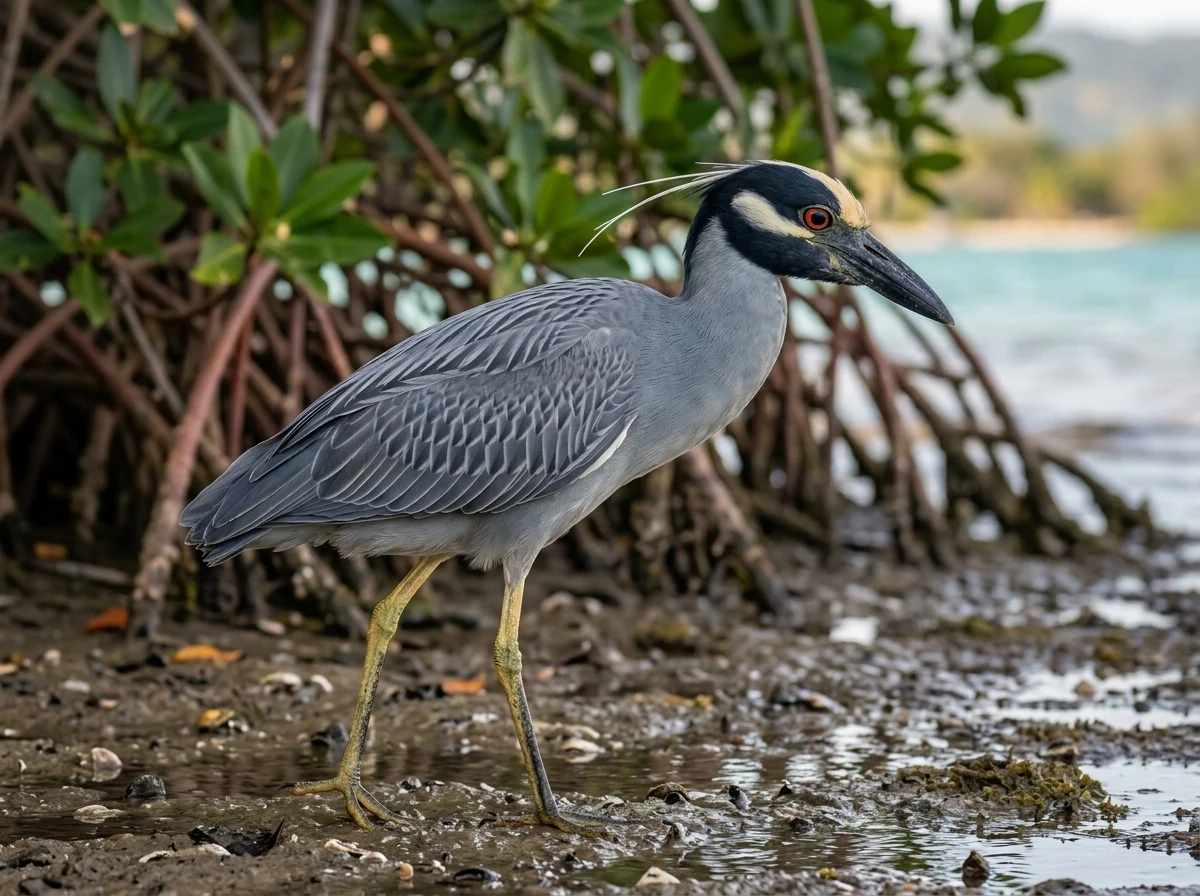
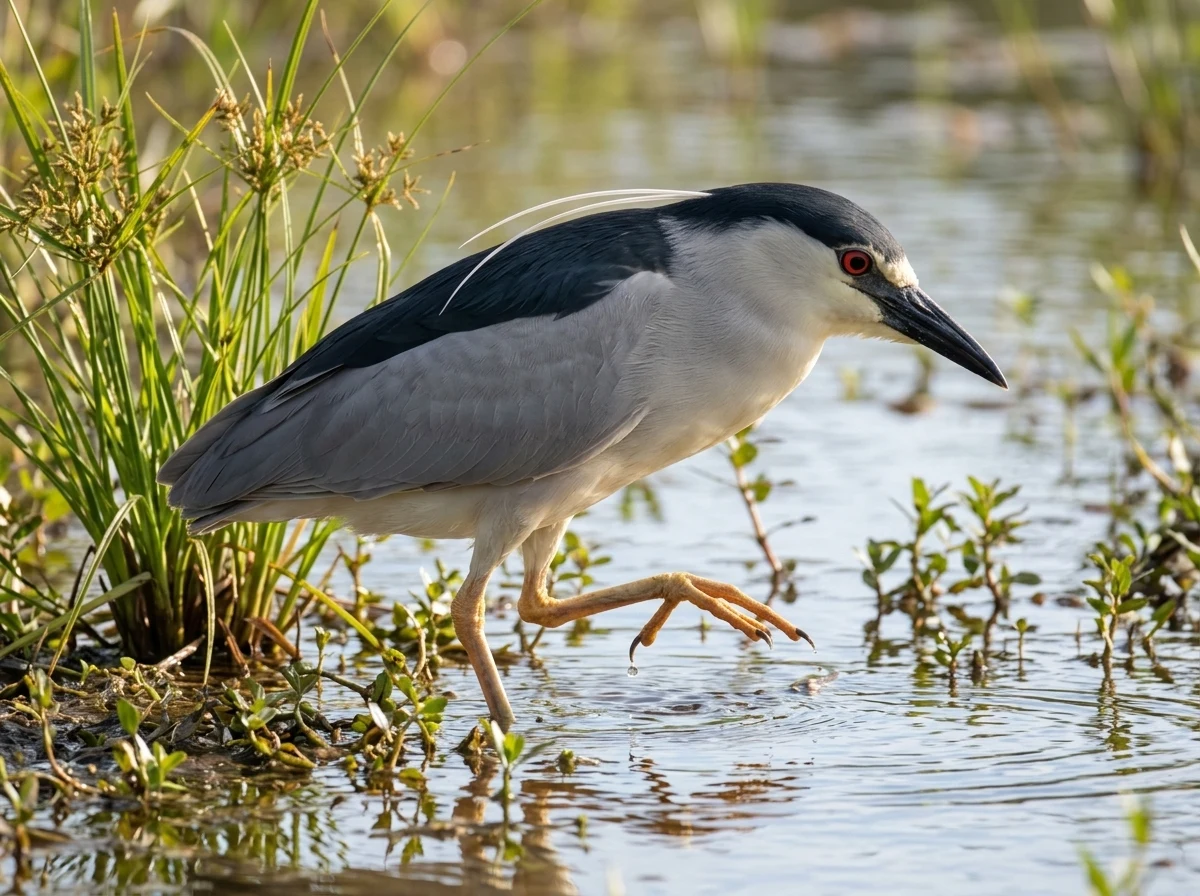
In Puerto Rico, 'yaboa' is the local name for night-herons: the Yaboa Común (Nyctanassa violacea, Yellow-crowned Night-Heron) and the Yaboa Real (Nycticorax nycticorax, Black-crowned Night-Heron). An adult Yellow-crowned is gray with a black-and-white face; an adult Black-crowned has a black cap and back that contrast with gray wings.
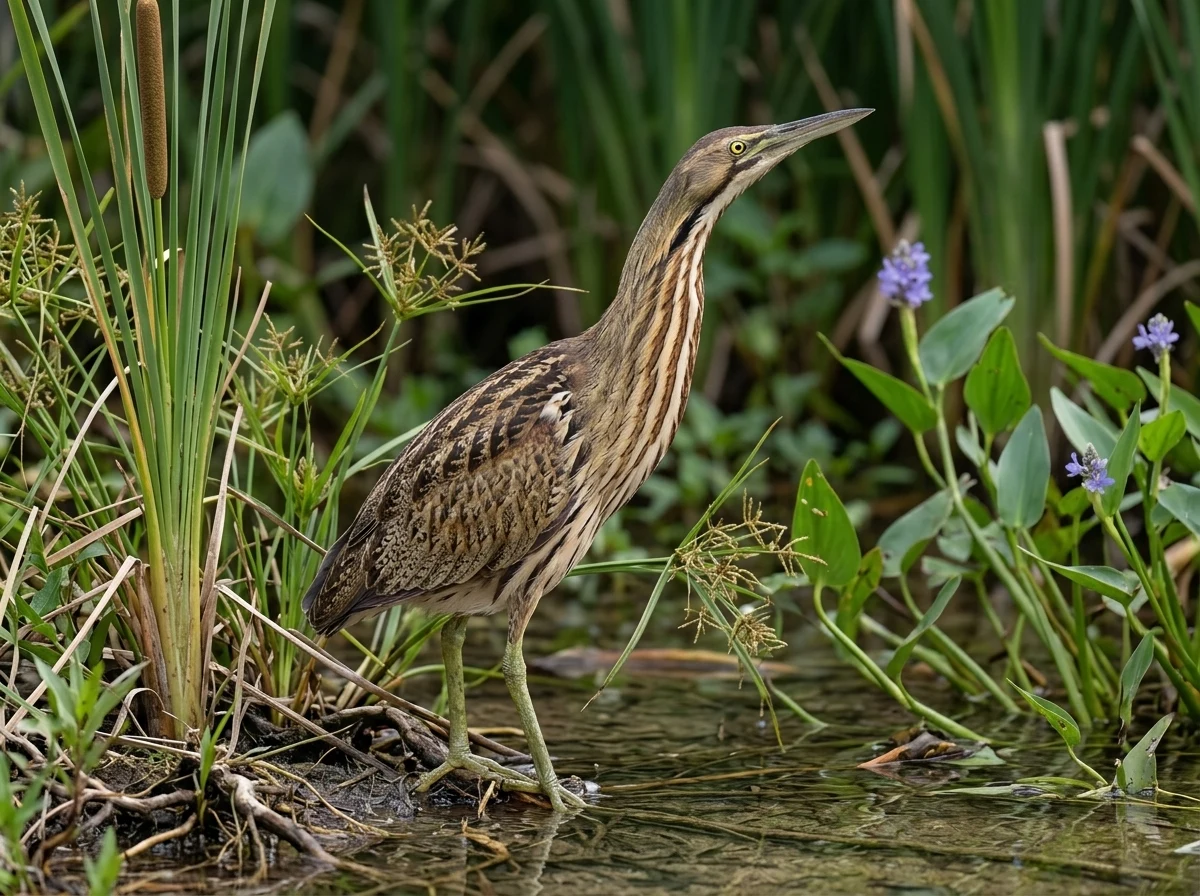
Both are stocky, short-necked, large-eyed herons that feed heavily at dusk and at night. Yellow-crowned is the more widespread: it occurs island-wide and on Desecheo, Culebra, and Vieques, mostly in mangroves, and eats a lot of crabs. Black-crowned is an uncommon resident of freshwater swamps, brackish lagoons, and salt ponds. The Puerto Rico Ornithological Society's official catalog adds a third 'yaboa', the Yaboa Americana (American Bittern), which is accidental.
Identification · Night-herons
Yaboas by the numbers
123hexagons with Yellow-crowned26% of the atlas's 479 hexagons, from 176 records.
60hexagons with Black-crowned13% of the archipelago, from 75 records: the scarcer of the two.
58–66 cmBlack-crowned lengthWingspan 114–119 cm per Audubon; Yellow-crowned is similar in size.
01
Adults: black-and-white face vs. black cap and back
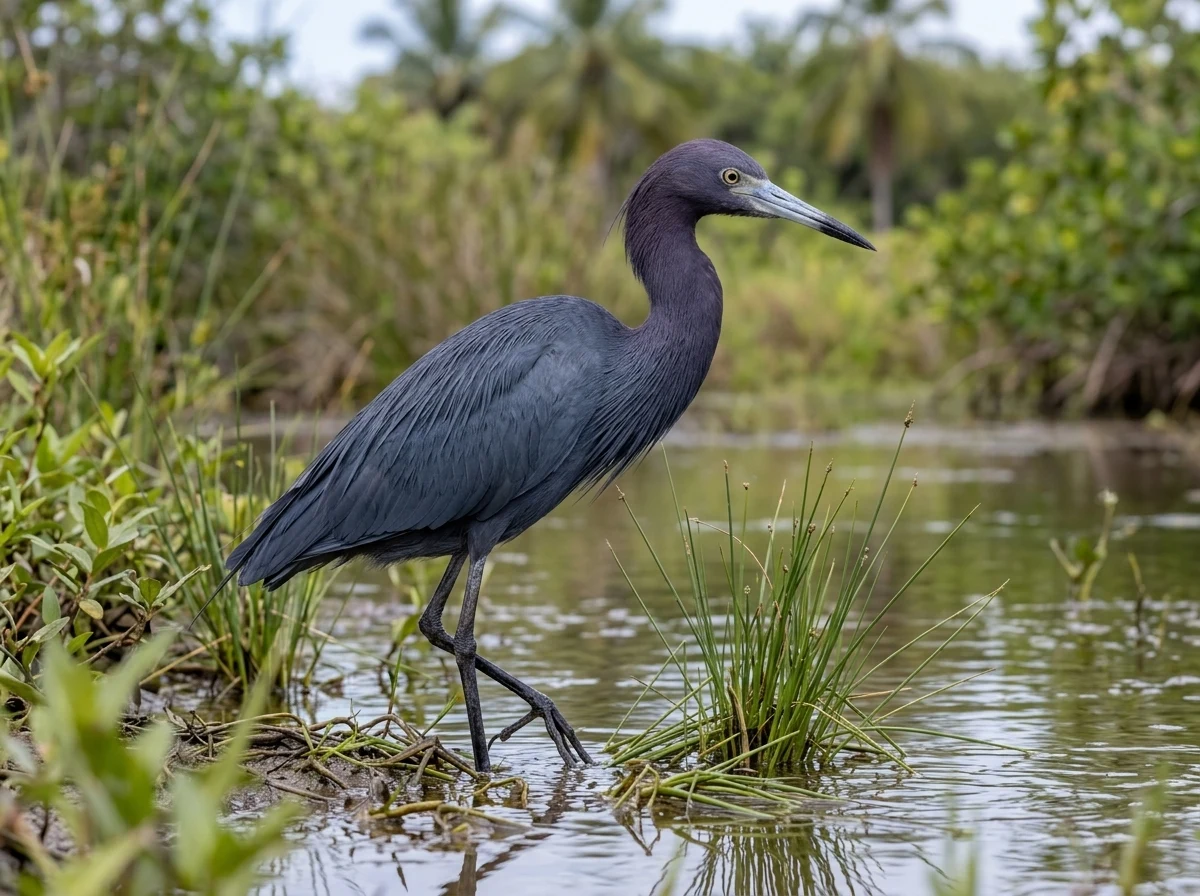
An adult Yellow-crowned Night-Heron is almost entirely gray, with a black head crossed by a white cheek and a pale crown; the yellow wash that gives it its English name is rarely obvious in the field. It has relatively long legs and a thick black bill built for breaking crabs.
An adult Black-crowned Night-Heron looks two-toned: black cap and back contrasting with gray wings. It looks chunkier, with shorter legs. When you see an adult night-heron in the mangroves, the key question is simple: is the head black with a white face stripe (Yellow-crowned) or is the whole back black (Black-crowned)?
02
Juveniles: the real identification challenge
Juveniles of both species are brown with pale spots and are easy to confuse. Young Black-crowned Night-Herons are brown with larger white spots. A juvenile Yellow-crowned looks grayer overall, with smaller pale spots, a thicker all-black bill, and longer legs.
In flight, the most useful clue is the legs: on Yellow-crowned the feet extend much farther past the tail. If the bird is distant, in poor light, or facing away, the honest call is 'night-heron sp.' with photos or audio attached; this site prefers an open identification to a forced one.
03
Where and when to see each yaboa in Puerto Rico
Yellow-crowned Night-Heron lives mainly in mangroves but also uses coastal mudflats, shorelines, lagoons, and estuaries, and sometimes dry thickets far from water. The atlas recorded it in 123 hexagons, with breeding confirmed in 16. Published reports placed breeding from March to July; the atlas found it extends through the year, with most activity in May and June. It builds a bulky stick platform in a tree, usually near water.
Black-crowned Night-Heron is an uncommon resident of freshwater swamps, brackish lagoons, and salt ponds, and on Vieques it is considered a rare spring resident. It is mostly nocturnal, so it is usually seen at dawn or dusk. It nests in tree colonies, mainly from January to late July, with an April–June peak per the atlas, which found it in only 60 hexagons.
04
What they eat: crabs vs. a broader menu
Yellow-crowned Night-Heron is a crustacean specialist. It eats many crabs, walking slowly on land or in shallow water or standing still until prey comes close, and in coastal areas it feeds at dusk, at night, and commonly by day. That is why it is normal to see one at a mangrove edge or even in open ground near crab burrows.
Black-crowned Night-Heron is more of a generalist: it fishes by standing still or walking slowly at the edge of shallow water, mostly from late evening through the night, though it also hunts by day during the breeding season. Its diet includes fish and many other aquatic animals. A night-heron catching crabs in the mangroves at midday points to Yellow-crowned; one leaving a roost for a lagoon at dusk could be either.
05
What a yaboa sounds like at night
Many people search for 'yaboa sound' because they hear the bird without seeing it. Black-crowned Night-Heron gives a loud, barking 'kwok' or 'quawk', often at night or at dusk, plus croaks and harsh calls in colonies. Yellow-crowned has a similar 'quawk' that is higher-pitched.
A short squawk crossing over a lagoon or mangrove at nightfall is usually a night-heron in flight, not an owl. Each species page has recordings with spectrograms; compare the pitch before deciding, and remember that a single distant note is sometimes not enough to separate the two species.
06
Confusing names: yaboa, garza real, and martinete
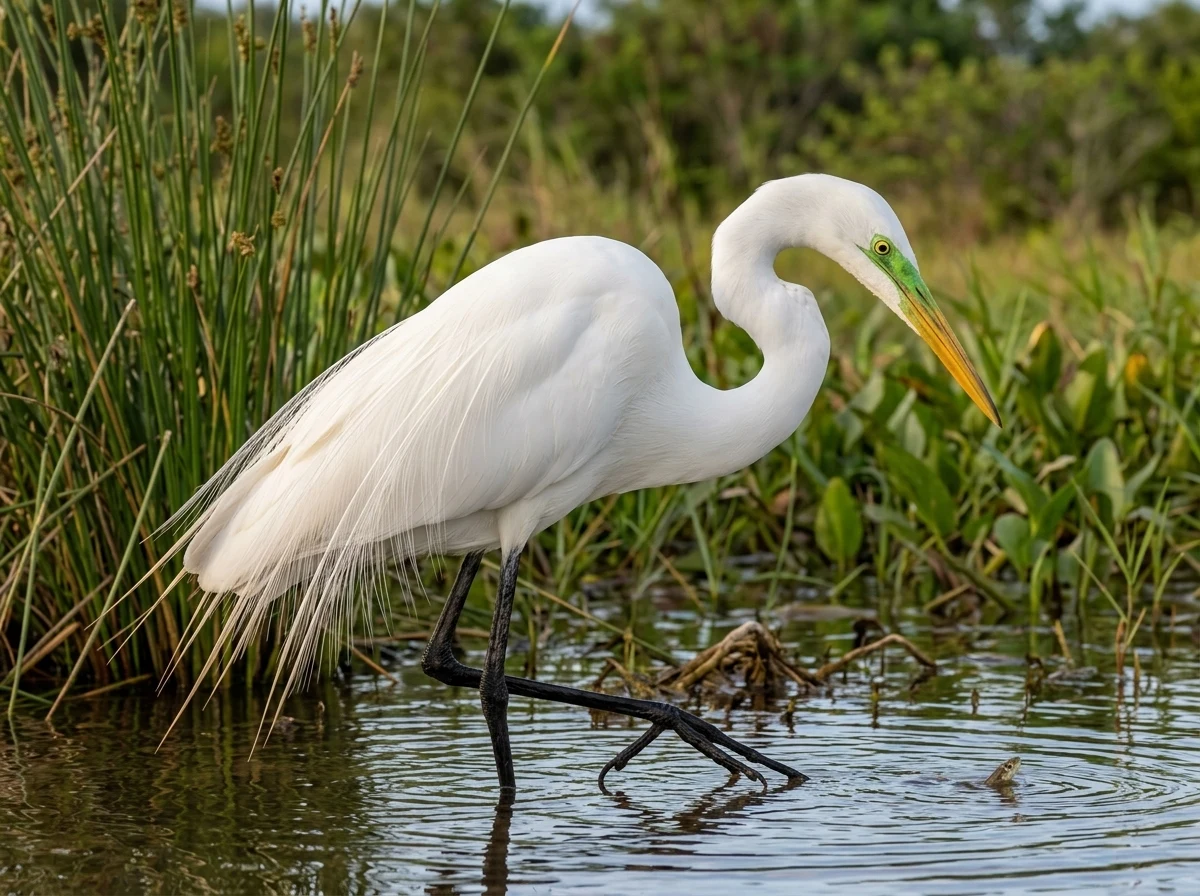
Local names do not always match those used elsewhere. In Puerto Rico, 'Garza Real' is the large white Great Egret, not the Black-crowned Night-Heron (Yaboa Real). 'Martinete' is the Green Heron, while in Spain 'martinete' refers to night-herons: Black-crowned appears as Martinete Común and Yellow-crowned as Martinete Coronado in Spanish nomenclature.
The catalog's Yaboa Americana is a different bird: the American Bittern, brown, streaked, and accidental on the island. If you are looking up 'the yaboa' you see in your town's mangroves, it is almost certainly the Yellow-crowned Night-Heron. Neither night-heron is listed in any threatened category by Puerto Rico's DNER or the U.S. Fish and Wildlife Service.
Linked profiles
The yaboas and the herons they get confused with
Open each profile to compare photos, status, and recordings for the night-herons and their look-alikes.

Sound archive
Hear its voice
Explore real songs and calls. The spectrogram turns each sound into a visual trace of time and frequency.
XC1070309Recording 1 of 3nocturnal flight call

Play: nocturnal flight call by Vandousselaere Patrick
Choose another recording
Sound recorded by Vandousselaere Patrick · XC1070309 · CC BY-NC-SA 4.0. Visualization by Stichting Xeno-canto voor Natuurgeluiden.
Every recording retains the creator, catalogue number, and license published by Xeno-canto. Metadata via GBIF ↗
01
What is a yaboa bird?
Yaboa is the Puerto Rican name for night-herons. There are two on the island: the Yaboa Común (Yellow-crowned Night-Heron), the more widespread crab-eater, and the Yaboa Real (Black-crowned Night-Heron), scarcer and found in lagoons and swamps.
02
What is the difference between a Yellow-crowned and a Black-crowned Night-Heron?
An adult Yellow-crowned is gray with a black head and a white cheek; an adult Black-crowned has a black cap and back with gray wings. In juveniles, Yellow-crowned has a thicker black bill, longer legs, and smaller spots.
03
What do night-herons eat in Puerto Rico?
Yellow-crowned Night-Heron eats mostly crabs and other crustaceans and, on the coast, feeds at night and by day. Black-crowned Night-Heron is more of a generalist, taking fish and other aquatic animals at the edge of shallow water.
04
What does a night-heron sound like?
Black-crowned Night-Heron gives a loud, barking 'kwok' or 'quawk', mostly at night or dusk. Yellow-crowned gives a similar but higher-pitched 'quawk'. They are often heard as they fly over lagoons or mangroves.
05
Are night-herons endangered in Puerto Rico?
No. Neither night-heron is in a threatened category with Puerto Rico's DNER or the U.S. Fish and Wildlife Service, and both are Least Concern on the IUCN Red List. Black-crowned, however, is uncommon on the island.
06
Is the Garza Real the same bird as the Yaboa Real?
No. In Puerto Rico, Garza Real is the large white Great Egret, while Yaboa Real is the Black-crowned Night-Heron. They are different species with different size, color, and habits.
Keep exploring
Connected routes
Sources and review
The evidence is one link away.
These sources support the editorial scope of this guide. Bird profiles also retain their own taxonomy, occurrence, and conservation references.
Reviewed:
01↗02↗03↗04↗05↗
Sociedad Ornitológica Puertorriqueña
Catalog of the Birds of Puerto Rico
Official local names: Guabairo (de Puerto Rico), Yaboa Común, Yaboa Real, Yaboa Americana, Garza Real, Martinete, Comeñame, Zorzal Pardo/Chucho, Zorzal Patirrojo, Viuda, Viuda Colicinta, and Veterano.USDA Forest Service, International Institute of Tropical Forestry
The Puerto Rico Breeding Bird Atlas (PDF)
Species accounts: distribution, habitat, record and hexagon counts, nesting months, nests, Pin-tailed Whydah parasitism of Orange-cheeked Waxbill, and share of protected habitat.National Audubon Society
Yellow-crowned Night Heron, Audubon Guide to North American Birds
Adult and juvenile field marks, measurements, a voice higher-pitched than Black-crowned's, and a crab-heavy diet.National Audubon Society
Black-crowned Night Heron, Audubon Guide to North American Birds
Black cap and back, brown white-spotted juveniles, measurements, 'kwok' call, and nocturnal foraging.Xeno-canto Foundation / GBIF
Xeno-canto recordings published through GBIF
Metadata, authorship, licenses, and catalogue records for field recordings used by the atlas.The atlas continues