 AI
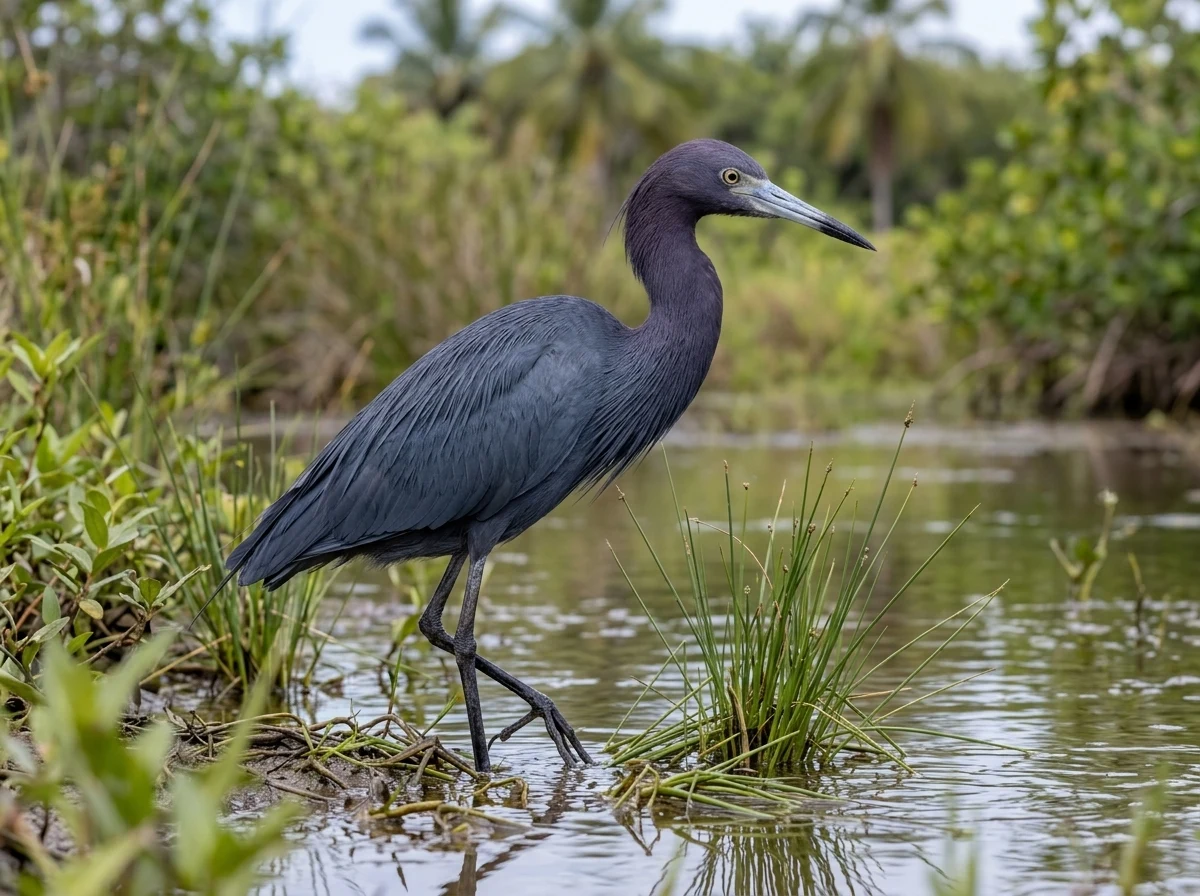
AIAI reconstruction created with Nano Banana 2 · 1K, grounded in the profile’s documented taxonomy, habitat, natural-history sources, and an open-license visual reference when available. It is an interpretive image, not documentary evidence. Image policy →
Little Blue Heron
Garza Azul
Egretta caerulea
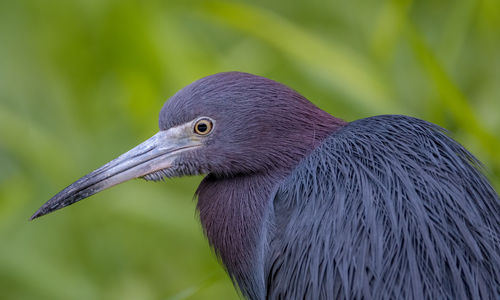
The little blue heron (Egretta caerulea) is a small heron of the genus Egretta. It is a small, darkly colored heron with a two-toned bill. Juveniles are entirely white, bearing resemblance to the snowy egret. During the breeding season, adults develop different coloration on the head, legs, and feet. They have a range that encompasses much of the Americas, from the United States to northern South America. Some populations are migratory. They can be found in both saltwater and freshwater ecosystems. Their preference for either one depends on where they live. Nesting behaviors are documented by numerous sources. The adults build nests in trees, in colonies with other bird species. The number of eggs laid varies from place to place. The young mature quickly, requiring little attention from adults after about nineteen days of age. Both young and adults are sometimes preyed on by other species. Adults hunt fish, crabs, and other small animals. As with clutch sizes, diet can vary regionally. The population of E. caerulea is declining. Many possible reasons for this have been proposed. Exposure to heavy metals has been found to have detrimental effects on young birds.
Sound archive
Hear its voice
Explore real songs and calls. The spectrogram turns each sound into a visual trace of time and frequency.

Play: call, flight call by JAYRSON ARAUJO DE OLIVEIRA
Choose another recording
Sound recorded by JAYRSON ARAUJO DE OLIVEIRA · XC1025694 · CC BY-NC-SA 4.0. Visualization by Stichting Xeno-canto voor Natuurgeluiden.
Every recording retains the creator, catalogue number, and license published by Xeno-canto. Metadata via GBIF ↗
Island profile
About the Little Blue Heron
This atlas includes Little Blue Heron (Egretta caerulea) with atlas status “Native / natural occurrence” within scope “Avibase inferred core 380.” Global trait data associate it primarily with wetland; consult the linked records to resolve its Puerto Rico habitat use.
Conservation
Least Concern
IUCN LC
- Global IUCN
- LC
- Puerto Rico DNER
- No current listing in source crosswalk
- Federal ESA
- No current listing in source crosswalk
- Critical habitat
- Not identified in source crosswalk
Natural history
How it lives
- Habitat
- wetlands
- Elevation
- 0–1700 m
- Nest
- Tree
- Clutch
- 2–5 eggs
- Social behavior
- Colonial
For kids and families
Turn this bird into your own artwork
Download a clean, print-ready coloring page, learn one quick fact, and color this Puerto Rico bird.
Keep exploring
This bird belongs to 4 paths through the atlas.
Guides featuring this bird
Follow this record beyond the profile.
Identification, sound, place, and explanatory guides connecting this species to larger questions.
See all related guides (10)
- Blue Herons of Puerto Rico: Little Blue, Tricolored, and Great Blue
- How to draw a heron step by step
- Great Egret vs. Snowy Egret vs. Cattle Egret in Puerto Rico
- Birds of Humacao
- Herons
- Mangrove birds
- Blue birds
- Birds of San Juan's Lagoons: San José, Torrecilla, Condado, Martín Peña
- Birding San Juan in One Day from a Cruise Ship
- White birds
Related in the atlas
Where to fly next
Connected by taxonomy, habitat, occurrence, and conservation.
 AI
AI AI
AI AI
AI AI
AI AI
AI AI
AI
Evidence trail