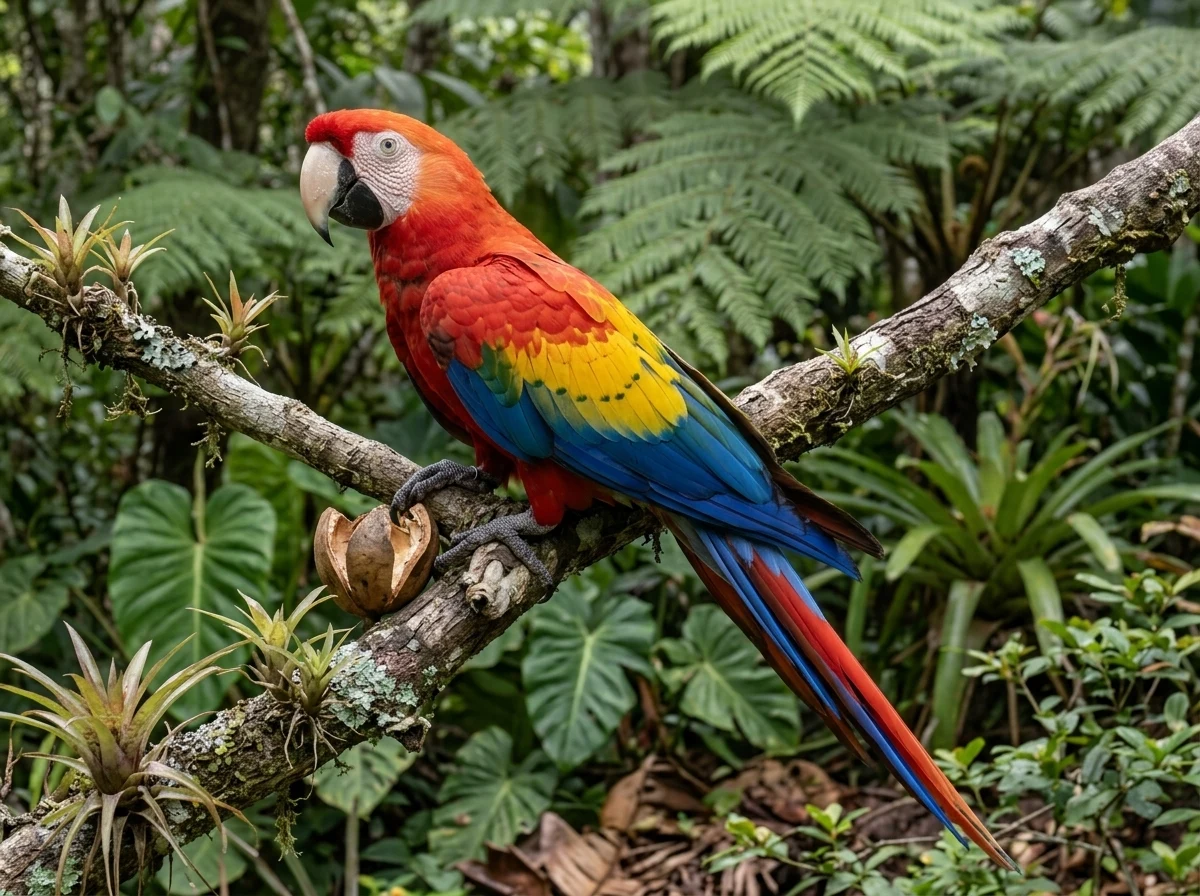
 AI
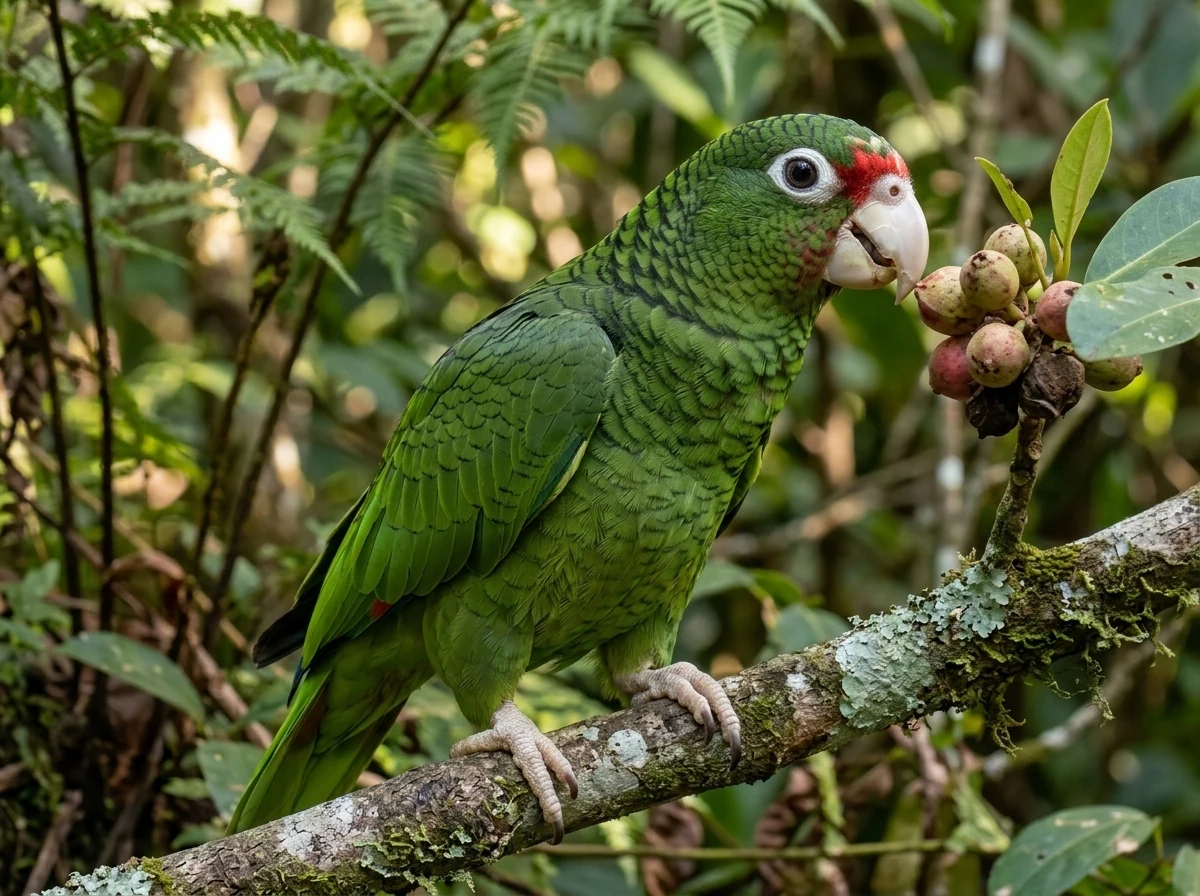
AIAI reconstruction created with Nano Banana 2 · 1K, grounded in the profile’s documented taxonomy, habitat, natural-history sources, and an open-license visual reference when available. It is an interpretive image, not documentary evidence. Image policy →
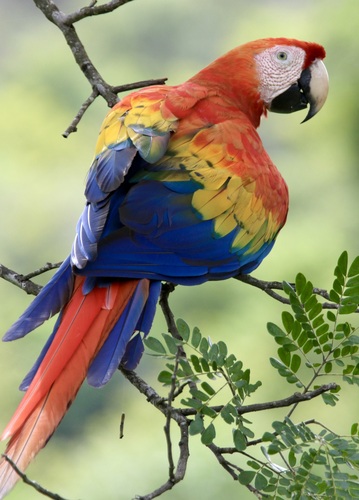
Scarlet Macaw
Guacamayo Rojo
Ara macao
The scarlet macaw (Ara macao) also called the red-and-yellow macaw, red-and-blue macaw or red-breasted macaw, is a large yellow, red and blue Neotropical parrot native to humid evergreen forests of the Americas. Its range extends from southeastern Mexico to Peru, Ecuador, Colombia, Bolivia, Venezuela, Honduras, and Brazil in lowlands of 500 m (1,600 ft) (at least formerly) up to 1,000 m (3,300 ft), the Caribbean island of Trinidad, as well as the Pacific island of Coiba. Formerly, the northern extent of its range included southern Tamaulipas. In some areas, it has suffered local extinction because of habitat destruction, or capture for the parrot trade, but in other areas, it remains fairly common. It is the national bird of Honduras. Like its relative the blue-and-yellow macaw, the scarlet macaw is a popular bird in aviculture as a result of its striking plumage. It is the third most common macaw species in captivity after the blue-and-yellow and red-and-green macaw respectively. In recent years it has become much rarer in captivity and much more expensive due to stricter laws, its price being higher than even red-and-green macaws.
Sound archive
Hear its voice
Explore real songs and calls. The spectrogram turns each sound into a visual trace of time and frequency.

Play: call by Paul Driver
Choose another recording
Sound recorded by Paul Driver · XC1085858 · CC BY-NC-SA 4.0. Visualization by Stichting Xeno-canto voor Natuurgeluiden.
Every recording retains the creator, catalogue number, and license published by Xeno-canto. Metadata via GBIF ↗
Island profile
About the Scarlet Macaw
This atlas includes Scarlet Macaw (Ara macao) with atlas status “Uncertain origin” within scope “Avibase rendered overflow / uncertain-origin review.” Global trait data associate it primarily with forest; consult the linked records to resolve its Puerto Rico habitat use.
Conservation
Least Concern
IUCN LC
- Global IUCN
- LC
- Puerto Rico DNER
- No current listing in source crosswalk
- Federal ESA
- No current listing in source crosswalk
- Critical habitat
- Not identified in source crosswalk
Natural history
How it lives
- Habitat
- forests
- Elevation
- 0–500 m
- Nest
- Tree cavity · Tree
- Clutch
- 1–4 eggs
- Social behavior
- Pairs / family groups
Keep exploring
This bird belongs to 4 paths through the atlas.
Guides featuring this bird
Follow this record beyond the profile.
Identification, sound, place, and explanatory guides connecting this species to larger questions.
Related in the atlas
Where to fly next
Connected by taxonomy, habitat, occurrence, and conservation.
 AI
AI AI
AI AI
AI AI
AI AI
AI AI
AI
Evidence trail
Sources, media & further reading
Research note: Rendered by Avibase but excluded from the inferred 380-core reconciliation because it is an uncertain-origin overflow row absent from the standard-format Wikipedia list. Avibase marks origin uncertain; native versus introduced cannot be assigned confidently.