 AI
AIMacaws
Are there macaws in Puerto Rico?
No macaw is native to Puerto Rico, but one already nests in royal palms in the metro area. The others are, for now, loose birds without a proven population.
Reviewed:Short answer: yes, but not native
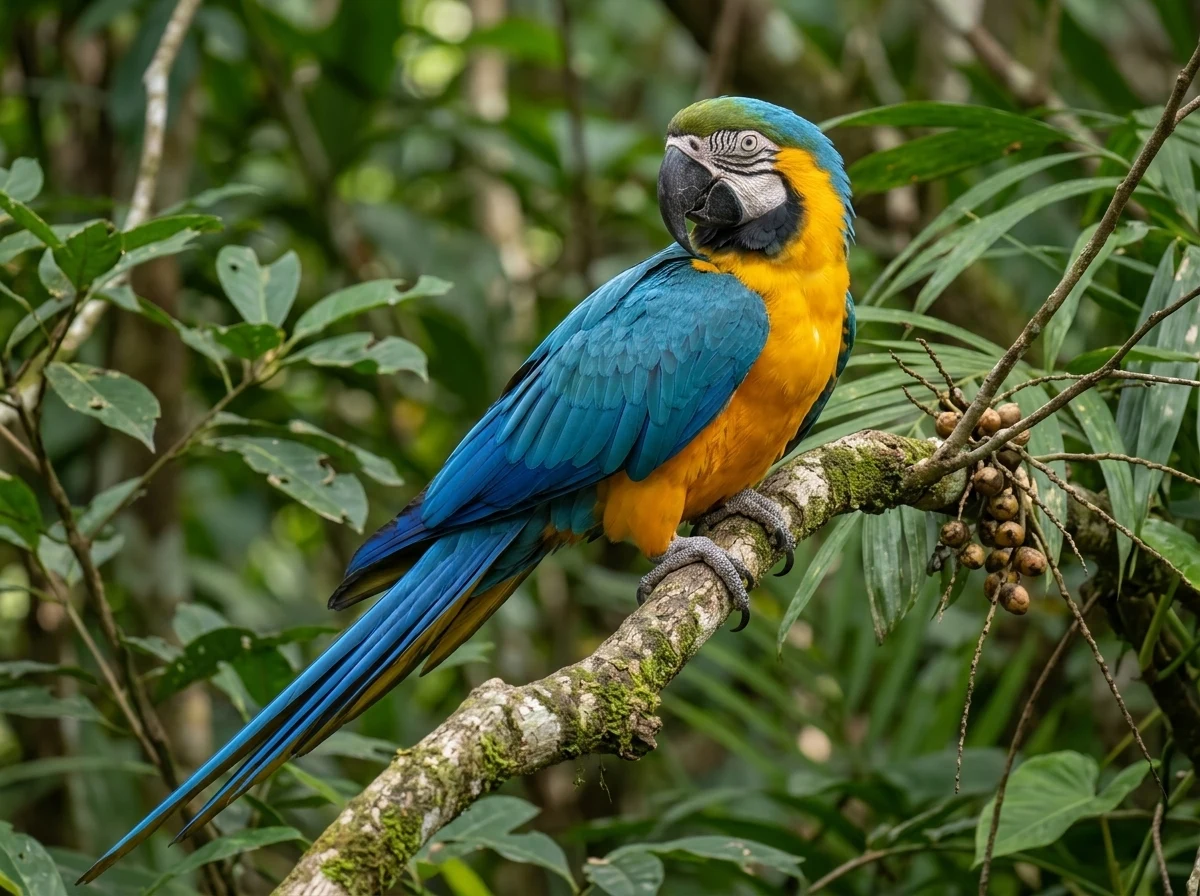
Yes, there are macaws in Puerto Rico, but none are native. The Blue-and-yellow Macaw (Ara ararauna) has wild, breeding populations in metropolitan San Juan and in Orocovis; the Red-and-green Macaw (Ara chloropterus) and the Scarlet Macaw (Ara macao) are seen as escaped birds, with no proven established population.
The distinction matters because many macaw photos from the island show pets in yards or birds that are loose only temporarily. This guide summarizes what the most complete study of introduced parrots in Puerto Rico documented, how to separate the three species, and what to look for to tell whether a macaw belongs to a wild population.
Macaws
Macaws in numbers
≈14Blue-and-yellows in the metro areaAfter falling from up to 22 birds (1996–2002), the population stabilized at about 14.
15+Breeding in OrocovisA second population about 29 km from the metro one.
1.1–1.4 kgMacaw body massAbout four times the mass of an Iguaca (281 g).
0Living native macawsAll macaws on the island today are introduced or of uncertain origin.
01
Blue-and-yellow Macaw: the one that became established
The Blue-and-yellow Macaw is the most commonly kept macaw in the world, and in Puerto Rico it is the only one with documented breeding populations. Falcón and Tremblay (2018) recorded up to 22 birds in metropolitan San Juan between 1996 and 2002, a later decline, and then stabilization at about 14. In addition, at least 15 birds are breeding in Orocovis, about 29 kilometers away, and there have been sightings in Cabo Rojo.
The same study placed it in the most advanced invasion stage of its scheme (E) and published a photo of a pair at their nest in a Puerto Rico royal palm (Roystonea borinquena). It also documented the species eating mahogany seeds, which are too large for other birds. Recent public observations on iNaturalist are concentrated in San Juan—including the Río Piedras campus—Guaynabo, and Bayamón.
02
Red-and-green and Scarlet Macaws: escapes
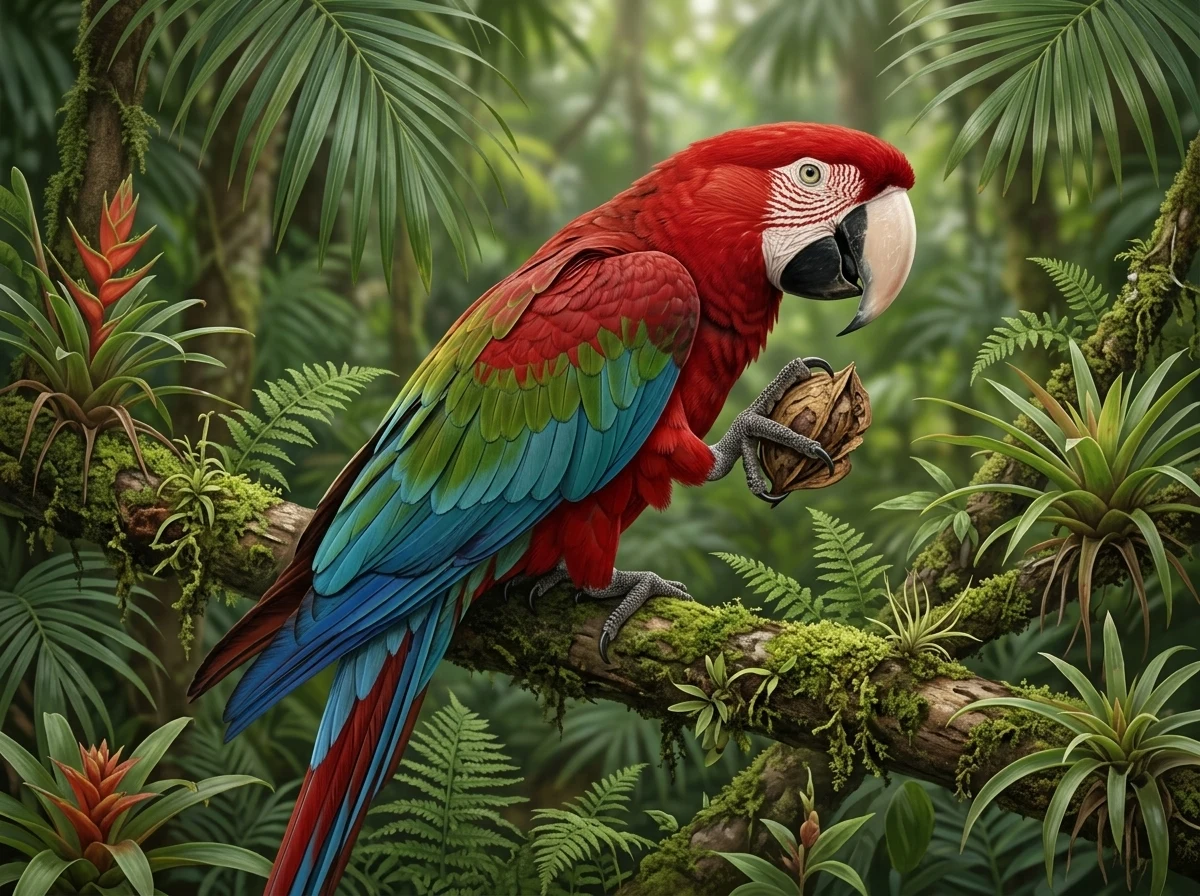
The Red-and-green Macaw, also called Green-winged Macaw, is the largest member of the genus Ara: red with a green band across the wing and a white face lined with small red feathers. In Puerto Rico, Falcón and Tremblay placed it between C0 and C2: free birds that do not survive long, that survive without breeding, or that breed without forming a stable population. In short, it is seen loose, but no population has been demonstrated.
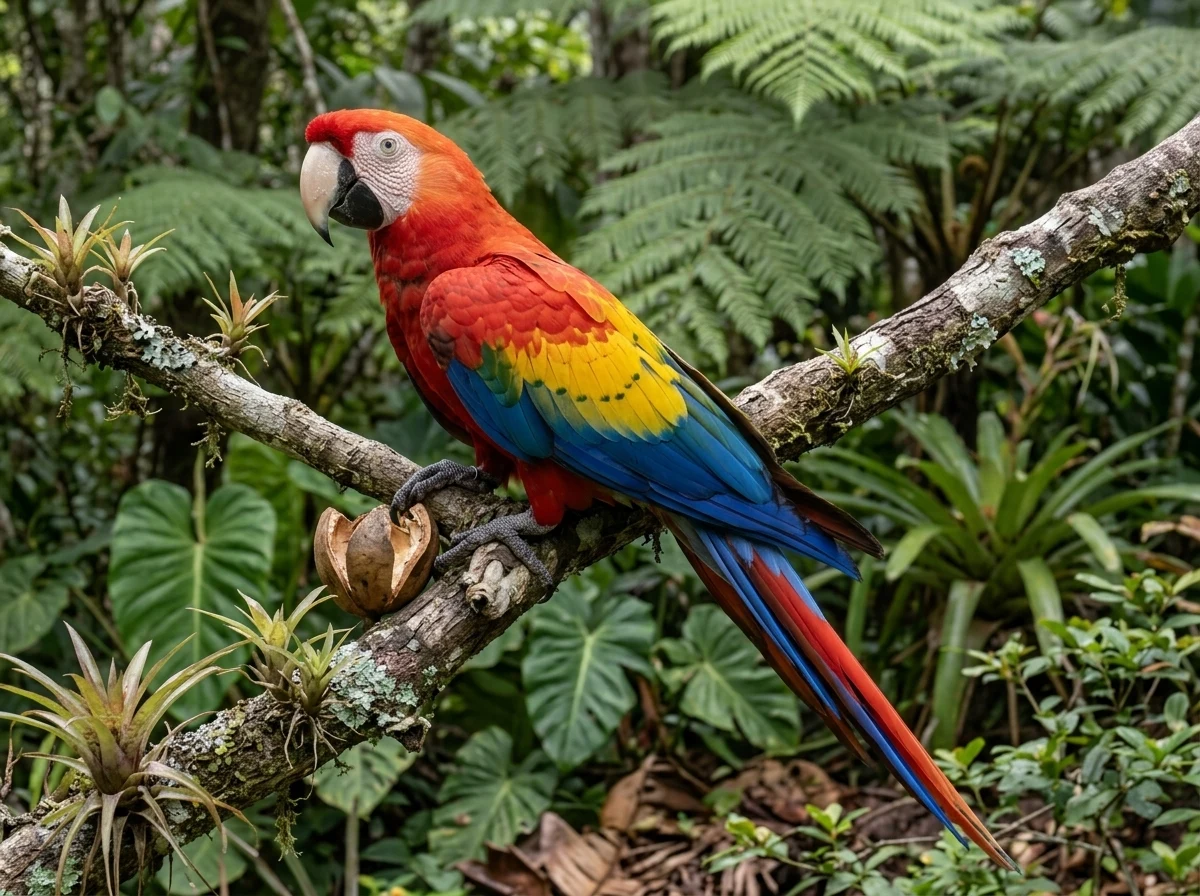
The Scarlet Macaw (Ara macao) looks similar but has a yellow band on the wing and an almost bare white face. Its status on the island is equally uncertain (C0–C3). Our species pages treat it, like the Red-and-green, as a species of uncertain origin. Birds that look like Blue-and-yellow × Red-and-green hybrids have also been photographed around San Juan, which is typical of populations founded by pets.
03
How to tell the three macaws apart
Check body color first: blue above and yellow below is Blue-and-yellow; red is Red-and-green or Scarlet. To separate those two, look at the band on the wing coverts: green on the Red-and-green, yellow on the Scarlet. The face helps too: Red-and-green shows lines of small red feathers on white skin, Scarlet has almost bare white skin, and Blue-and-yellow has black lines.
In flight, macaws stand out by their size, very long graduated tails, and deep wingbeats. They weigh 1.1 to 1.4 kilograms, four times as much as an amazon parrot. A lone bird near houses that shows no fear of people may be a loose pet; pairs or groups that use tall palms for weeks may be part of a wild population.
04
Hurricanes and survival
Hurricane María in September 2017 was a test for urban macaws. Falcón and Tremblay reported at least one Blue-and-yellow Macaw found dead in Guaynabo, but also at least eight macaws seen after the storm, showing that part of the population survived.
The lack of food changed their behavior: macaws that normally feed high in trees and palms were seen eating flowers on shrubs as low as 1.5 meters off the ground. That flexibility helps explain how a South American tropical bird can persist in a hurricane-exposed Caribbean city.
05
Was there ever a Puerto Rican macaw?
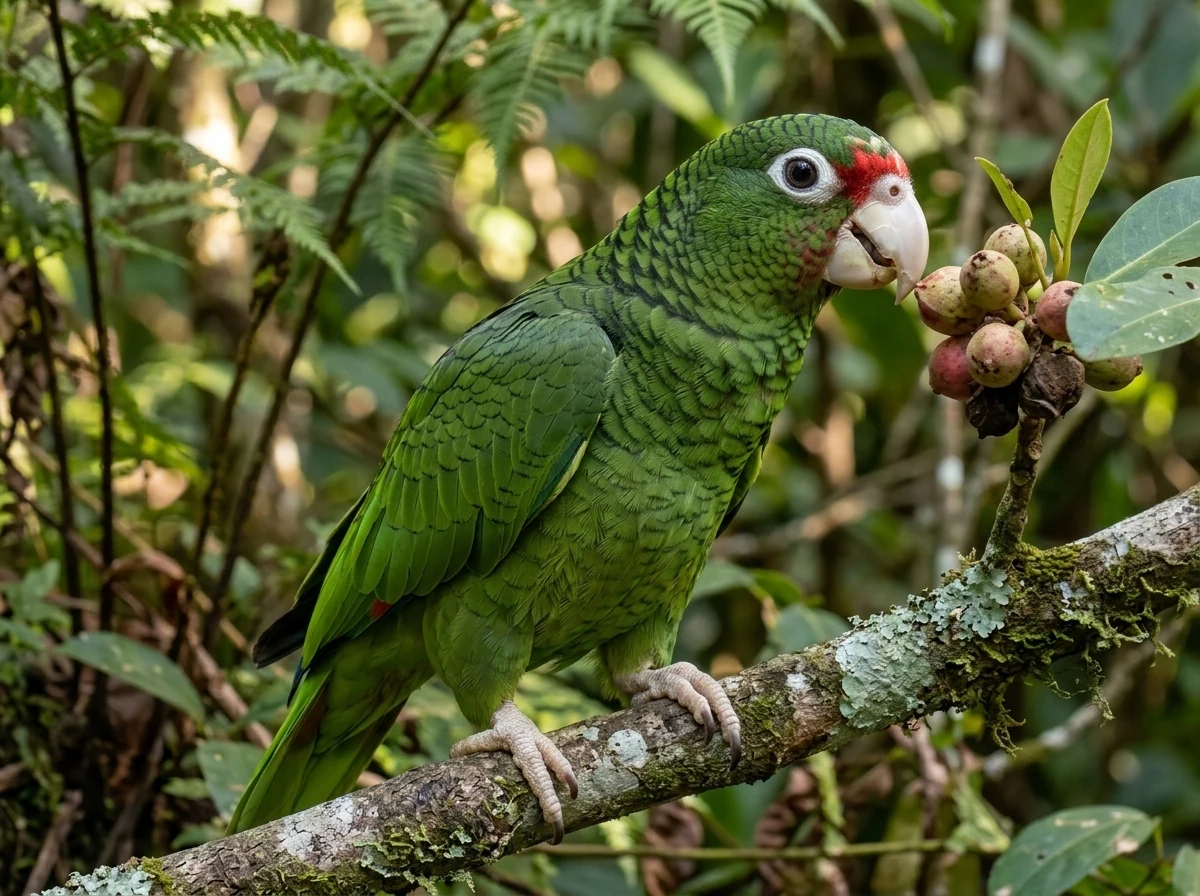
Some people search for a “Puerto Rican macaw.” No native macaw exists today: the only living native parrot on the island is the Puerto Rican Parrot, and the only native parakeet, the Puerto Rican Parakeet, went extinct in the nineteenth century. The macaws on the Puerto Rico bird list appear as introduced or of uncertain origin.
If you see a macaw flying free, note species, number, municipality, whether it was at a palm or nest, and whether it wore a band or seemed tame, and share it on eBird or iNaturalist. Those records are what make it possible to tell an escape from a breeding population.
Linked profiles
Macaws recorded in Puerto Rico
Three introduced or uncertain-origin species, compared with the native parrot.
Sound archive
Hear its voice
Explore real songs and calls. The spectrogram turns each sound into a visual trace of time and frequency.
XC1084398Recording 1 of 3call

Play: call by Robson Silva e Silva
Choose another recording
Sound recorded by Robson Silva e Silva · XC1084398 · CC BY-NC-SA 4.0. Visualization by Stichting Xeno-canto voor Natuurgeluiden.
Every recording retains the creator, catalogue number, and license published by Xeno-canto. Metadata via GBIF ↗
01
Are there macaws in Puerto Rico?
Yes. The Blue-and-yellow Macaw breeds in the wild in metropolitan San Juan (about 14 birds) and in Orocovis (at least 15). Red-and-green and Scarlet Macaws appear as escaped birds without a proven established population. None are native.
02
What is the Red-and-green Macaw?
It is Ara chloropterus, the largest macaw in the genus Ara (about 1.4 kg), red with a green wing band and lines of small red feathers on its white face. It comes from South America; in Puerto Rico it is seen as an escaped bird with no demonstrated established population.
03
What is the difference between Red-and-green and Scarlet Macaws?
Both are red, but the Red-and-green has a green wing band and lines of red feathers on the face, while the Scarlet has a yellow wing band and an almost bare white face. The Red-and-green is also slightly larger.
04
Where do macaws live in San Juan?
Public Blue-and-yellow Macaw observations are concentrated in San Juan, including the Río Piedras campus, Guaynabo, and Bayamón. They nest in cavities in tall palms such as the royal palm. Watch from a distance and do not approach nests.
05
Was there a native Puerto Rican macaw?
No native macaw lives in Puerto Rico today. The island's native parrots are the Puerto Rican Parrot, still alive, and the Puerto Rican Parakeet, now extinct. All macaws on the island today are introduced or of uncertain origin.
Keep exploring
Connected routes
Sources and review
The evidence is one link away.
These sources support the editorial scope of this guide. Bird profiles also retain their own taxonomy, occurrence, and conservation references.
Reviewed:
01↗02↗03↗04↗
PeerJ (Falcón & Tremblay 2018), via PubMed Central
From the cage to the wild: introductions of Psittaciformes to Puerto Rico
Inventory of 46 psittacines, invasion stage per species, eBird trends, history of White-winged and Monk Parakeets, macaws in San Juan and Orocovis, and Hurricane María effects.iNaturalist
Ara ararauna observations in Puerto Rico
Recent photographic records of Blue-and-yellow Macaw, concentrated in San Juan, Guaynabo, and Bayamón.Sociedad Ornitológica Puertorriqueña
Official bird list
Local names, occurrence categories, and the public summary of 17 endemics.The Wilson Journal of Ornithology
History and fossils of the Puerto Rican Parakeet
Specimens, archaeological material, and distinction of the extinct parakeet.The atlas continues