 AI
AIPuerto Rico Bird Guides
How Birds Participate in Pollination
Birds pollinate when pollen sticks to their bodies as they seek nectar and is later deposited on another flower. In Puerto Rico, the Puerto Rican Emerald and the Bananaquit illustrate two different styles of doing so.
Reviewed:Prepared with AI assistance and linked sources. Illustrations are not field photographs.
What It Means for a Bird to Pollinate
Pollination is the transfer of pollen from one flower to another, enabling plants to reproduce and produce seeds. When birds carry out this transfer, it is called ornithophily. It is not an intentional act by the bird: pollen sticks to its body while it seeks nectar, and when it visits another flower, some of that pollen rubs off onto the stigma, the part that receives pollen.
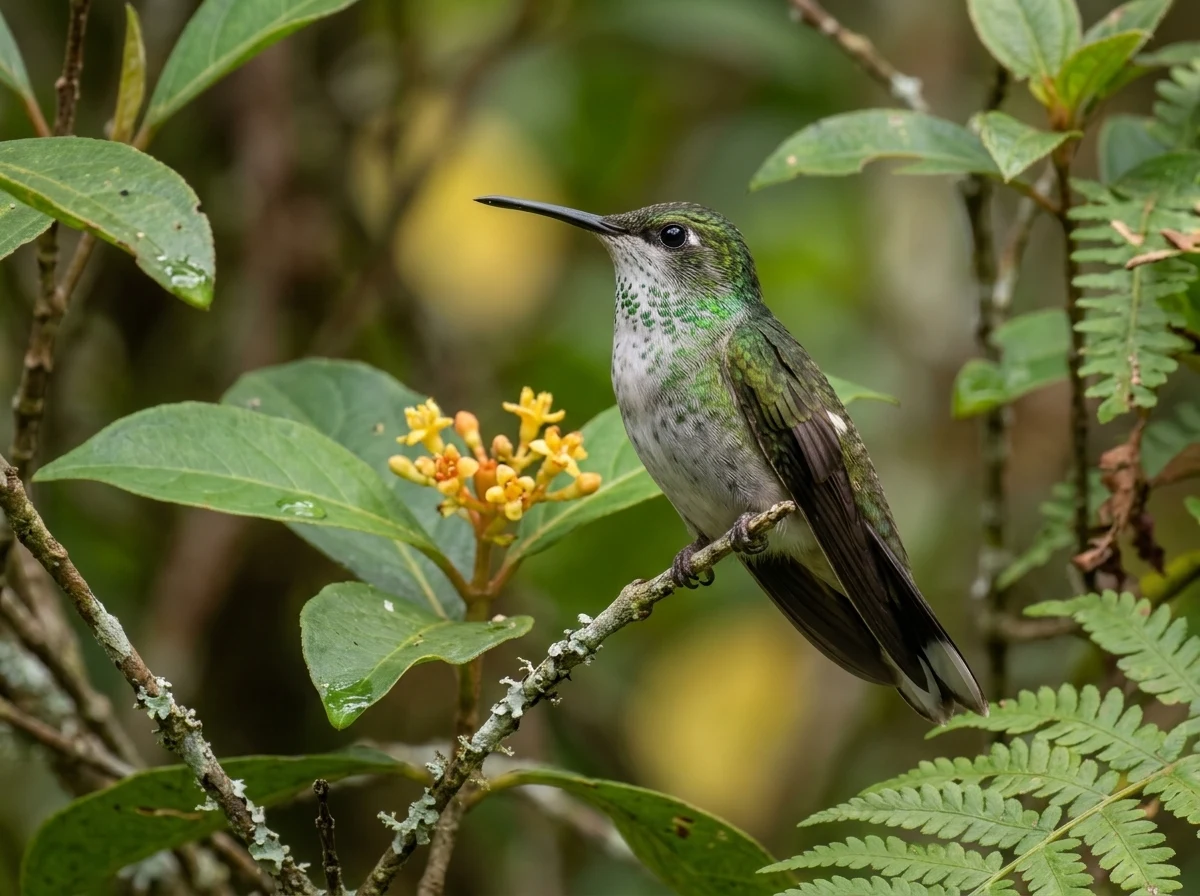
In Puerto Rico, two resident nectar-feeding birds help explain the phenomenon: the Puerto Rican Emerald (Riccordia maugaeus), an endemic hummingbird, and the Bananaquit (Coereba flaveola), a widespread passerine. Their diets include nectar according to the local catalog, and their ways of visiting flowers differ. This guide compares both styles and proposes a simple observation.
Puerto Rico Bird Guides
Three Key Ideas
OrnitofiliaName of the processIt is pollination carried out by birds; the U.S. Fish & Wildlife Service uses the English term 'ornithophily'.
NéctarMain rewardBirds visit flowers seeking nectar; pollen sticks as a side effect.
Dos estilosHummingbird and BananaquitThe emerald hovers while feeding; the Bananaquit often clings to flowers and sometimes pierces the flower.
01
The Mechanism: Pollen Traveling on the Bird
The process begins when a bird inserts its bill into a flower to reach nectar, a sweet liquid it uses as food. In doing so, pollen from the flower sticks to its head, bill, or body. When the bird visits another flower of the same species, some of that pollen rubs off onto the stigma and fertilization occurs. In this way, birds help plants create seeds and produce new generations.
Not all flowers are adapted to birds. Bird-visited flowers are typically tubular, with recurved petals, bright colors such as red, yellow, or orange, little scent, open during the day, and with deep nectar. They produce modest pollen, designed to dust the bird's head or back as it forages. These traits help pollen travel without being wasted.
02
Two Puerto Rico Pollinators: Emerald and Bananaquit
The Puerto Rican Emerald is a hummingbird endemic to the archipelago. Its diet is nectarivorous and it inhabits dry and moist forests, woodlands, plantations, and gardens. Like other hummingbirds, it has a long, slender bill, very good eyesight, and the ability to hover. That combination lets it feed in mid-air in front of tubular flowers and withdraw with its face dusted in pollen. The local catalog records it as resident and native, without inferring abundance.
The Bananaquit is a nectarivorous passerine native and resident in Puerto Rico. Its bill is down-curved and it often clings to flowers or hangs upside down to reach nectar. BirdsCaribbean notes that it sometimes steals nectar by piercing the flower from the side, without pollinating it. That detail is key: not every flower visit equals pollination. The same bird can pollinate on one visit and rob nectar on another.
03
Comparison: Hummingbird vs. Nectar-Feeding Passerine
The main difference is how the bird accesses nectar. The hummingbird usually hovers, with its bill deep in the flower; pollen is deposited on its face and head. The Bananaquit usually clings to the flower, sometimes hangs, and inserts its bill through the natural opening or pierces the side. The U.S. Fish & Wildlife Service describes that orioles, with short bills, become covered in sticky pollen on the body, more like a bumblebee; that detail applies to orioles, not to the Bananaquit.
Another difference is frequency. A hummingbird can visit upwards of 2,000 flowers per day, according to the U.S. Fish & Wildlife Service, making it a very efficient vector for tubular flowers. The Bananaquit visits flowers with less specialization, and its nectar-robbing behavior reduces its effectiveness on some visits. Even so, when it inserts its bill through the natural opening, it can still transfer pollen.
04
Observation Exercise: Follow a Flower, Not Just a Bird
Choose a flowering shrub or tree in your yard, park, or garden. Sit a few meters away and observe for 10 to 15 minutes. Record each bird visit to a flower with four data points: time, bird species if you recognize it, whether it perched or hovered, and whether it inserted its bill through the natural opening or from the side. You do not need to identify the plant to start, though noting its color and flower shape helps.
Afterward, compare your notes. Visits with the bill through the natural opening are candidates for pollination; visits from the side are nectar robbing. If you see visible pollen on the bird's head or body, note it as a clue, not as proof. This exercise requires no special equipment and can be repeated at different times of day to notice patterns.
05
Checklist for an Observation Outing
Before heading out, check that you have what you need: binoculars if you have them, a notebook or phone for notes, a pencil, water, and neutral-colored clothing. Choose a place with visible flowers and sit at a distance so you do not scare the birds. If you plan to photograph, use zoom instead of approaching. Do not touch the flowers or the birds, and do not feed birds sugar or honey.
During the observation, keep a simple routine: scan the flowers, wait, record, and repeat. Note the start and end time, general weather, and any bee or butterfly visits for comparison. When you return, review your notes and share them on a citizen science platform if you wish. The goal is not to prove pollination, but to document visits and behaviors honestly.
Linked profiles
The Birds in This Guide
Two resident nectar-feeding birds of Puerto Rico that show different styles of visiting flowers.
AI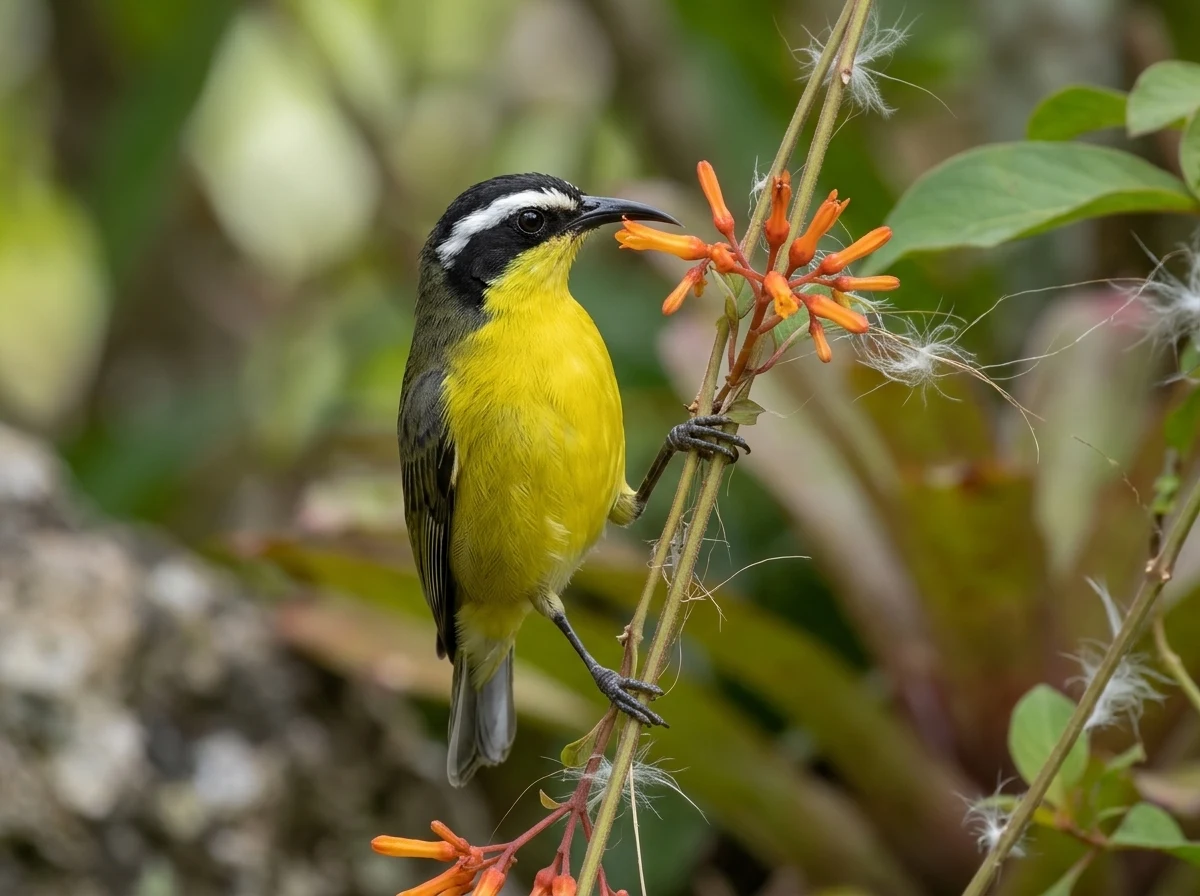 AI
AI01
Do all birds that visit flowers pollinate?
No. Pollination occurs only when pollen sticks to the bird and is later deposited on the stigma of another flower. Some visits, such as the Bananaquit's nectar robbing, do not pollinate because the bird pierces the flower from the side and avoids the stigma.
02
What traits do bird-visited flowers have?
They are typically tubular, with recurved petals, bright colors such as red, yellow, or orange, little scent, open during the day, and with deep nectar. They produce modest pollen designed to stick to the bird's head or back.
03
Is the Puerto Rican Emerald endemic?
Yes. The local catalog records it as endemic to the Puerto Rico archipelago, resident, and native. Abundance is not inferred from that classification.
04
Can I attract pollinating birds to my yard?
You can plant tubular flowers in bright colors and keep a clean hummingbird feeder. Avoid offering sugar or honey without proper guidance. Observing natural visits is more informative than artificial feeding.
05
How do I know if a bird carried pollen?
Sometimes visible pollen can be seen on the bird's head, bill, or body. That is a clue, not proof of pollination. Proof requires pollen reaching the stigma of another flower, something not easily observed with the naked eye.
Keep exploring
Connected routes
Sources and review
The evidence is one link away.
These sources support the editorial scope of this guide. Bird profiles also retain their own taxonomy, occurrence, and conservation references.
Reviewed:
01↗02↗03↗04↗
USDA Forest Service
Bird Pollination
Evidence for cited sections; consult the original document.U.S. Fish & Wildlife Service
Bird Pollinators
Evidence for cited sections; consult the original document.Birds of the World, Cornell Lab of Ornithology
Bananaquit (Coereba flaveola)
Evidence for cited sections; consult the original document.BirdsCaribbean
From the Nest – Day 3 (Bananaquit)
Evidence for cited sections; consult the original document.The atlas continues