 AI
AIPlanting for birds
Native Plants That Feed Puerto Rico's Birds
A native fruiting tree feeds birds for decades without any cleaning. These are documented species, the birds that use them, and where to plant them.
Reviewed:What to plant, in one sentence.
The native plants that attract the most birds in Puerto Rico are those that fruit or flower through much of the year: Puerto Rico royal palm, sea grape, camasey, cupey, and mameyuelo for fruit-eating birds, and firebush (Hamelia patens) and native heliconias for hummingbirds. Combining several, at different heights, spreads food across more months.
This guide relies on two local sources: the Ecología Urbana plant guide, prepared in Tomás Carlo's frugivory and seed-dispersal lab at Penn State, which documents which birds eat each fruit, and the wildlife planting list of the NRCS Caribbean Area, which states whether each species is native, endemic, or naturalized. That distinction matters: not every plant that attracts birds is native.
Planting for birds
The plants in numbers
10plants in the Ecología Urbana guideChosen because they flower and fruit year-round; not all are native.
12–18 mtypical royal palm heightFat-rich fruit and resistance to hurricane winds.
2 sexosin sea grape and cupeyThey are dioecious: you need a female plant, and pollination, to get fruit.
01
Why native, and how to check
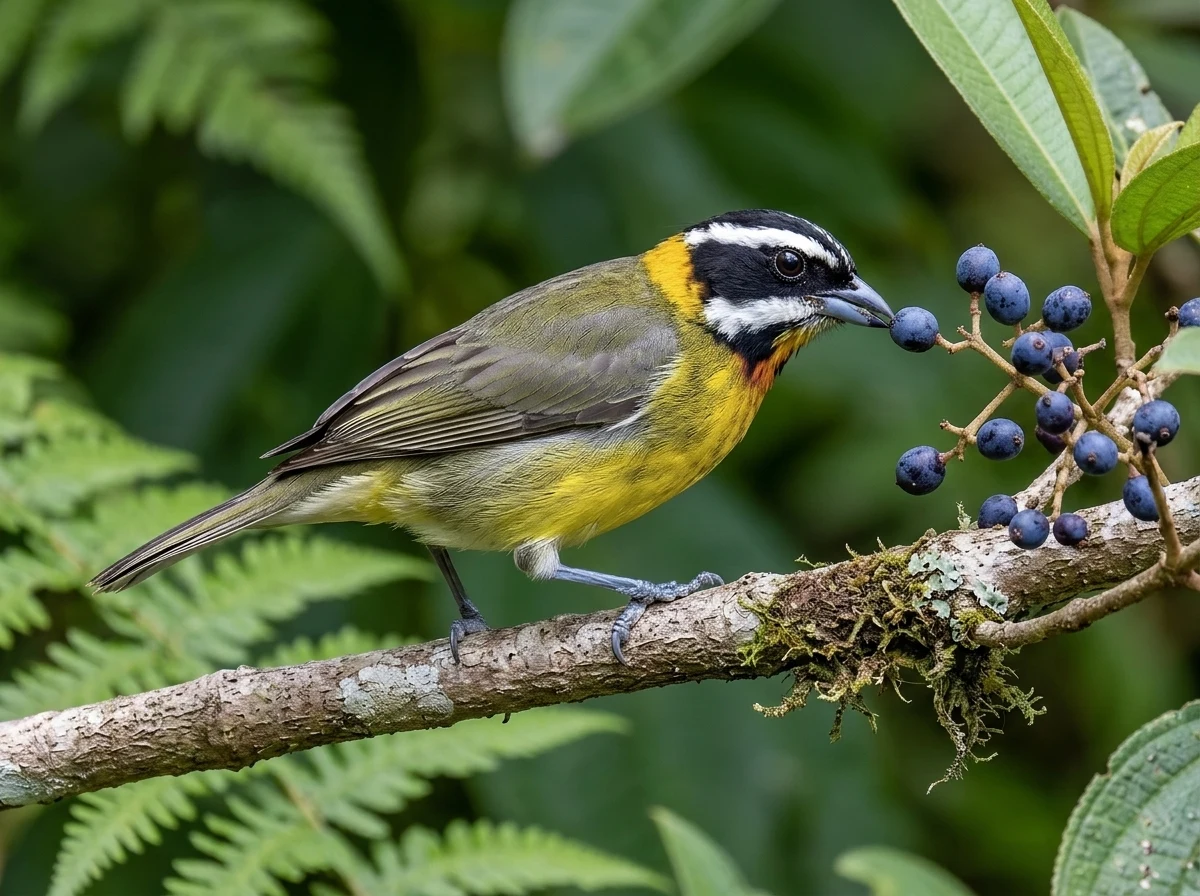
NRCS Caribbean Area recommends native plants because they are adapted to local soil, rainfall, and temperature, resist many insects and diseases, need little irrigation or fertilizer, and are unlikely to become weedy. The island's birds also evolved with those fruits and flowers: the Puerto Rican Spindalis, an endemic fruit-eater, disperses the seeds of the plants it eats.
Before buying, ask for the scientific name. The Ecología Urbana guide itself includes bird-friendly plants that are not native, such as the umbrella tree (Heptapleurum actinophyllum), which originates in Australia. The NRCS list marks each plant as native, endemic, or naturalized; for example, Mexican sunflower (Tithonia diversifolia) is listed as naturalized, not native.
02
Puerto Rico royal palm: food after the hurricane
The Puerto Rico royal palm (Roystonea borinquena) is native to Puerto Rico, Hispaniola, and the Virgin Islands and usually grows 12 to 18 meters tall. It flowers year-round; its blossoms provide nectar to bees, other insects, and nectar-feeding birds, and its small fruits, which ripen red or purple, are a fat-rich food for birds that disperse the seeds. It also provides habitat and nesting sites.
Its great advantage on the island is that it withstands hurricane-force winds. Ecología Urbana describes it as one of the first food sources for birds after a hurricane, when many trees lose their flowers and fruit. Its roots do not damage sidewalks or structures, and it grows in a variety of soils, so it fits urban yards and street edges.
03
Sea grape: the coastal choice
Sea grape (Coccoloba uvifera), native according to NRCS, tolerates salty soils and wind, which makes it work for homes near the sea. It can be kept as a shrub or grown into a tree of about nine meters and prefers full sun. Its grape-like clusters turn from green to violet as they ripen.
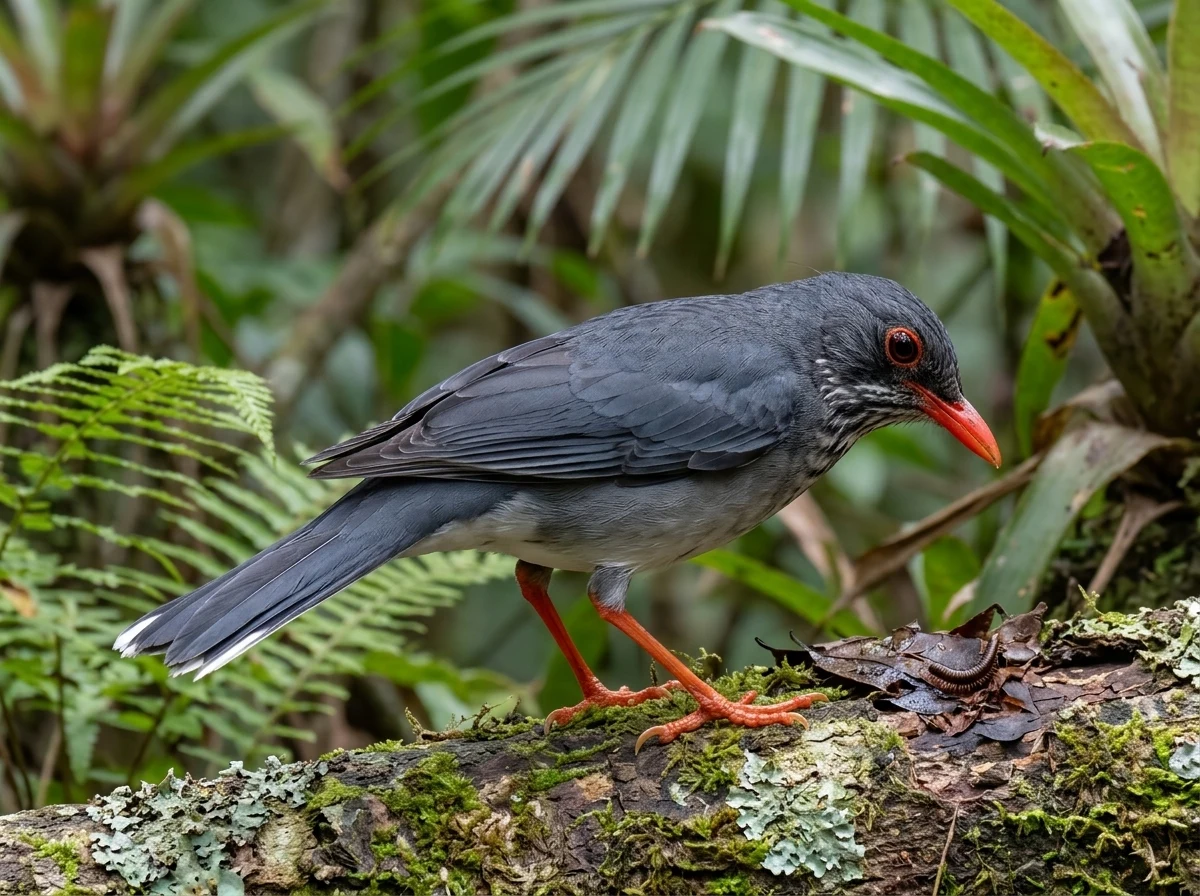
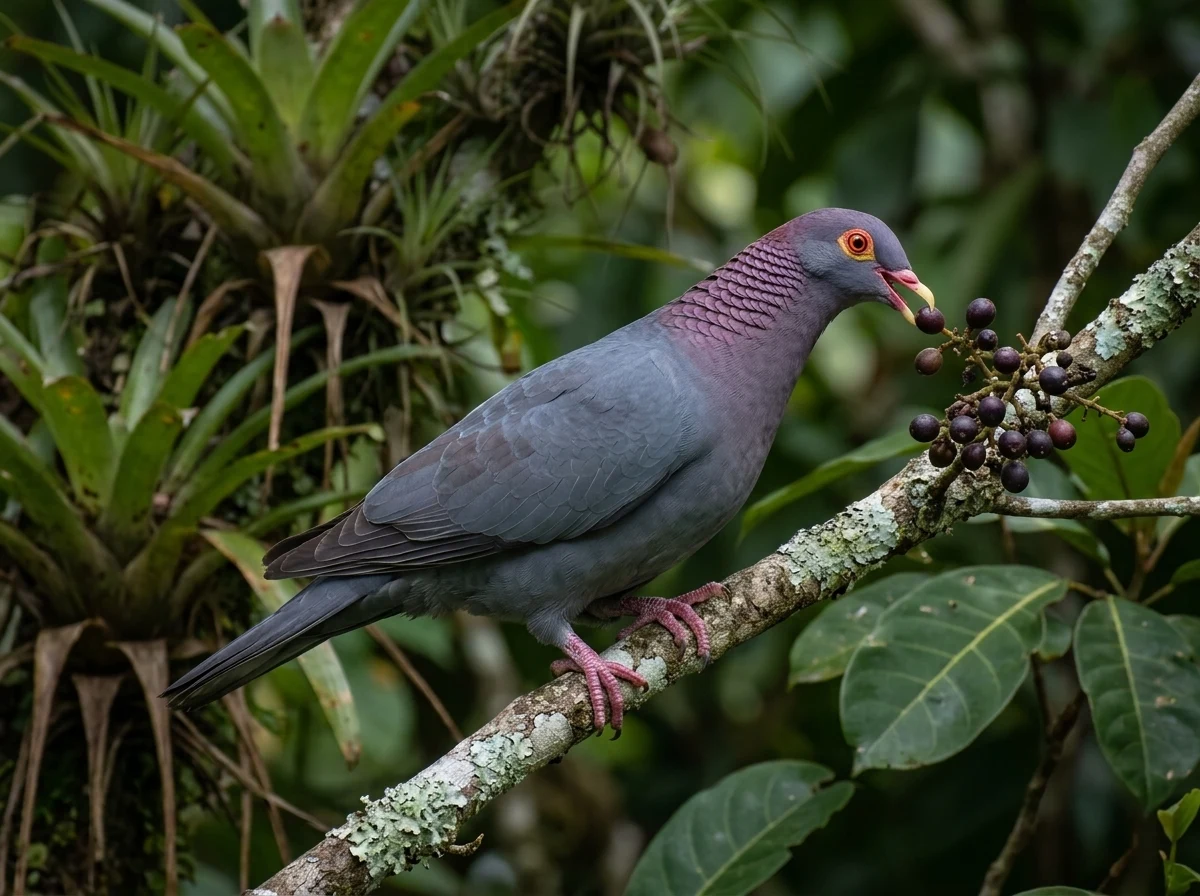
It is dioecious: there are male and female plants, and cross-pollination is needed for fruit. Ecología Urbana documents that large birds such as pigeons and thrushes swallow the fruit whole and disperse the seeds, while smaller birds, such as Puerto Rican Spindalis and Puerto Rican Bullfinch, eat the sweet pulp. If you have room for only one, ask the nursery for a female plant.
04
Camasey and cupey: fruit for thrushes, warblers, and spindalis
Camasey blanco (Miconia prasina), native according to NRCS, is an evergreen shrub or small tree up to seven meters that grows best in humid, mountainous areas. It flowers and fruits year-round, and Ecología Urbana reports that Puerto Rican Spindalis, Puerto Rican Tanager, thrushes, pigeons, and migrant warblers eat its fruit. Camasey de paloma (Miconia laevigata), up to six meters, plays a similar role. Both are pioneers that help restore degraded ground.
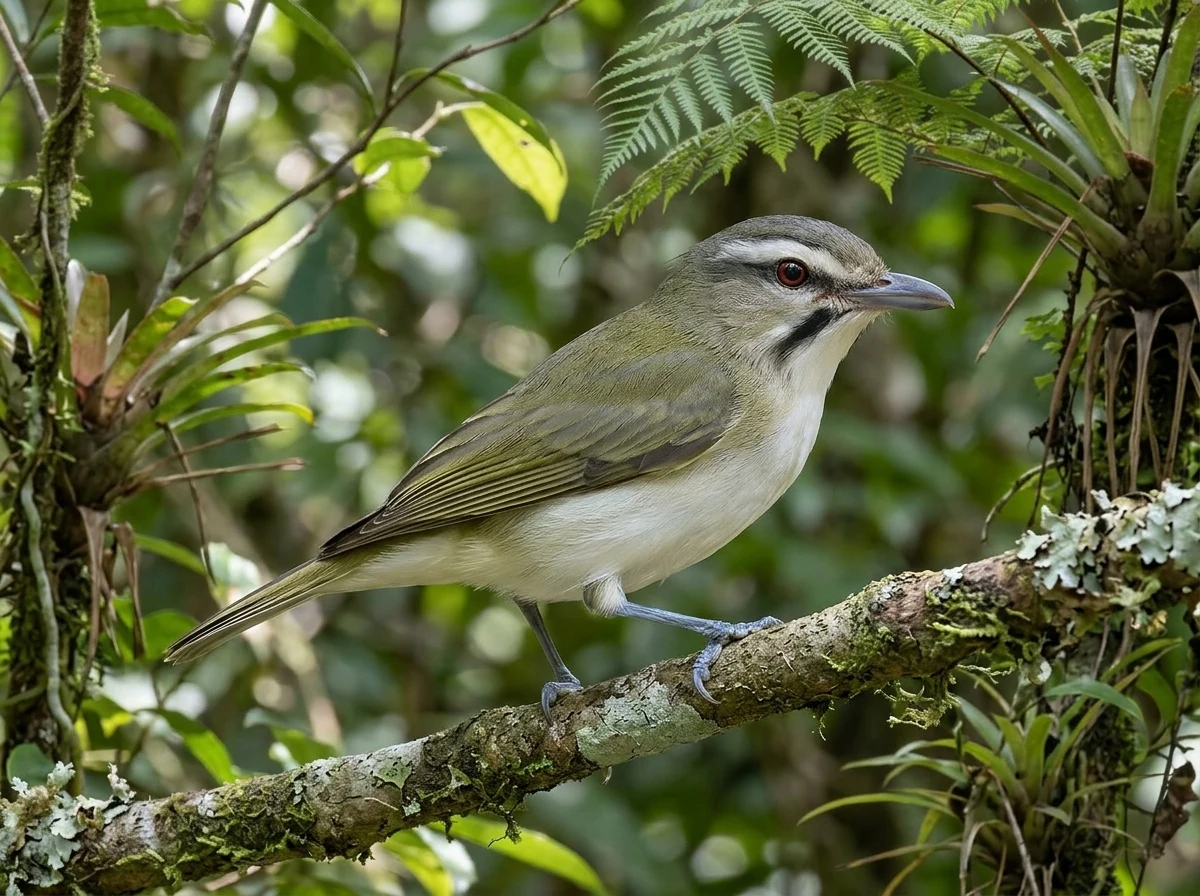
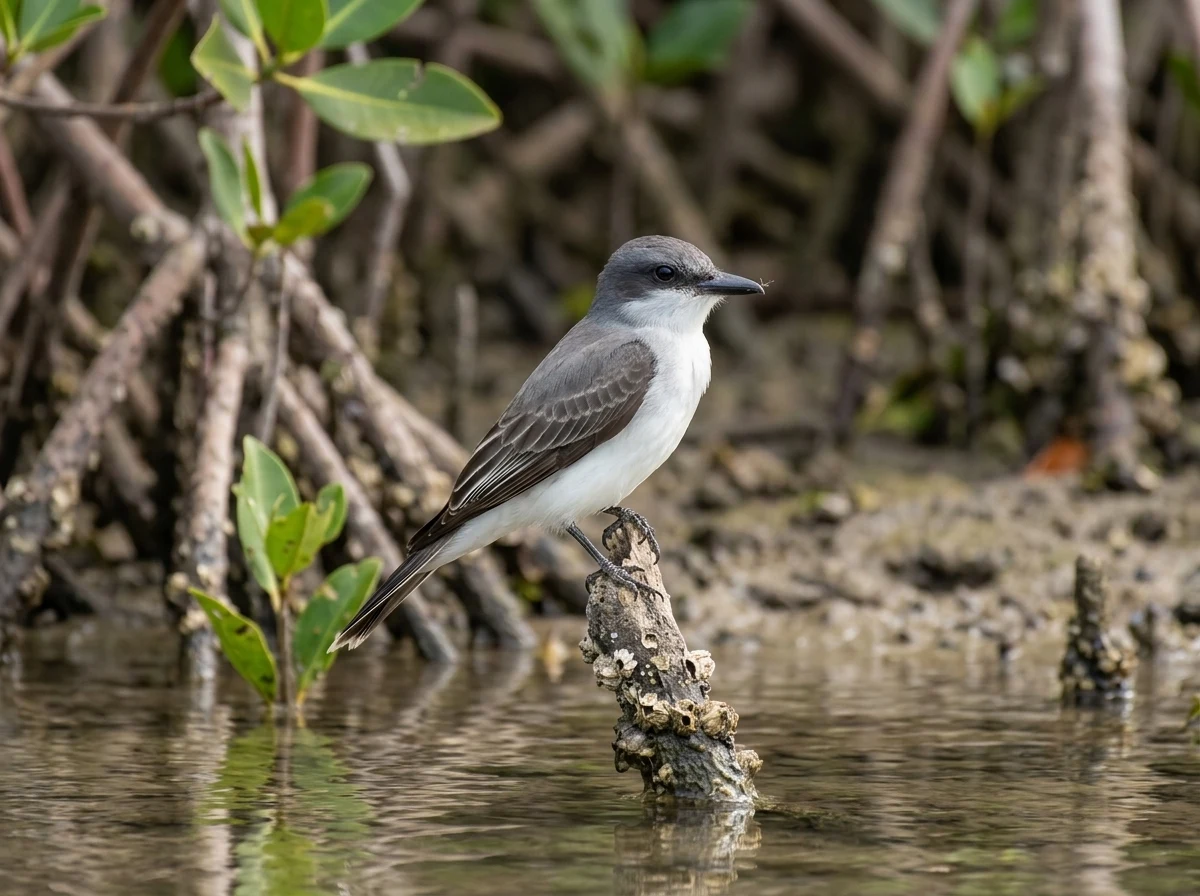
Cupey (Clusia rosea) is a broad-crowned tree that can reach 18 meters. Its fleshy fruit is rich in fat and draws both fruit-eating and insect-eating birds: Ecología Urbana names Black-whiskered Vireo, kingbirds, thrushes, and Bananaquit. Because it is also dioecious and its roots take up a lot of room, plant it in a spacious spot away from pipes and foundations.
05
Flowers for hummingbirds: firebush, heliconia, and mameyuelo
Firebush, locally bálsamo or Doña Julia (Hamelia patens), is listed as native by NRCS. University of Florida IFAS says its red flowers attract hummingbirds and butterflies and that songbirds eat its berries, so it feeds two groups at once. Be careful when buying: IFAS warns that some nurseries sell non-native dwarf forms under names like Hamelia patens 'Dwarf' or 'Compacta.'
NRCS recommends including native heliconias where conditions allow; its list records Heliconia caribaea (botecitos, guineo cimarrón) as endemic to the West Indies. Mameyuelo (Ardisia obovata), a native, offers flowers that attract nectar-feeding birds and fruit for fruit-eating birds, according to Ecología Urbana. NRCS also names Green Mango and Puerto Rican Emerald, and indirectly Bananaquit, as pollinators of native plants.
06
How to combine them and where to get them
Think in layers and in calendar terms. A medium-sized yard can have a royal palm or cupey as canopy, sea grape or camasey as mid-level fruit, and firebush or mameyuelo at the edge for flowers. NRCS suggests a variety of flowering shrubs to provide food and cover year-round, and pruning to encourage more flowers and fruit; avoid heavy pruning when there are nests.
Ecología Urbana notes that these species can be obtained through the Conservation Trust of Puerto Rico / Para la Naturaleza, and for the royal palm, also from commercial nurseries or by planting seeds collected beneath adult palms. Plant during the rainy season to reduce watering, avoid pesticides near plants that feed birds, and combine planting with clean water and marked windows.
Linked profiles
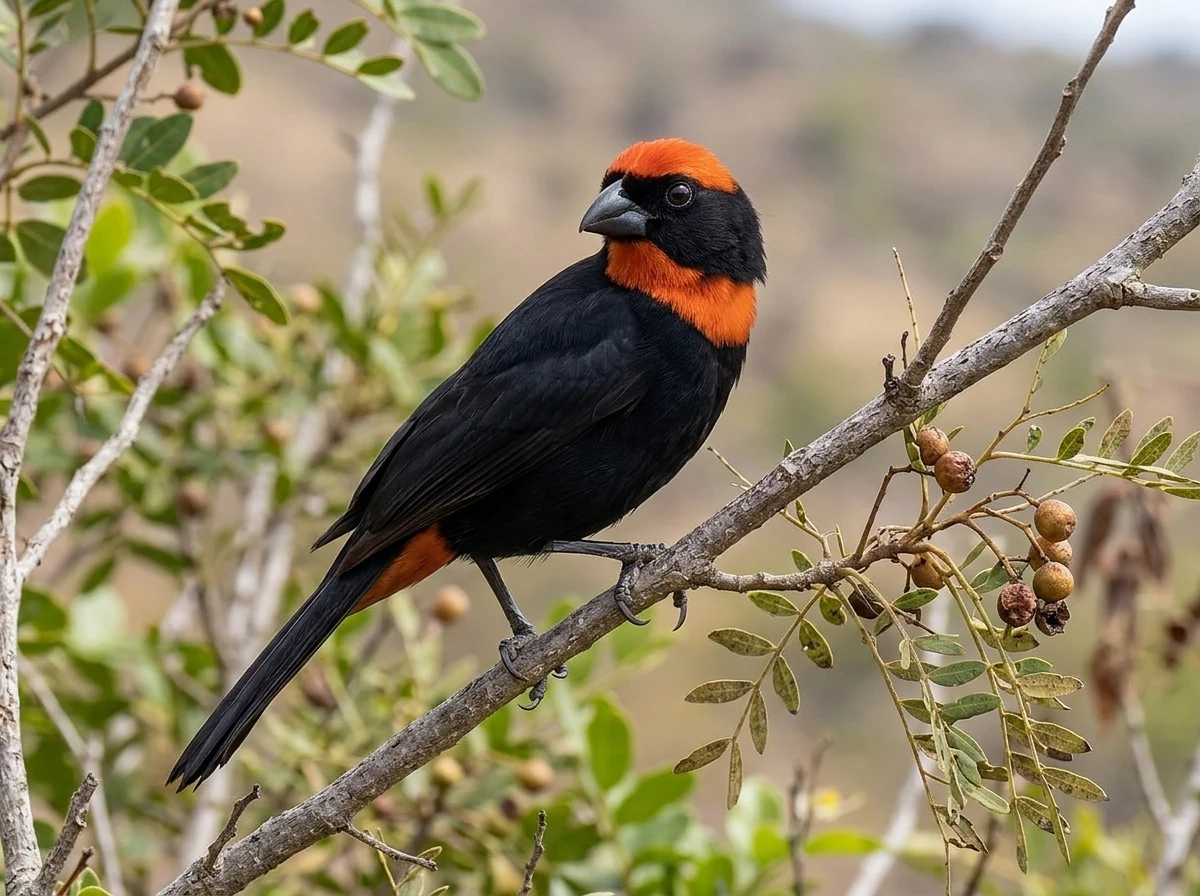
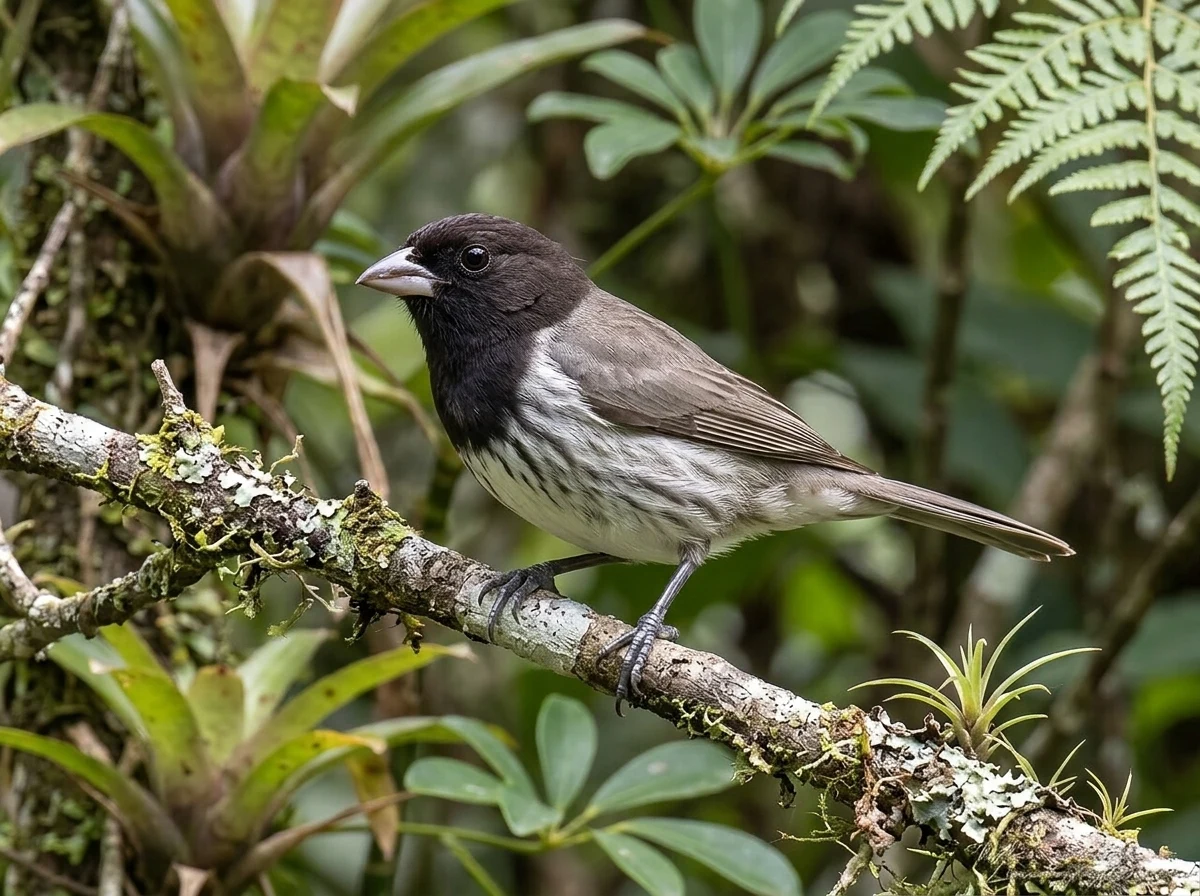
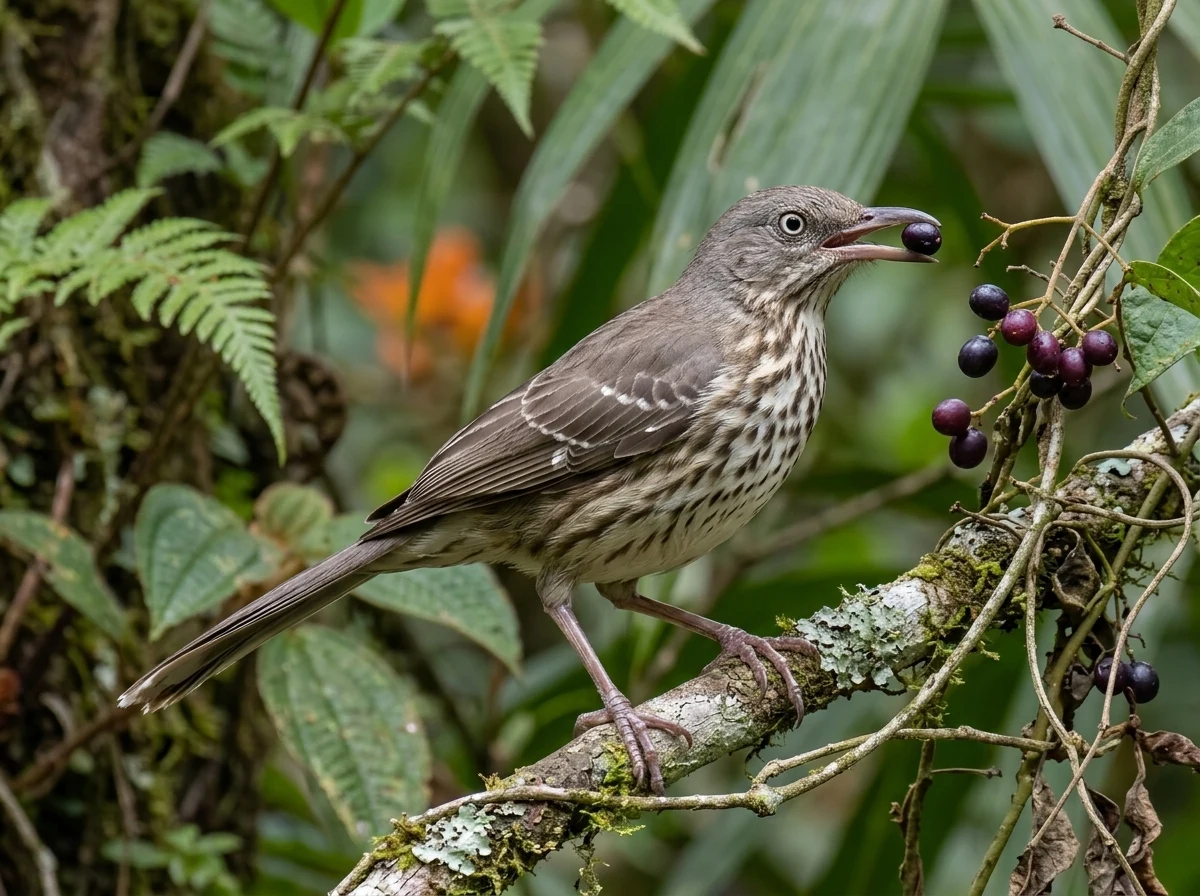
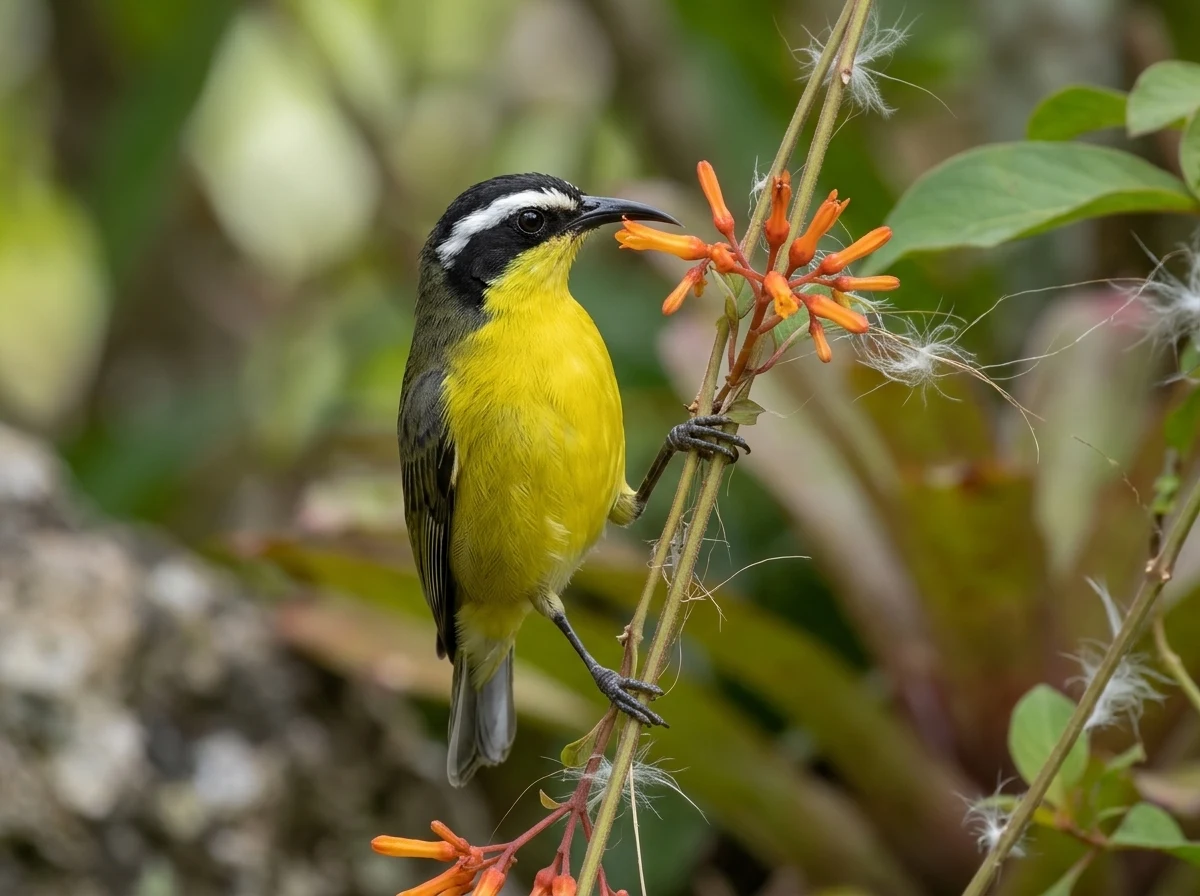
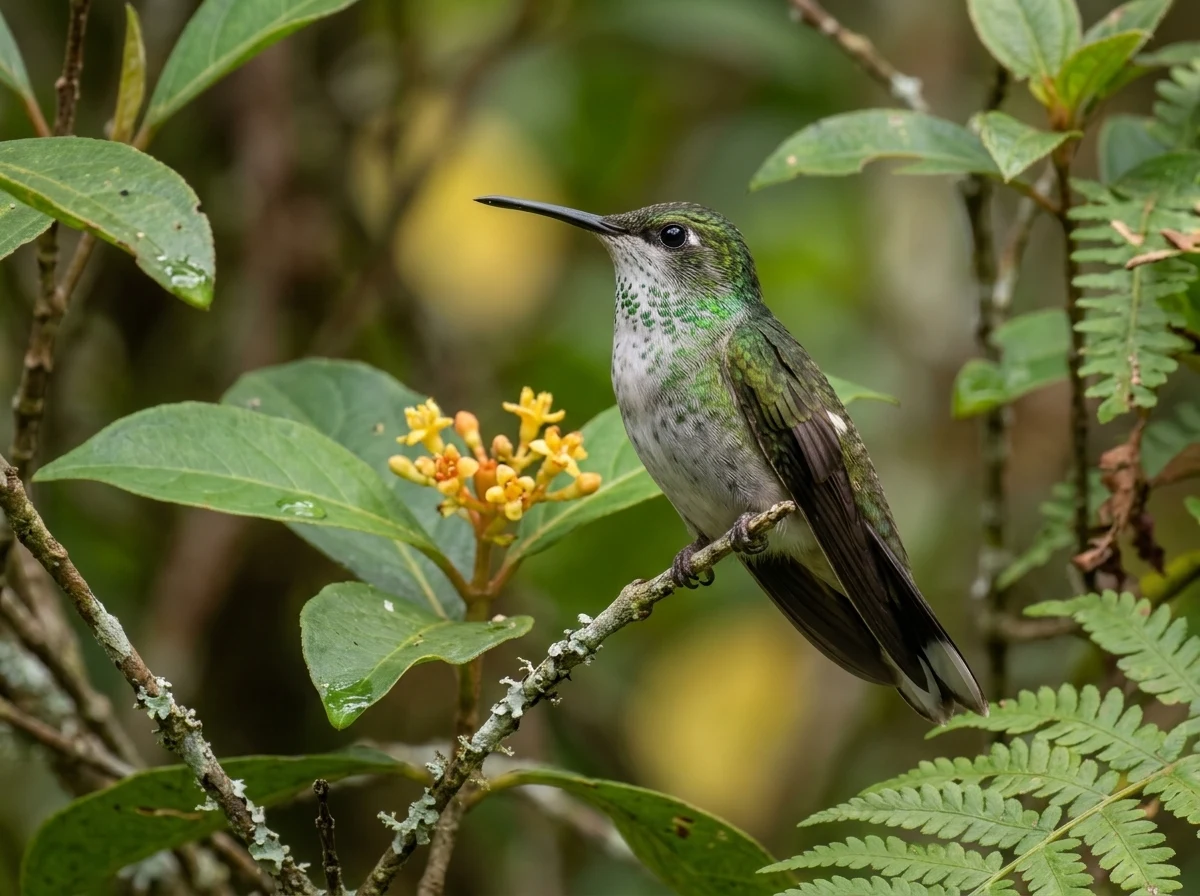
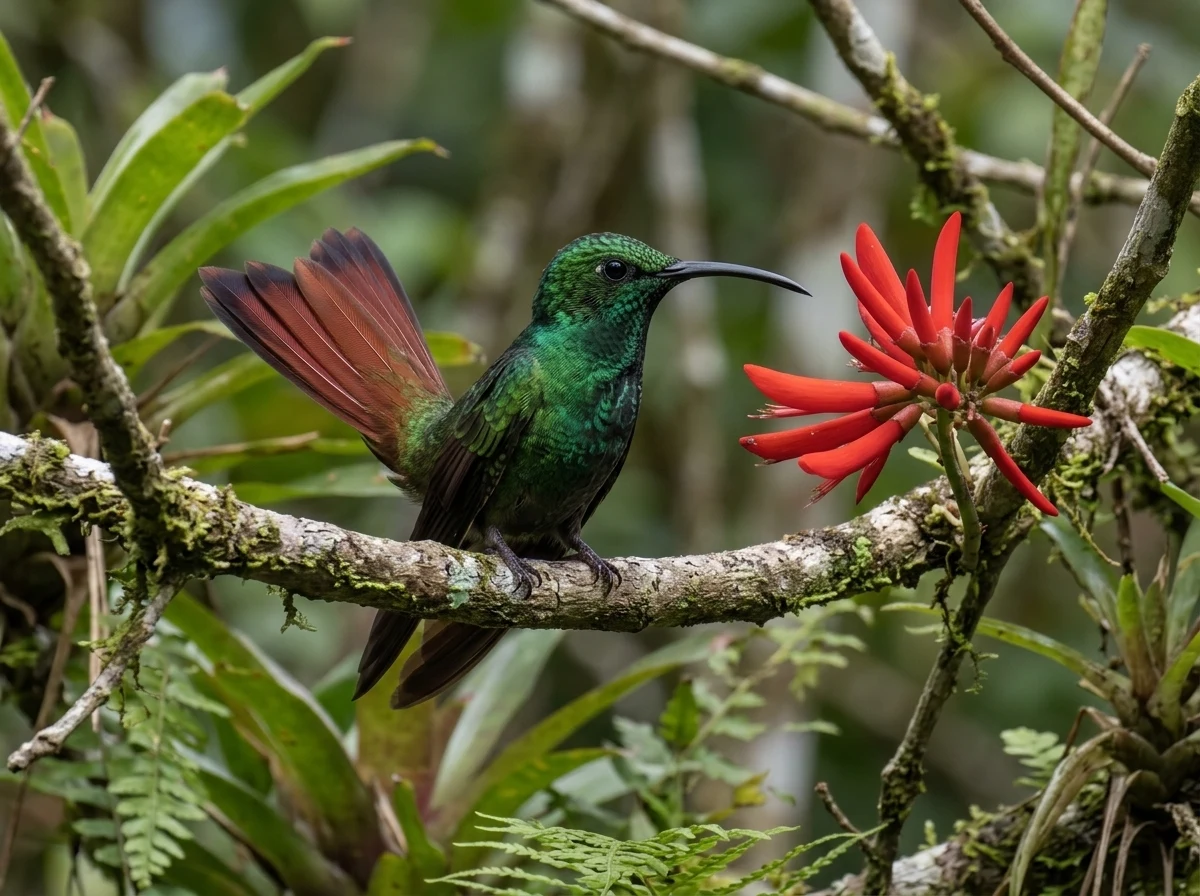
Birds that eat the fruit and nectar of native plants
Fruit-eaters such as spindalis and thrushes, insect-eaters that also take fruit, and pollinating hummingbirds; open each profile for diet and habitat.
Sound archive
Hear its voice
Explore real songs and calls. The spectrogram turns each sound into a visual trace of time and frequency.
XC682523Recording 1 of 3song

Play: song by Rainforest Connection
Choose another recording
Sound recorded by Rainforest Connection · XC682523 · CC BY-NC-SA 4.0. Visualization by Stichting Xeno-canto voor Natuurgeluiden.
Every recording retains the creator, catalogue number, and license published by Xeno-canto. Metadata via GBIF ↗
01
What plants attract birds in Puerto Rico?
Documented natives include the Puerto Rico royal palm, sea grape, camasey, cupey, and mameyuelo, whose fruit is eaten by Puerto Rican Spindalis, thrushes, pigeons, and other birds. For hummingbirds, firebush (Hamelia patens) and native heliconias are good choices.
02
What plants attract hummingbirds in Puerto Rico?
Native firebush, or Doña Julia (Hamelia patens), has red tubular flowers that attract hummingbirds, and NRCS recommends including native heliconias such as Heliconia caribaea. Buy the native form of firebush: some dwarf varieties sold under the same name are not native.
03
Which native fruit tree is best for birds?
It depends on the site. Near the coast, sea grape tolerates salt and wind; in humid or mountain areas, camasey fruits year-round; and the royal palm withstands hurricanes and is among the first food sources after one. Combining species spreads food across more months.
04
Why doesn't my sea grape produce fruit?
Sea grape is dioecious: there are male and female plants, and only females fruit, with cross-pollination. If yours is male, it will not fruit; Ecología Urbana notes that male plants have conspicuous red leaf veins.
05
Where can I get native plants in Puerto Rico?
Ecología Urbana recommends contacting the Conservation Trust of Puerto Rico / Para la Naturaleza, and for royal palms, commercial nurseries as well. Always ask for the scientific name to confirm the plant is native.
Keep exploring
Connected routes
Sources and review
The evidence is one link away.
These sources support the editorial scope of this guide. Bird profiles also retain their own taxonomy, occurrence, and conservation references.
Reviewed:
01↗02↗03↗04↗05↗06↗07↗
Ecología Urbana / Penn State University (Laboratorio de Frugivoría y Dispersión de Semillas)
Plant guide for urban birds
Ten ornamental plants that flower and fruit year-round for Puerto Rico birds, prepared by Tomás Carlo's lab.USDA Natural Resources Conservation Service – Caribbean Area
Wildlife Habitat Planting, Caribbean Area (CPS 420)
Plant list with native or endemic status, pollinating birds of Puerto Rico, and planting and pesticide recommendations.Ecología Urbana / Penn State University
Puerto Rico royal palm (Roystonea borinquena)
Fat-rich fruit, year-round flowering, nesting habitat, and resistance to hurricane winds.Ecología Urbana / Penn State University
Sea grape (Coccoloba uvifera)
A salt- and wind-tolerant dioecious plant; pigeons and thrushes swallow the fruit, spindalis and bullfinch eat the pulp.Ecología Urbana / Penn State University
Camasey blanco (Miconia prasina)
A pioneer shrub fruiting year-round, eaten by spindalis, tanager, thrushes, pigeons, and migrant warblers.Ecología Urbana / Penn State University
Cupey (Clusia rosea)
A tree up to 18 meters with fat-rich fruit sought by Black-whiskered Vireo, kingbirds, thrushes, and Bananaquit.University of Florida IFAS Gardening Solutions
Firebush (Hamelia patens)
Flowers that attract hummingbirds, berries eaten by songbirds, and a warning about non-native dwarf forms sold under the same name.The atlas continues