 AI
AIBehavior guide
How Monk Parakeets Build Their Nests
The Monk Parakeet does not nest in holes: it builds a stick structure, shared and reused. Here we explain the mechanism and how to observe it critically.
Reviewed: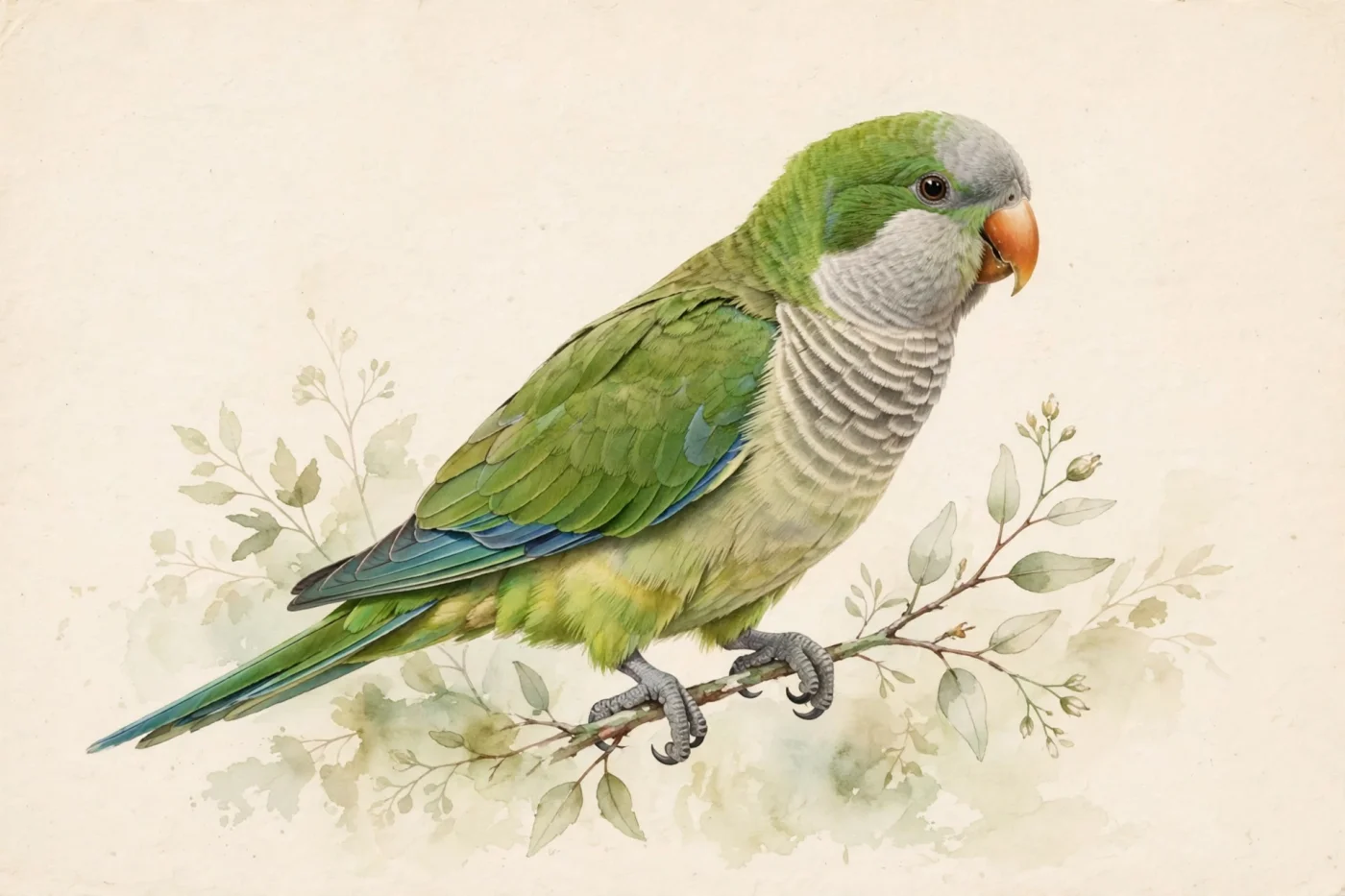
Prepared with AI assistance and linked sources. Illustrations are not field photographs.
The direct question
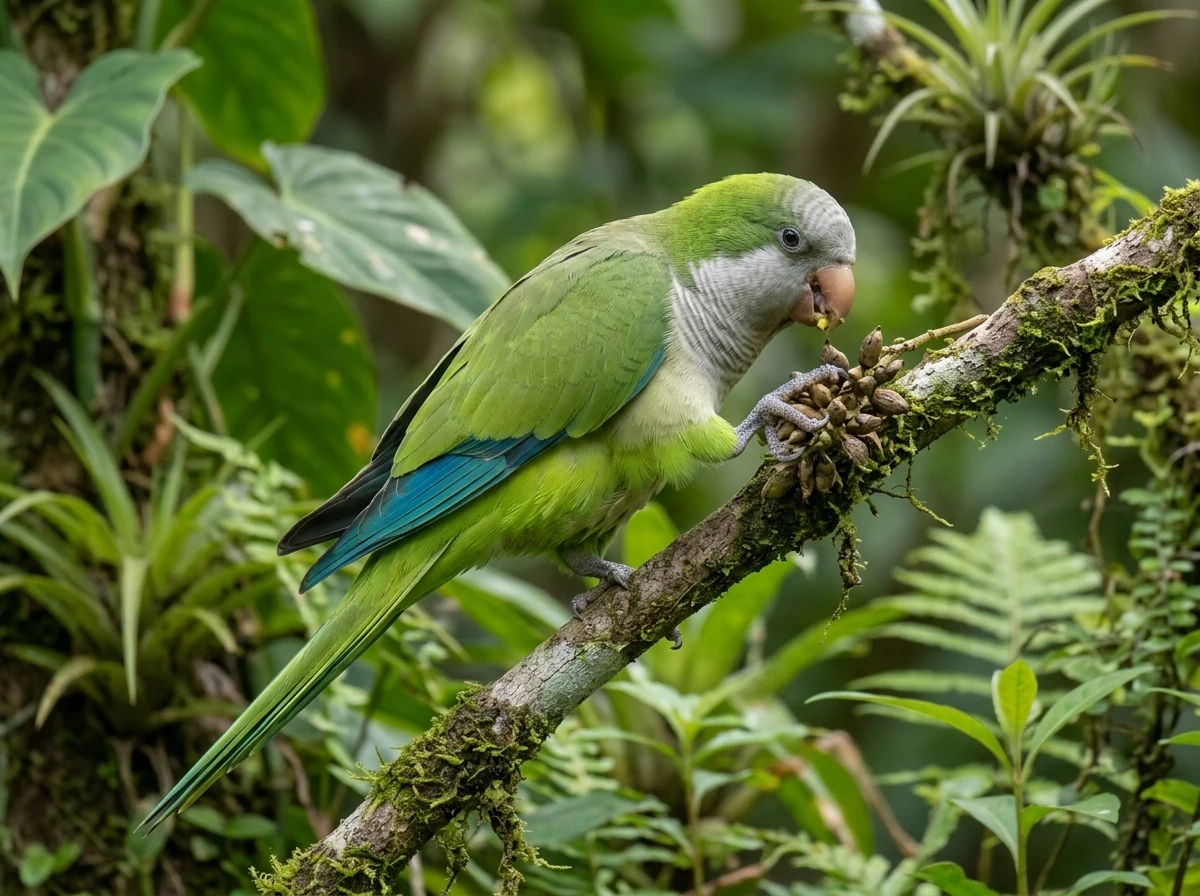
Most of the world's parrots and parakeets nest in cavities: tree holes, termitaria, or crevices. The Monk Parakeet (Myiopsitta monachus) is the most cited exception. Instead of searching for a hole, it builds a bulky stick nest among the branches, and uses it both for raising young and for sleeping. That difference is the short answer to how they build their nests.
This guide explains the mechanism using the available sources: Audubon's description of the stick nest and its nighttime use, and the context of introduced psittacids in Puerto Rico documented by the Journal of Caribbean Ornithology. We do not present unverified local observations or infer abundance. The Monk Parakeet's occurrence in Puerto Rico is treated as introduced, according to the bird catalog.
Behavior guide
Three keys to the nest
Palos, no huecosMain materialAudubon describes the nest as a bulky stick structure among the branches.
Dormir y criarDual functionThe same type of nest serves for raising young and for sleeping at night.
ColonialSocial organizationThe species catalog indicates colonial behavior and a dome or oven nest type.
01
What exactly a Monk Parakeet nest is
The Audubon Field Guide says it plainly: most parrots and parakeets nest in holes, but the Monk Parakeet builds bulky stick nests among the branches. That sentence contains the two essential elements. First, the material: sticks, not excavated cavities or natural holes. Second, the location: among the branches, not inside a trunk.
The species catalog adds two details that help sharpen the description: the nest type is classified as dome or oven, and the substrate can be building or tree. That is, the structure does not depend exclusively on a tree. This does not mean every nest is identical, but it does mean the Monk Parakeet builds a mass of sticks rather than occupying a preexisting cavity.
02
How it is built: the mechanism step by step
The available sources do not describe every construction movement, but they do allow reconstructing the general mechanism. The Monk Parakeet collects sticks and places them among the branches until it forms a compact mass. Audubon indicates that this structure serves both for raising young and for sleeping at night. That dual function explains why the nest is not a simple temporary container: it remains in use outside the breeding season.
The species catalog reinforces the idea of an elaborate structure: dome or oven nest type, colonial behavior, and a substrate that can be tree or building. In practical terms, the mechanism combines material collection, assembly among branches, and continued use. It is not a cavity that is cleaned and abandoned, but a construction that is occupied and reused.
03
Comparison: Monk Parakeet versus other birds
The most useful comparison is with the rest of the psittacids. Audubon establishes the contrast: most parrots and parakeets nest in holes; the Monk Parakeet builds stick nests. That difference is not minor. A bird that depends on holes competes for limited cavities; one that builds its own structure creates its own space.
The Journal of Caribbean Ornithology offers additional context on introduced psittacids in Puerto Rico, although its study focuses on the White-winged Parakeet (Brotogeris versicolurus), not the Monk Parakeet. That work documents that non-native psittacids can establish breeding populations and leave roosts to begin nesting activities. We should not transfer those numbers to the Monk Parakeet, but it does remind us that introduced psittacids in Puerto Rico are a documented phenomenon.
04
Puerto Rico: what the sources say and what they do not
The bird catalog classifies the Monk Parakeet in Puerto Rico as introduced. It is not a native species, it is not endemic, and it should not be presented as a historical record for the island. That classification is the correct starting point for any statement about its presence there.
The Journal of Caribbean Ornithology study on the White-winged Parakeet in San Germán documents breeding populations of an introduced psittacid and mentions that the White-winged Parakeet is considered the most common exotic species in Puerto Rico according to Raffaele et al. 1998. That is not evidence about Monk Parakeet abundance. For the Monk Parakeet, presence in Puerto Rico rests on the catalog, not on abundance inference. Any local observation must be documented separately.
05
Observation exercise and checklist
This exercise is a methodological suggestion, not an access instruction or an invitation to visit a specific place. The goal is for you to practice critical observation of a structure without assuming it belongs to a species. Before heading out, prepare a notebook or a phone note with these columns: date, time, general location, substrate (tree or building), approximate height, number of visible structures, presence of birds entering or leaving, and behavior notes.
Observation checklist: 1) Locate a mass of sticks among branches or on a structure. 2) Describe the substrate without assuming the species. 3) Observe whether birds enter or leave. 4) Record the time and duration of observation. 5) Note whether the structure appears active or abandoned. 6) Do not infer abundance from a single structure. 7) Compare your notes with Audubon's description: stick nest, among branches, used for raising young and sleeping. 8) If you cannot confirm the species, record the structure as unidentified. This procedure turns a casual observation into useful data without inventing conclusions.
Linked profiles
The bird in this guide
Monk Parakeet (Myiopsitta monachus): introduced species in Puerto Rico, according to the catalog. Its stick nest is the feature that answers this guide's question.
AI01
Does the Monk Parakeet nest in holes like other parrots?
No. The Audubon Field Guide states that most parrots and parakeets nest in holes, but the Monk Parakeet builds bulky stick nests among the branches. That is the central difference.
02
What does it use the nest for besides raising young?
Audubon indicates that the nest serves both for raising young and for sleeping at night. That dual function is part of the answer to how they build their nests.
03
Is the Monk Parakeet native to Puerto Rico?
No. The bird catalog classifies it as introduced in Puerto Rico. It is not native, not endemic, and should not be presented as a historical record for the island.
04
Can I use the nest to estimate how many Monk Parakeets there are in Puerto Rico?
No. An observed structure is not evidence of abundance. The Journal of Caribbean Ornithology study on the White-winged Parakeet documents fluctuations in roost counts of another introduced species, but those numbers do not transfer to the Monk Parakeet. Monk Parakeet presence in Puerto Rico rests on the catalog, not on abundance inference.
05
Where can I see a Monk Parakeet nest in Puerto Rico?
This guide does not document local locations or access rules. What you can do is apply the observation exercise described above wherever you already are, and record the structure without assuming the species. If you cannot confirm the species, note it as unidentified.
Keep exploring
Connected routes
Sources and review
The evidence is one link away.
These sources support the editorial scope of this guide. Bird profiles also retain their own taxonomy, occurrence, and conservation references.
Reviewed:
01↗02↗
National Audubon Society
Monk Parakeet | Audubon Field Guide
Evidence for cited sections; consult the original document.Journal of Caribbean Ornithology (BirdsCaribbean)
Seasonal changes in roost counts of the non-native White-winged Parakeet (Brotogeris versicolurus) in San Germán, Puerto Rico
Evidence for cited sections; consult the original document.The atlas continues