 AI
AIIntroduced species
Introduced Birds of Puerto Rico
Parakeets in San Juan, African finches in cane fields, and Asian munias in pastures: a visible part of Puerto Rico's birdlife arrived with people.
Reviewed:Introduced means it arrived through human action.
An introduced bird in Puerto Rico is a species that reached the island through direct or indirect human action rather than on its own. In the avespuertorico.com catalog, 47 of the 402 recorded species carry that category; most are parakeets, parrots, and finches that escaped or were released from the cage-bird trade.
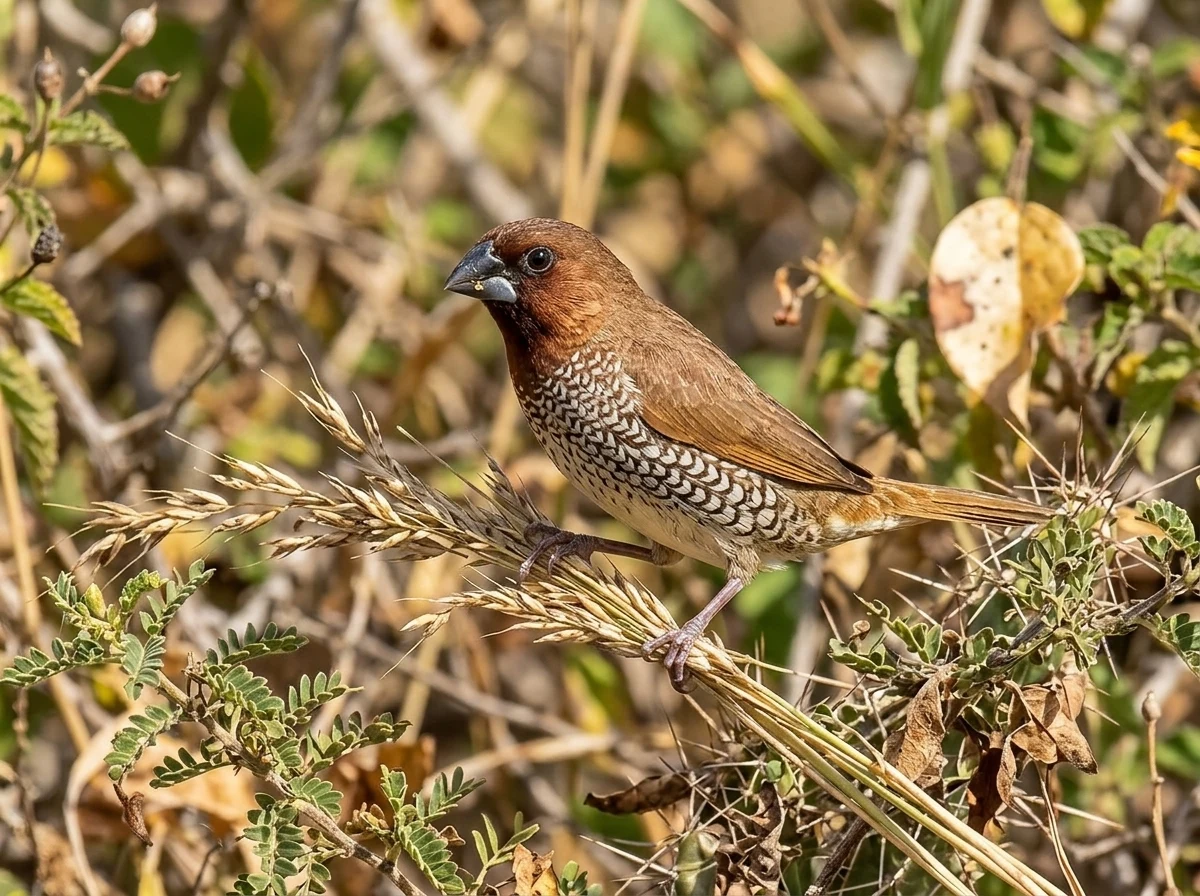
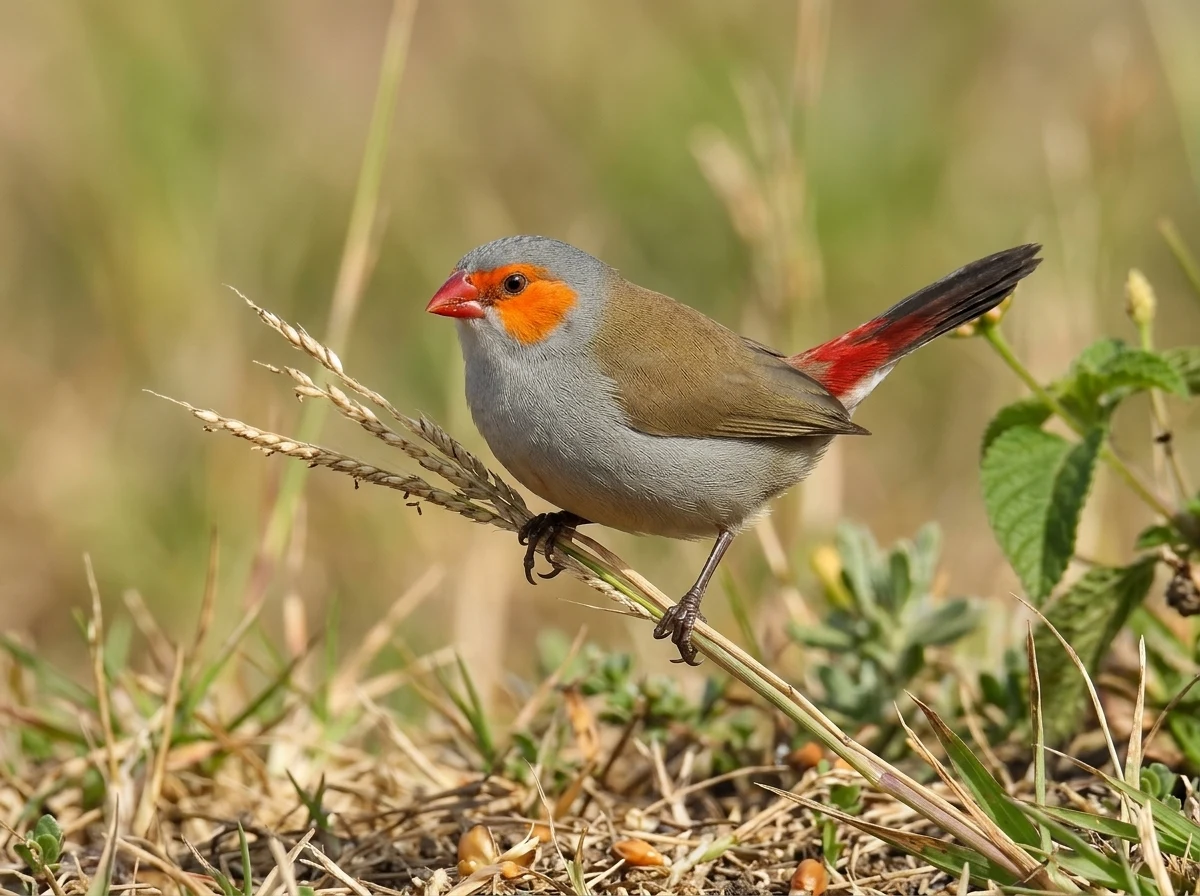
Being on the list does not mean every one lives wild today. Some have bred for decades and are part of the everyday landscape, such as Scaly-breasted Munia or Orange-cheeked Waxbill; others rest on a handful of records or recent escapes. This guide explains the categories, where the introductions came from, which species have breeding evidence, and why some birds that look exotic, such as Shiny Cowbird, arrived by themselves.
Introduced species
Introduced birds by the numbers
47introduced species in the catalogOut of 402 species; includes two also treated as accidental (European Starling and Yellow-fronted Canary).
26nonnative residents with breeding evidencePer the Puerto Rico Breeding Bird Atlas (fieldwork 2004–2009), out of 130 breeding species.
46+psittacine species observedFalcón and Tremblay (2018) estimate 28% are established.
1971first wild record for severalNorthern Red Bishop, Yellow-crowned Bishop, Scaly-breasted Munia, Indian Silverbill, Tricolored Munia, and Red Avadavat.
01
Native, endemic, vagrant, or introduced: what each label means
A native species reached and persists in Puerto Rico through natural processes; an endemic one, in addition, exists only here, like Puerto Rican Amazon or Yellow-shouldered Blackbird. A vagrant appears rarely, outside its normal route. The introduced category describes how a species arrived, not how common it is: an introduced bird may be abundant or may have vanished after a few sightings.
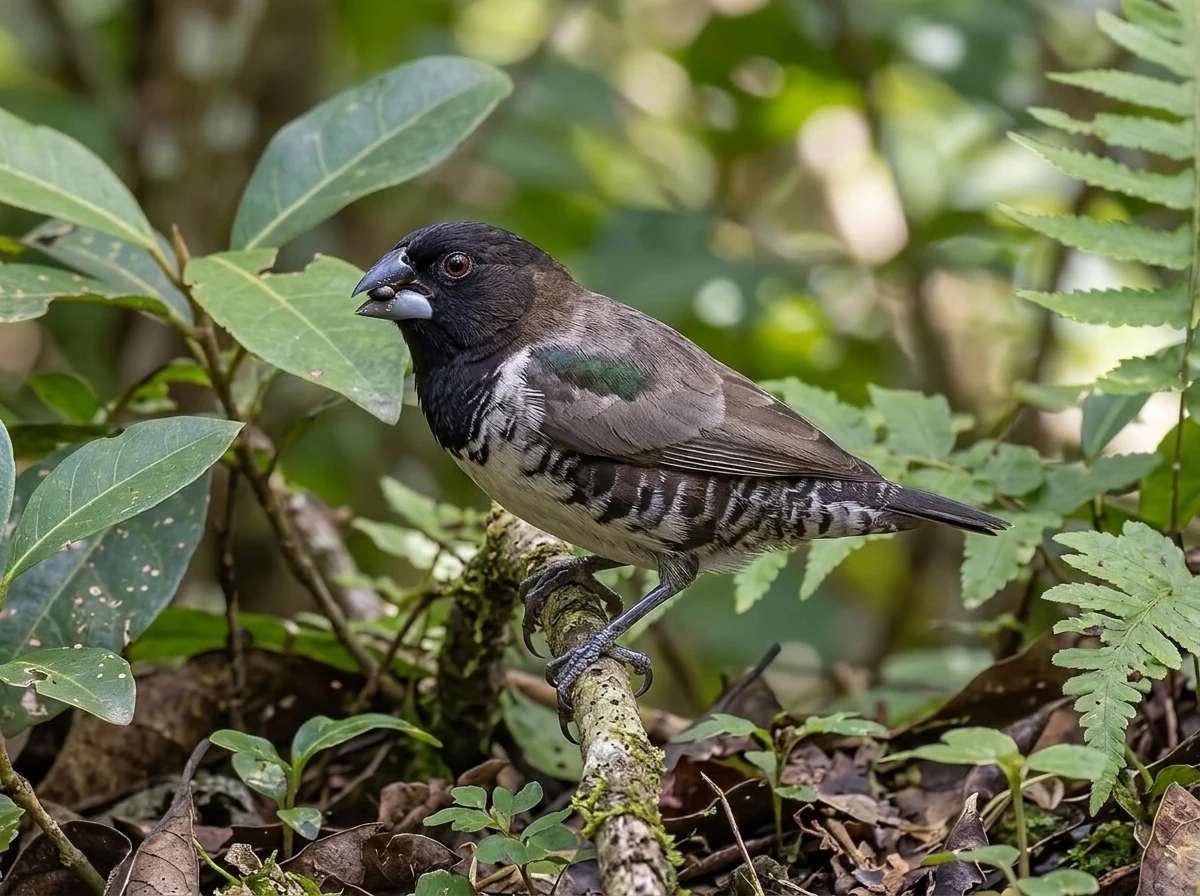
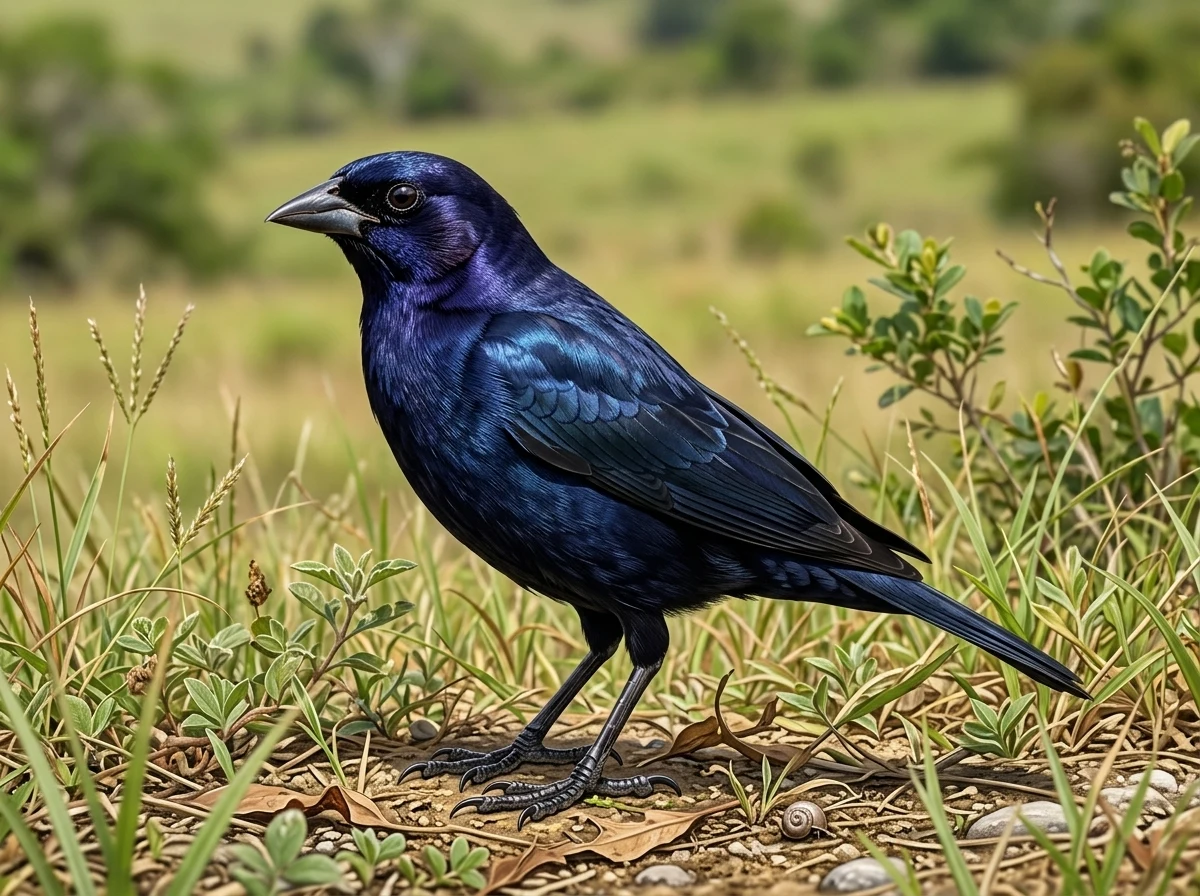
The most useful case for seeing the difference is Shiny Cowbird. It came from South America by island hopping, and the catalog classifies it as native because it arrived naturally, even though the U.S. Fish and Wildlife Service calls it invasive because of the harm it does to the Yellow-shouldered Blackbird. Invasive speaks to impact; introduced speaks to origin. A species can be one without being the other.
02
How they arrived: from colonial times to the pet trade
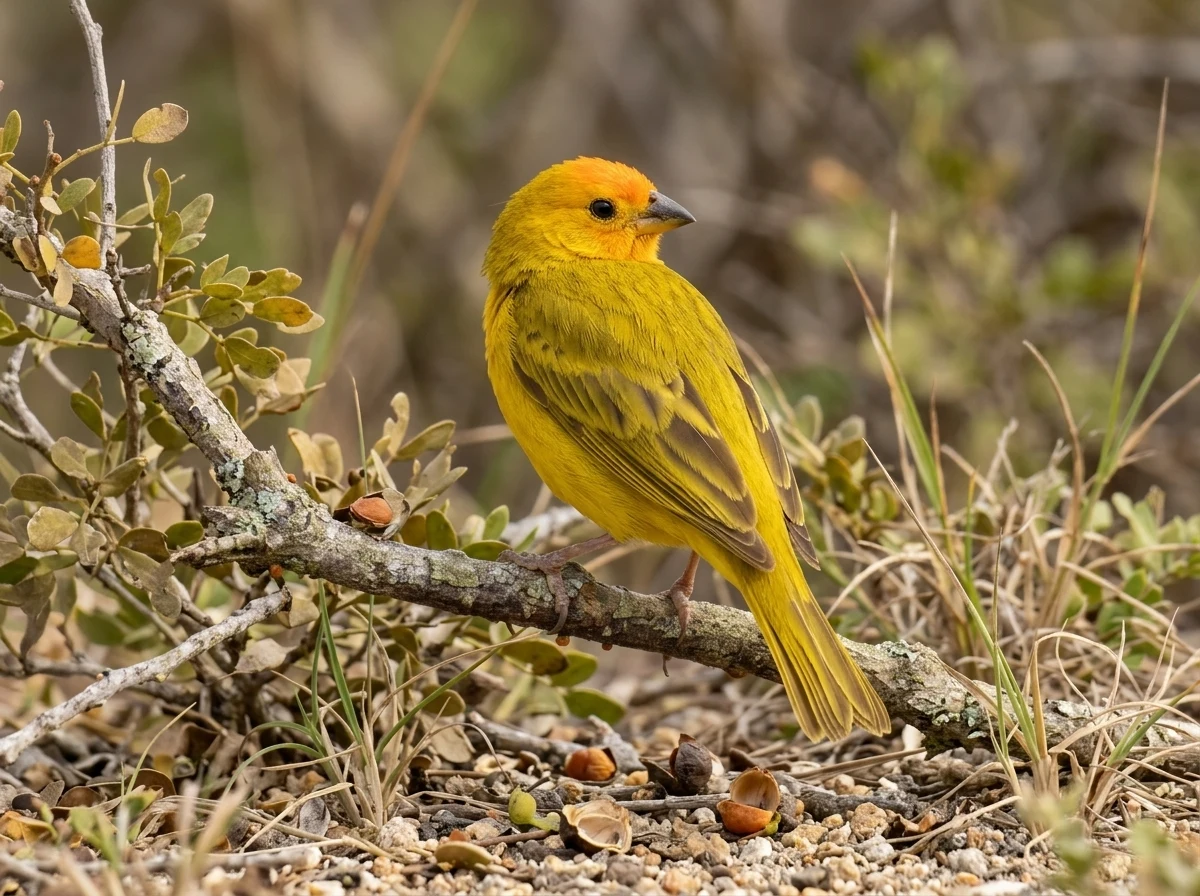
Introductions did not happen all at once. The Breeding Bird Atlas notes that Bronze Mannikin probably arrived in the early colonial era and that Orange-cheeked Waxbill was on the island before 1874. The largest wave came with the twentieth-century cage-bird trade: Saffron Finch is linked to imports in the 1960s, and 1971 is the first wild-record year for six African and Asian finches and bishops.
Parrots follow the same pattern. Falcón and Tremblay (2018) document that many species were imported as pets, especially since the 1950s, and that at least 46 have been observed on the island. With those data, the authors conclude that Puerto Rico has the highest number of wild-observed and established exotic parrot species in the world.
03
Which families dominate the list
In the catalog, the families with the most introduced species are parrots and parakeets (15 psittacids and 2 cockatoos), estrildid finches (9 munias, waxbills, and relatives), pigeons and doves (4), and starlings and mynas (3). The list is rounded out by canaries and siskins, two African bishops, Pin-tailed Whydah, House Sparrow, Venezuelan Troupial, Saffron Finch, Red-crested Cardinal, and feral fowl such as Helmeted Guineafowl and Red Junglefowl.
The pattern reflects what was sold and what survives. Small grassland seedeaters found cane fields, wetland edges, and lawns with seeding grasses; parakeets found palms and urban trees.
04
Established or escaped: breeding evidence decides
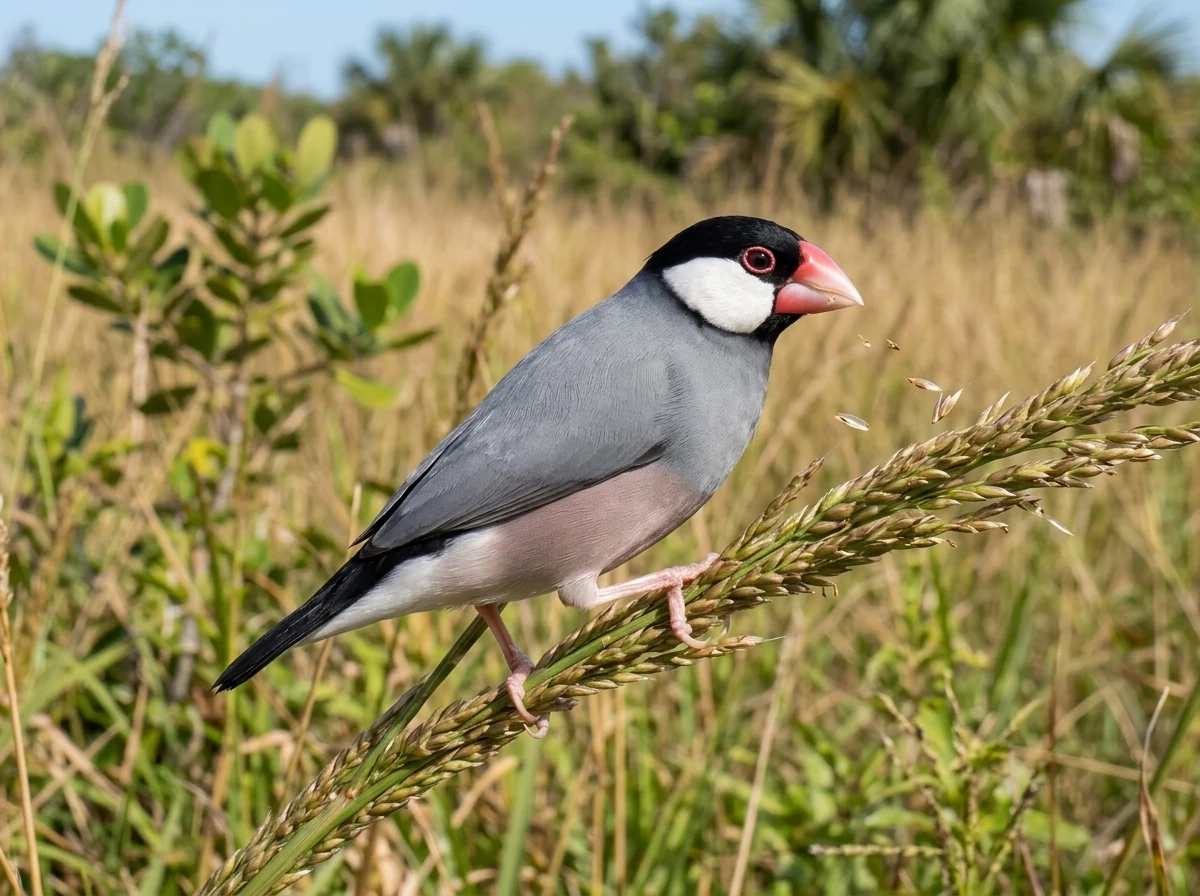
The Breeding Bird Atlas divided the island into 479 hexagons and documented 26 nonnative resident species with breeding evidence. The differences are huge: Scaly-breasted Munia appeared in 52% of hexagons, Orange-cheeked Waxbill in 49%, and Bronze Mannikin in 44%, while Java Sparrow appeared in seven hexagons and Red Avadavat in only three, near Salinas.
At the other extreme, European Starling was confirmed breeding in a single Fajardo hexagon and has not been recorded on the Fajardo Christmas Bird Counts from 2010 through 2019; the atlas suggests it may have failed to establish. That is why a list of introduced species should be read with two questions: does it breed in the wild, and where and how often?
05
Impacts: why introduced birds matter
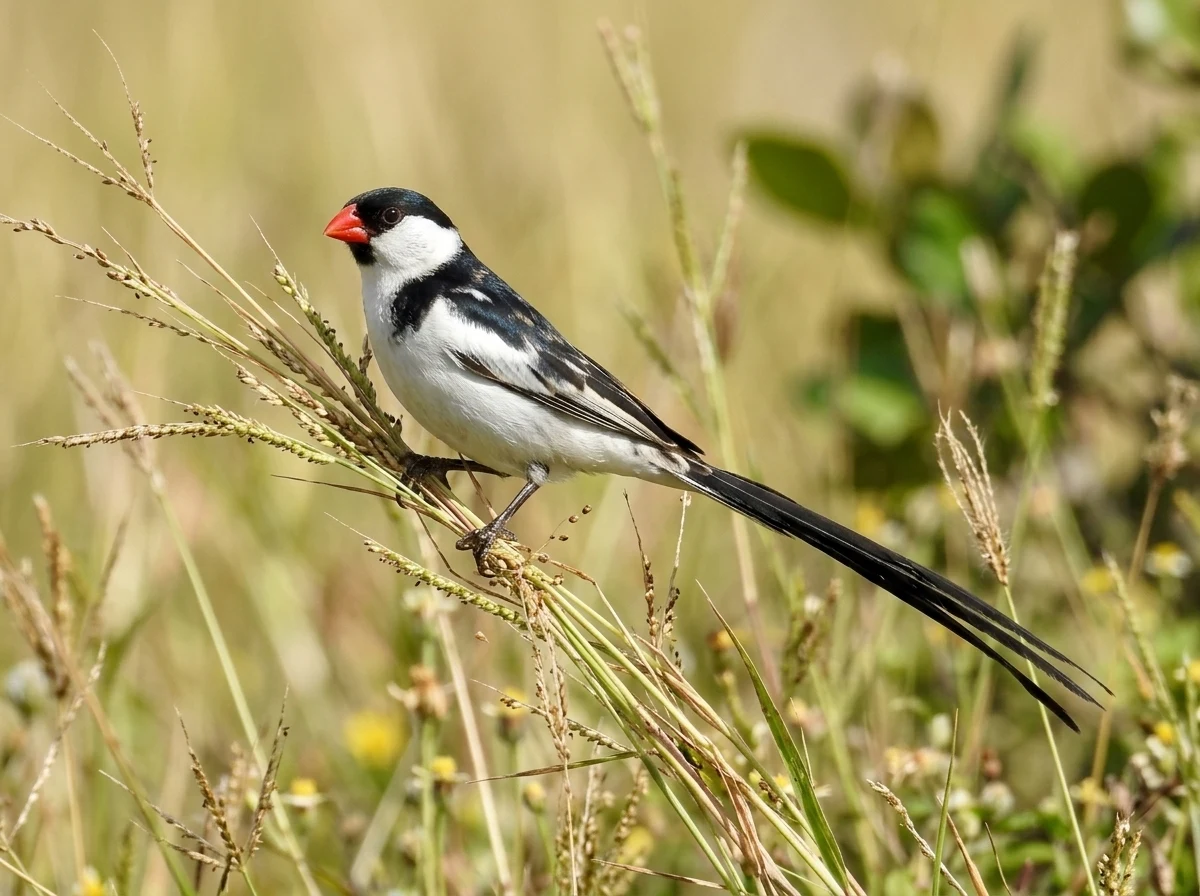
Not every introduced bird causes documented harm in Puerto Rico, and it is worth not exaggerating. The best-studied impact on the island comes from Shiny Cowbird, which is not introduced: Wiley (1985) found cowbird eggs in 95% of the Yellow-shouldered Blackbird nests studied. Among introduced species, Pin-tailed Whydah is also a brood parasite and lays mainly in the nests of waxbills and other nonnative finches.
There is also a conservation paradox. Java Sparrow is Endangered on the IUCN Red List in its native Indonesia, threatened by habitat loss and trapping, while it lives in metropolitan San Juan. Red-crowned Amazon and Yellow-headed Amazon, also introduced here, are Endangered on the IUCN Red List. These populations do not replace conservation at home, but they are useful data.
06
How to report an exotic bird without muddying the data
If you see a bird you don't recognize, photograph it and note place, time, number of individuals, and behavior. Behavior is key: a parrot that begs from people, wears a band, or sits alone in a yard may be an escaped pet, while a flock that visits the same tree or carries nest material suggests a wild population.
When you upload the record to eBird or birding groups, say whether you think it is a recent escape. That distinction lets researchers like the atlas and parrot-study authors separate established populations from loose birds. And never release a pet: that is how many of these stories began.
Linked profiles
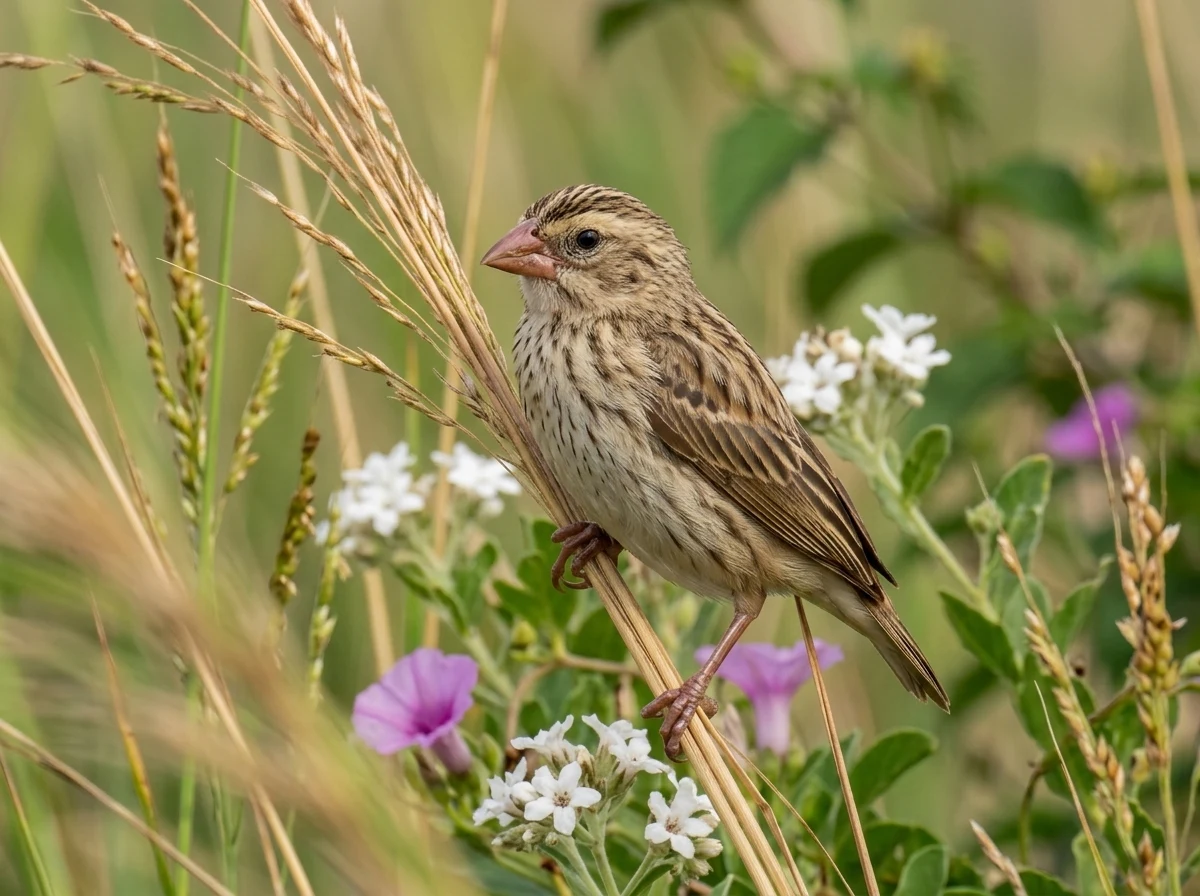
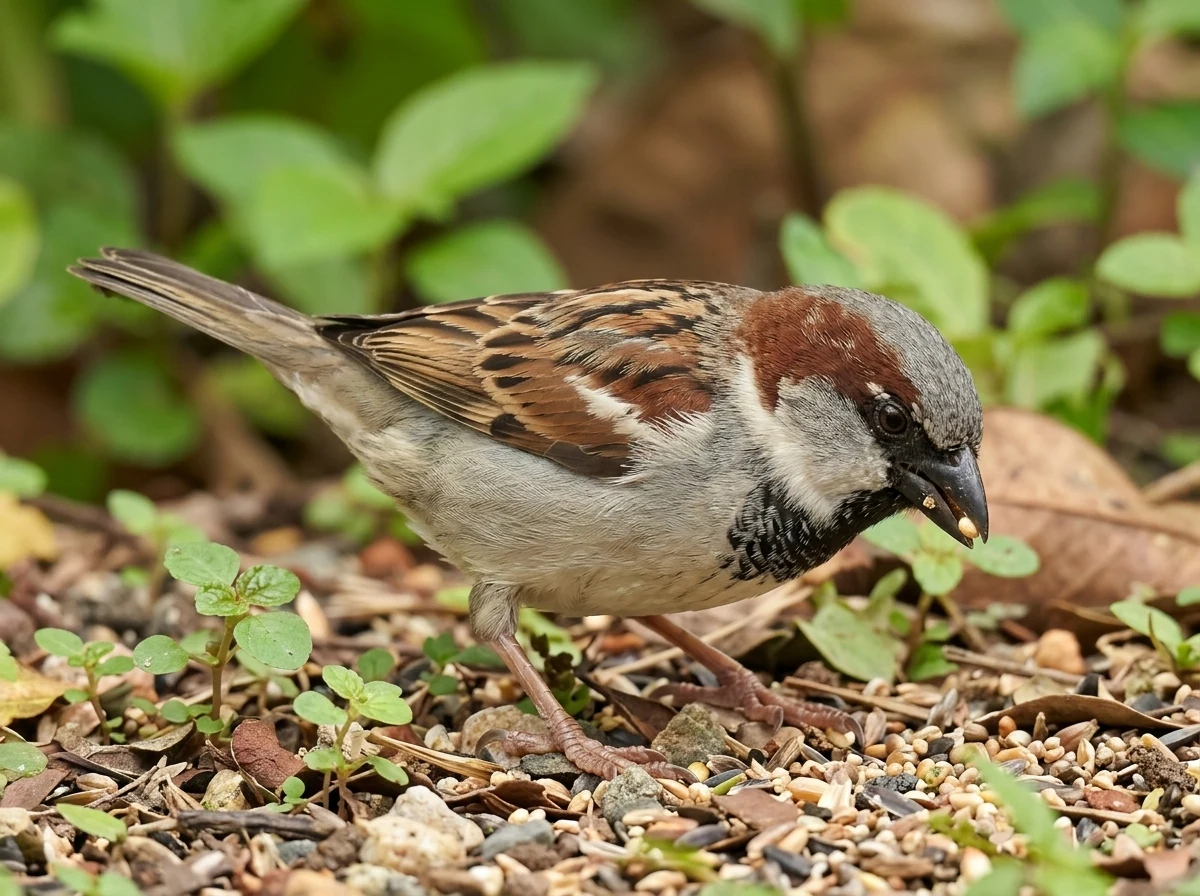
Introduced birds you may find, and one that came alone
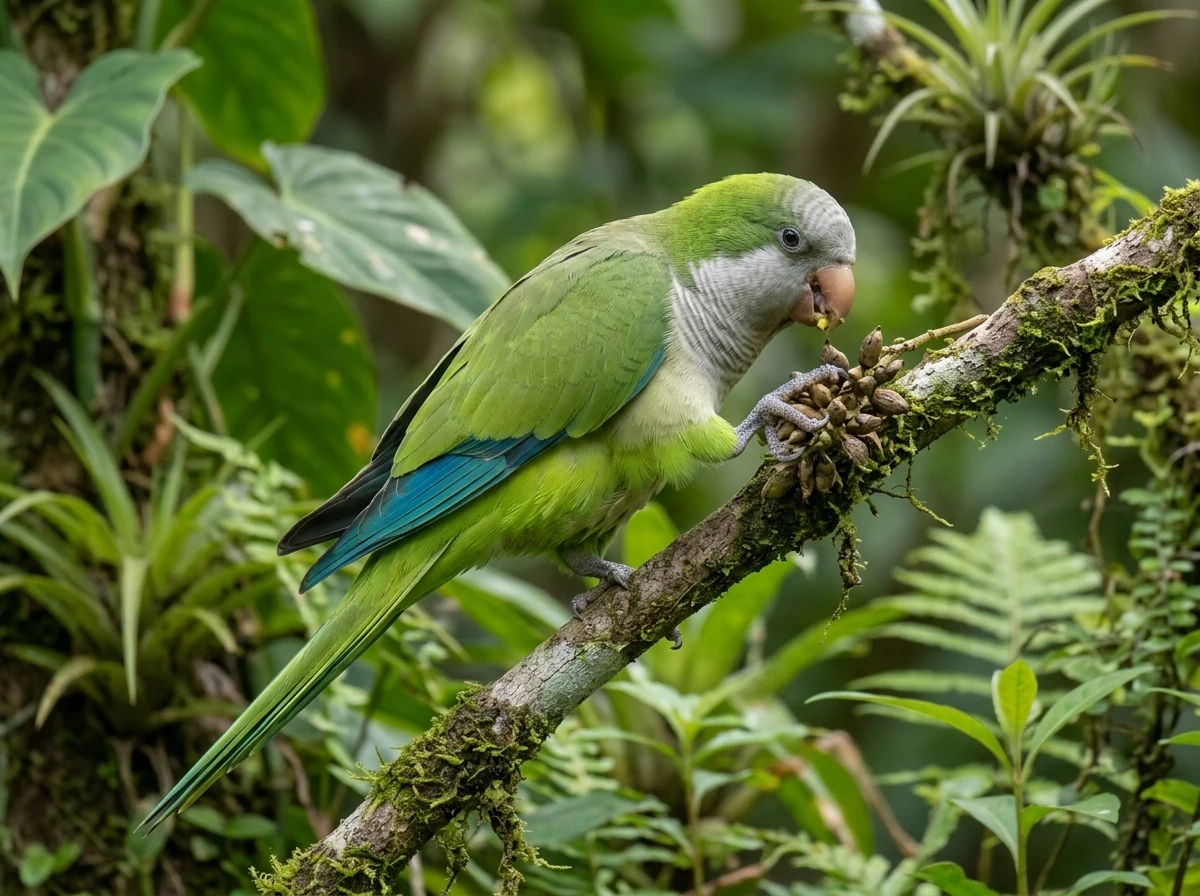
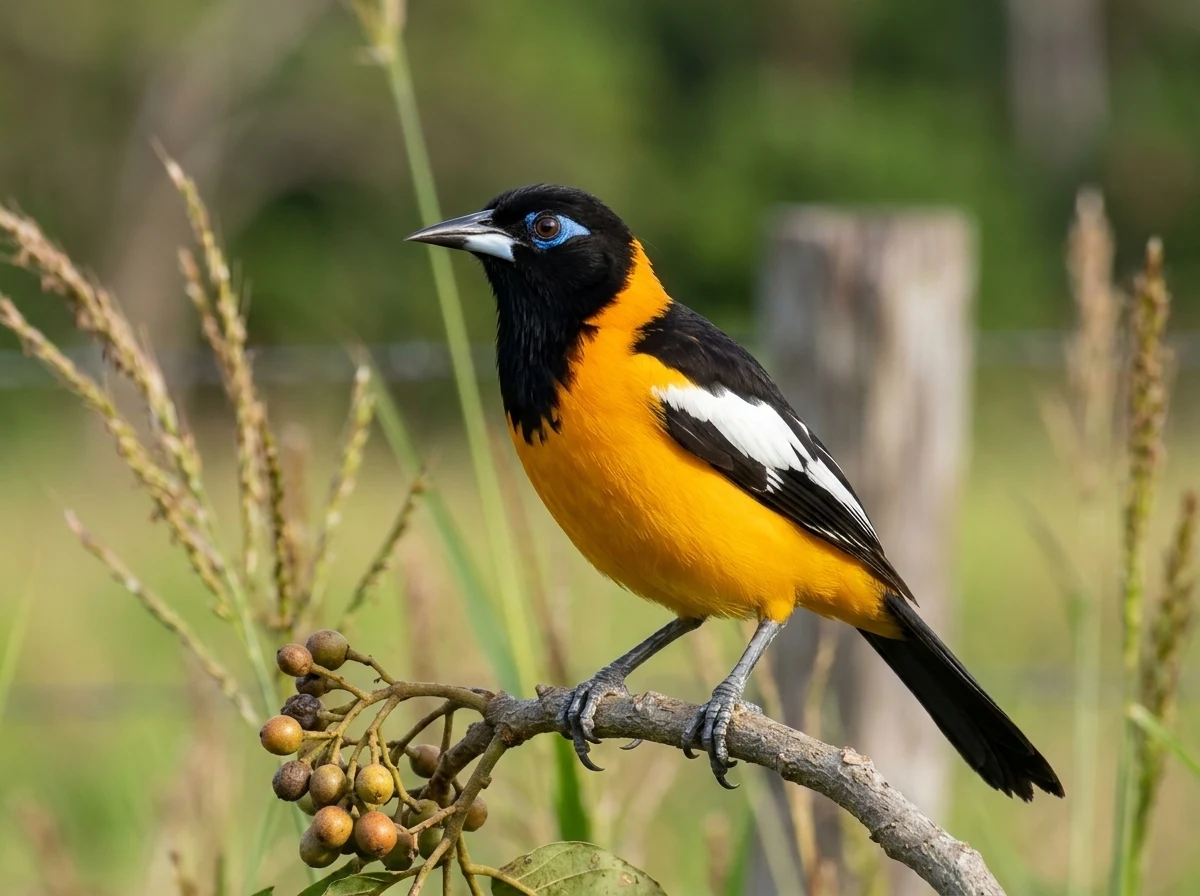
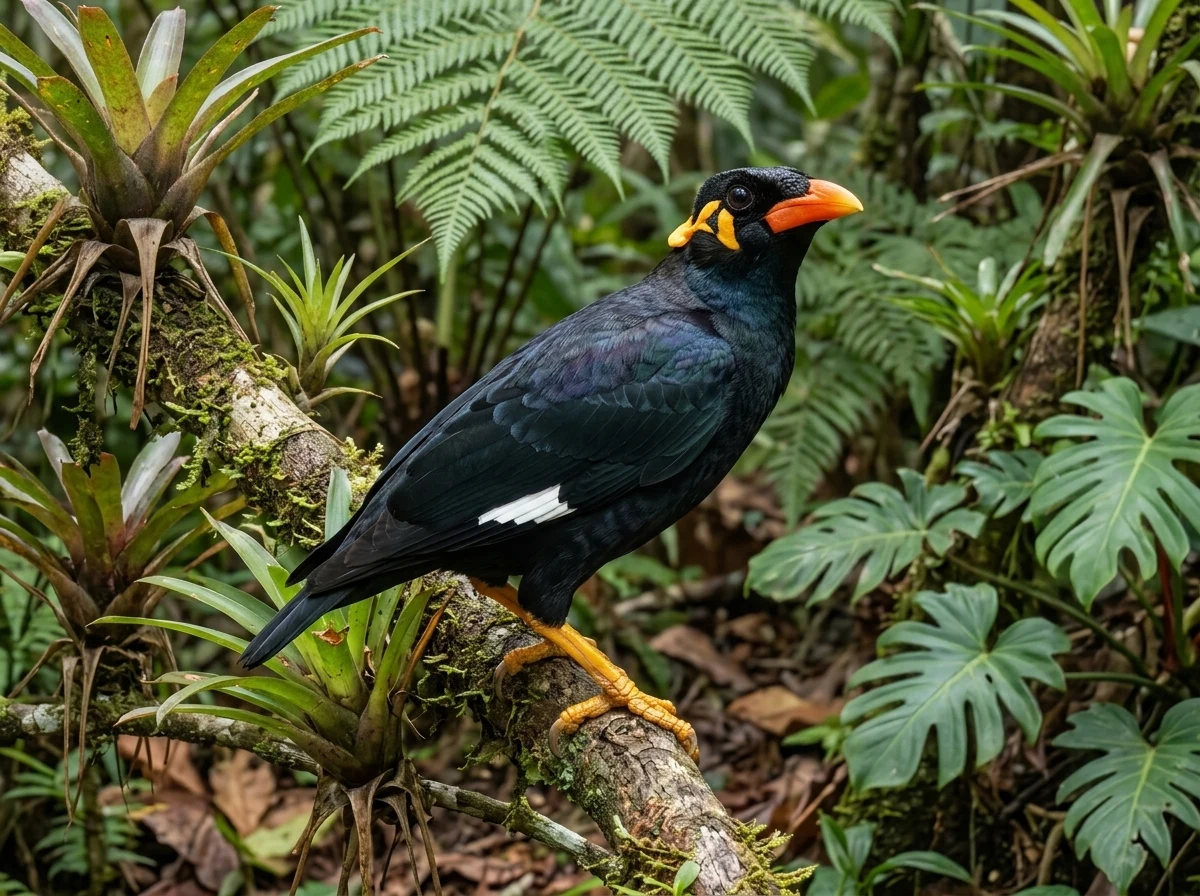
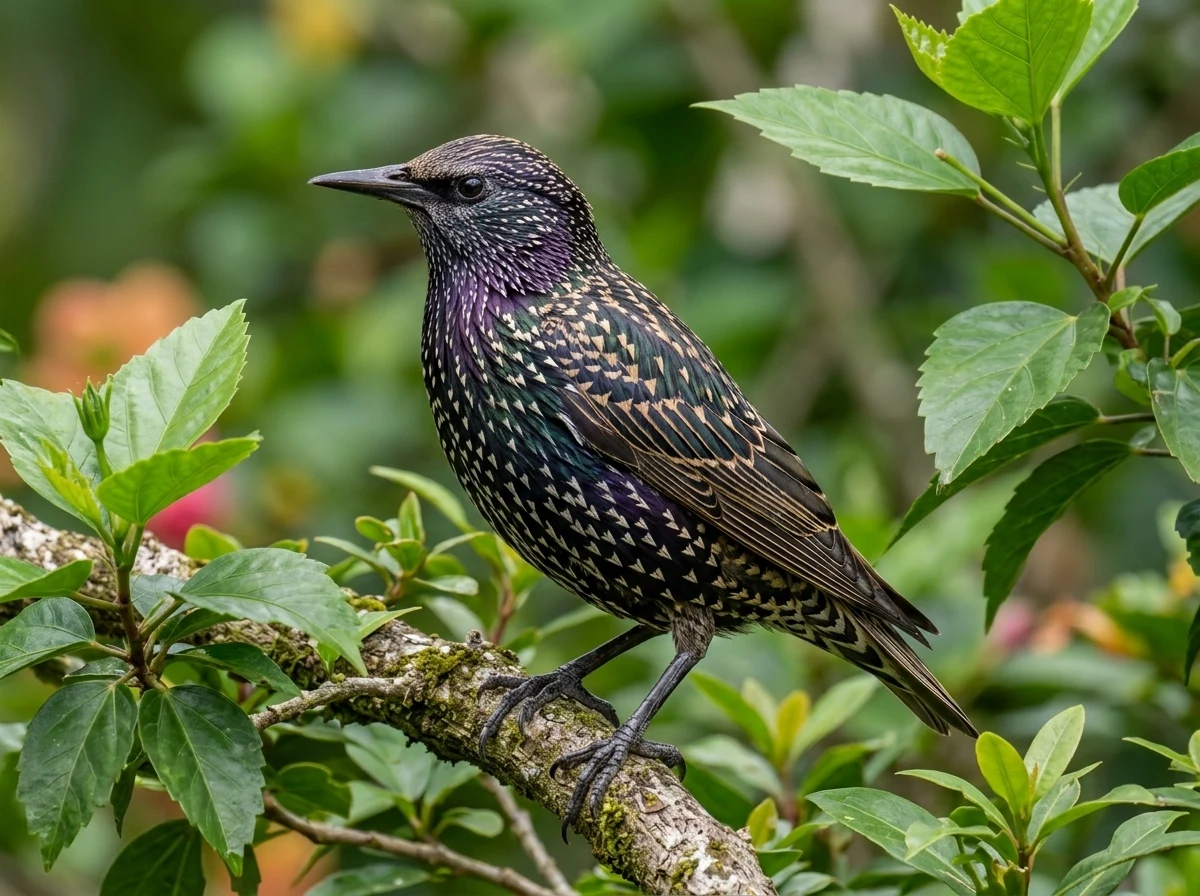
Open each profile for occurrence category, habitat, and conservation status; Shiny Cowbird appears as the contrast of a native invasive bird.
Sound archive
Hear its voice
Explore real songs and calls. The spectrogram turns each sound into a visual trace of time and frequency.
XC1015325Recording 1 of 3call

Play: call by Nancy Salem
Choose another recording
Sound recorded by Nancy Salem · XC1015325 · CC BY-NC-SA 4.0. Visualization by Stichting Xeno-canto voor Natuurgeluiden.
Every recording retains the creator, catalogue number, and license published by Xeno-canto. Metadata via GBIF ↗
01
How many introduced birds are there in Puerto Rico?
The avespuertorico.com catalog classifies 47 of its 402 species as introduced. Of these, the Breeding Bird Atlas documented 26 nonnative resident species with breeding evidence between 2004 and 2009; the rest are escapes, sparse records, or unconfirmed populations.
02
What is the difference between a native and an introduced bird?
A native bird arrived and persists through natural processes; an introduced bird arrived through human action, such as the pet trade. The category describes origin, not abundance or impact.
03
Is the Shiny Cowbird an introduced species?
No. It came from South America on its own by island hopping and was first recorded in Puerto Rico in 1955. It is still considered invasive because of the harm its brood parasitism does to the Yellow-shouldered Blackbird.
04
What is the most common introduced bird in Puerto Rico?
In the Breeding Bird Atlas, House Sparrow appeared in 64% of hexagons, followed by Scaly-breasted Munia (52%) and Orange-cheeked Waxbill (49%). Atlas frequency measures distribution, not the number of individuals.
05
Why are there so many exotic parrots in Puerto Rico?
Many species were imported as pets, especially since the 1950s, and some escaped or were released. Falcón and Tremblay (2018) counted at least 46 psittacine species observed on the island, about 28% of them established.
06
What should I do if I see an exotic bird in my yard?
Photograph it, note date, place, number, and behavior, and share it on eBird, noting whether it looks like an escaped pet. Don't try to catch it or feed it continually.
Keep exploring
Connected routes
Sources and review
The evidence is one link away.
These sources support the editorial scope of this guide. Bird profiles also retain their own taxonomy, occurrence, and conservation references.
Reviewed:
01↗02↗03↗04↗05↗06↗
Sociedad Ornitológica Puertorriqueña
Official bird list
Local names, occurrence categories, and the public summary of 17 endemics.U.S. Forest Service Research and Development
Puerto Rico Breeding Bird Atlas
Distribution and breeding timing for 130 species breeding in Puerto Rico and its satellite islands.PeerJ / PubMed Central
From the cage to the wild: introductions of Psittaciformes to Puerto Rico (Falcón and Tremblay 2018)
At least 46 psittacine species present, 28% established, and the invasion-stage framework used to classify introductions.U.S. Geological Survey Publications Warehouse / The Condor
Shiny cowbird parasitism in two avian communities in Puerto Rico (Wiley 1985)
Share of nests parasitized per host species and the effect of parasitism on nesting success.U.S. Fish and Wildlife Service
Yellow-shouldered Blackbird recovery plan
Range, nesting, threats, and recovery.U.S. Fish and Wildlife Service
Yellow-shouldered Blackbird: bird of the month
Visual comparison, current distribution, and threats affecting the endemic Yellow-shouldered Blackbird.The atlas continues