 AI
AIFieldcraft guide
How to observe hummingbird behavior
A practical guide to moving from seeing a hummingbird to understanding what it is doing, using five Puerto Rico species as reference.
Reviewed: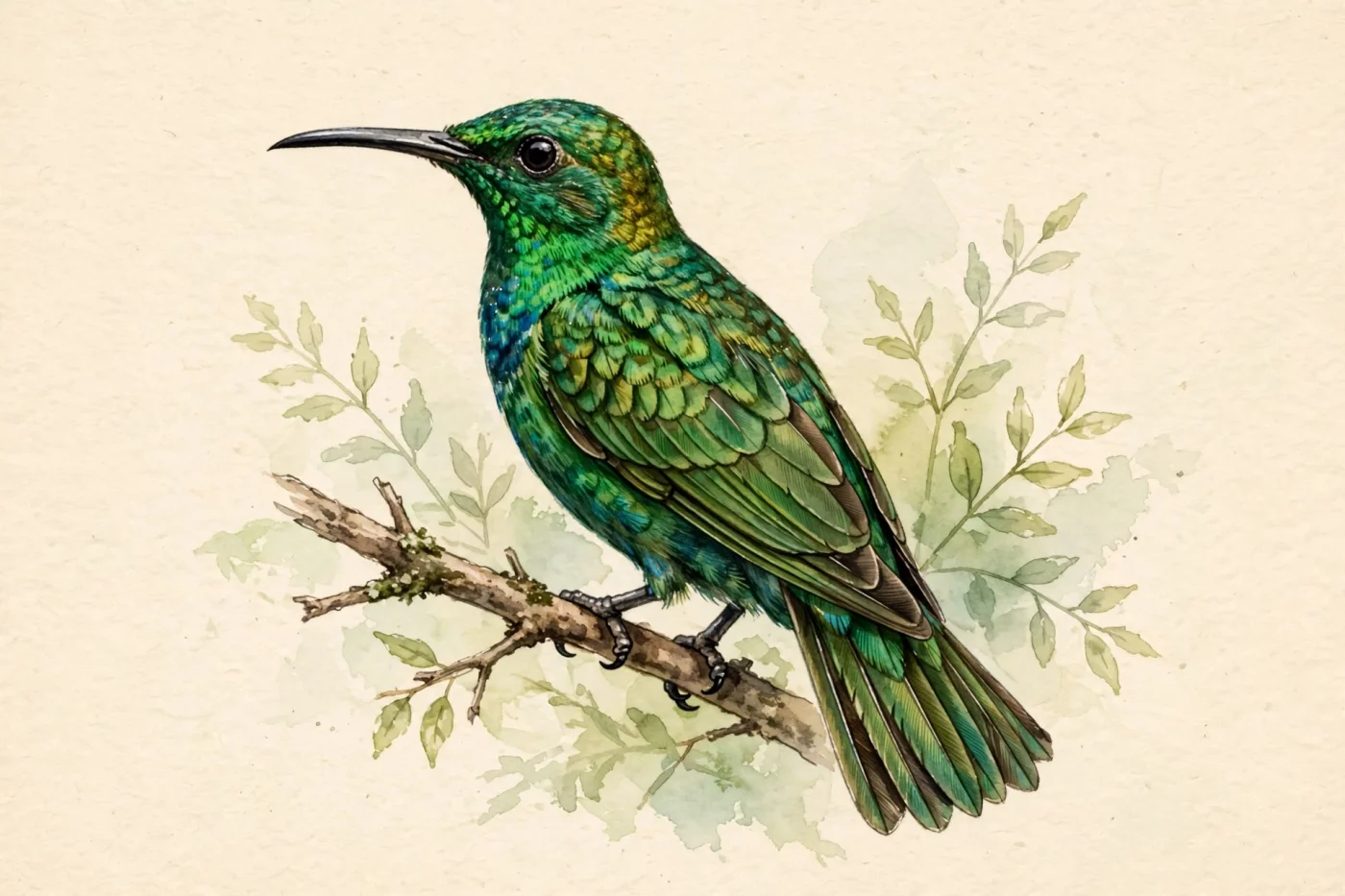
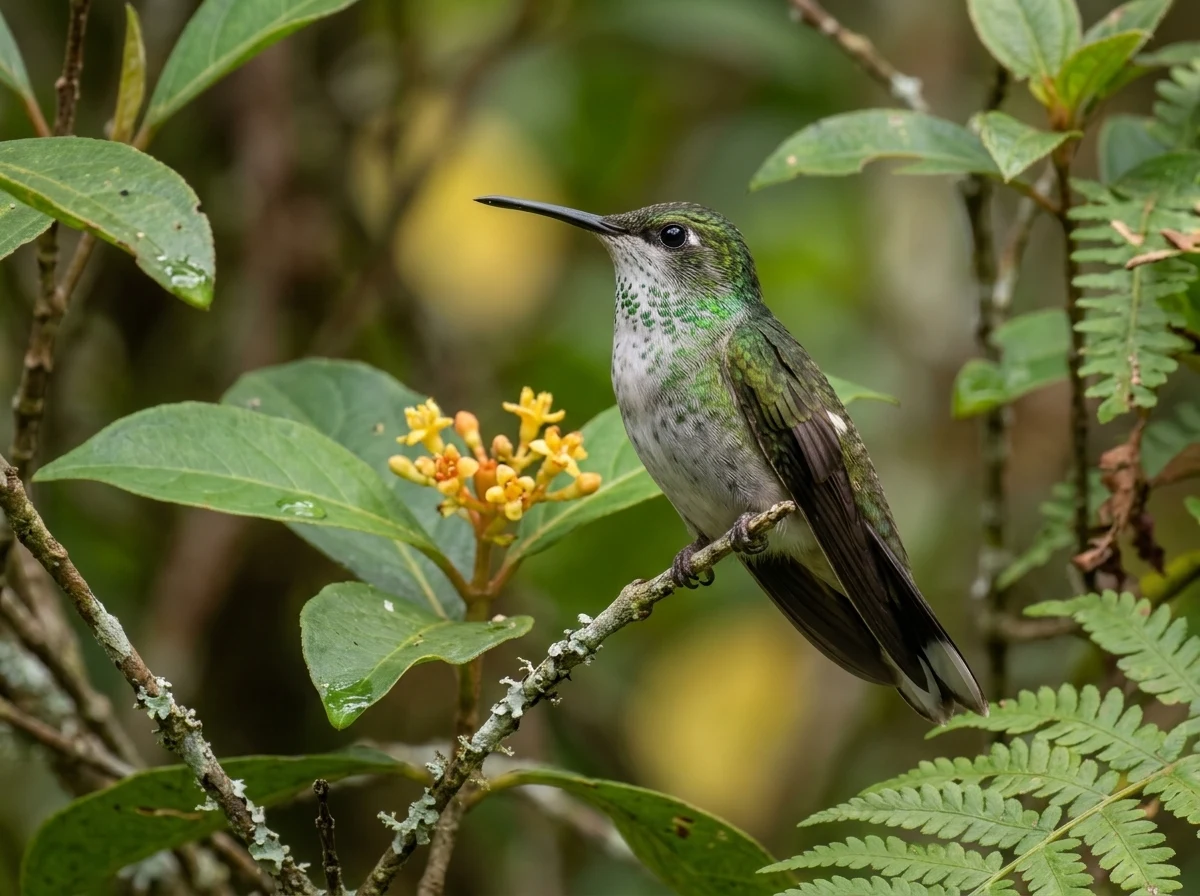
Prepared with AI assistance and linked sources. Illustrations are not field photographs.
From seeing a hummingbird to reading it
Hummingbirds are the easiest birds to see and among the easiest to misread. A bird chasing another beside a flowering shrub is not playing and is not necessarily courting: it may be defending a patch of flowers. A hummingbird sitting still on a high perch giving short notes may be announcing its presence, not singing a melody. The difference matters, and it can be learned.
This guide proposes a simple routine: pick a fixed point, watch in short repeated periods, and record what the bird does, not just what it looks like. The five reference species — Puerto Rican Emerald, Green Mango, Puerto Rican Mango, Antillean Crested Hummingbird and Green-throated Carib — cover much of what an observer can encounter on the island, from montane forest to the urban yard.
Fieldcraft guide
Three ideas to take into the field
TerritorioFlower defenseMany short chases are defense of a flower patch, not courtship.
VozCalls, not melodiesHummingbirds give short repeated notes; describe them, do not just count them.
RutinaFixed point and patienceTen minutes in one place teach more than walking without stopping.
01
How to set up an observation session
Before watching a bird, choose the place. Look for a visible flower patch, a nearby high perch and some shade where you can stay still. Sit or stand a few meters from the patch, with the sun behind you if possible, and avoid moving every time a hummingbird passes. Most interesting behaviors happen in the first seconds after a bird arrives, and an observer who constantly shifts position misses them.
Work in ten-minute blocks. In each block note four things: approximate time, species or type of bird, what it was doing (feeding, chasing, perched, vocalizing) and where it moved. You do not need to identify every individual. It is enough to distinguish categories: a large dark hummingbird is not the same as a small green one, and that distinction already lets you compare behavior between species.
02
Territoriality: chases, perches and flowers
Territoriality is the most visible behavior and the one most often confused with courtship. A hummingbird defending a flower patch usually uses a fixed perch from which it watches, and sallies out to chase any other hummingbird that approaches. Chases are short, noisy and often end with the intruder moving away and the resident returning to the same perch. If you see the same bird return to the same point three times, you are probably watching a territory, not a casual interaction.
The Puerto Rican Mango is a good example for practicing this reading: it is a large, common and widespread bird on the island that favors forests (except rain forest), forest clearings, scrub, shade coffee plantations and suburban gardens. Its size and its tendency to use exposed perches make it easy to follow with binoculars, which lets you count how often it sallies out to chase and at what time of day it does so most.
03
Feeding: which flowers and how they are used
Puerto Rico's hummingbirds feed on nectar and also on insects. The Puerto Rican Mango uses its long decurved bill to feed on a variety of flowers and insects. The Puerto Rican Emerald and the Green Mango are also nectarivores, and the Green Mango is associated with montane and moist forest, forest edge and shade coffee, where the flowers available differ from those of a coastal garden.
In practice, watch the flower before the bird. Note the color, the shape and whether the flower grows on a shrub, a vine or a tree. Then watch how the bird approaches: does it enter from the front, go around the corolla, visit several flowers on the same shrub in sequence? That sequence of visits is a valuable behavioral datum and does not require precise plant identification. If you cannot identify the flower, describe it; an honest description is more useful than an invented name.
04
Courtship and vocalizations: what can and cannot be concluded
Hummingbird courtship includes display flights, chases and displays near a perch, but from a distance it is easy to confuse with a territorial dispute. The key is context: if the chased bird stays nearby and responds instead of fleeing, and if the resident does not immediately return to its watch perch, you are more likely watching a courtship interaction. If the chaser returns to the same perch and repeats the pattern, it is more likely territoriality. You cannot always decide, and it is fine to record it as an "unresolved interaction".
On vocalizations, be cautious. Hummingbirds give short repeated calls, and the available catalog does not document the specific meaning of each note for these species. What you can do is describe the sound: high or low, one note or several, repeated or isolated, given in flight or from a perch. That description, stored with the time and the behavior, is more valuable than a rushed interpretation.
05
Exercise: comparing two species at the same patch
Choose a flower patch that receives visits from at least two types of hummingbird. For twenty minutes, record each visit in a simple table with four columns: time, bird type, behavior and approximate duration. At the end, compare. Does the larger species chase more? Does the smaller one visit more flowers per minute? Does one vocalize from a perch and the other only in flight? You do not need a large sample for the exercise to be useful; ten visits already give you a pattern you can repeat another day.
This exercise also helps distinguish species by behavior when visual identification is difficult. The Antillean Crested Hummingbird's range extends from eastern Puerto Rico through the Lesser Antilles, and it has been recorded as a vagrant in Florida. The Green-throated Carib is found in Puerto Rico and most of the Lesser Antilles. In the catalog consulted, both species are listed as native to Puerto Rico without resident or breeder status, so locality and date should be noted carefully.
Linked profiles
The five reference species
Each one offers a different lesson in behavior and observation.
AI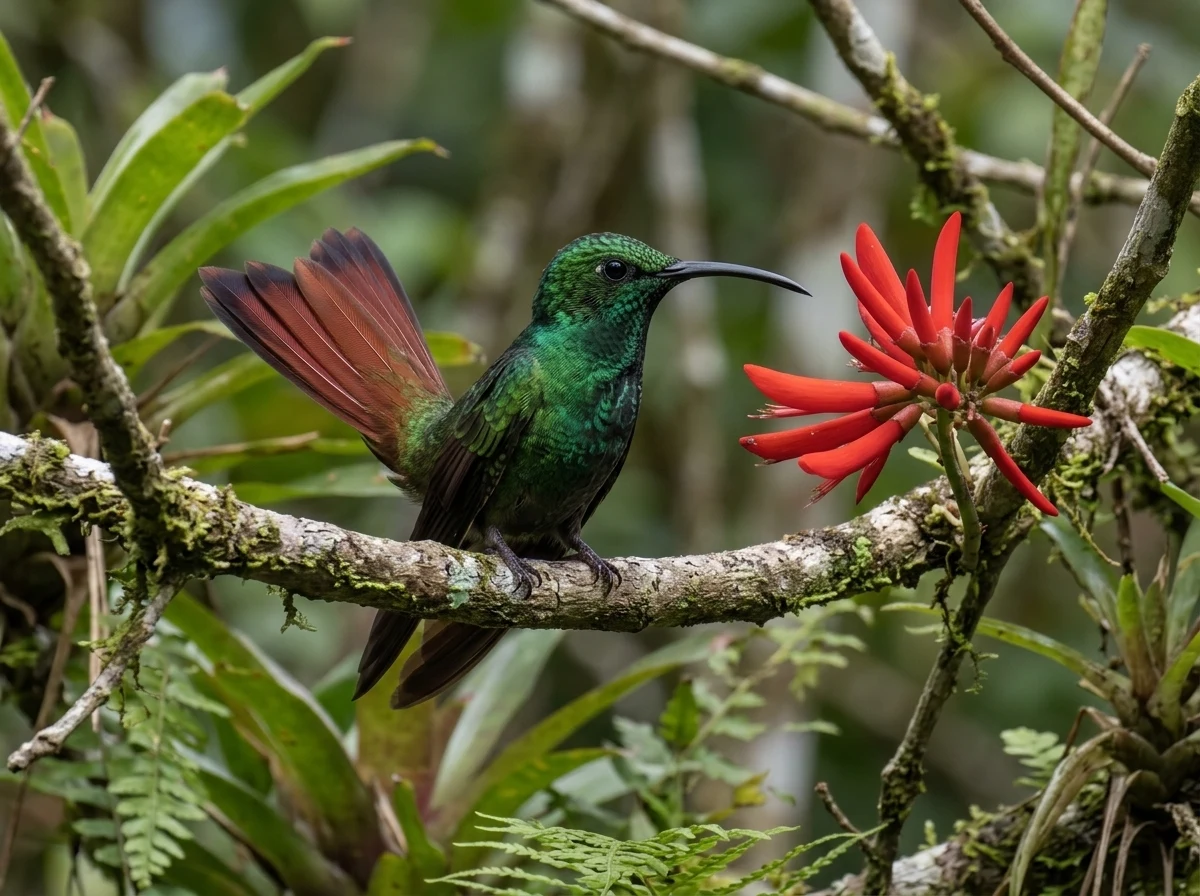 AI
AI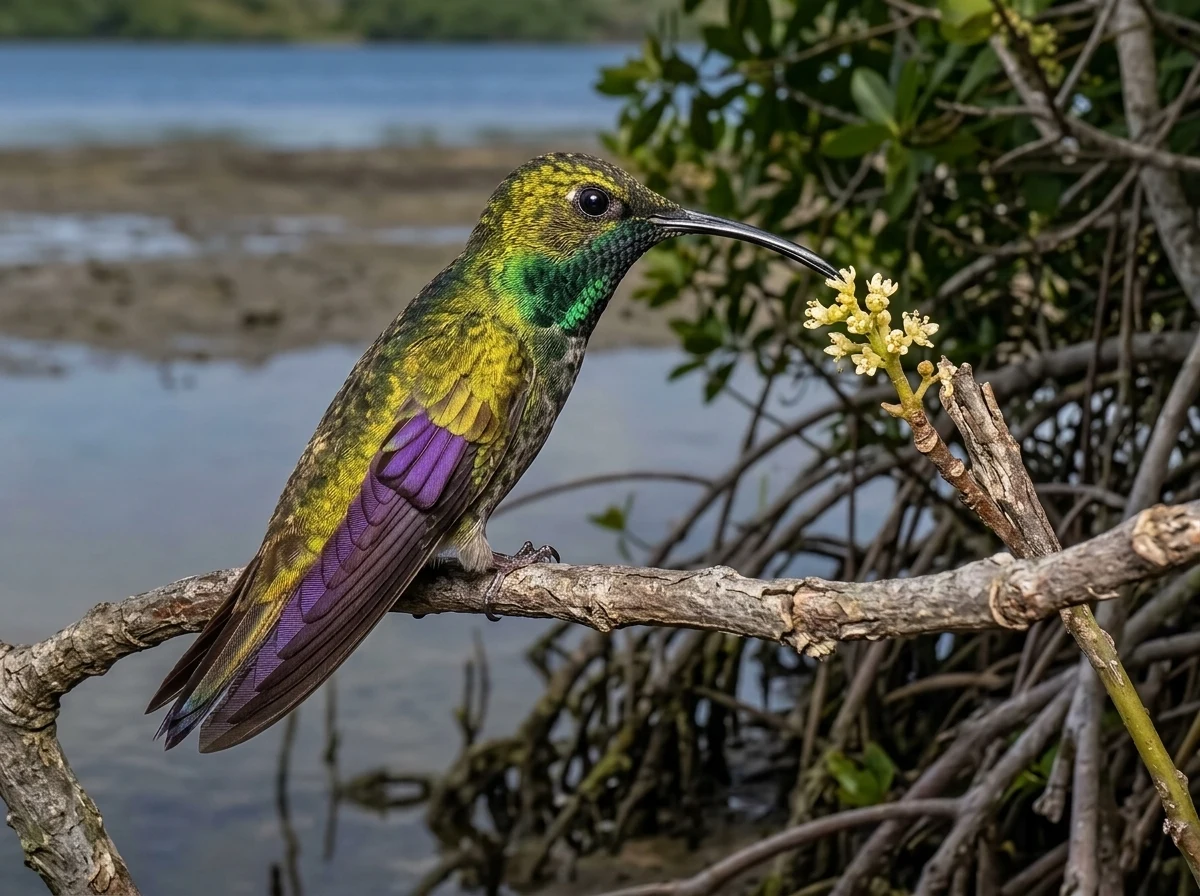 AI
AI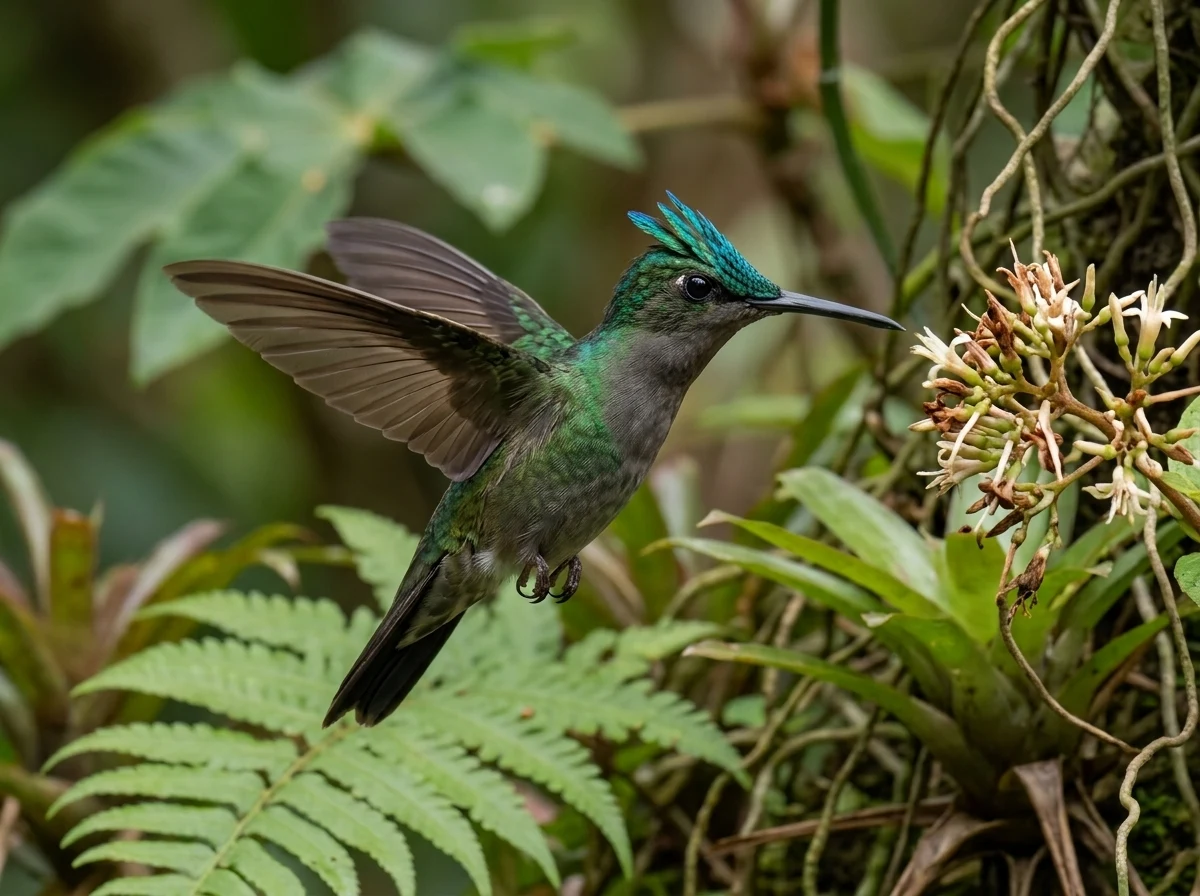 AI
AINative / natural occurrenceIUCN LC
Antillean Crested Hummingbird
Zumbadorcito Crestado
Orthorhyncus cristatus
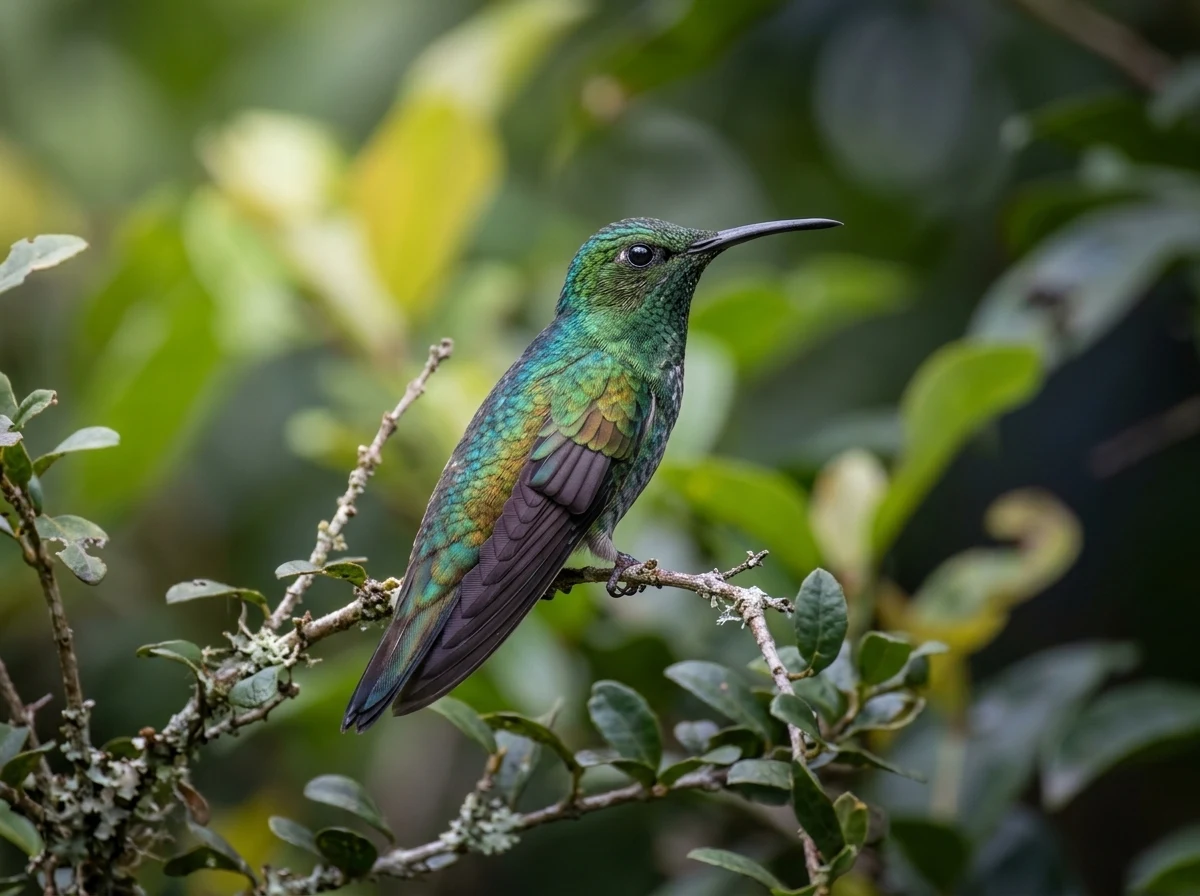 AI
AI01
How do I tell a territorial chase from courtship?
Watch what happens next. If the resident returns to the same perch and repeats the pattern, it is more likely territoriality. If the chased bird stays nearby and responds, and the resident does not immediately return to its perch, it is more likely courtship. If you cannot decide, record it as an unresolved interaction.
02
Which flowers should I look for to watch hummingbirds?
Look for visible flower patches and note color, shape and support (shrub, vine or tree). The Puerto Rican Mango feeds on a variety of flowers and insects, and the Green Mango is associated with montane and moist forest, forest edge and shade coffee. If you cannot identify the flower, describe it.
03
What do hummingbird calls mean?
The available catalog does not document the specific meaning of each note for these species. What is useful is to describe the sound: high or low, one note or several, repeated or isolated, given in flight or from a perch, together with the time and the behavior observed.
04
Can I watch hummingbirds in an urban yard?
Yes. The Puerto Rican Mango favors suburban gardens, forest clearings and scrub, and the Puerto Rican Emerald also uses plantations and gardens. A visible flower patch and a nearby perch are enough to start a ten-minute session.
05
How long should I stay at one point?
Ten-minute blocks work well. Note time, bird type, behavior and where it moved. Repeating the same block on different days gives you a more reliable pattern than a single long visit.
Keep exploring
Connected routes
Sources and review
The evidence is one link away.
These sources support the editorial scope of this guide. Bird profiles also retain their own taxonomy, occurrence, and conservation references.
Reviewed:
01↗02↗
Cornell Lab of Ornithology, Birds of the World
Puerto Rican Mango (Anthracothorax aurulentus) — Field Identification
Evidence for cited sections; consult the original document.Cornell Lab of Ornithology, eBird / Merlin
Antillean Crested Hummingbird Orthorhyncus cristatus
Evidence for cited sections; consult the original document.The atlas continues