 AI
AIHabitat guides
What Bird Habitat Restoration Means
A practical guide to habitat restoration: what is recovered, how it is evaluated, and what you can observe without jumping to conclusions.
Reviewed: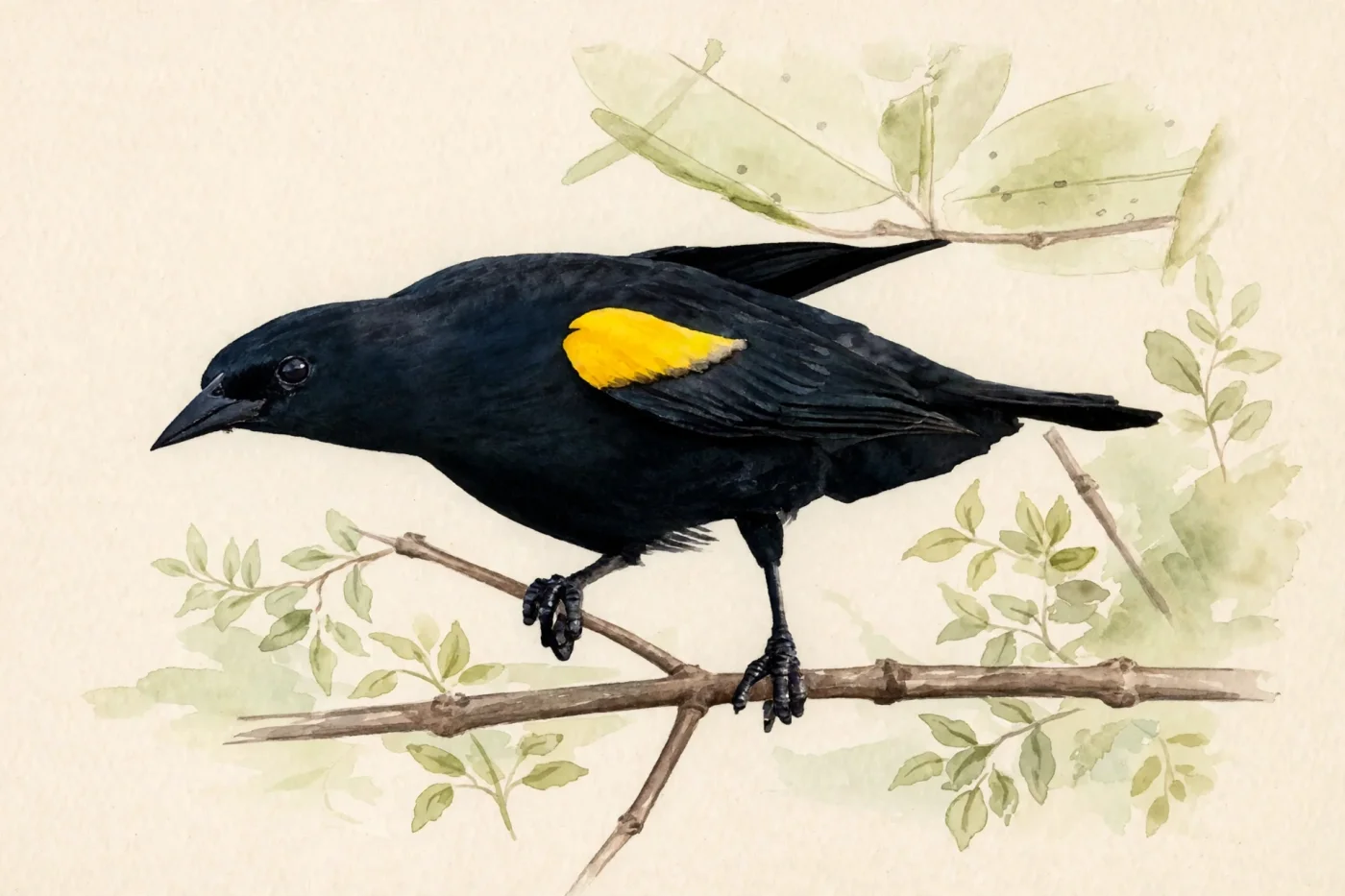
Prepared with AI assistance and linked sources. Illustrations are not field photographs.
Restoring is not just planting
Restoring bird habitat means recovering the conditions a species needs to survive and reproduce: food, nesting sites, shelter, and enough space away from disturbance. It is not simply planting vegetation where a forest once stood, nor returning a landscape to an idealized past. It is a process with measurable objectives, monitoring, and continuous adjustments.
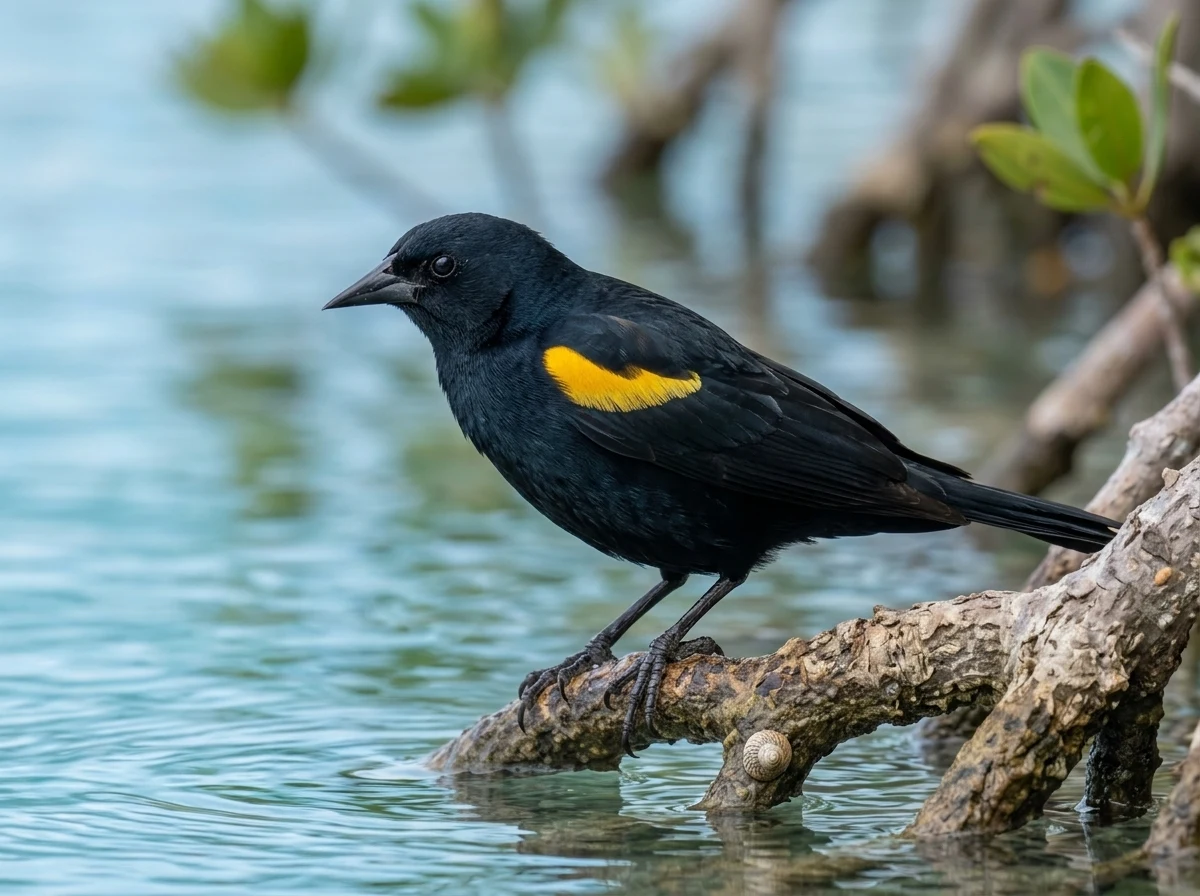
In Puerto Rico, the Yellow-shouldered Blackbird (Agelaius xanthomus), known locally as mariquita or capitán, is a useful case for understanding this. It is an endemic bird that nests in mangroves, palms, and other coastal substrates, with main populations concentrated in the southwest and on Mona and Monito. Its history shows that habitat restoration also involves managing threats such as brood parasitism by the Shiny Cowbird and predation, and that restoration must be combined with other conservation actions.
Habitat guides
Three key ideas
Restauraris not just plantingIt means recovering food, nests, shelter, and reducing disturbance.
Monitorearto adjustSuccessful projects are long-term and adaptive.
Combinarrestoration and managementAudubon evidence indicates they are more effective together.
01
What exactly gets restored
Restoring bird habitat involves recovering four basic components: food, nesting sites, shelter, and disturbance-free space. In coastal areas, for example, restoration can include vegetation management, reduced beach raking, and beach nourishment, as described by Audubon. In mangroves, it can mean replanting trees and improving germination in nurseries, as Vida Marina UPR does in northwestern Puerto Rico.
Not all projects restore the same things. A mangrove degraded by hurricanes requires recovering forest structure and its function as a natural barrier. A nesting beach requires reducing foot and dog traffic, and sometimes restoring sand. A coastal dry forest may need invasive species control and protection from development. Restoration is specific to each place and each species.
02
The Yellow-shouldered Blackbird case: habitat and threats
The Yellow-shouldered Blackbird is endemic to Puerto Rico and the islands of Mona and Monito. According to the U.S. Fish and Wildlife Service (USFWS), the species was once common in coastal forests, but most of these were destroyed in the early 20th century to plant sugarcane. Later, many plantations became housing or pastures. Today, the blackbird is limited to four areas: Mona and Monito, and three small, disjunct populations in eastern, southern, and southwestern Puerto Rico.
The blackbird uses up to eight nesting habitat types: mud flats and salt flats, offshore red mangrove cays, black mangrove forests, lowland dry coastal pastures, suburban areas (including buildings), coconut plantations, and coastal cliffs. It shows a preference for nesting in black mangroves or palms, especially coconut palms and Puerto Rican palmetto (Sabal causiarum). Its primary threats are habitat loss and degradation from development and recreational activities, predation by rats, cats, and raptors, and nest parasitism by the Shiny Cowbird. Restoring its habitat therefore means protecting and recovering those nesting and feeding sites while managing those threats.
03
How restoration success is measured
Success is not measured only by the number of trees planted. Audubon notes that successful conservation programs tend to be long-term and adaptive: they track their progress and adjust what they do based on results. For coastal birds, Audubon's research found that habitat restoration and management of human disturbance work best when implemented together, not separately.
For the Yellow-shouldered Blackbird, USFWS proposes measurable criteria: that the two primary populations (southwest and Mona) show a stable or increasing trend, with natural recruitment and multiple age classes; that two additional populations be established on protected lands; and that parasite and predator control actions be maintained. These criteria are not only ecological: they also aim to increase the species' resilience, redundancy, and representation—its capacity to adapt and persist through events such as hurricanes.
04
An observation exercise to understand restoration
You can use a notebook to compare two nearby areas: one that has been restored or is under management, and one that has not. You do not need to identify every bird; just record what you see. Note the date, time, vegetation type, presence of water, trash, people or dogs, and the total number of birds you observe. Repeat the visit on different weeks if you can.
The goal is not to draw conclusions about abundance, but to practice systematic observation. Ask yourself: are there differences in vegetation structure? Are there signs of disturbance? Do you see birds using the area for feeding, perching, or nesting? This kind of record is the same principle used by restoration projects: compare before and after, and adjust. To go deeper, visit the guides on mangrove birds and Yellow-shouldered Blackbird conservation.
Linked profiles
The Yellow-shouldered Blackbird as an example
An endemic bird that shows why restoring habitat also means managing threats.
AI01
Is restoring habitat the same as reforesting?
No. Reforesting is a technique that can be part of restoration, but restoring bird habitat means recovering food, nesting sites, shelter, and reducing disturbance. It can also include vegetation management, predator control, or community education, depending on the case.
02
How do I know if a restoration is working?
Long-term monitoring is needed. Audubon notes that successful programs track their progress and adjust their actions. For birds, changes in habitat use, the presence of multiple age classes, and the reduction of threats such as parasitism or predation are observed.
03
Why is the Yellow-shouldered Blackbird a good example?
Because its history combines habitat loss, multiple threats, and measurable recovery criteria. USFWS documents that its populations are small and disjunct, and that restoration must include protection of nesting sites and control of parasites and predators.
04
Can I participate in habitat restoration in Puerto Rico?
Yes. You can join mangrove planting, bird monitoring, or coastal cleanup projects. Vida Marina UPR, as reported by BirdsCaribbean, documents projects that involve communities and students in mangrove restoration in northwestern Puerto Rico. You can also practice systematic observation in your area.
Keep exploring
Connected routes
Sources and review
The evidence is one link away.
These sources support the editorial scope of this guide. Bird profiles also retain their own taxonomy, occurrence, and conservation references.
Reviewed:
01↗02↗03↗
National Audubon Society
New Evidence Reveals Coastal Birds Need Both Stewardship and Restoration
Evidence for cited sections; consult the original document.U.S. Fish and Wildlife Service, Caribbean Ecological Services Field Office
Yellow-shouldered Blackbird (Agelaius xanthomus) Recovery Plan Amendment
Evidence for cited sections; consult the original document.BirdsCaribbean
Planting Seeds for the Future: Post-Hurricane Mangrove Restoration in Puerto Rico
Evidence for cited sections; consult the original document.The atlas continues