 AI
AIBehavior
What Feather Molt Means for a Bird
Molt is not a disease or a sign of neglect: it is one of the most costly and orderly activities in a bird's life. Here you will learn to read it without disturbing the bird.
Reviewed: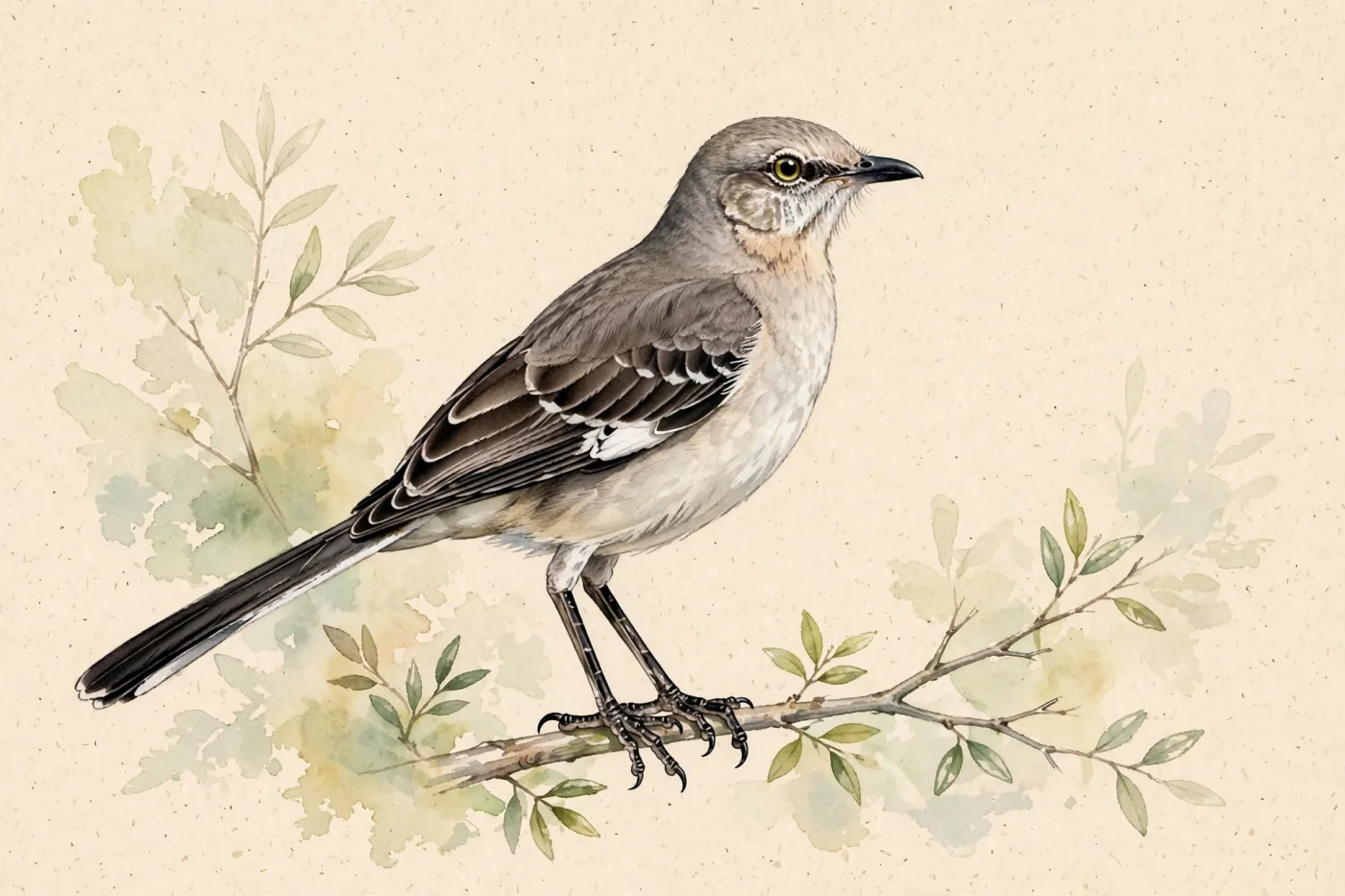
Prepared with AI assistance and linked sources. Illustrations are not field photographs.
Molt, explained without jargon
When you see a bird with ruffled feathers, gaps in the wing, or patches of different color, it is most likely molting. Molt is the replacement of feathers: feathers wear out, break, and stop working well, so the bird replaces them. It is not an emergency or a disease; it is a normal, periodic process.
Understanding molt changes how you watch birds. It explains why an individual looks 'odd' at a certain time of year, why some birds look duller, and why others show new colors without having changed species. This guide answers the concrete question —what it means for a bird to be molting— and gives you an observation procedure and a checklist to practice in Puerto Rico.
Behavior
Three key ideas
ReemplazoWhat molt isFeathers wear out and the bird replaces them; it is not a disease.
Costo energéticoWhy it mattersMolt is energetically expensive, like migrating or breeding.
EscalonadaHow it happensIn many birds flight feathers are replaced sequentially, not all at once.
01
What molt exactly is and why it happens
Molt is the process by which a bird replaces its feathers. Feathers are complex and capable structures, but they do not last forever: they begin to break down after some time, forcing their owner to replace them. As a result, during molt a bird's appearance may change radically or simply look odd and patchy.
Molt is energetically expensive, just like migration and breeding. That is why birds make sure these three activities do not overlap. For many North American songbirds, that sweet spot in the calendar is July into early August. Other species, such as some flycatchers, migrate to their tropical grounds first and complete the process there; some swallows may begin molting up north, pause for migration, and finish after arriving at their wintering destinations.
02
Complete, partial, and stepwise molt: not all birds do the same
In general, smaller species replace all their feathers once a year and will often replace some twice. But the bigger the feather, the more taxing it is to replace. That is why huge birds such as eagles and pelicans do not grow a new set of flight feathers each year; they restore individual primaries and secondaries on the wings in a staggered manner, taking multiple years to refresh them completely.
Many species also have a partial molt in late winter or spring, replacing their head and body feathers but not their flight feathers. That is how a male Scarlet Tanager can switch to olive-green for the winter and back to luminous red for spring and summer. In large birds that need to maintain flight while molting, there is a pattern called 'staffelmauser' or stepwise molt: a series of incomplete prebasic molts eventually results in multiple waves of replacement through the feather tracts. Among the primaries, this results in 'sets' of contiguous feathers replaced during a molt, with starting points defined by a fresher inner feather adjacent to a more-worn outer feather.
03
How to recognize molt in the field: wings, tail, and body
Are molts obvious? Yes, though more so in larger species and in longer feathers on the wings and the tail. When birds are molting, you can usually spot the missing primary flight feathers by looking for a gap in the outline of the wing. The molt typically starts with the inner-most primary feather and works out; similarly, the central tail feathers tend to be shed first. At the same time, the plumage on the body is also being swapped. In black or darkly colored birds, the new feathers are noticeable as they contrast with the faded old ones.
Wear is another way plumage changes, and it is not the same as fading. Wear is mechanical deterioration from flapping and environmental elements that causes the feather tips to fray. Generally, paler plumes wear more quickly because they lack melanin, a pigment that strengthens cells and protects them from damage. Fading, on the other hand, is a photochemical reaction: UV radiation from the sun breaks down a feather's structure. Lice and bacteria also contribute to feather loss.
04
Molt as a tool: age, juvenile plumage, and 'molt limits'
The juvenile stage refers to the period right after a fledgling leaves the nest. For some species it lasts just a few days; for others it can take up to a year. This is also the only time in a bird's life when all of its feathers grow in at the same time, giving it a particularly uniform appearance. After a bird goes through its first juvenile molt, it only changes feathers sequentially, which means it always has something old and something new on its body. That is why late-winter gulls that are immature —the awkward stage between juvenile and adult— look so patchy.
Molt patterns, or patterns of feather replacement, can help us determine the age of a bird. 'Molt limits' are visible contrasts between retained feathers and replaced feathers. For example, in many warblers, molt patterns allow observers to distinguish first-cycle birds from adults. Learning to read these limits is a skill that takes practice: it does not require finding rare birds, because molt is universal and occurs in common species.
05
Practical exercise: observe molt without disturbing the bird
Choose a place where you can watch common birds at a comfortable distance: a yard with shrubs, a park, or the edge of a lagoon. Bring binoculars if you have them and a notebook or phone to take notes. You do not need to capture or touch the bird. The goal is to practice reading signals from a distance.
Procedure: first, observe the bird's overall silhouette and note the date and species if you recognize it. Second, look at the wing: search for a gap or a step in the edge of the primaries. Third, check the tail: are central feathers missing, or are there feathers of different lengths? Fourth, compare the body: are there patches of new, darker or brighter feathers next to old, faded ones? Fifth, note whether the bird is flying, feeding, or resting, because molt can affect its behavior. Repeat the observation in different weeks to notice changes. This practice is safe for the bird and for you, and it does not require special permits.
Linked profiles
Two Puerto Rico birds to practice reading molt
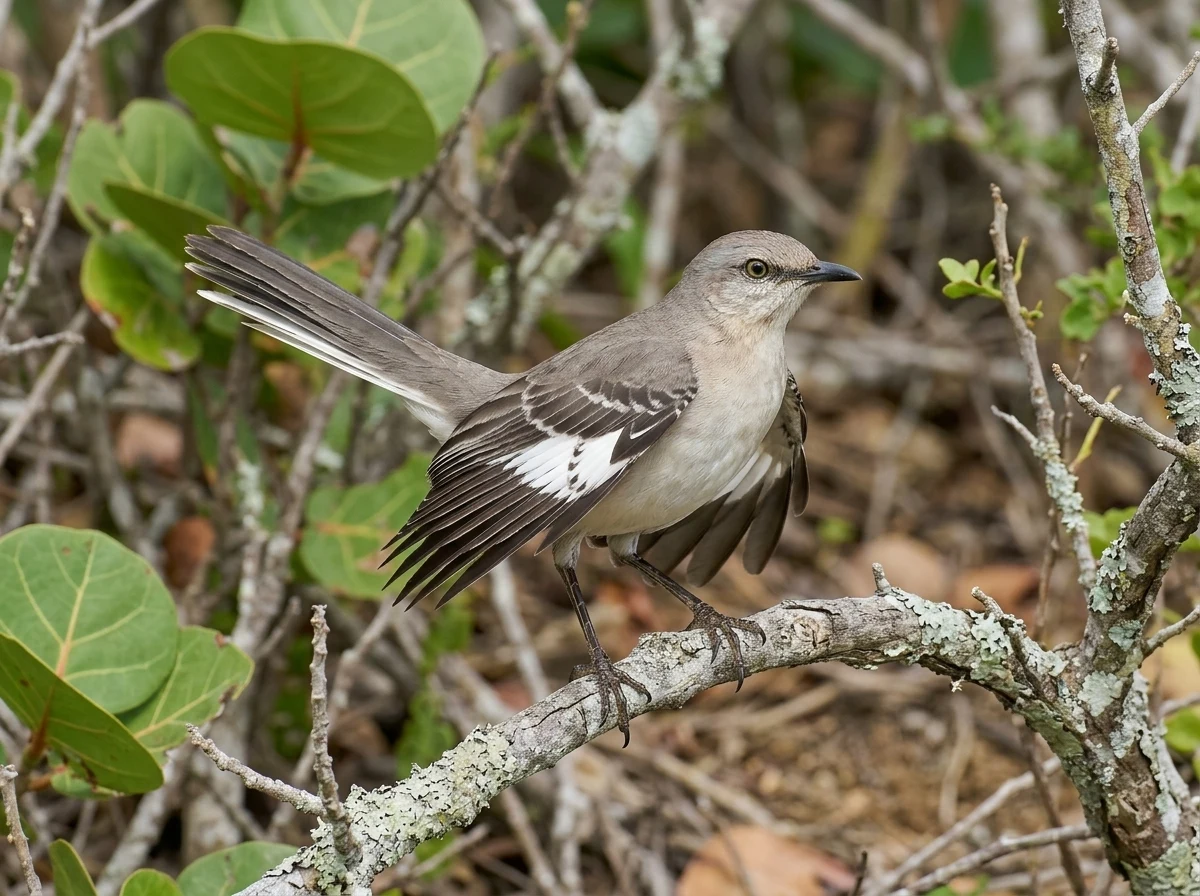
The Northern Mockingbird and the Laughing Gull offer useful contrasts: one is a shrubland bird and the other a coastal gull. Both are recorded in Puerto Rico according to the bird catalog.
AI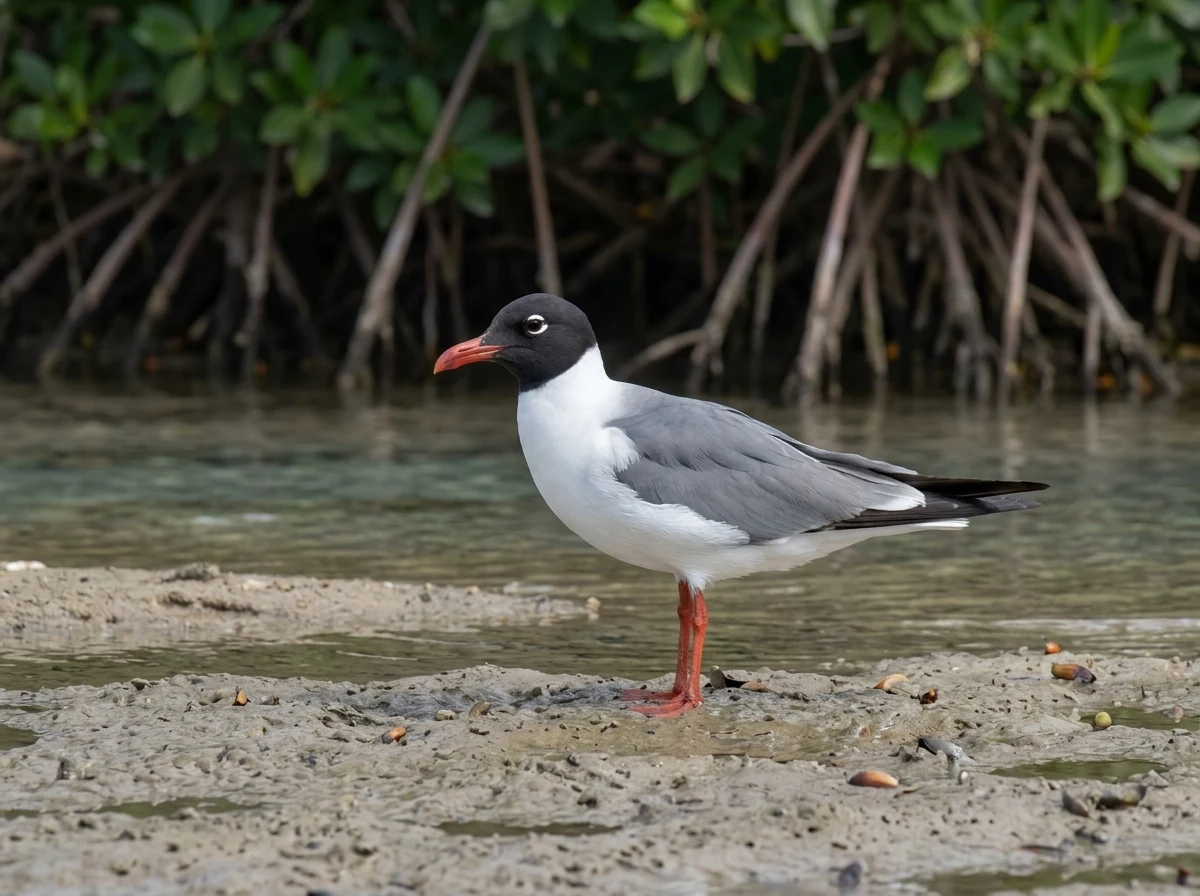 AI
AI01
Is molt dangerous for the bird?
It is not a disease or an emergency. It is a normal, periodic process. However, it is energetically expensive, so birds adjust their schedule to avoid overlapping it with migration and breeding.
02
Do all birds molt once a year?
In general, smaller species replace all their feathers once and often some twice. Large birds, such as eagles and pelicans, replace flight feathers in a staggered manner over several years.
03
Why does a bird look 'patchy'?
Because after the first juvenile molt the bird only changes feathers sequentially, so it always has old and new feathers at the same time. This is especially visible in immature gulls.
04
Can I observe molt without capturing the bird?
Yes. With binoculars and patience you can see gaps in the wing, tail feathers of different lengths, and patches of new plumage. You do not need to touch or capture the bird to practice this skill.
05
Are fading and wear the same thing?
No. Wear is mechanical deterioration that frays feather tips. Fading is a photochemical reaction in which UV radiation breaks down the feather's structure.
06
Does molt change a bird's color?
Yes, it can radically change appearance. Some birds have a partial molt in spring that replaces head and body feathers, which can make a male go from dull plumage to bright plumage.
Keep exploring
Connected routes
Sources and review
The evidence is one link away.
These sources support the editorial scope of this guide. Bird profiles also retain their own taxonomy, occurrence, and conservation references.
Reviewed:
01↗02↗03↗
National Audubon Society
Understanding the Basics of Bird Molts
Evidence for cited sections; consult the original document.American Birding Association (Birding magazine)
Birding by Feather: A Molt Primer
Evidence for cited sections; consult the original document.BirdsCaribbean
Making Connections and Measuring Molt: Experiences at a Second Bird Banding Workshop in the Dominican Republic
Evidence for cited sections; consult the original document.The atlas continues