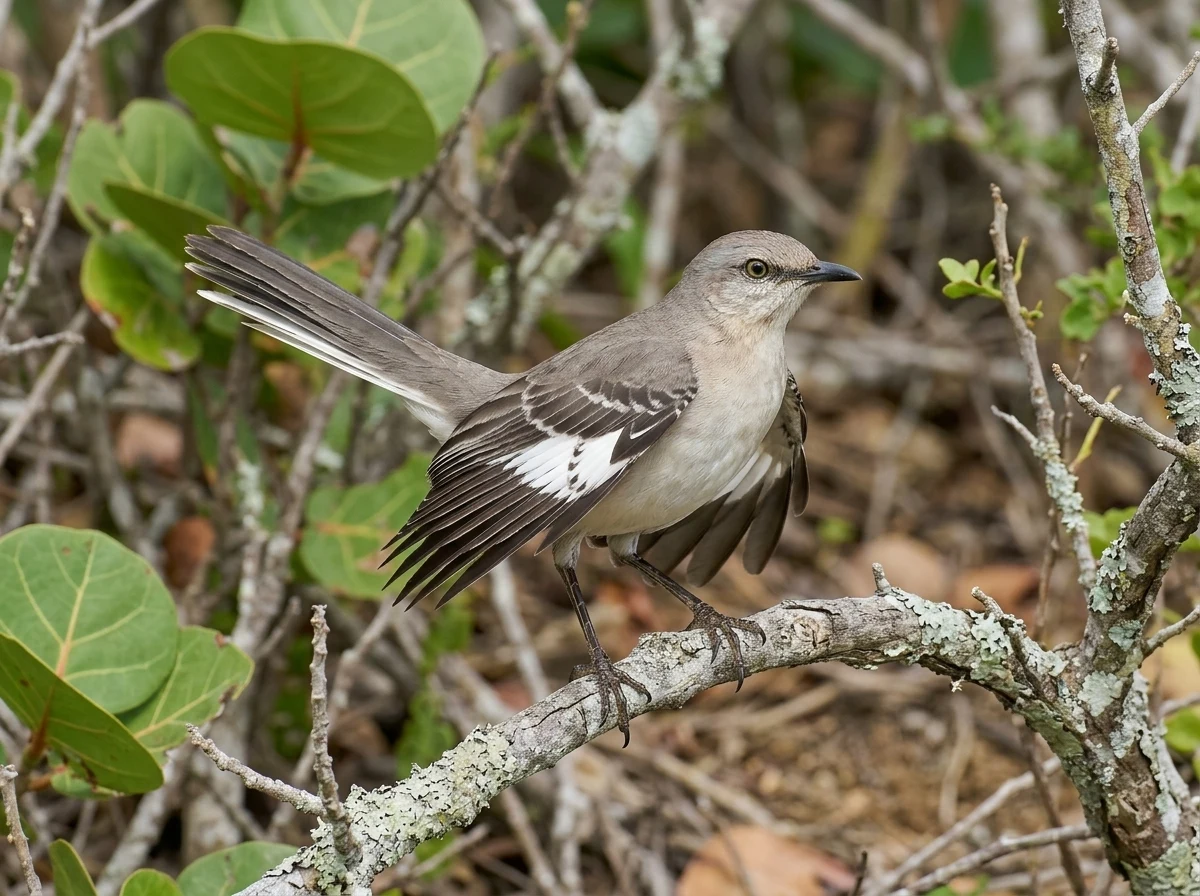
 AI
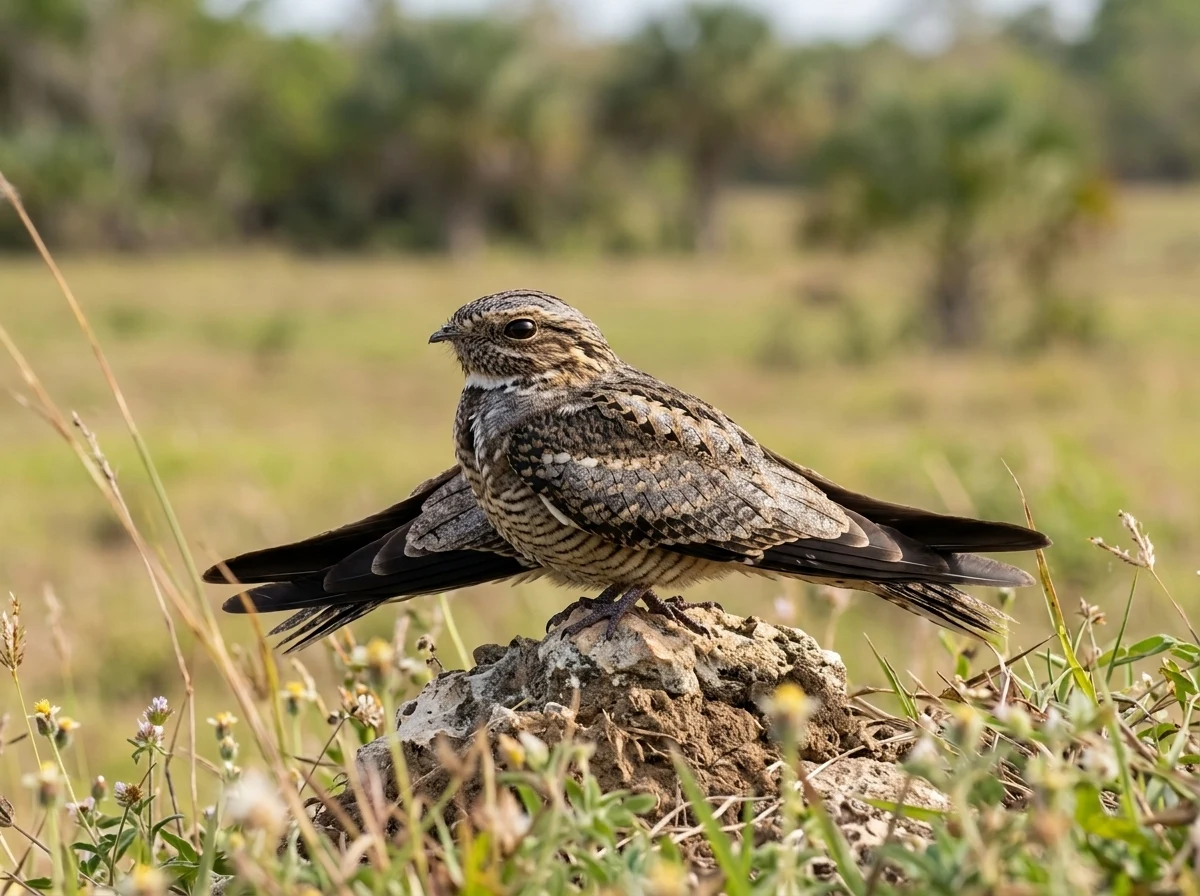
AIAI reconstruction created with Nano Banana 2 · 1K, grounded in the profile’s documented taxonomy, habitat, natural-history sources, and an open-license visual reference when available. It is an interpretive image, not documentary evidence. Image policy →

Northern Mockingbird
Ruiseñor
Mimus polyglottos
The northern mockingbird (Mimus polyglottos) is a mockingbird commonly found in North America, of the family Mimidae. The species is also found in some parts of the Caribbean, as well as on the Hawaiian Islands. It is typically a permanent resident across much of its range, but northern mockingbirds may move farther south during inclement weather or prior to the onset of winter. The northern mockingbird has gray to brown upper feathers and a paler belly. Its tail and wings have white patches which are visible in flight. The species is known for its ability to mimic bird calls and other types of sound, including artificial and electronic noises. Studies have shown its ability to identify individual humans and treat them differently based on learned threat assessments. It is an omnivore and consumes fruit, invertebrates, and small vertebrates. It is often found in open areas, open woodlands and forest edges, and is quite common in urbanized areas. The species breeds from southeastern Canada throughout the United States to the Greater Antilles. It is listed as a species of least concern by the International Union for Conservation of Nature. The mockingbird is influential in United States culture, being the state bird of five states, appearing in book titles, songs and lullabies, and making other appearances in popular culture.
Sound archive
Hear its voice
Explore real songs and calls. The spectrogram turns each sound into a visual trace of time and frequency.

Play: call by Scott Olmstead
Choose another recording
Sound recorded by Scott Olmstead · XC1140500 · CC BY-NC-SA 4.0. Visualization by Stichting Xeno-canto voor Natuurgeluiden.
Every recording retains the creator, catalogue number, and license published by Xeno-canto. Metadata via GBIF ↗
Island profile
About the Northern Mockingbird
This atlas includes Northern Mockingbird (Mimus polyglottos) with atlas status “Native / natural occurrence” within scope “Avibase inferred core 380.” Global trait data associate it primarily with shrub; consult the linked records to resolve its Puerto Rico habitat use.
Conservation
Least Concern
IUCN LC
- Global IUCN
- LC
- Puerto Rico DNER
- No current listing in source crosswalk
- Federal ESA
- No current listing in source crosswalk
- Critical habitat
- Not identified in source crosswalk
Natural history
How it lives
- Habitat
- shrublands
- Elevation
- 0–3000 m
- Nest
- Cup / bowl · Shrub / bush / vine
- Clutch
- 2–6 eggs
- Social behavior
- Not resolved
Keep exploring
This bird belongs to 4 paths through the atlas.
Guides featuring this bird
Follow this record beyond the profile.
Identification, sound, place, and explanatory guides connecting this species to larger questions.
See all related guides (27)
- How Urban Noise Affects Bird Communication
- Identifying birds by their alarm calls
- Northern Mockingbird vs. Red-legged Thrush
- How to do a 5-minute point count
- How to describe a bird sound in words for your notes
- How to read a spectrogram for Puerto Rico birds
- Why to Limit Pishing and Other Bird-attraction Methods
- How to estimate distance and direction of a bird sound
- How to make a complete and useful eBird checklist
- How to compare two bird sounds side by side
- How to make a sound map of a birding site
- How to observe Puerto Rican Woodpecker foraging
- Bird tracking: tracks, feathers, and signs
- How to observe molt and plumage for bird identification
- Backyard Bird Bingo: A Family Game
- Sound Bingo: Dawn Chorus
- Family Bird Journal: 7-Day Challenge
- Sound Mapping: Layers of the Morning Chorus
- Calls in Spanish and English: Onomatopoeia
- Pearly-eyed Thrasher vs. Red-legged Thrush: Puerto Rico's two 'zorzales'
- Coquí or Bird? What You Are Hearing at Night in Puerto Rico
- The Ruiseñor (Northern Mockingbird) and Puerto Rico's Mimic Birds
- Backyard and urban birds
- Found a Baby Bird in Puerto Rico? What to Do
- How to Attract Birds to Your Yard in Puerto Rico
- Long-tailed birds
- Birds of Old San Juan
Related in the atlas
Where to fly next
Connected by taxonomy, habitat, occurrence, and conservation.
 AI
AI AI
AI AI
AI AI
AI AI
AI AI
AI
Evidence trail