 AI
AIBehavior guide
What Mixed-species Bird Flocks Are
A mixed-species flock is not one species in a group, but several species moving together for a while. Here we explain the mechanism, the key comparison, and a field exercise.
Reviewed: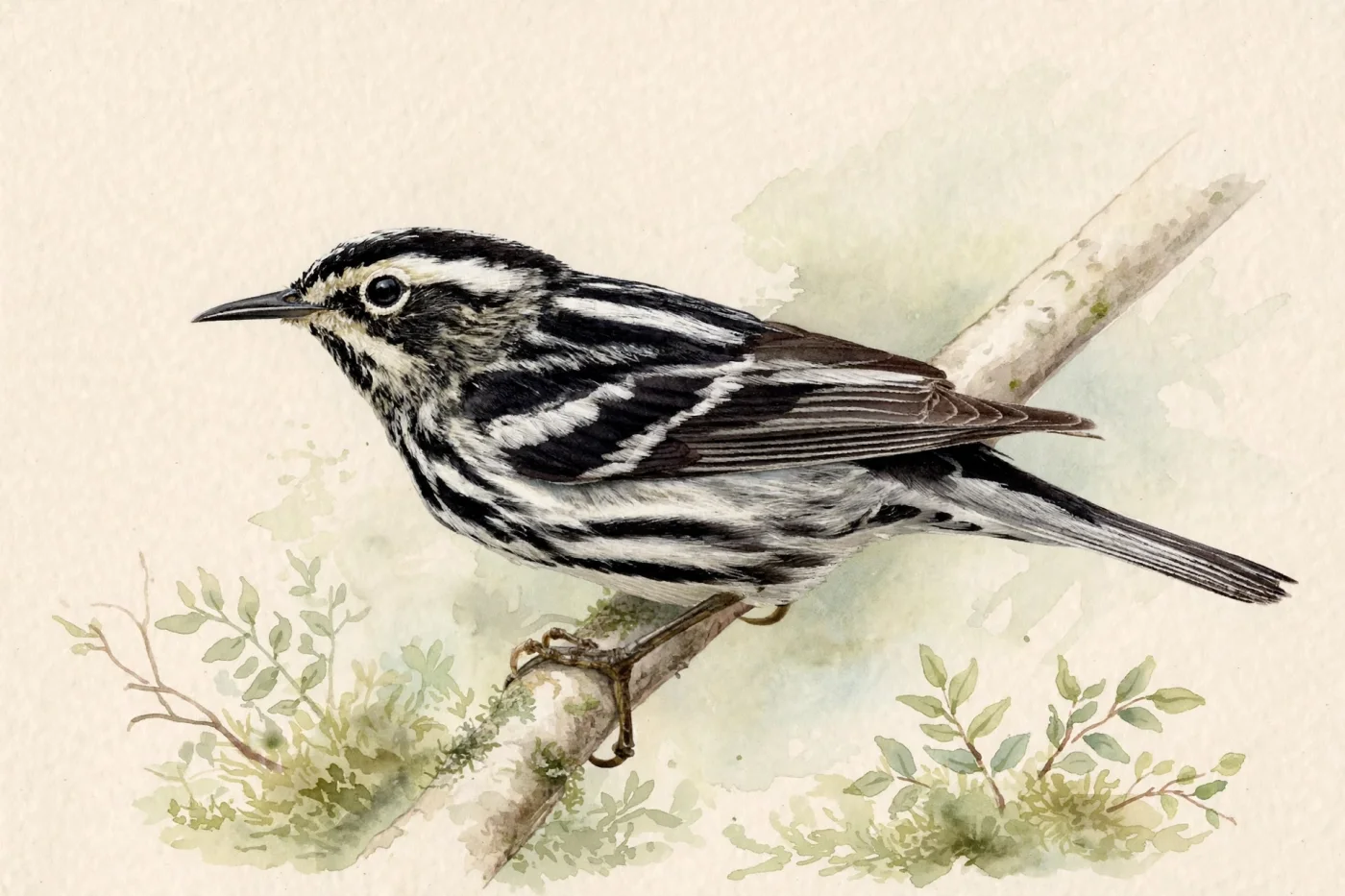
Prepared with AI assistance and linked sources. Illustrations are not field photographs.
The short answer
A mixed-species bird flock is a temporary group in which several species move and feed together, not just individuals of the same species. In the Neotropics, including the Caribbean islands, these flocks are common and obvious, and in Puerto Rico they have been noted in the ornithological literature for decades.
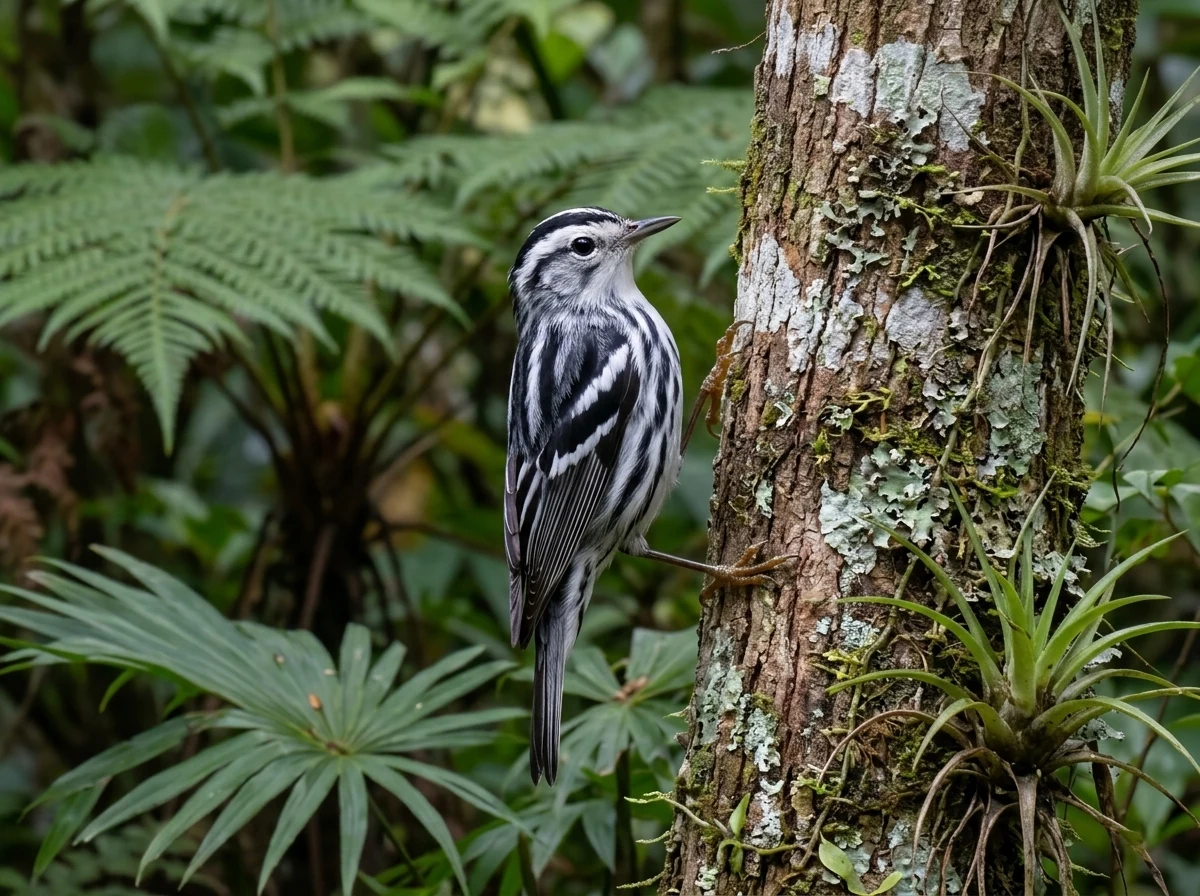
The key is the mix: migratory and resident birds can coincide in the same foraging front. Two examples in the avespuertorico.com catalog are the Black-and-white Warbler and the Northern Parula, both migratory and both recorded with social or flocking behavior. This guide explains what they are, how they compare with a single-species group, and how to practice watching them without inventing local data.
Behavior guide
Three ideas to remember
Varias especiesDefinitionIt is not a single-species flock; it is a temporary mix.
Migratorias y residentesCompositionCaribbean literature describes flocks with migratory and resident birds.
Movimiento compartidoBehaviorThe group moves together for a while and then breaks up.
01
What exactly a mixed-species flock is
A mixed-species flock is a temporary association of individuals of different species moving and foraging in proximity. It is not a breeding flock or a colony: it is a flexible group that forms, moves, and breaks up. The USDA Forest Service source on Cuba describes these flocks as common and obvious in Neotropical habitats and notes that in the Caribbean islands they have been noted in Puerto Rico, Jamaica, Haiti, the Dominican Republic, the Virgin Islands, and Cuba.
The same source notes that, unlike other islands, mixed-species flocks had not been described in detail for Cuba, and that one previous report treated mixed-species flocks of migratory wood warblers in Cuba. That context matters: the definition does not depend on one particular species, but on the phenomenon of several species sharing the same activity front.
02
The key comparison: single-species group vs. mixed-species flock
A single-species group, such as a flock of swallows or a group of pigeons, is recognized because all individuals share shape, size, and pattern. A mixed-species flock is recognized by the opposite: there are visible differences in size, color, and foraging behavior in the same space. The Black-and-white Warbler, for example, behaves somewhat like a nuthatch: it climbs up and down along tree trunks and branches probing bark for insects and spiders, according to BirdsCaribbean. The Northern Parula, in contrast, moves among foliage and shows marks such as the broken eye ring, yellow lower mandible, and two white wing bars.
That behavioral difference is the practical clue. If you see birds climbing trunks and, at the same time, birds checking leaves and nearby branches, you are likely looking at a mixed-species flock rather than a single-species group. The comparison alone does not prove the flock's composition, but it helps you notice that there is more than one foraging style in the same front.
03
How it forms and why it moves
The USDA source describes mixed-species flocks of migratory and resident birds in Cuba, showing that the mix can include birds that are passing through and local birds. In the Caribbean, BirdsCaribbean explains that warblers include endemic species, winter residents, and birds that only pass through on migration. That seasonal variety is part of the context: a mixed-species flock can change composition depending on the season and the presence of migratory birds.
The shared movement has a practical advantage for the observer: the group acts as a moving front of activity. It is not a fixed choreography or a permanent association. The USDA source does not describe a hierarchy or an obligatory leader species; it describes flock composition. So it is better to speak of a temporary association rather than a group with a single function.
04
Field exercise: follow the activity front
Choose a fixed point in a forest or wooded area and stay still for 10 to 15 minutes. Do not chase individual birds; watch the activity front. Note mentally or in a notebook: how many birds are there? How many different foraging styles do you see? Are birds climbing trunks, checking leaves, flying between branches? If you detect at least two different styles in the same space and time, you are looking at a possible mixed-species flock.
Then compare with a single-species group. If all birds look and move the same, it is a single-species group. If there are differences in size, color, or behavior, it is a mixed-species flock. This comparison is an observation suggestion, not a method to identify species by itself. To identify, use the warbler and migratory bird guides linked below.
05
Checklist for an orderly observation
Before going out: review a warbler guide and a migratory bird guide. Bring a notebook or phone for notes. On arrival: stay still, do not chase, watch the activity front. During: count birds, note foraging styles, look for differences in size and color. After: compare your notes with the descriptions of the Black-and-white Warbler and the Northern Parula. Remember that the presence of these species in Puerto Rico is supported by the catalog and local references, but you should not infer abundance from a single observation.
This checklist does not replace careful identification. The BirdsCaribbean source recommends observing behavior, location, color, and patterns, and using a field guide. The USDA source supports the existence of mixed-species flocks in the Caribbean, including Puerto Rico. With those two pieces, you can practice observation without inventing data.
Linked profiles
The two warblers in this guide
Both are migratory and appear in the catalog with social or flocking behavior. Use them as references to practice comparing foraging styles.
AI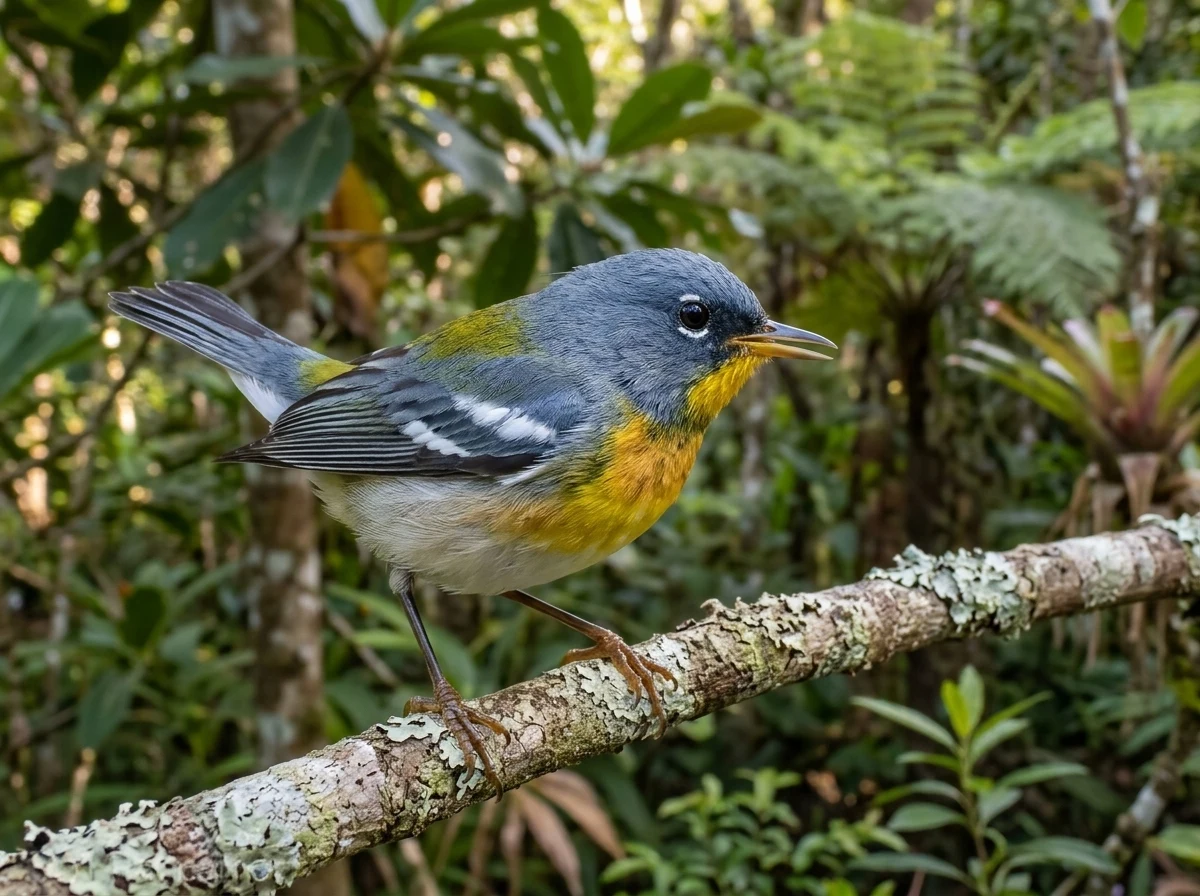 AI
AI01
Is a mixed-species flock the same as a single-species flock?
No. A mixed-species flock includes several species moving and foraging together for a time. A single-species flock has individuals of the same species. The difference is noticeable in behavior and in the variety of shapes, sizes, and colors.
02
Do mixed-species flocks exist in Puerto Rico?
Yes. The USDA Forest Service source, describing mixed-species flocks in the Caribbean, notes that they have been observed in Puerto Rico, as well as Jamaica, Haiti, the Dominican Republic, the Virgin Islands, and Cuba. That is an occurrence reference, not a measure of abundance.
03
Which birds can I use to practice the comparison?
You can use the Black-and-white Warbler and the Northern Parula. The first behaves like a nuthatch, climbing up and down trunks and branches. The second moves among foliage and shows a broken eye ring, yellow lower mandible, and two white wing bars. Both are migratory and appear in the catalog with social or flocking behavior.
04
How do I know if I am seeing a mixed-species flock and not scattered birds?
Look for a shared activity front: several birds moving and foraging in the same space and time, with at least two different styles. If the birds are separated and do not share a front, it is not a clear mixed-species flock. Repeated observation helps distinguish the pattern.
05
Can I identify species just by being in a mixed-species flock?
No. The mixed-species flock tells you that several species are together, but not which ones. To identify, you need to observe field marks, behavior, location, and use a guide. The BirdsCaribbean source recommends exactly that approach.
06
Are mixed-species flocks permanent?
No. They are temporary associations. They form, move together for a while, and then break up. The USDA source describes them as common and obvious in Neotropical habitats, but not as permanent groups.
Keep exploring
Connected routes
Sources and review
The evidence is one link away.
These sources support the editorial scope of this guide. Bird profiles also retain their own taxonomy, occurrence, and conservation references.
Reviewed:
01↗02↗
USDA Forest Service Research & Development
Composition of mixed-species flocks of migrant and resident birds in Cuba (with Caribbean/Puerto Rico flock references)
Evidence for cited sections; consult the original document.BirdsCaribbean
Identifying Warblers in the Caribbean
Evidence for cited sections; consult the original document.The atlas continues