 AI
AIBehavior guide
Why Birds Form Communal Roosts
Every evening, flocks of birds converge on a few trees to spend the night. This guide explains why it happens, how to tell a roost from a simple flock, and what to observe without inventing data.
Reviewed:Prepared with AI assistance and linked sources. Illustrations are not field photographs.
The direct question
A communal roost is a place where multiple birds gather to spend the night, often year after year. It is not the same as a foraging flock: the roost forms at the end of the day and breaks up at dawn. The question of why it happens has several answers that are not mutually exclusive.
The evidence available for the Caribbean is limited but concrete. A study published in the Journal of Caribbean Ornithology documented the first communal roost of the Jamaican Crow (Corvus jamaicensis) at Windsor, Trelawny Parish, with evening counts of 53 to 64 crows between 21 and 23 February 2008. That case allows us to compare the main explanations and apply them cautiously to other social birds, such as the Greater Antillean Grackle (Quiscalus niger) in Puerto Rico.
Behavior guide
Three key ideas
53–64Crows counted at one roostEvening counts of Jamaican Crow at Windsor, 21–23 February 2008.
TresMain explanationsPredator safety, foraging information and thermoregulation.
NocturnaTime scale of the phenomenonThe roost forms at dusk and breaks up at dawn.
01
What a communal roost is and is not
A communal roost is a nighttime concentration of birds at a specific site. In the Jamaican Crow case, crows arrived at the roost after sunset, in near darkness (1826–1841), and departed before sunrise (0600–0622). The roost was in a cluster of three Albizia falcataria trees 20–22 m tall with interlaced crowns, about 65 m from a staging tree. Crows perched on thin branches high in the canopy, with an average distance between individuals of roughly 1.5–2.0 m.
That is not the same as a mixed-species foraging flock. The Audubon source describes mixed flocks of chickadees, nuthatches and kinglets that forage and move together in fall and winter; such associations can include a dozen species and more than fifty individuals. The key difference is function and timing: the mixed flock seeks food during the day, while the roost organizes at the end of the day to spend the night. In Puerto Rico, the Greater Antillean Grackle is described in the catalog as a gregarious, social, flocking and colonial species; its occurrence on the island is listed as native and resident. That combination of traits makes it a plausible candidate for observing roosts, but the source does not document a specific grackle roost in Puerto Rico, so any local observation must be presented as your own observation, not as a source datum.
02
Predator safety: the best-supported explanation in the Caribbean case
The predation-risk hypothesis proposes that many birds together detect a predator sooner and that each individual can spend less time watching. In the Jamaican Crow study, the authors considered several explanations and found little support for thermoregulation or for information-sharing about food. Instead, they noted that perching on thin branches of tall, isolated trees might offer protection from the nocturnal Jamaican boa (Epicrates subflavus), which has been implicated as a significant source of predation on parrot nestlings in the Windsor area. The roost tree canopies lacked macroepiphytes and vines, whose presence facilitates boa access.
The authors also cited the Mariana Crow (Corvus kubaryi) on Guam, where communal roosting was suggested to have evolved as a response to predation from the introduced brown tree snake (Boiga irregularis). It is important not to overstate this: the study does not claim predation is the only cause, but that the evidence favors that function in that case. For an observer in Puerto Rico, the practical lesson is to look at site structure: thin branches, height, tree isolation and absence of vines or epiphytes are details you can record without claiming they explain the roost.
03
Foraging information and thermoregulation: two ideas that sound good but do not always fit
The information hypothesis proposes that birds that failed to find good food follow successful ones to the roost and thereby learn where to feed the next day. In the Jamaican Crow case, that explanation fits poorly: crows returned at dawn to dispersed territories in pairs or small groups, not to a shared feeding area. The authors concluded it was difficult to see how foraging efficiency would be enhanced through information-sharing in that case.
The thermoregulation hypothesis proposes that huddling reduces heat loss. In the same study, the authors found little evidence for that benefit: Albizia trees have relatively sparse foliage, offering little thermal insulation or protection from rain or wind, and the crows perched too far apart to gain a thermoregulatory benefit from one another. This does not mean thermoregulation never matters in other species; it means that, in the documented case, it was not the main explanation. For an observer, the useful comparison is: do the birds huddle or stay apart? Is the site dense or sparse? Those notes let you evaluate which explanation seems more plausible without inventing conclusions.
04
How to observe a roost: procedure and checklist
A simple, repeatable procedure is as follows. First, choose a fixed point with good visibility of the candidate tree or trees and arrive at least an hour before sunset. Second, record the arrival time of the first birds, the direction they come from, and whether they arrive in pairs, small groups or large groups. Third, count the birds that enter the roost, not those flying past. Fourth, record the time of the last arrival and, if you can, return before dawn to note departure time and the size of departing groups. Fifth, repeat the visit on different days: a single count does not distinguish a stable roost from a casual concentration.
Checklist to carry: date and start/end times; sky conditions (clear or overcast); number of birds counted; size of arriving and departing groups; height and type of branches used; approximate distance between birds; presence or absence of vines and epiphytes in the canopies; direction of arrival and departure; and any vocalizations, noting whether they decrease at dusk. In the Jamaican Crow study, birds arrived in groups whose size varied widely (1, 1, 1, 1, 1, 1, 2, 2, 2, 3, 4, 4, 5, 5, 7, 10, 14 on one evening) and departed in groups of 1 to 20 individuals. That variation is normal and worth recording. Do not claim a site is a traditional roost without several visits; the source indicates roosts can be used for years or decades, but that is established by repetition, not by a single night.
05
Comparison with mixed flocks and the Puerto Rico context
Mixed-species foraging flocks and communal roosts share the grouping behavior but differ in function. The Audubon source explains that in fall and winter several small species join to forage; more eyes mean better predator detection and more time to feed, and more individuals searching improve the odds of finding a rich feeding area. In those flocks, chickadees often lead and give an alarm call that other species understand. That collective vigilance logic is similar to the safety argument for roosts, but the context is daytime and foraging.
For the Caribbean, the USDA Forest Service source notes that mixed-species flocks are common and obvious in Neotropical habitats and have been noted in Puerto Rico, Jamaica, Haiti, the Dominican Republic, the Virgin Islands and Cuba. That confirms that bird grouping is a regional phenomenon, but it does not document communal roosts in Puerto Rico. The only Puerto Rico bird species in this guide's catalog is the Greater Antillean Grackle, described as gregarious, social, flocking and colonial, native and resident. Any observation of a grackle roost on the island would be a new observation by the reader, not a datum from these sources. That distinction matters: the guide explains the general mechanism and the documented Caribbean case, and leaves local verification to the observer.
Linked profiles
The bird in this guide
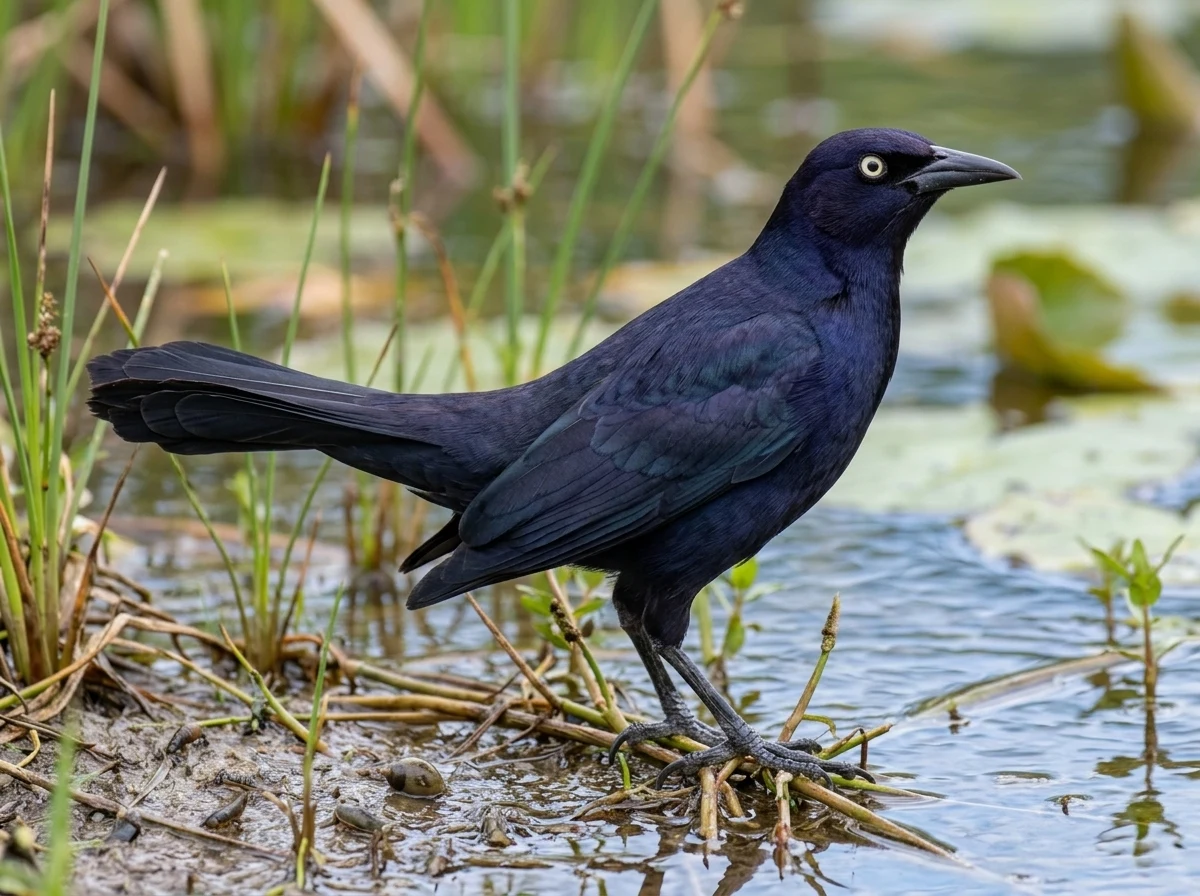
The Greater Antillean Grackle is the Puerto Rico species in this guide's catalog: gregarious, social, flocking and colonial, native and resident. Its social behavior makes it a plausible candidate for observing dusk gatherings, although this guide's sources do not document a communal grackle roost in Puerto Rico.
AI01
Do all communal roosts form for the same reason?
No. The Jamaican Crow source considers several explanations and finds little support for thermoregulation or foraging information-sharing in that case, while favoring protection from predators. Other species may have other combinations of causes.
02
Is a roost the same as a mixed-species flock?
No. The mixed flock described by Audubon forages and moves together during the day in fall and winter. The roost forms at the end of the day and breaks up at dawn, as in the Jamaican Crow case.
03
Are communal roosts documented in Puerto Rico?
This guide's sources do not document communal roosts in Puerto Rico. The USDA Forest Service source mentions mixed flocks in Puerto Rico and other Caribbean islands, but that is a different phenomenon. Any roost observed on the island would be the reader's own observation.
04
Why did the Jamaican Crows perch on thin branches?
The study suggests that perching on thin branches high in isolated trees might make access difficult for the nocturnal Jamaican boa. The roost canopies lacked macroepiphytes and vines, which facilitate boa access. The authors do not claim it is the only cause.
05
Can I use the Greater Antillean Grackle to study roosts in Puerto Rico?
The catalog describes the Greater Antillean Grackle as gregarious, social, flocking and colonial, native and resident, which makes it a plausible candidate. But the sources do not document a grackle roost in Puerto Rico, so any finding would be your own observation and should be recorded with this guide's procedure and checklist.
Keep exploring
Connected routes
Sources and review
The evidence is one link away.
These sources support the editorial scope of this guide. Bird profiles also retain their own taxonomy, occurrence, and conservation references.
Reviewed:
01↗02↗03↗
Journal of Caribbean Ornithology (BirdsCaribbean)
Communal Roosting of the Jamaican Crow (Corvus jamaicensis)
Evidence for cited sections; consult the original document.National Audubon Society / BirdNote
Why Are All Those Chickadees, Nuthatches, and Kinglets Hanging Out?
Evidence for cited sections; consult the original document.USDA Forest Service, Research & Development
Composition of mixed-species flocks of migrant and resident birds in Cuba
Evidence for cited sections; consult the original document.The atlas continues