 AI
AIPuerto Rican name
What is a mozambique?
Mozambique is the official local name; Chango is the everyday one. Both describe the same bird, and neither is the Shiny Cowbird.
Reviewed:Mozambique and Chango are the same bird.
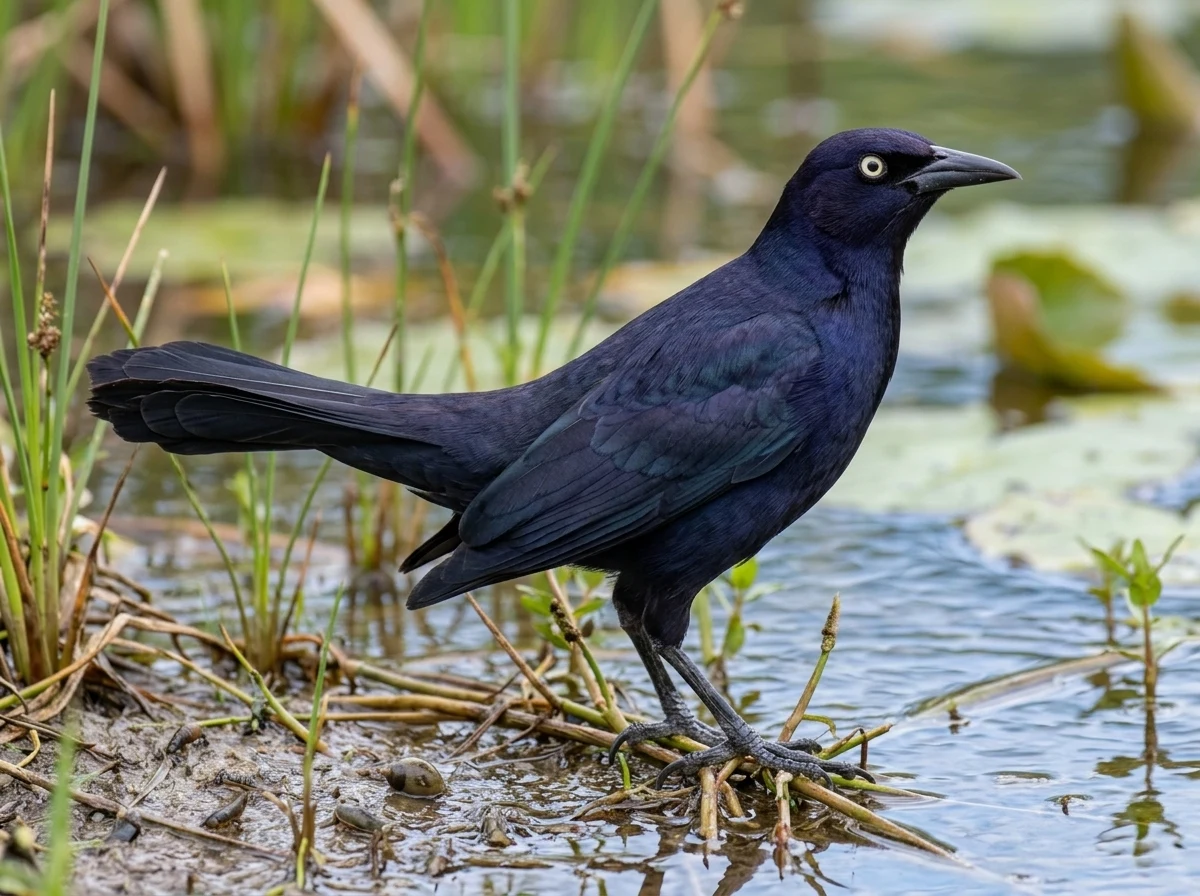
In Puerto Rico, a mozambique is the Greater Antillean Grackle (Quiscalus niger), also called Chango: a black bird with yellow eyes, a straight bill, and a V-shaped tail that walks across parking lots, plazas, and beaches. Mozambique is its official name in the Sociedad Ornitológica Puertorriqueña catalog; Chango is the name most people use day to day.
The question comes up often because the name has nothing to do with the African country, and because the island has another similar black bird, the Shiny Cowbird (Tordo Lustroso). This guide covers the names, how to recognize the grackle by sex and age, what it eats, when it nests, and how not to confuse it with the cowbird or the endangered Yellow-shouldered Blackbird.
Puerto Rican name
The grackle in numbers
25–30 cmlongThe male, with a long graduated tail, is larger than the female.
Feb–sepbreeding seasonCup nest of plant fibers and mud, 3–4 eggs.
1955Shiny Cowbird arrivalThe parasite often confused with the grackle reached Puerto Rico that year.
01
One bird, many names
The SOPI catalog uses Mozambique as the official name for Quiscalus niger and Zanate Antillano as the Spanish Ornithological Society name. In daily conversation Chango dominates. Spanish Wikipedia also lists machango, pichanga, chichinguaco, chinchilín, and hachuela among the species' names in the Greater Antilles, which explains searches such as “machango animal.”
Each island has its own name: kling-kling in Jamaica and ching ching in the Cayman Islands. Puerto Rico's population, including Vieques, belongs to the subspecies Q. n. brachypterus. It is a native resident but not an endemic: it also lives from Cuba to Hispaniola and in the Caymans.
02
How to recognize a mozambique
It measures 25–30 cm (10–12 in). Adults of both sexes have a yellow iris, black bill, and black legs. The male is glossy black and carries a long, graduated tail folded into a V, like the keel of a boat. The female is smaller and less glossy, with a shorter tail held flat. Males weigh roughly 67–100 g and females 50–72 g.
Juveniles fool many people: they are brownish black with no gloss, dark brown eyes, and a shorter tail. A dull, dark-eyed black bird traveling with a group of grackles is probably a young bird, not another species. Check the eye, the tail, and the company it keeps before deciding.
03
Grackle or Shiny Cowbird
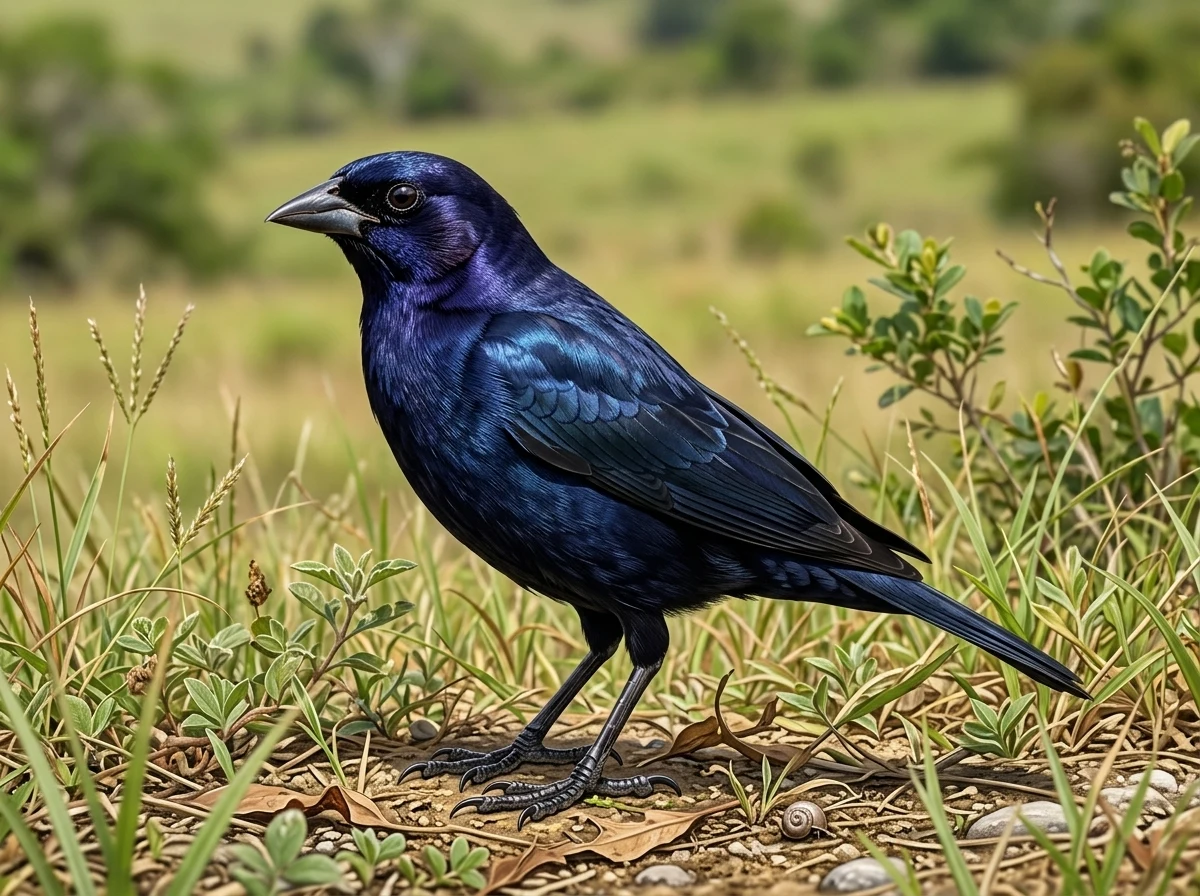
The Shiny Cowbird (Molothrus bonariensis), locally Tordo Lustroso, is the most common confusion. It is smaller and more compact: in our catalog data it averages about 44 g versus about 80 g for the grackle. The male is black with a purple-blue sheen and the female is dull gray-brown. It lacks the male grackle's V-shaped tail and the adult grackle's yellow eye.
Its history on the island is short. The species spread north from South America and reached Puerto Rico in 1955, then the Dominican Republic in 1973 and Cuba in 1982. It is an obligate brood parasite: females lay eggs in other birds' nests, across roughly 250 host species, and never raise their own young.
04
Why the difference matters: the Yellow-shouldered Blackbird
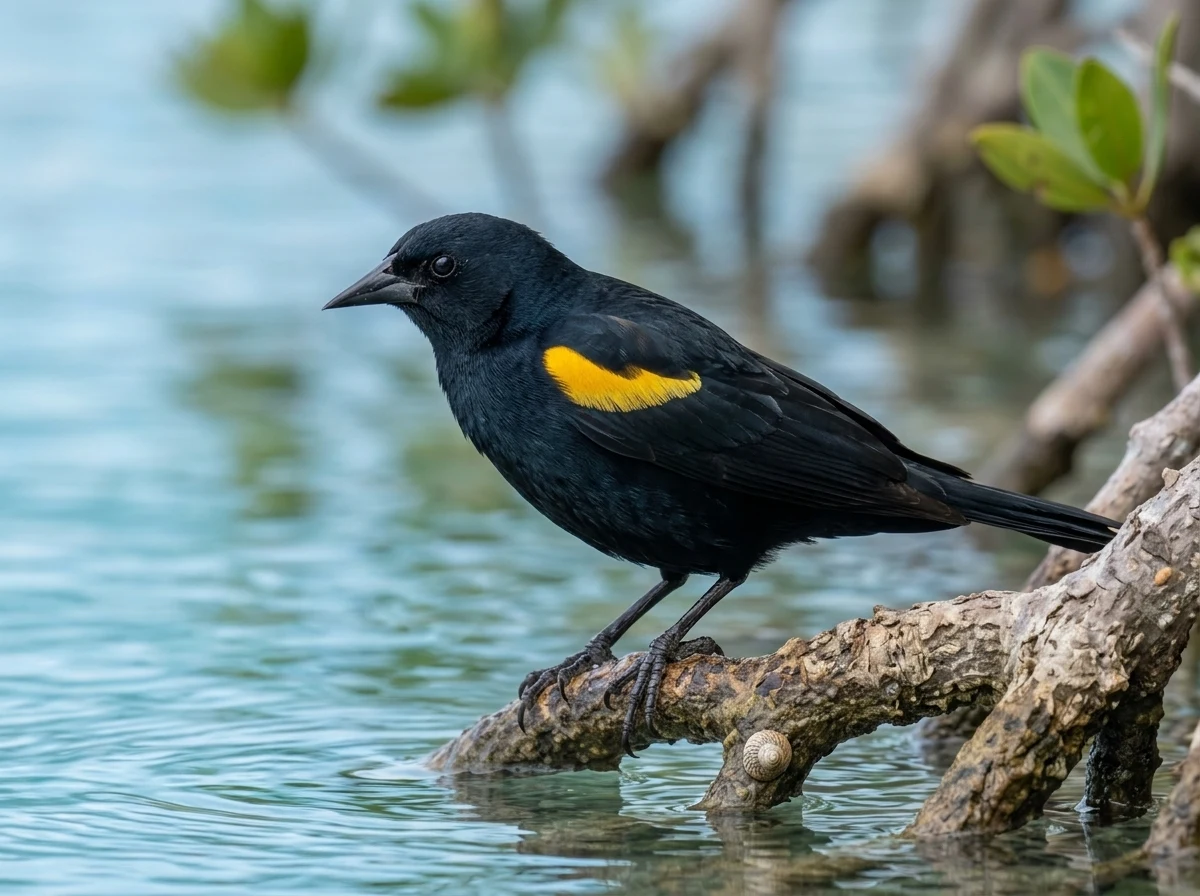
Confusing a grackle with a cowbird may seem minor, but the Shiny Cowbird matters for conservation. The Yellow-shouldered Blackbird (Agelaius xanthomus), locally Mariquita and endemic to Puerto Rico, is black with yellow epaulets and has been listed as endangered under the Endangered Species Act since 1976. Cowbird parasitism often causes the death of the host's eggs and nestlings.
The U.S. Fish and Wildlife Service estimated the island-wide Yellow-shouldered Blackbird population at about 600–700 individuals in 2023. If you see a black bird with a yellow shoulder patch, it is not a grackle: note the place and date and read the Mariquita conservation guide before approaching any nest.
05
What it eats, where it nests, and why it is so loud
The grackle is omnivorous. It eats insects and other arthropods, wild and cultivated fruit, seeds, small vertebrates such as lizards, and the eggs and chicks of small birds. In populated areas it eats almost anything, which is why it shows up by picnic tables, trash cans, and beaches.
It breeds from February to September. It builds an open cup of plant fibers and mud, often in mangroves or palms, and lays 3–4 greenish, spotted eggs. At dusk it gathers at roosts inside towns and cities that can hold thousands of birds, and the racket as they settle is part of the soundscape of many Puerto Rican plazas.
06
Other “mozambiques” and blackbirds that muddle searches
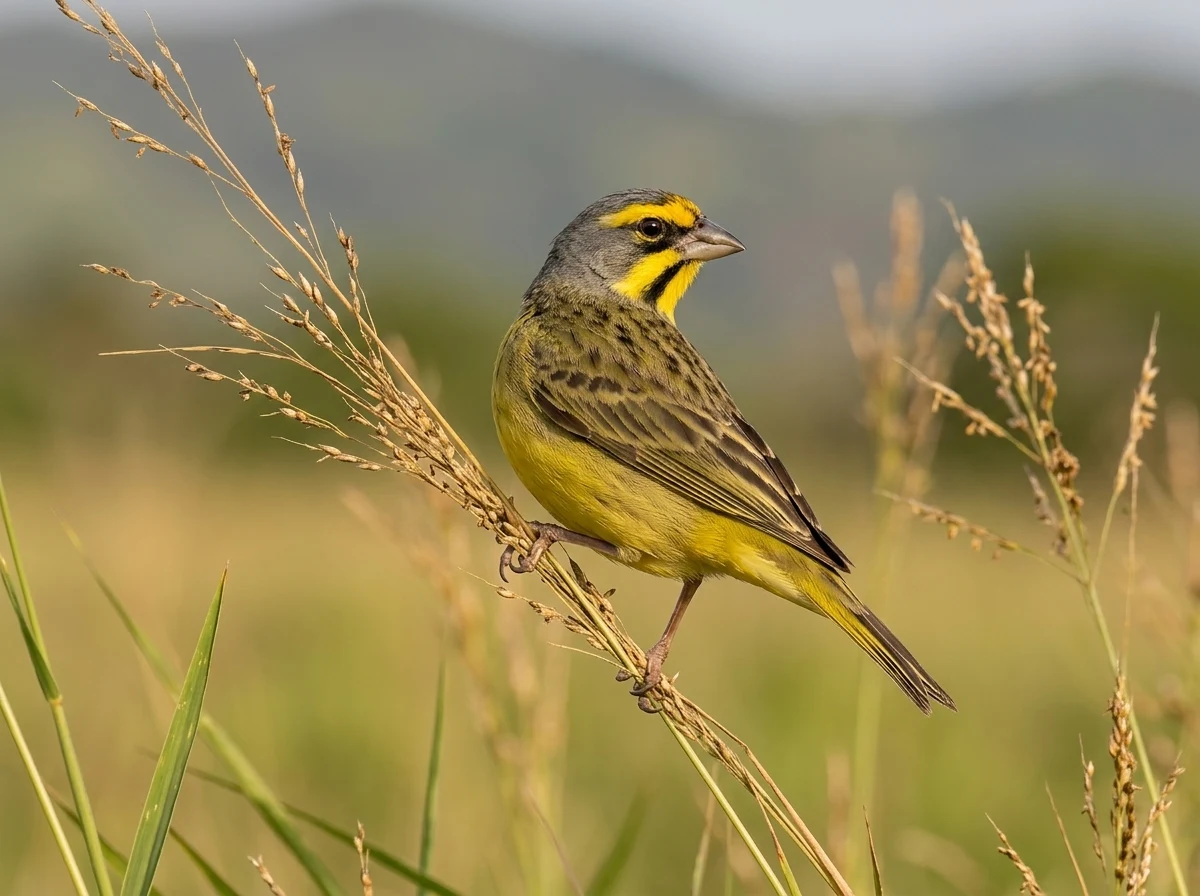
The Yellow-fronted Canary (Crithagra mozambica), known in Spanish as canario de Mozambique or Canario Cantor, is a small yellow finch from sub-Saharan Africa; our catalog lists it in Puerto Rico as introduced, with a moderate-confidence review. It looks nothing like the grackle.
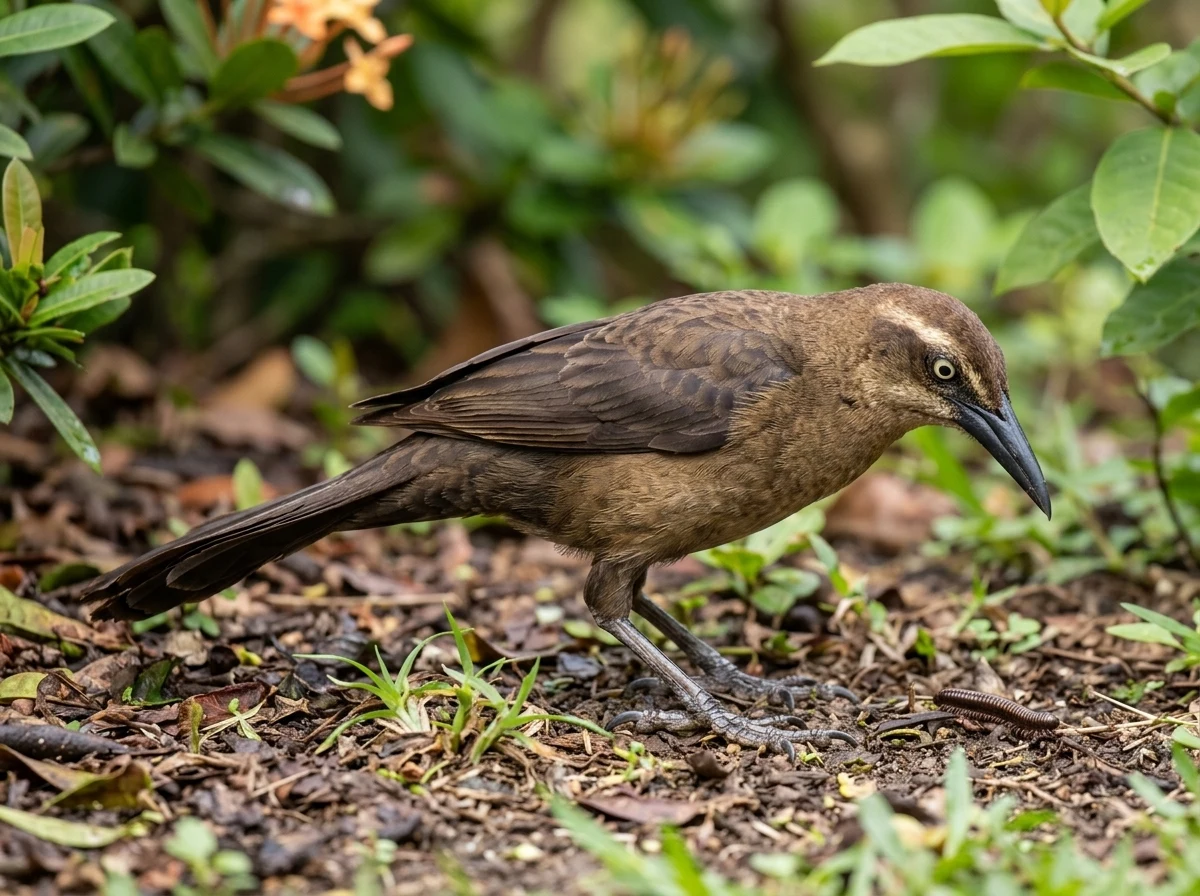
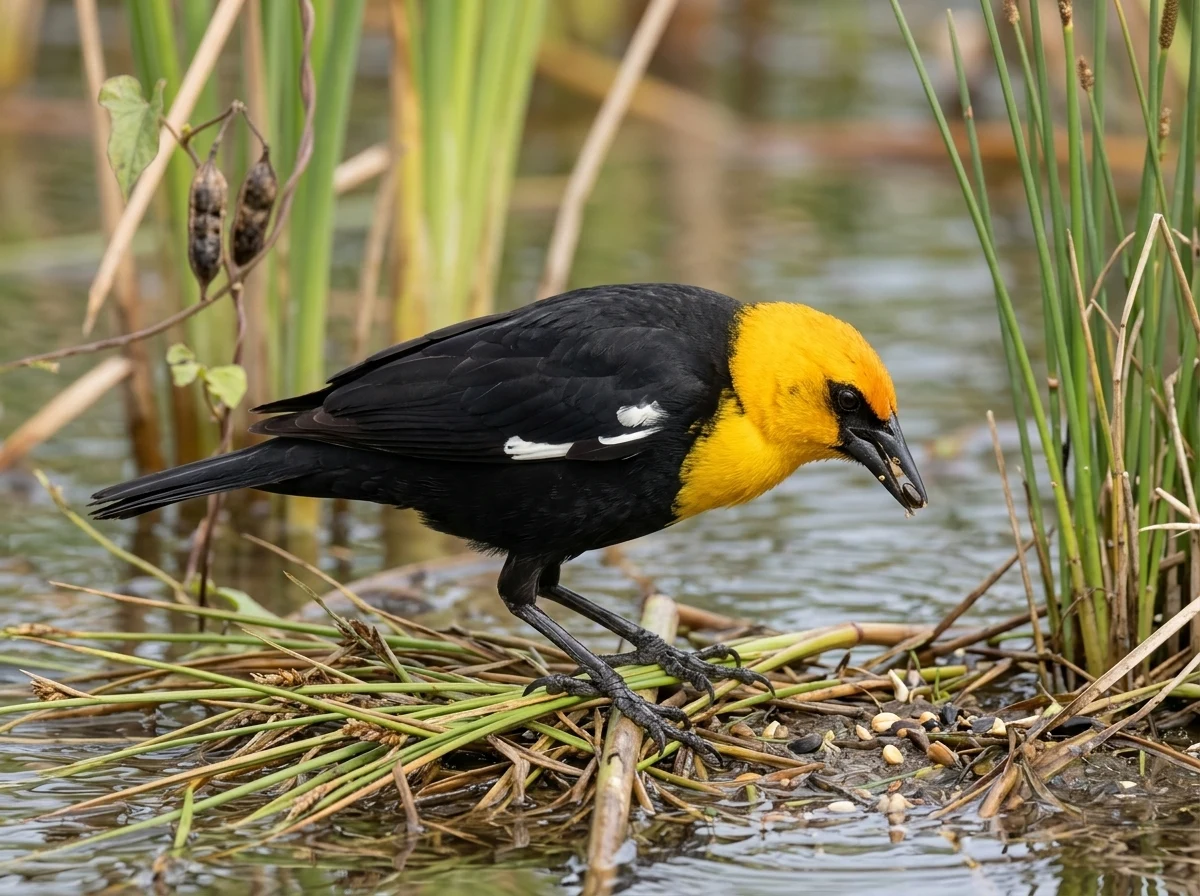
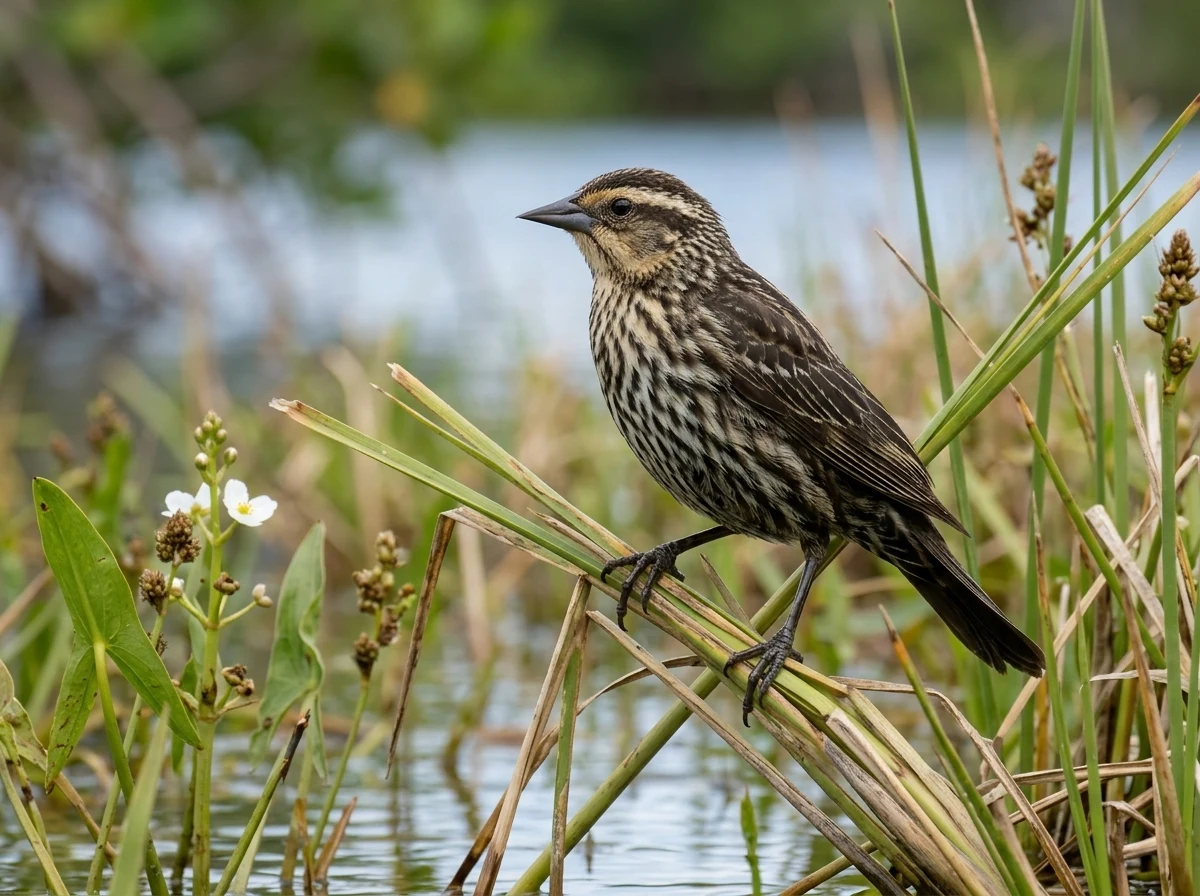
Searches for “tordo cabeza amarilla” or “tordo sargento” point to Yellow-headed Blackbird and Red-winged Blackbird, two North American icterids that appear in Puerto Rico only as accidental visitors, like the Great-tailed Grackle, a large relative of the mozambique. For any such record, a clear photo is worth more than any description.
Linked profiles
The grackle and its look-alikes
Compare the grackle with the parasitic cowbird, the endemic blackbird, and accidental visitors.
Sound archive
Hear its voice
Explore real songs and calls. The spectrogram turns each sound into a visual trace of time and frequency.
XC796182Recording 1 of 3song, call

Play: song, call by Bobby Wilcox
Choose another recording
Sound recorded by Bobby Wilcox · XC796182 · CC BY-NC-SA 4.0. Visualization by Stichting Xeno-canto voor Natuurgeluiden.
Every recording retains the creator, catalogue number, and license published by Xeno-canto. Metadata via GBIF ↗
01
What is a mozambique in Puerto Rico?
It is the Greater Antillean Grackle (Quiscalus niger), the same bird people call Chango. It is black, with yellow eyes and, in males, a long tail folded into a V. Mozambique is its official local name according to the Sociedad Ornitológica Puertorriqueña.
02
Are the chango and the mozambique the same bird?
Yes. Chango and Mozambique are two names for Quiscalus niger. Other Antillean names for the species include machango, pichanga, chichinguaco, chinchilín, and hachuela.
03
What is the difference between the chango and the Shiny Cowbird?
The grackle is larger (25–30 cm), has a yellow eye, and males carry a V-shaped tail. The Shiny Cowbird is smaller and more compact; males are black with a purple-blue sheen and females are gray-brown. The cowbird is also a brood parasite that lays eggs in other birds' nests.
04
Is the mozambique endemic to Puerto Rico?
No. It is a native resident, but the species ranges across the Greater Antilles from Cuba to Puerto Rico and into the Cayman Islands. The Puerto Rico population, including Vieques, is the subspecies Q. n. brachypterus.
05
Why are there dark-eyed black birds with the grackles?
Often they are juvenile grackles, which are brownish black with no gloss, dark brown eyes, and shorter tails. They can also be Shiny Cowbirds, which are smaller and more compact.
06
What does the grackle eat?
It is omnivorous: insects, arthropods, fruit, seeds, lizards, and the eggs or chicks of small birds. In towns and on beaches it takes almost any human food.
Keep exploring
Connected routes
Sources and review
The evidence is one link away.
These sources support the editorial scope of this guide. Bird profiles also retain their own taxonomy, occurrence, and conservation references.
Reviewed:
01↗02↗03↗04↗05↗06↗07↗
Sociedad Ornitológica Puertorriqueña
Catalog of the Birds of Puerto Rico (2007)
Official local names (Mozambique, Tordo Lustroso, Pizpitas, Querequequé, Clérigo, Aura Tiñosa), Spanish SEO names, and introduced status.Wikipedia
Greater Antillean grackle
Measurements, weight by sex, yellow iris, V-shaped tail, subspecies brachypterus, diet, breeding season, and urban roosts.Wikipedia en español
Quiscalus niger, Spanish Wikipedia
Alternate names (chango, machango, pichanga, mozambique, and others), eggs, and noisy behavior at roosts.Wikipedia
Shiny cowbird
Plumage by sex, brood parasitism, about 250 host species, and arrival in Puerto Rico in 1955.U.S. Fish and Wildlife Service
Yellow-shouldered Blackbird: bird of the month
Visual comparison, current distribution, and threats affecting the endemic Yellow-shouldered Blackbird.Sociedad Ornitológica Puertorriqueña
Official bird list
Local names, occurrence categories, and the public summary of 17 endemics.Xeno-canto Foundation / GBIF
Xeno-canto recordings published through GBIF
Metadata, authorship, licenses, and catalogue records for field recordings used by the atlas.The atlas continues