 AI
AIIdentification answer
Are there crows in Puerto Rico?
No established crow population is documented in the atlas today, but Puerto Rico's history preserves two Corvus chapters and several living black birds that explain the confusion.
Reviewed:Short answer: not as an established living population.
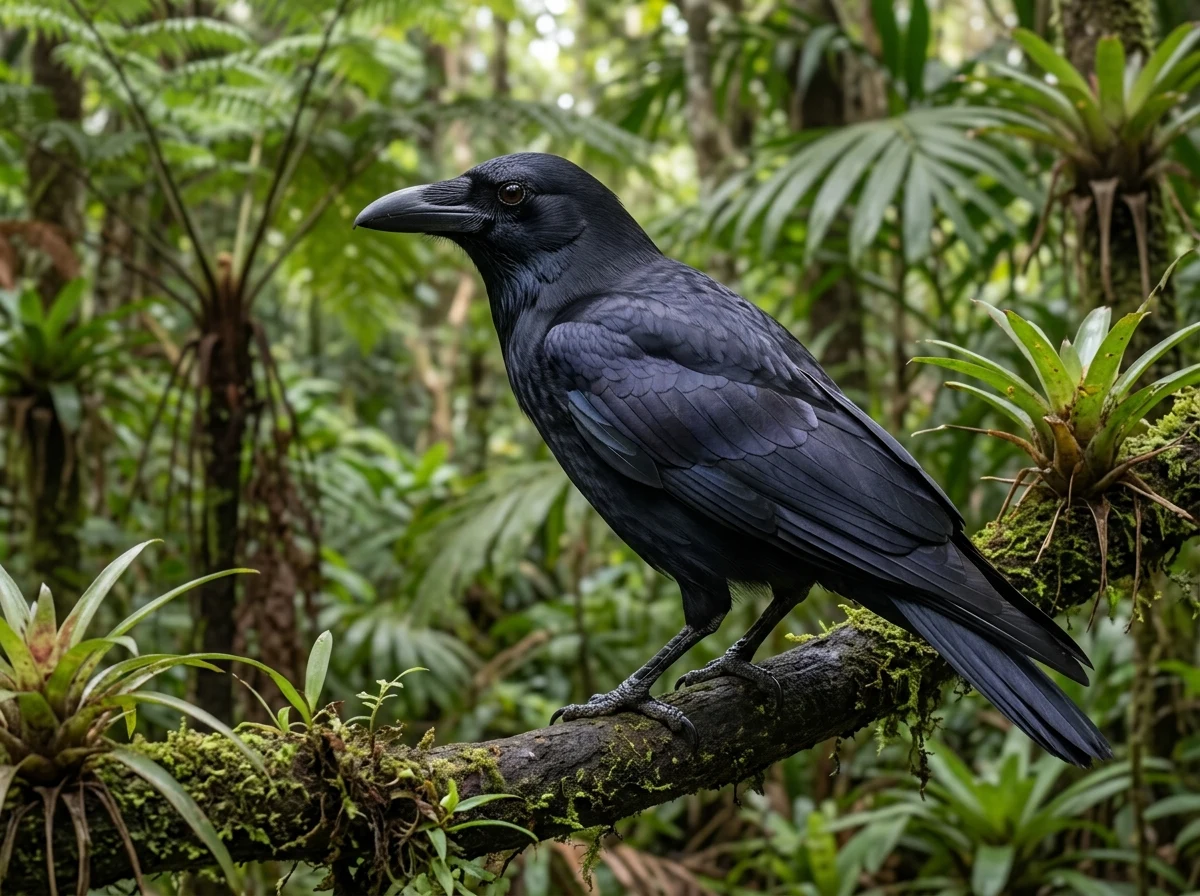
This atlas's reconciled living checklist does not include a currently established crow population in Puerto Rico. That does not mean crows lack a local history: White-necked Crow once lived here and is now extirpated from Puerto Rico, although it survives on Hispaniola.
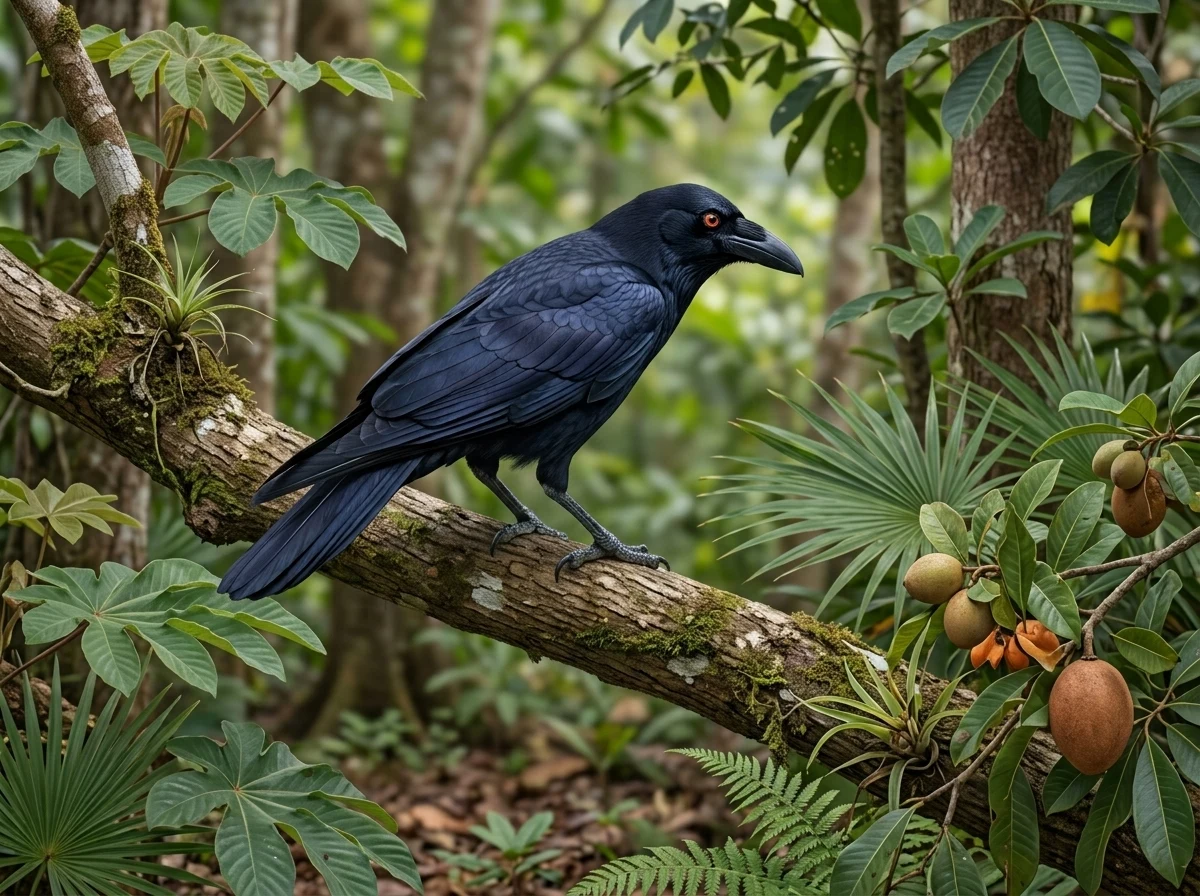
Cave remains have also traditionally been assigned to the extinct Puerto Rican Crow, Corvus pumilis. Their taxonomic interpretation is not a closed picture: the bones document crows in the past, while the name and relationships remain open to scientific review.
Identification answer
The guide at a glance
5linked profilesA focused selection connects the guide with verifiable species.
4reading lensesContext, identification, and practical decisions organized by topic.
5primary sourcesAgencies, research, and ornithological organizations support the content.
01
Two lost-crow histories
White-necked Crow is a living Caribbean species, large and heavy-billed with a pale neck area. Conservation sources place its current population on Hispaniola; the Puerto Rico record belongs to a historical range that no longer persists on the island.
Corvus pumilis is known from Puerto Rican fossil or subfossil material, not verified modern observations. The atlas profile preserves the traditional name and states the uncertainty: a visual reconstruction can suggest proportions, but it cannot establish plumage, voice, or behavior.
02
What you are probably seeing today
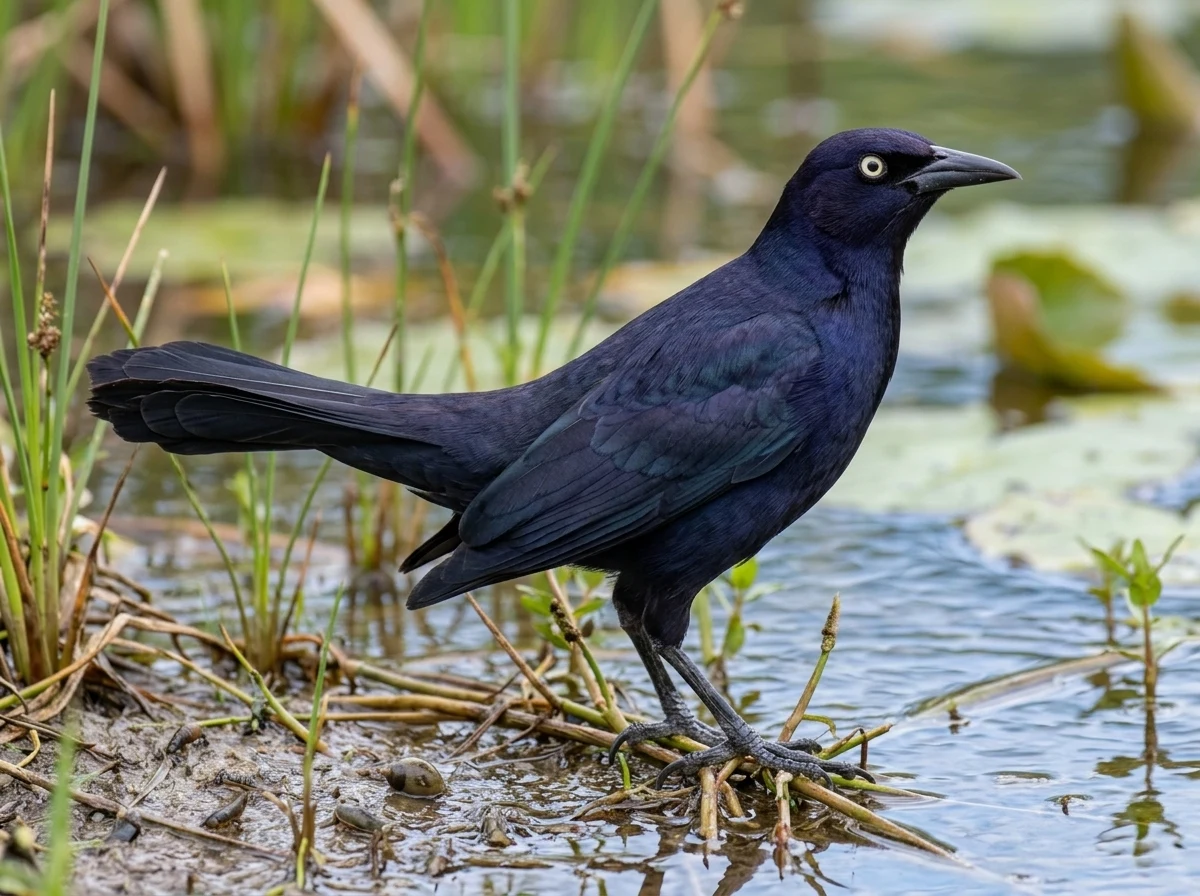
Greater Antillean Grackle is the first comparison around parking lots, plazas, lawns, and coasts. It is dark, social, vocal, and long-tailed, but belongs to Icteridae rather than Corvidae. Its tail and elongated outline differ from the more compact, large-headed shape of many crows.
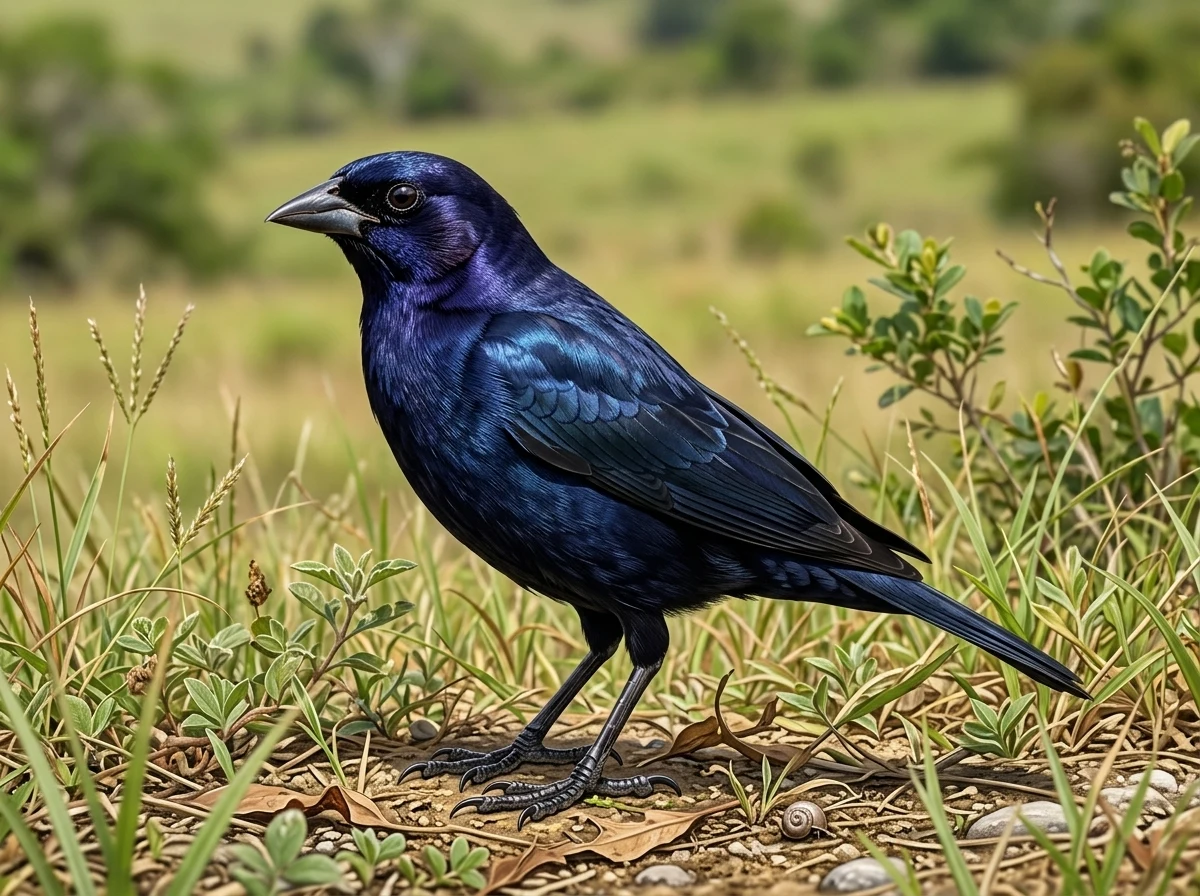
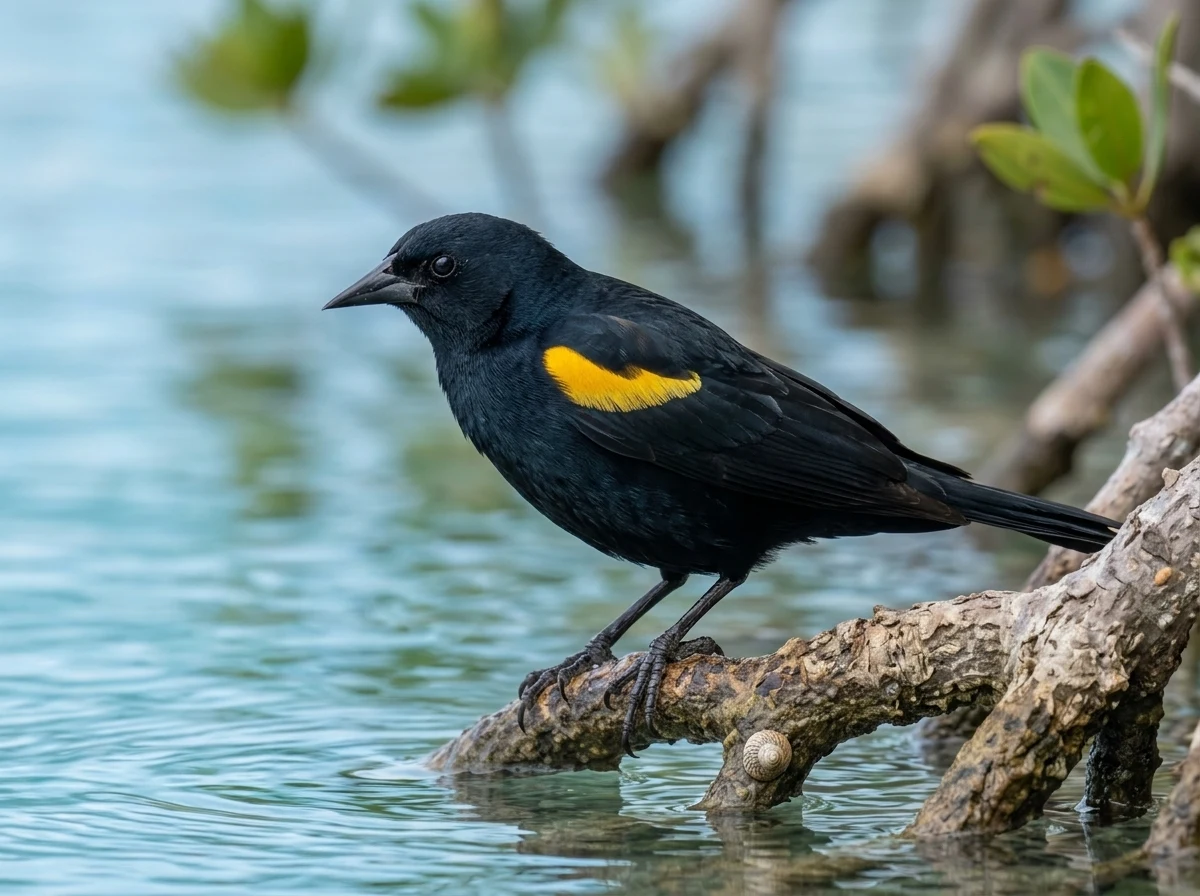
Shiny Cowbird is more compact and fine-billed; Yellow-shouldered Blackbird adds a clean yellow shoulder patch. Size, tail, bill thickness, voice, behavior, and location produce a much stronger identification than deciding only because the bird looked black.
03
If it truly looks like a crow, document first
An extraordinary occurrence needs proportionate evidence. Keep original photos from several angles, relative size, bill, tail, voice, behavior, date, time, and location; also record the common species you compared. Do not publish a sensitive location before review.
The absence of an established population does not make every accidental arrival impossible. Nor does it turn a dark silhouette into a crow. Open the rare-bird guide to prepare a reviewable record and the black-bird guide to eliminate local alternatives first.
Linked profiles
Birds to compare
Open each profile to review names, marks, audio, habitat, status, and sources.
Sound archive
Hear its voice
Explore real songs and calls. The spectrogram turns each sound into a visual trace of time and frequency.
XC796182Recording 1 of 3song, call

Play: song, call by Bobby Wilcox
Choose another recording
Sound recorded by Bobby Wilcox · XC796182 · CC BY-NC-SA 4.0. Visualization by Stichting Xeno-canto voor Natuurgeluiden.
Every recording retains the creator, catalogue number, and license published by Xeno-canto. Metadata via GBIF ↗
01
Is the Greater Antillean Grackle a crow?
No. Greater Antillean Grackle is a long-tailed icterid; crows belong to Corvidae. Its dark color and social behavior explain part of the confusion.
02
Could a vagrant crow appear in Puerto Rico?
An accidental arrival should not be declared impossible, but no established population is documented in the atlas. An exceptional report needs photographs, audio, location, date, and rigorous comparison.
03
How do I verify an identification or claim?
Compare more than one mark, check date and place, open the linked profile, and consult the sources published at the end of the guide.
Keep exploring
Connected routes
Sources and review
The evidence is one link away.
These sources support the editorial scope of this guide. Bird profiles also retain their own taxonomy, occurrence, and conservation references.
Reviewed:
01↗02↗03↗04↗05↗06↗07↗
BirdLife International
White-necked Crow factsheet
Current range, status, and conservation context for White-necked Crow.Smithsonian Institution
Pleistocene birds of Puerto Rico
Fossil evidence and scientific context for the prehistoric avifauna.Sociedad Ornitológica Puertorriqueña
Official bird list
Local names, occurrence categories, and the public summary of 17 endemics.Cornell Lab of Ornithology
Urban birds of Puerto Rico
Bilingual educational material for recognizing common birds near homes, schools, and plazas.Macaulay Library / Cornell Lab of Ornithology
Puerto Rico sound archive
Complementary audio collection for comparing songs, calls, locations, and dates.U.S. Fish and Wildlife Service
Yellow-shouldered Blackbird: bird of the month
Visual comparison, current distribution, and threats affecting the endemic Yellow-shouldered Blackbird.Xeno-canto Foundation / GBIF
Xeno-canto recordings published through GBIF
Metadata, authorship, licenses, and catalogue records for field recordings used by the atlas.The atlas continues