 AI
AIBehavior
Why Herons Stand Still Before Catching Fish
Stillness is not passivity: it is a documented hunting technique in herons. Here we compare two Puerto Rico species and give you a method to observe it.
Reviewed: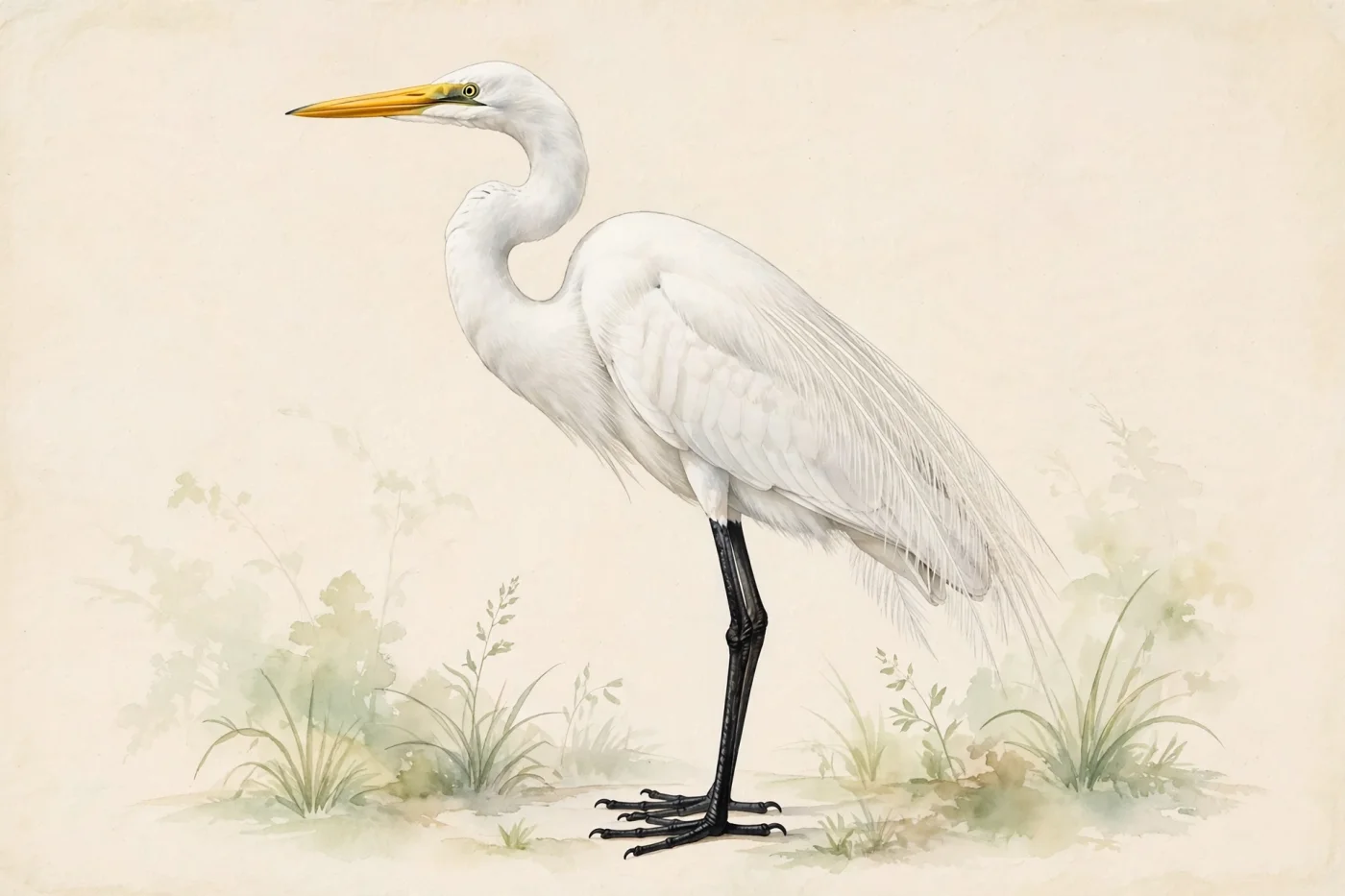
Prepared with AI assistance and linked sources. Illustrations are not field photographs.
Stillness as a hunting tool
When a heron stops completely at the water's edge, it is not resting or distracted. It is performing a foraging technique called stand-and-wait. The reader's question —why herons stand still before catching fish— has a functional answer: reduce the stimulus that alerts prey and conserve energy while waiting for the exact moment of capture.
In Puerto Rico, the Great Egret (Ardea alba) and the Little Blue Heron (Egretta caerulea) are two native species that use this technique, though with differences in size, habitat, and frequency. This article explains the mechanism, compares both species, and proposes an observation exercise. It is not a general profile of each bird: it is a guide to a specific behavior.
Behavior
Key facts
60–90%of Great Egret foraging time is spent slow walkingStand-and-wait and peering are the techniques that follow slow walking, according to the Cornell source.
Dos especiescompared in this guideGreat Egret and Little Blue Heron, both native to Puerto Rico according to the catalog.
134.4 vs. 17.0prey per m² at sites used versus unused by Great EgretsIn Puerto Rico, used sites averaged 134.4 prey/m² (SE 17.0) versus 17.0 prey/m² (SE 5.1) at unused sites, per the source.
01
What stand-and-wait is and why it works
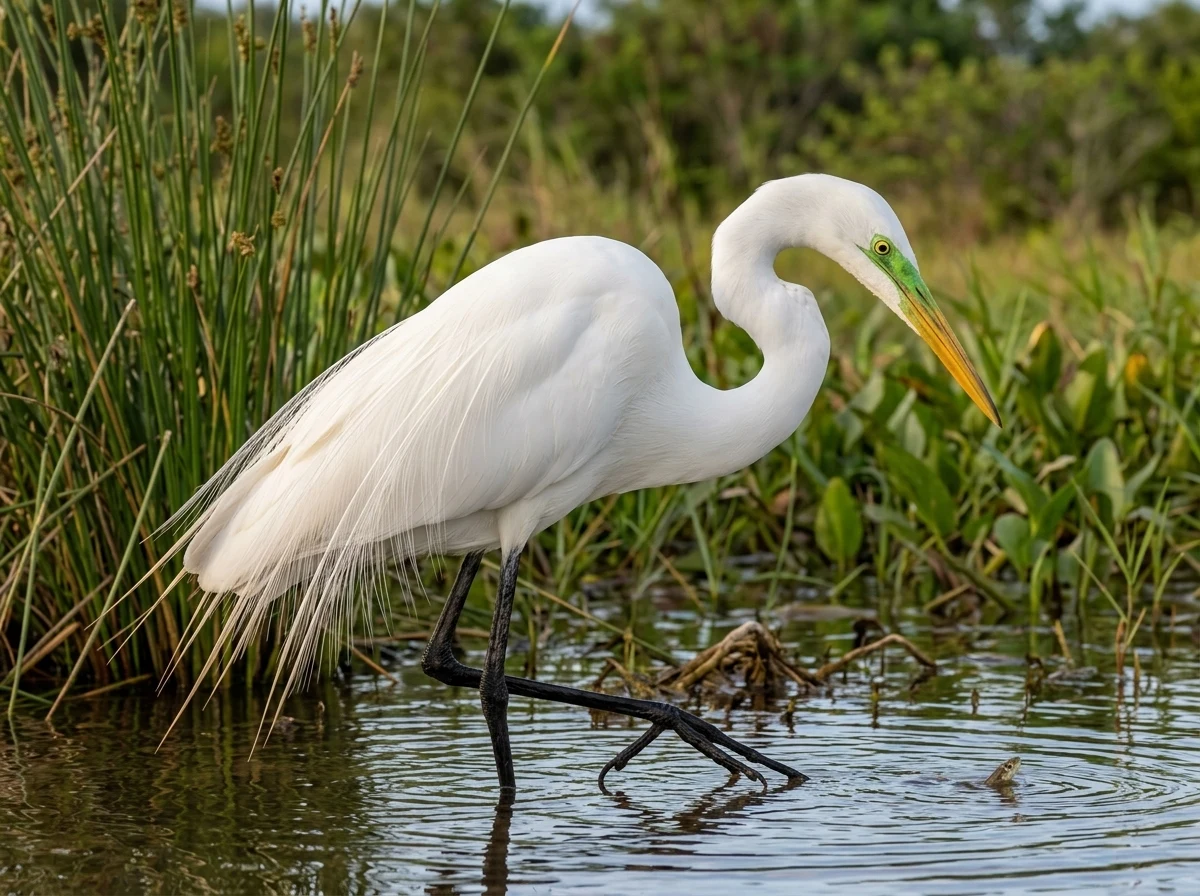
Stand-and-wait means remaining still, usually in shallow water or at the edge, with the neck tucked or extended, without walking or making large movements. The Great Egret prefers areas with little aquatic vegetation so it can spot prey easily. By staying still, the bird reduces ripples, moving shadows, and vibrations that could scare off fish, crustaceans, or insects.
The benefit is twofold. First, prey loses the alarm signal produced by a moving predator. Second, the heron spends less energy than if it walked constantly. In environments where visibility is good but prey is cautious, waiting can be more profitable than chasing. The Cornell source documents that the Great Egret uses stand-and-wait after slow walking, and that it prefers open water with little vegetation cover.
02
Comparison: Great Egret and Little Blue Heron
The Great Egret is large, with white plumage, a yellow bill, and black legs. Its relatively longer legs compared with smaller herons give it greater access to deeper water for foraging. The Cornell source indicates that it walks slowly 60–90% of the time and that stand-and-wait is its second technique. In Puerto Rico, a study cited in that same source found that sites used by Great Egrets averaged 134.4 prey/m² (SE 17.0) prey density, versus 17.0 prey/m² (SE 5.1) at unused sites.
The Little Blue Heron is smaller and dark-plumaged as an adult. According to Audubon, its foraging is generally slow and methodical: it walks very slowly in shallows or stands still waiting for prey to approach. It may also feed on shore or in grassy fields. The main difference is scale: the Great Egret waits in more open, deeper water; the Little Blue Heron usually does so in shallower water with more cover. Both species show that stillness is a shared foraging behavior in these two herons.
03
How to observe it without interfering
To observe stand-and-wait, choose a fixed point on the shore, at a distance that does not make the bird move away. Use binoculars and keep your body still. The behavior is easiest to see in shallow, open water, where the heron has a clear line of sight to prey. Do not approach to 'make it fish': waiting is part of foraging, and your movement interrupts it.
A simple procedure: for 10 minutes, note each time the bird changes technique (walks, stops, captures). You will see that stillness is not rest, but an active phase. If the bird captures, it usually does so with a quick neck and bill movement after several seconds or minutes of immobility. That sequence —stillness, tension, strike— is the signature of the technique.
04
Checklist for your next outing
Before heading out: binoculars, notebook or notes app, watch or timer, water, neutral-colored clothing. On arrival: choose a spot with a view of shallow water and little vegetation. During observation: record time, species, technique (walks, waits, captures), duration of stillness, and outcome. Do not chase the bird for a better photo; if it moves away, look for another individual.
Afterward: compare your notes with the sources. If you saw a Great Egret, check whether it was in deeper water than a Little Blue Heron. If you saw a Little Blue Heron, note whether it was near cover or in open field. That comparison turns a casual outing into a behavior exercise.
Linked profiles
Species mentioned
Two herons native to Puerto Rico that use stand-and-wait.
AI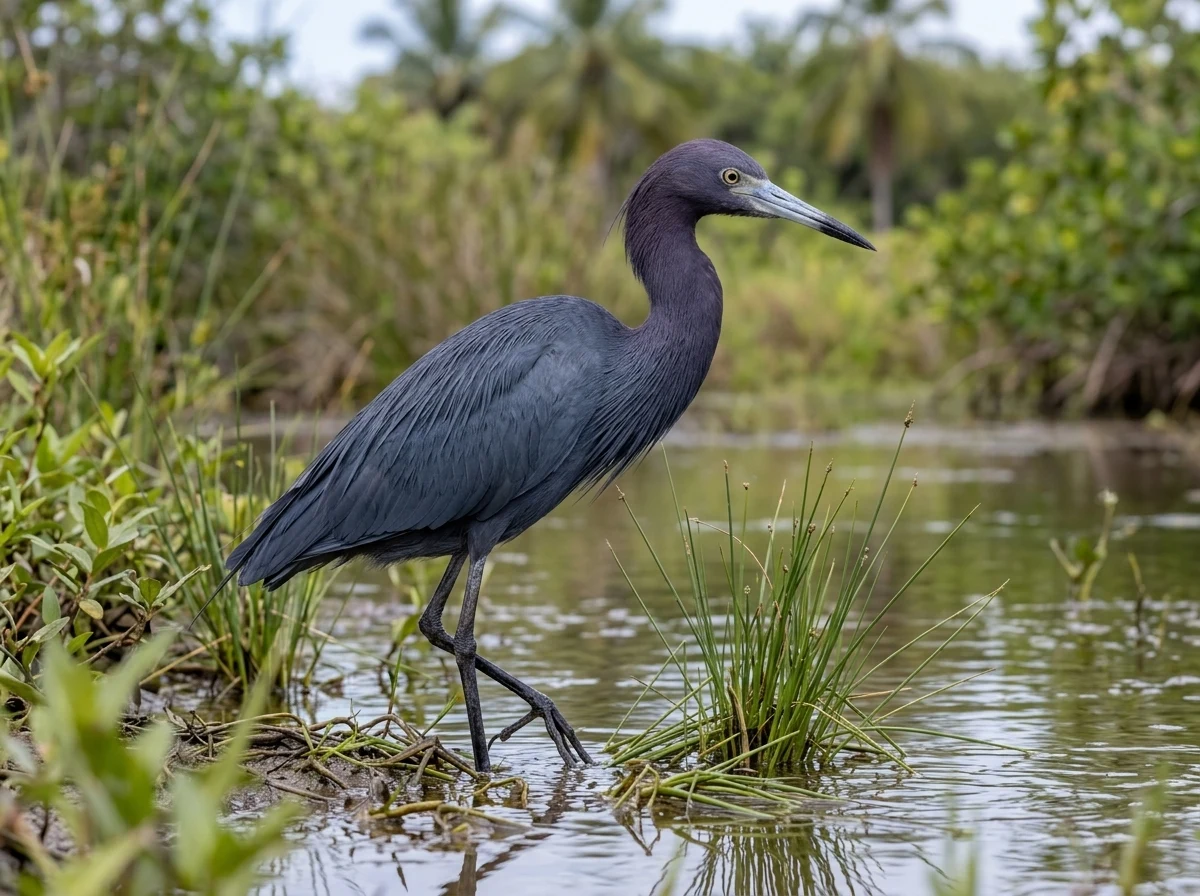 AI
AI01
Do the Great Egret and Little Blue Heron stand still before catching fish?
Yes. The Great Egret spends most of its time slow walking and uses stand-and-wait as a second technique. The Little Blue Heron is described as slow and methodical, and also stands still. The behavior is documented in both species, but the proportion varies.
02
Does stillness help avoid scaring fish?
Yes. By staying still, the heron reduces ripples, shadows, and vibrations that alert prey. The Cornell source notes that the Great Egret prefers areas with little aquatic vegetation to see prey better, and that waiting is one of its main techniques.
03
Can I see this behavior in Puerto Rico?
Yes, both species are recorded as native to Puerto Rico according to the catalog. The Great Egret and Little Blue Heron frequent wetlands, shorelines, and shallow water. Observation depends on location and season, but the behavior itself is documented for both.
04
How long can a heron stay still?
There is no fixed time in the sources. Duration depends on prey and site. In your observation, record the seconds or minutes of stillness before a strike; that is the best way to answer the question with your own data.
Keep exploring
Connected routes
Sources and review
The evidence is one link away.
These sources support the editorial scope of this guide. Bird profiles also retain their own taxonomy, occurrence, and conservation references.
Reviewed:
The atlas continues