 AI
AIDark herons
Blue Herons of Puerto Rico: Little Blue, Tricolored, and Great Blue
Three common blue or gray herons, one reddish rarity, and the small Green Heron: how to solve the dark heron you saw at the lagoon.
Reviewed:The short answer
Puerto Rico has three common blue or grayish herons: Little Blue Heron (Egretta caerulea, Garza Azul), medium-sized and all dark; Tricolored Heron (Egretta tricolor, Garza Pechiblanca), blue above with a white belly; and Great Blue Heron (Ardea herodias, Garzón Cenizo), the island's largest heron, gray and up to 1.4 m tall, seen mostly from October to March.
The first two are native residents that nest on the island. Great Blue Heron is also native, but its records cluster in the winter months and it is not among the herons covered by the Puerto Rico Breeding Bird Atlas. Add Reddish Egret, a dark-morph rarity, and Green Heron, a small heron that also looks dark at a distance.
If you searched for a dark heron or a blue heron, this guide takes you from silhouette to name in a few steps: size, belly color, bill, and hunting style.
Dark herons
Blue herons by the numbers
1.0–1.4 mGreat Blue HeronWingspan 1.7 to 2.0 m; 2.1–2.5 kg.
56–74 cmLittle Blue HeronJuveniles white in their first year.
58–66 cmTricolored HeronThe only one with a white belly.
12×More records in January than JuneGreat Blue Heron in GBIF: 1,786 vs. 149.
01
Little Blue Heron: dark from head to toe
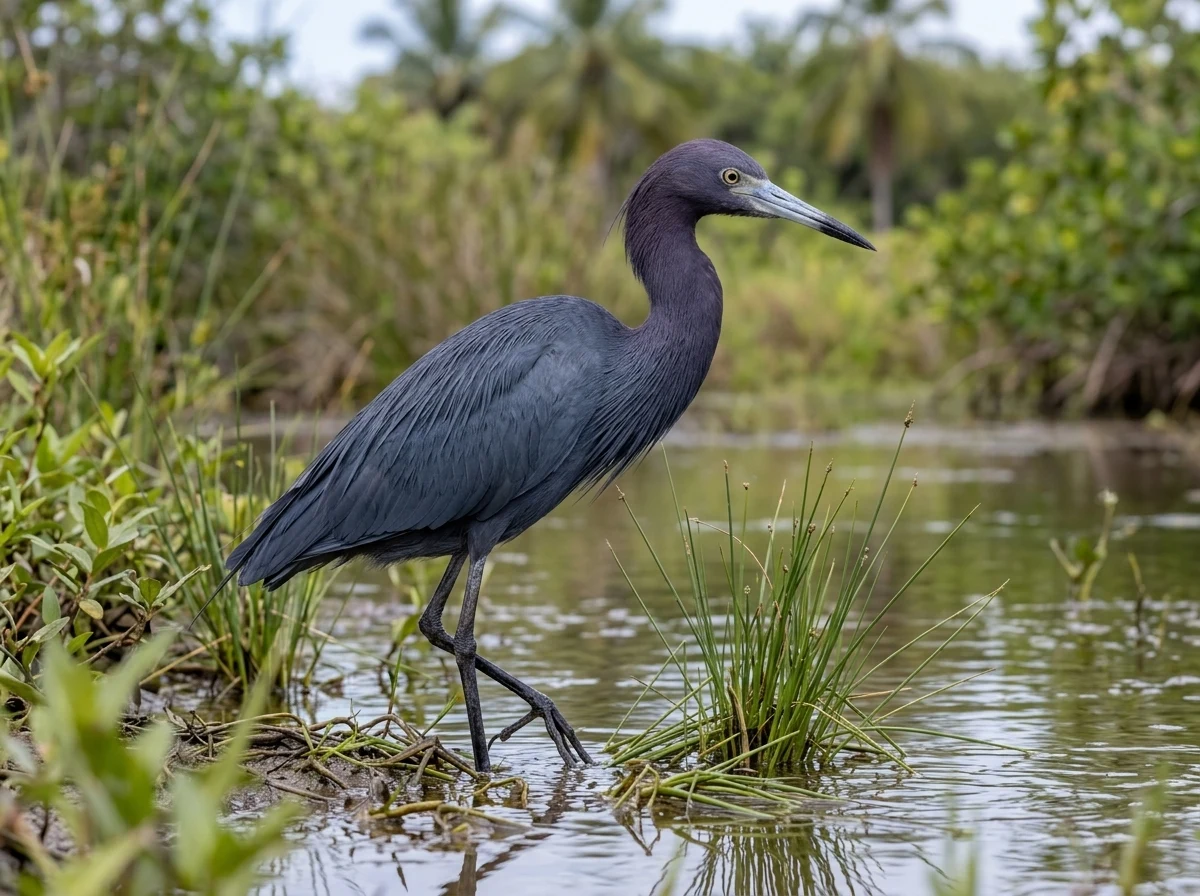
Adult Little Blue Heron is dark slate blue with the head and neck tinged reddish purple, and it has a bluish bill with a black tip. It measures 56 to 74 cm. In poor light or against the sun it looks black, which is why many people describe it as a black heron. It fishes slowly and methodically, walking very slowly in shallow water or standing still for prey.
Juveniles are white and get mistaken for Snowy Egret; as they molt they pass through a patchy white-and-blue calico stage. It is a common resident in Puerto Rico, in ponds, canals, mangroves, estuaries, and lagoons. The atlas recorded it in 118 of 479 hexagons and confirmed breeding in 10, with most activity in March and June. An easy place to see it is the Parque Central boardwalk along Caño Martín Peña in San Juan.
02
Tricolored Heron: look for the white belly
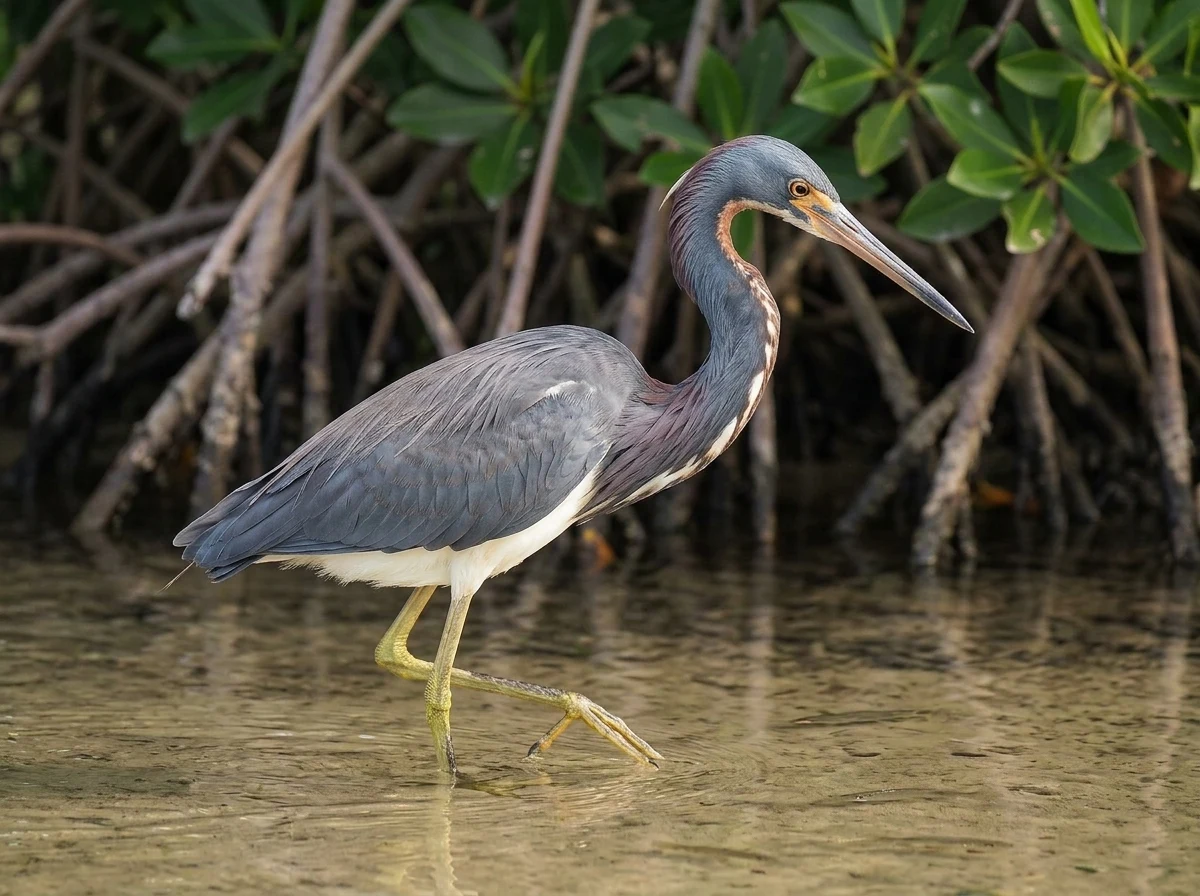
Tricolored Heron measures 58 to 66 cm and is the slimmest of the group, with a long, thin neck and bill. It is dark blue above and, unlike Little Blue Heron, has a white belly and a white stripe running up the front of the neck. The bill base and face are yellowish, turning bright blue in breeding season. Juveniles show rusty tones on the neck and wings.
It is a common permanent resident and prefers saltwater lagoons, mangroves, estuaries, and shallow coastal water. It usually fishes alone, standing still or walking slowly, and sometimes stirs the bottom with one foot. The atlas found it in 95 hexagons, breeding mostly from March to September. Its local name, Garza Pechiblanca, means white-breasted heron.
03
Great Blue Heron: the gray winter giant
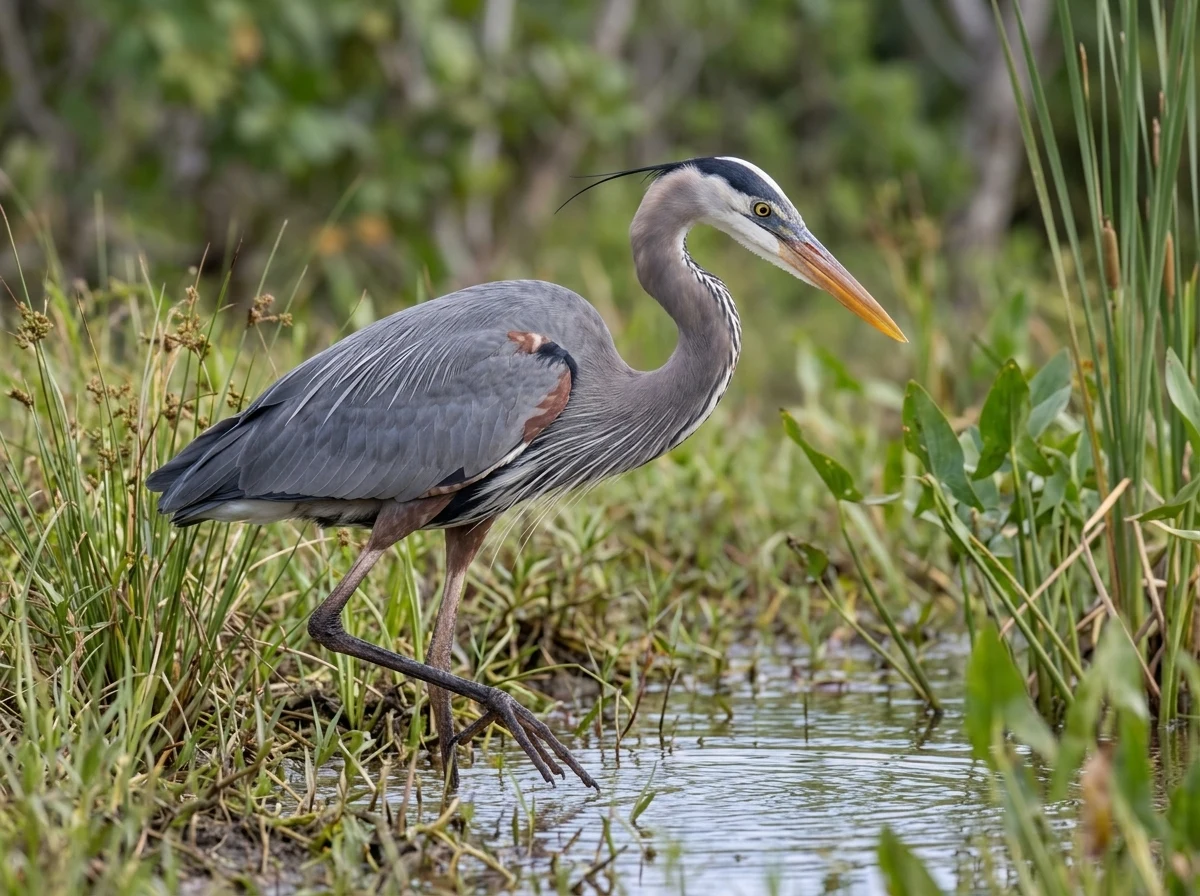
Great Blue Heron is unmistakable by size: 1.0 to 1.4 m long, with a 1.7 to 2.0 m wingspan and a weight of 2.1 to 2.5 kg. It is blue-gray, with a whitish head crossed by a black stripe above the eye and a large, heavy bill. Beside a Little Blue Heron it looks twice as big.
In Puerto Rico it is seen mainly in winter. Of the nearly 9,800 island records in GBIF, December, January, and February add up to more than 5,200, while June and August have fewer than 170 each. It uses lagoons, mangroves, shorelines, and ponds; at Condado Lagoon it is the most-reported heron. The all-white form, called Great White Heron, is known mostly from Florida and differs from Great Egret by its size and pale legs.
04
A black heron? Green Heron, Reddish Egret, and other suspects
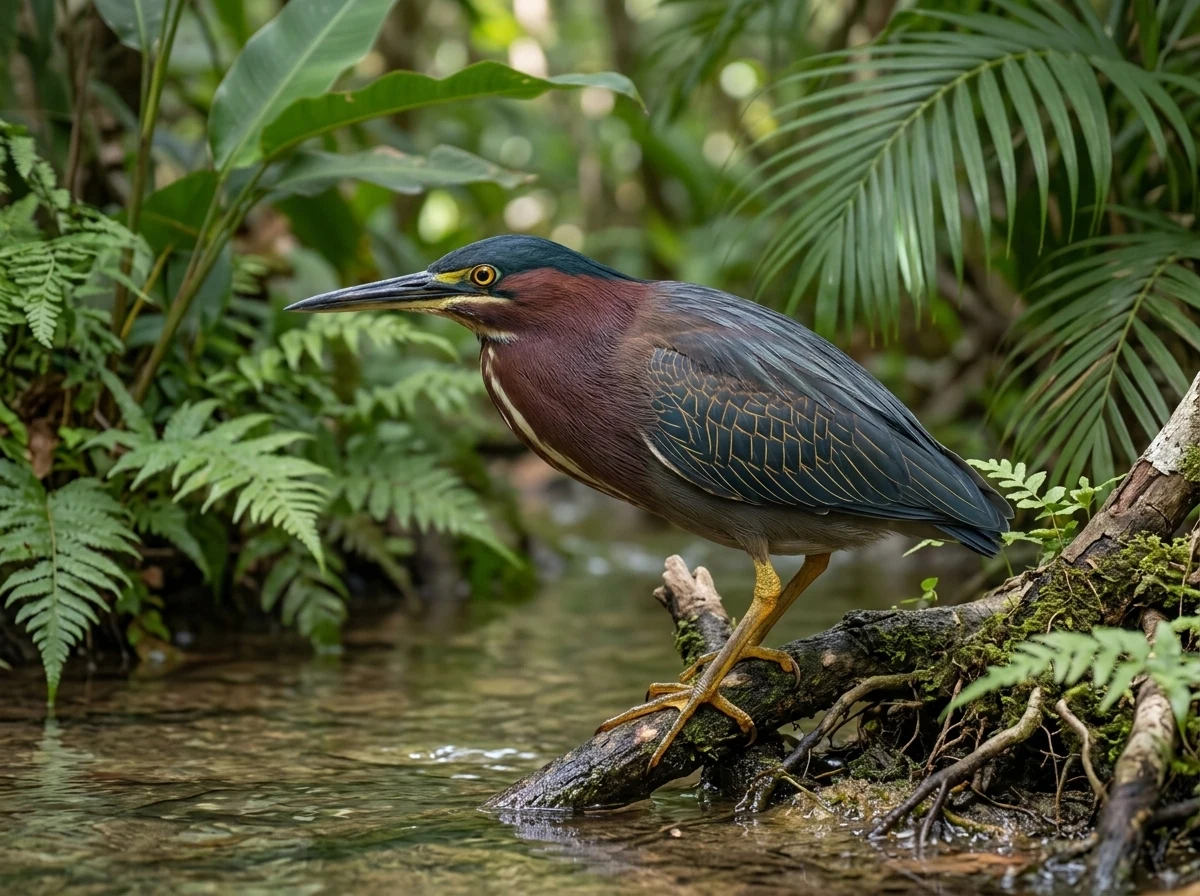
Green Heron (Butorides virescens, Martinete) is much smaller, 41 to 56 cm, compact and short-necked. It has a green or bluish back, chestnut neck, a black crown it sometimes raises into a crest, and orange-yellow legs. It is a common resident of ponds, canals, mangroves, streams, and even gardens: the atlas found it in 284 hexagons. Its call is a sharp kyowk, and it sometimes uses feathers or twigs as bait to lure fish.
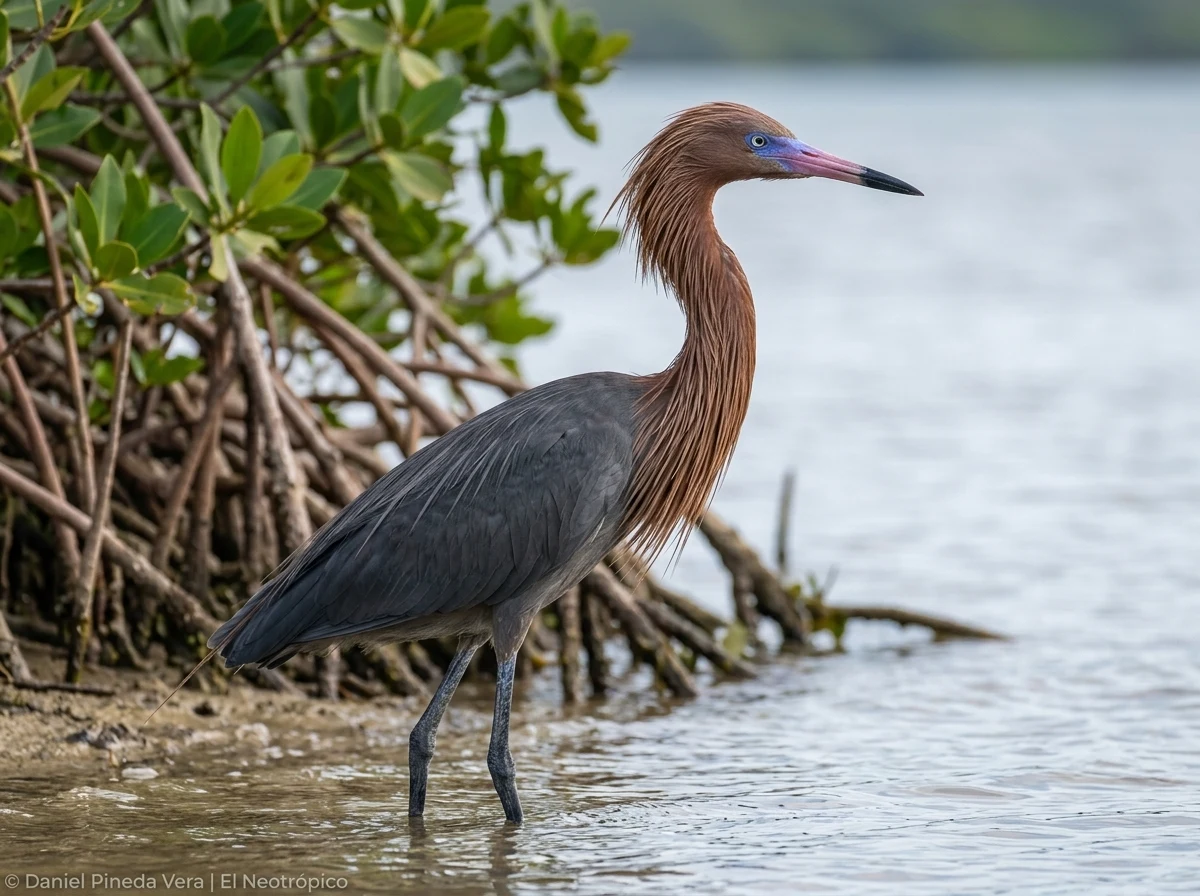
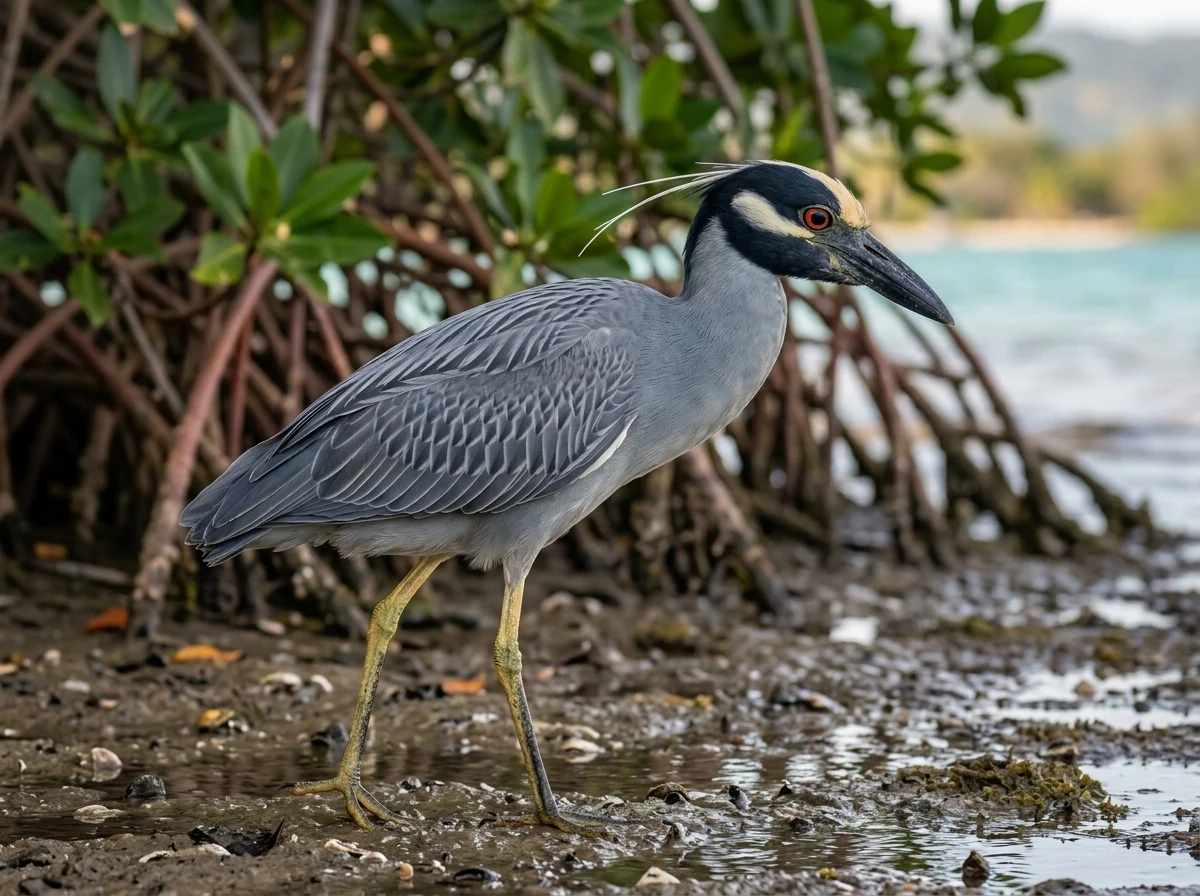
Reddish Egret (Egretta rufescens, Garza Rojiza) is a coastal rarity, Near Threatened on the IUCN Red List. Its dark morph is slate gray with a rusty head and shaggy neck, and in breeding season its bill is pink at the base with a black tip. It is known for theatrical fishing: it runs, leaps, staggers, and spreads its wings to shade the water. At a distance a Glossy Ibis or a juvenile night-heron can also look dark; check the bill and posture.
05
Quick key in three steps
Step one, size: if it is huge, taller than any other heron nearby, it is a Great Blue Heron. Step two, belly: if the body is dark blue but the belly is white, it is a Tricolored Heron. Step three, overall color: if it is dark throughout, medium-sized, with a bluish black-tipped bill, it is an adult Little Blue Heron.
If it is small, chunky, with yellow or orange legs and stalking motionless at the water's edge, think Green Heron. If it runs and flashes its wings on a salty mudflat, consider Reddish Egret and document it with photos. And if it is white with a bluish bill and greenish legs, it is a juvenile Little Blue Heron, not a Snowy Egret.
06
Where to see them and how to protect them
The three common blue herons overlap in coastal wetlands: the San Juan lagoons and Caño Martín Peña, Piñones, Humacao Nature Reserve, Jobos Bay, Laguna Cartagena, and the Cabo Rojo mangroves and salt flats. Tricolored Heron is more coastal and brackish; Little Blue Heron also uses fresh water and urban canals; Great Blue Heron turns up in winter on broad lagoons.
None is in a DNER threatened category, but Little Blue Heron's global population trend is described as decreasing and Reddish Egret is Near Threatened. Watch from the shore, do not flush birds that are fishing, and avoid approaching trees with nests between March and September, when the residents concentrate their nesting.
Linked profiles
Blue and dark herons of Puerto Rico
The three common blue herons, the rare Reddish Egret, and two dark herons they get confused with.
Sound archive
Hear its voice
Explore real songs and calls. The spectrogram turns each sound into a visual trace of time and frequency.
XC1025694Recording 1 of 3call, flight call

Play: call, flight call by JAYRSON ARAUJO DE OLIVEIRA
Choose another recording
Sound recorded by JAYRSON ARAUJO DE OLIVEIRA · XC1025694 · CC BY-NC-SA 4.0. Visualization by Stichting Xeno-canto voor Natuurgeluiden.
Every recording retains the creator, catalogue number, and license published by Xeno-canto. Metadata via GBIF ↗
01
What blue herons live in Puerto Rico?
Three common ones: Little Blue Heron (Egretta caerulea), dark throughout; Tricolored Heron (Egretta tricolor), with a white belly; and Great Blue Heron (Ardea herodias), the largest, seen mostly in winter. Dark-morph Reddish Egret is a rarity.
02
What is the black heron in Puerto Rico?
It is almost always an adult Little Blue Heron, which is very dark slate blue and looks black in poor light. It may also be a Green Heron, smaller with a chestnut neck, or at a distance a Glossy Ibis, which has a curved bill.
03
Does the Great Blue Heron live in Puerto Rico year-round?
It is seen mainly from October to March. In GBIF records, January has about 12 times more observations than June. A few birds stay through summer, but not many.
04
How do I tell a Little Blue Heron from a Tricolored Heron?
Look at the belly. Tricolored Heron has a white belly and a white neck stripe; adult Little Blue Heron is dark throughout, with a reddish-purple head and neck and a bluish black-tipped bill.
05
Why is there a white Little Blue Heron?
Juvenile Little Blue Herons are white and gain blue plumage gradually, passing through a patchy stage called calico. They differ from Snowy Egret by a grayish-blue black-tipped bill and greenish legs without yellow feet.
06
Where can I see blue herons in San Juan?
The Parque Central boardwalk along Caño Martín Peña is a regular spot for Little Blue Heron. The San José, Torrecilla, and Condado lagoons also hold Tricolored Heron and, in winter, Great Blue Heron.
Keep exploring
Connected routes
Sources and review
The evidence is one link away.
These sources support the editorial scope of this guide. Bird profiles also retain their own taxonomy, occurrence, and conservation references.
Reviewed:
01↗02↗03↗04↗05↗06↗07↗08↗09↗10↗
U.S. Forest Service Research and Development
Puerto Rico Breeding Bird Atlas
Distribution and breeding timing for 130 species breeding in Puerto Rico and its satellite islands.National Audubon Society
Field guide: Little Blue Heron
Slate-blue adult plumage, blue bill with a black tip, white juveniles, the calico phase, and slow foraging.National Audubon Society
Field guide: Tricolored Heron
Measurements, white belly, white neck stripe, rusty-toned juveniles, and estuary and mangrove habitat.National Audubon Society
Field guide: Great Blue Heron
Measurements (1.0–1.4 m, 1.7–2.0 m wingspan, 2.1–2.5 kg), black crown stripe, and the white Great White Heron form.Global Biodiversity Information Facility (GBIF), datos de eBird e iNaturalist
Great Blue Heron records in Puerto Rico
Monthly distribution of records: peaks from December to February and lows from May to September.Birds of Puerto Rico (resumen del Atlas de Aves Reproductoras)
Little Blue Heron in Puerto Rico
Common resident, regularly seen from the Parque Central boardwalk along Caño Martín Peña, and atlas results.National Audubon Society
Field guide: Green Heron
Size (41–56 cm), chestnut neck, orange-yellow legs, the kyowk call, and occasional use of bait.National Audubon Society
Field guide: Reddish Egret
Dark and white morphs, shaggy neck, pink bill base in breeding, and foraging by running and shading water with the wings.NOAA Office for Coastal Management
Jobos Bay Estuarine Research Reserve
Habitats, extent, and monitoring of the reserve.Departamento de Recursos Naturales y Ambientales
Humacao reserve designation document
Historical bird inventory and ecological description of lagoons, channels, and Pterocarpus forest.The atlas continues