 AI
AISpecies profile
Great Egret (Ardea alba) in Puerto Rico
The island's largest white heron: identification, habitats, nesting calendar, confusing names, and the plume trade that nearly wiped it out.
Reviewed:What Ardea alba is
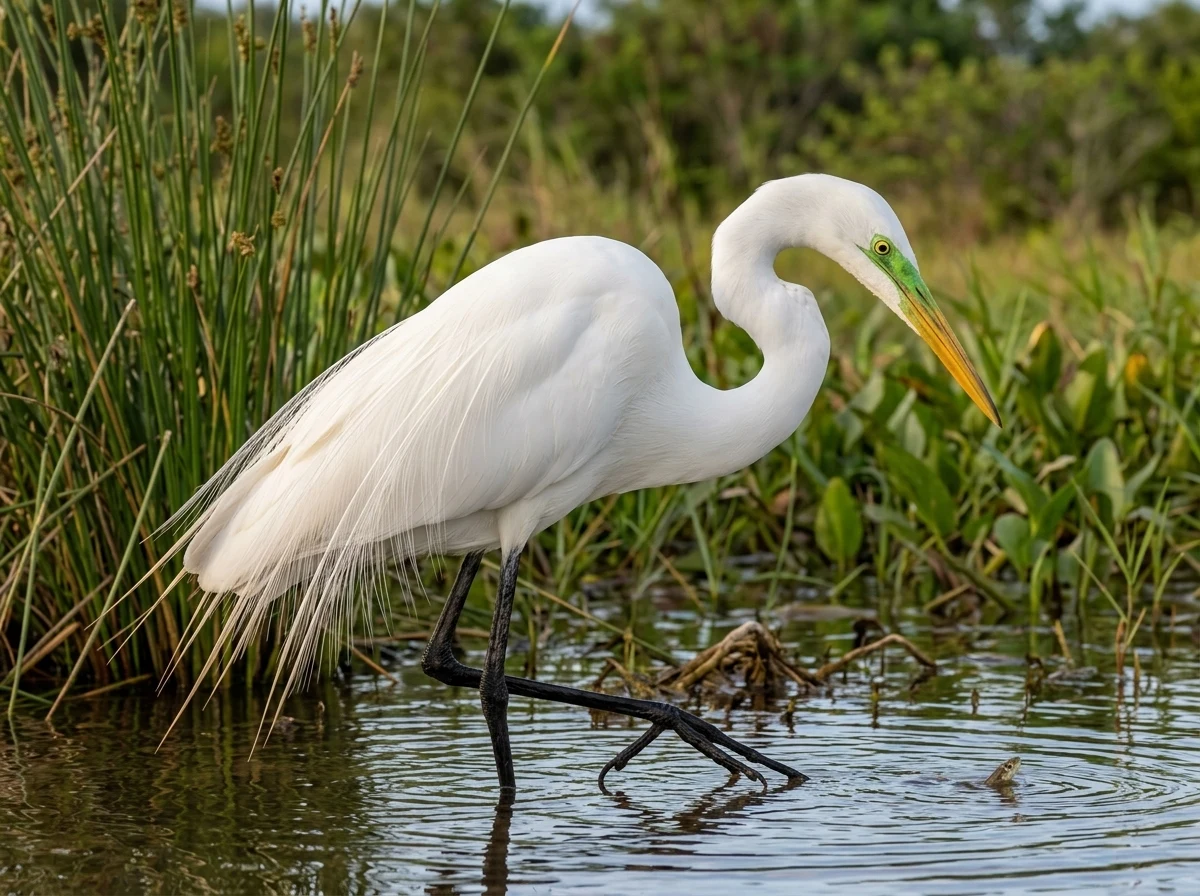
Ardea alba is the Great Egret (Garza Real in Puerto Rico), the island's largest all-white heron: it measures 89 to 104 cm, has a yellow bill and black legs, and is a common native resident of ponds, lagoons, mangroves, and streams across the island.
It is a cosmopolitan species found in the Americas, Africa, Asia, and southern Europe, and the IUCN lists it as Least Concern. In Puerto Rico it is not in any threatened category of the DNER or the U.S. Fish and Wildlife Service.
The Puerto Rico Breeding Bird Atlas (2004–2009) found it in 253 of 479 hexagons, 53% of the surveyed area, yet confirmed nesting in only 8. In other words, you see it almost everywhere, but its colonies are few and valuable.
Species profile
Great Egret facts
89–104 cmLengthWingspan about 1.4 m.
53 %Atlas hexagons253 of 479, with 465 records.
Mar–MayNesting peakPer the 2004–2009 atlas.
23–26 díasIncubationTypical clutch of 3 to 4 eggs.
01
How to recognize a Great Egret
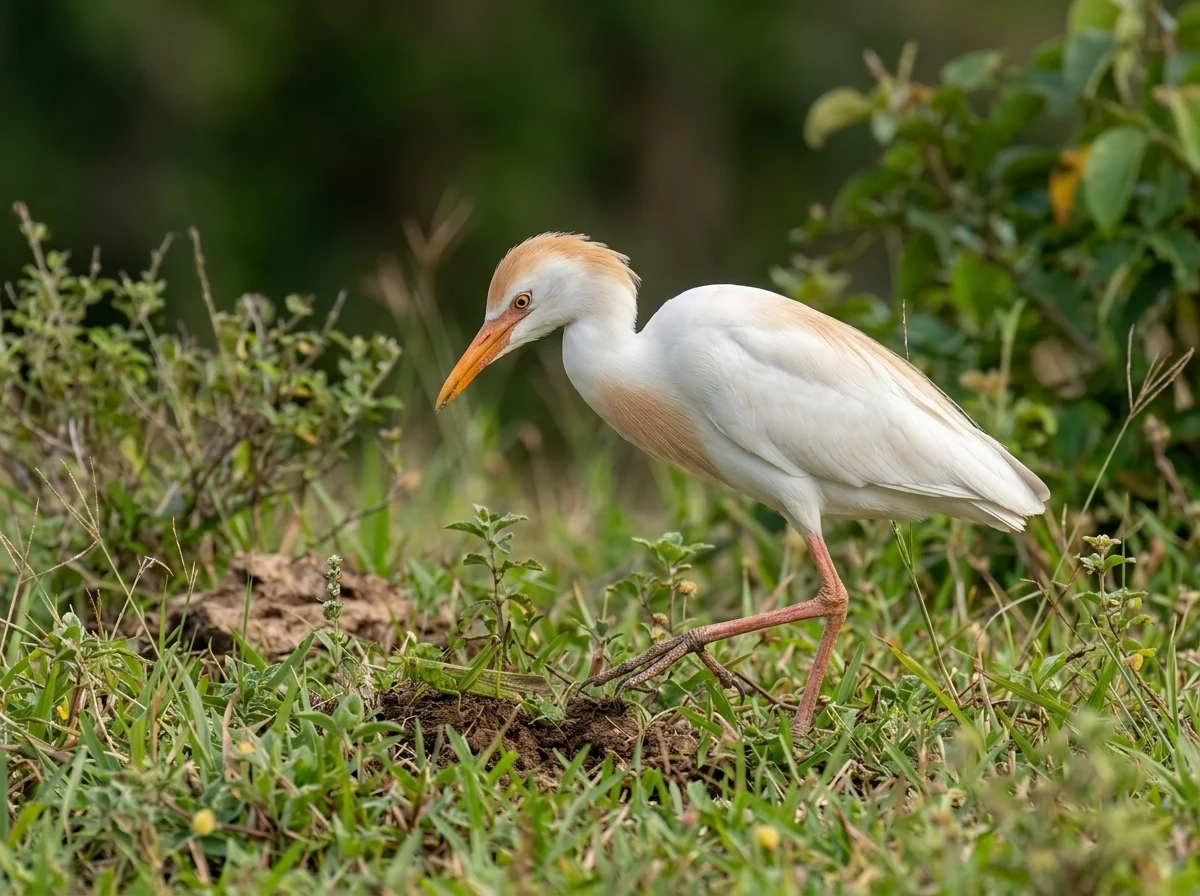
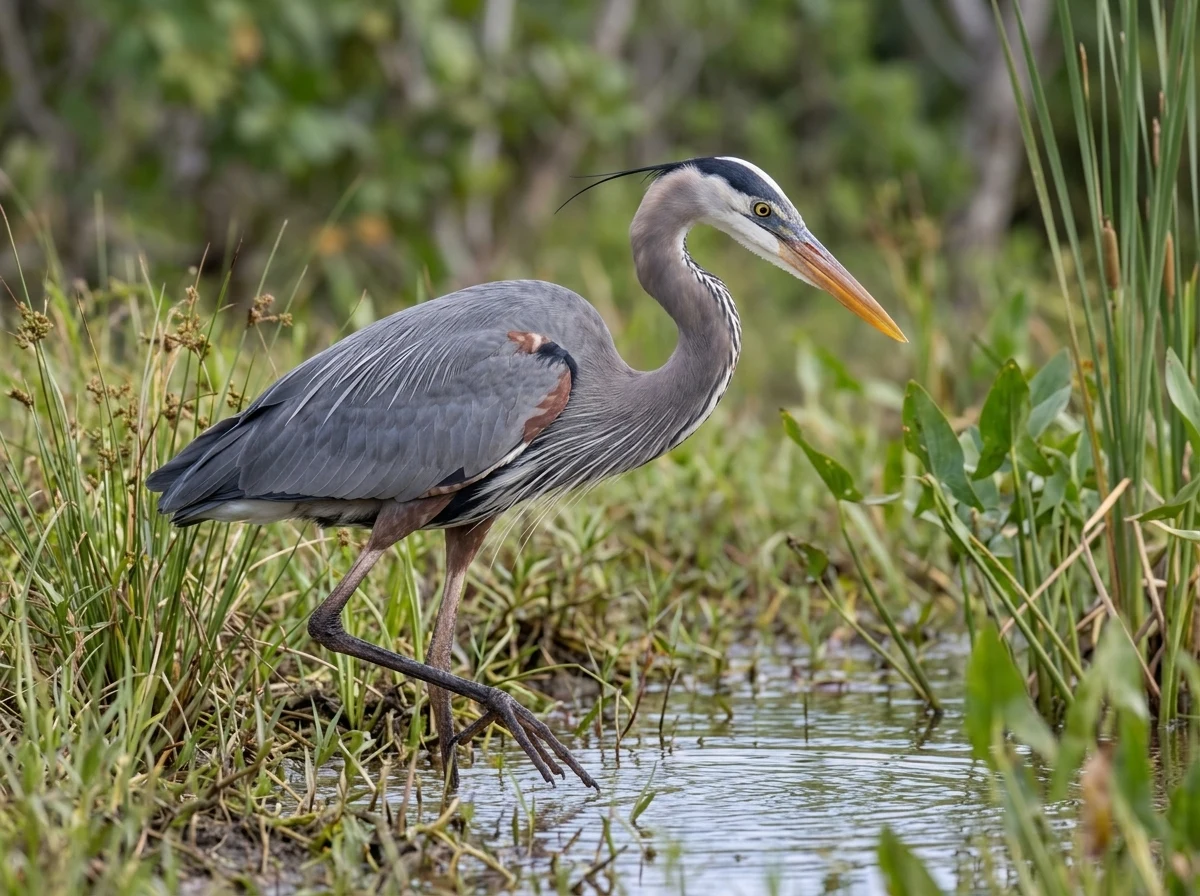
Look for a tall white heron with a very long S-curved neck, a straight dagger-like yellow bill, and black legs and feet. It is only slightly smaller than a Great Blue Heron and nearly twice as tall as a Cattle Egret. In breeding season it carries long, fine ornamental plumes on the back, and the bill can darken a little.
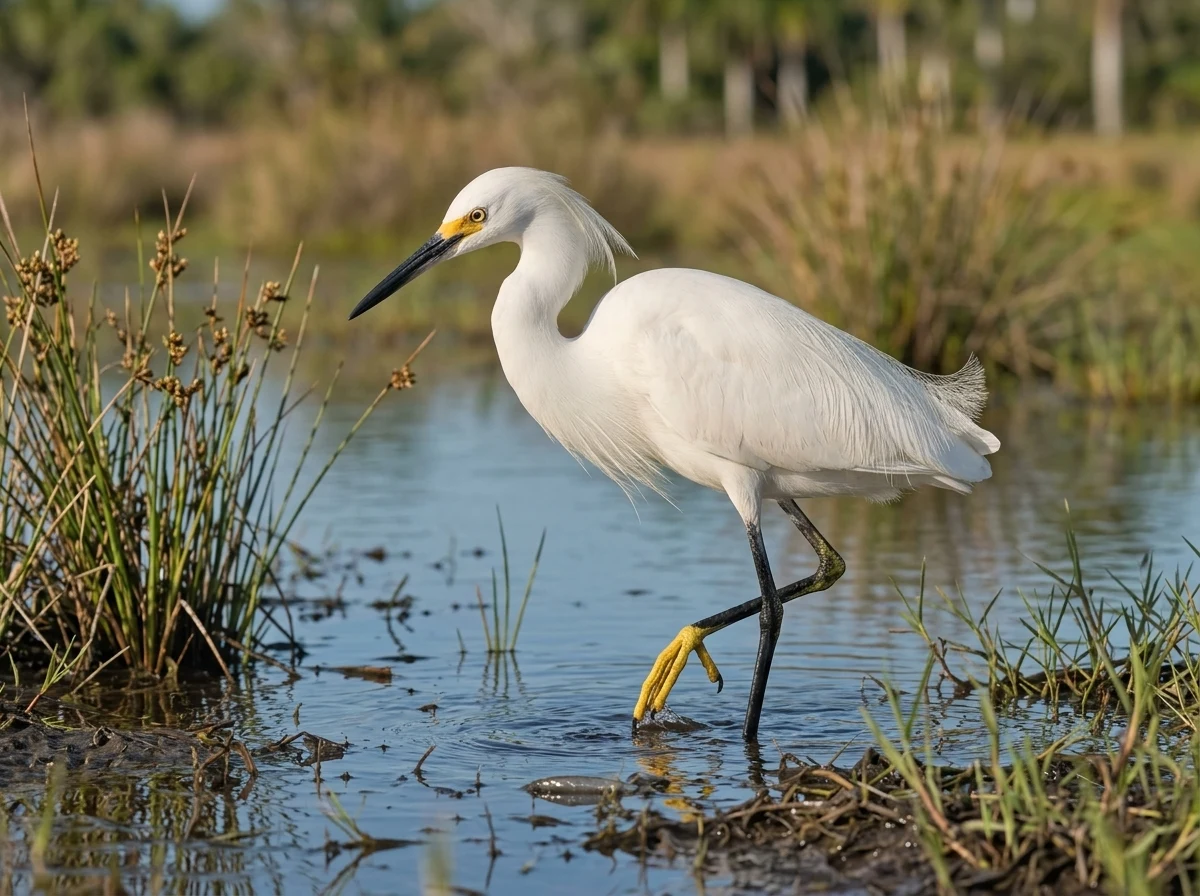
Three common mix-ups: Snowy Egret has a black bill and yellow feet; Cattle Egret is short, short-billed, and lives in pastures; and the white form of Great Blue Heron, called Great White Heron, is bigger, heavier-billed, and pale-legged, and is known mainly from Florida. Black legs plus a yellow bill almost always means Great Egret.
02
Where to see it in Puerto Rico
Great Egret uses fresh and saltwater ponds, canals, mangroves, lagoons, wet pastures, and even urban streams. It is easy in coastal wetlands: the San Juan lagoons, Piñones, Humacao Nature Reserve, Laguna Cartagena, the Cabo Rojo salt flats, and Jobos Bay. In the eBird and iNaturalist data aggregated by GBIF, it is the most-reported heron around the San José and Torrecilla lagoons.
For a good look, go early and scan open shorelines, since it forages in exposed places: lake edges, large marshes, and shallow estuaries. Most records are from the lowlands, but the atlas also documented nesting in the subtropical wet forest life zone of the mountains, so it can turn up at interior reservoirs and rivers.
03
What it eats and how it hunts
It eats mostly fish, but also crustaceans, frogs, lizards, snakes, aquatic insects, and occasionally grasshoppers and rodents. Its technique is patience: it stands or walks very slowly in shallow water, waits for prey to come close, and catches it with a fast thrust of the bill.
That calm sets it apart from Snowy Egret, which runs and stirs the bottom with its feet, and from Reddish Egret, which leaps and spreads its wings. If you find a big white heron frozen for minutes at a lagoon edge, wait for the final strike: it is one of the easiest behaviors to photograph in the island's wetlands.
04
Nesting and colonies
Great Egret nests and roosts in colonies, often mixed with other herons. It builds a loose stick platform on a branch or shrub, typically 10 to 40 feet above ground or water, and lays 3 to 4 pale blue-green eggs that hatch after 23 to 26 days.
Published Caribbean accounts gave April to June for nesting, but the Puerto Rico atlas found most activity in March, April, and May. Of the hexagons with breeding evidence, 47% were in subtropical moist forest, 40% in subtropical dry forest, and 13% in subtropical wet forest. Only 7% of the area with breeding evidence was protected, so a known colony deserves respect and distance.
05
Names: Great Egret, Garza Real, Egretta alba
In Puerto Rico its local name is Garza Real. Elsewhere it is called garceta grande, garza blanca, or garza blanca grande, and in Spain garza real refers to Ardea cinerea, a gray heron. When comparing guides from different countries, always confirm the scientific name.
That scientific name has changed too. Today it is Ardea alba, but older publications list it as Egretta alba or Casmerodius albus. A search for egretta alba or ardea alba is about the same species. In English it has also been called common egret, large egret, or great white egret.
06
The plumes that nearly wiped it out
In the late nineteenth and early twentieth centuries, Great Egret breeding plumes decorated women's hats, and hunting at colonies pushed it close to disappearing from North America. Early conservationists stopped the hunting and protected colonies, and the egret became the symbol of the National Audubon Society.
Today its range is enormous and the IUCN lists it as Least Concern, but in Puerto Rico it depends on wetlands that get filled, polluted, or drained. To watch it without harm, stay on shorelines or trails, keep away from trees with nests, and avoid flying drones over colonies during nesting season.
Linked profiles
Great Egret and its lookalikes
Compare Great Egret with the other large and white herons seen on the island.
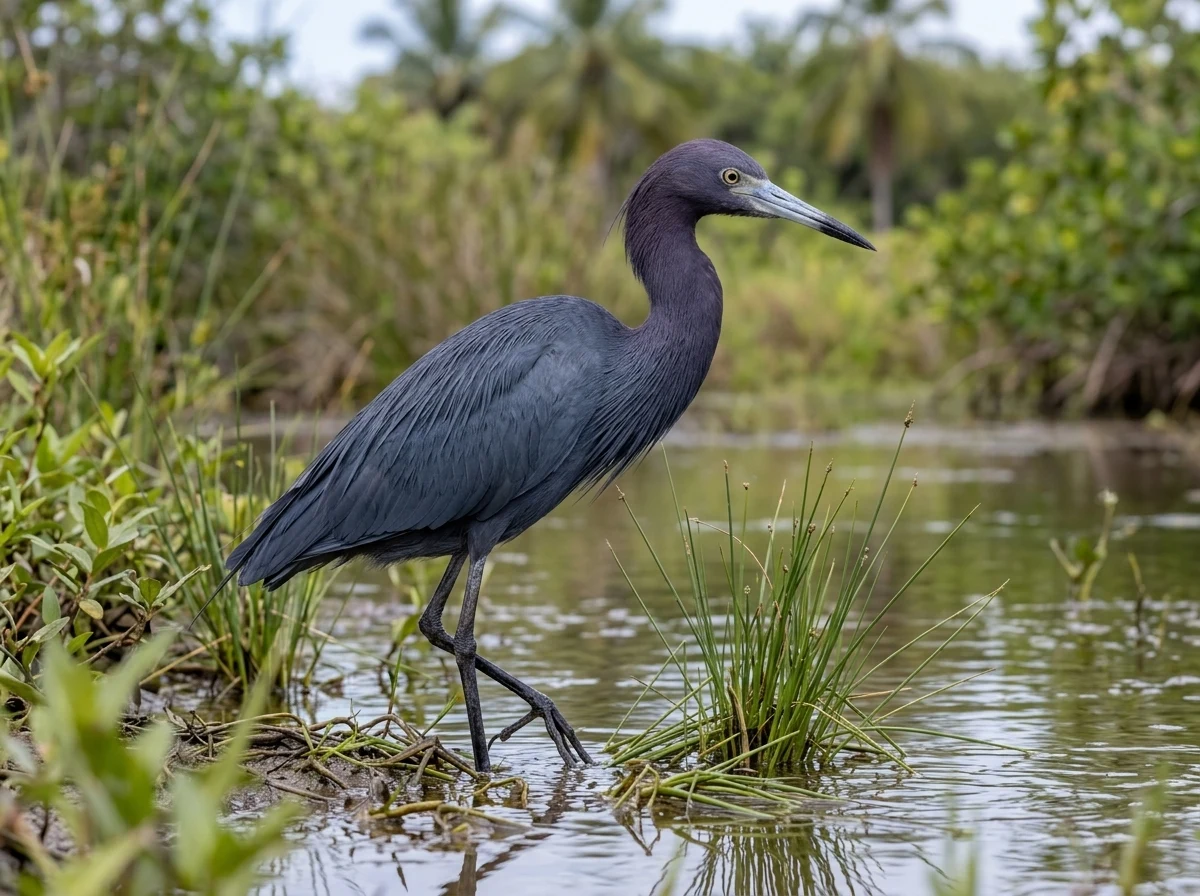
Sound archive
Hear its voice
Explore real songs and calls. The spectrogram turns each sound into a visual trace of time and frequency.
XC1091707Recording 1 of 3flight call

Play: flight call by Francesco Sottile
Choose another recording
Sound recorded by Francesco Sottile · XC1091707 · CC BY-NC-SA 4.0. Visualization by Stichting Xeno-canto voor Natuurgeluiden.
Every recording retains the creator, catalogue number, and license published by Xeno-canto. Metadata via GBIF ↗
01
What is Ardea alba?
It is the Great Egret, called Garza Real in Puerto Rico: a large white heron, 89 to 104 cm long, with a yellow bill and black legs. In Puerto Rico it is a common native resident of wetlands, lagoons, and mangroves, and it is not threatened.
02
Are Great Egret and Egretta alba the same species?
Yes. Egretta alba and Casmerodius albus are older scientific names for the same species, now classified as Ardea alba.
03
When does the Great Egret nest in Puerto Rico?
The 2004–2009 atlas found most breeding activity in March, April, and May. It nests in colonies on stick platforms in trees or shrubs near water and lays 3 to 4 eggs.
04
Where can I see a Great Egret in Puerto Rico?
In almost any lowland wetland: the San Juan lagoons, Piñones, Humacao Nature Reserve, Laguna Cartagena, the Cabo Rojo salt flats, and Jobos Bay. The atlas recorded it in 53% of surveyed hexagons.
05
How do I tell a Great Egret from a Snowy Egret?
Great Egret is much larger, with a yellow bill and legs black to the toes. Snowy Egret is 56 to 66 cm, with a black bill, yellow face, and yellow feet.
06
Does the Great Egret make any sound?
It is usually quiet. When disturbed it gives a low, hoarse croak, and at colonies it makes loud croaks and higher squawks. You can hear recordings on its species page.
Keep exploring
Connected routes
Sources and review
The evidence is one link away.
These sources support the editorial scope of this guide. Bird profiles also retain their own taxonomy, occurrence, and conservation references.
Reviewed:
01↗02↗03↗04↗05↗06↗07↗08↗09↗10↗
U.S. Forest Service Research and Development
Puerto Rico Breeding Bird Atlas
Distribution and breeding timing for 130 species breeding in Puerto Rico and its satellite islands.Birds of Puerto Rico (resumen del Atlas de Aves Reproductoras)
Great Egret in Puerto Rico
Common resident, local habitats, and atlas results: 465 records in 253 of 479 hexagons, breeding concentrated March to May.National Audubon Society
Field guide: Great Egret
Measurements (89–104 cm, 1.4 m wingspan), yellow bill and black legs, diet, nesting, and its role as the Audubon symbol after the plume trade.Global Biodiversity Information Facility (GBIF)
Ardea alba: taxonomic record
Accepted name Ardea alba and older synonyms Egretta alba and Casmerodius albus.National Audubon Society
Field guide: Great Blue Heron
Measurements (1.0–1.4 m, 1.7–2.0 m wingspan, 2.1–2.5 kg), black crown stripe, and the white Great White Heron form.National Audubon Society
Field guide: Snowy Egret
Measurements, black bill, yellow lores, black legs with yellow feet, and active foraging that stirs the bottom with the feet.U.S. Fish and Wildlife Service
Laguna Cartagena National Wildlife Refuge
Importance of the freshwater wetland for resident and migratory waterbirds.Departamento de Recursos Naturales y Ambientales
Humacao reserve designation document
Historical bird inventory and ecological description of lagoons, channels, and Pterocarpus forest.National Audubon Society
Field guide: Reddish Egret
Dark and white morphs, shaggy neck, pink bill base in breeding, and foraging by running and shading water with the wings.Sociedad Ornitológica Puertorriqueña
Official bird list
Local names, occurrence categories, and the public summary of 17 endemics.The atlas continues