 AI
AIBehavior guide
Why Hummingbirds Defend Flowers
Nectar is a limited resource that renews slowly. That is the key to hummingbird aggression, even at feeders that appear endless.
Reviewed:Prepared with AI assistance and linked sources. Illustrations are not field photographs.
The short answer
Hummingbirds defend flowers because they depend on nectar to sustain an extraordinary energy budget. Nectar is a sugar-rich food that provides the energy needed for hovering flight and a very high heart rate; in some species the heart can exceed 1,200 beats per minute. When survival depends on such a demanding fuel, protecting the source makes sense.
Nectar is also not infinite. Each flower produces a limited amount of sugar and needs time to regenerate it. That is why hummingbirds compete with each other instead of foraging together, and why they defend territories around flowers and feeders. In Puerto Rico, the Puerto Rican Emerald is a local example of this territorial behavior.
Behavior guide
Three key points
NéctarLimited and slowly renewing resourceEach flower produces little sugar and takes time to replenish it.
EnergíaHovering flight demands high fuelNectar sustains a high metabolism and heart rate.
TerritorioDefense reduces food lossHummingbirds compete rather than forage together.
01
Why nectar changes the rules
Nectar is the main reason for hummingbird aggression. These birds have a very fast metabolism and depend on sugar to maintain hovering flight, a very energy-demanding way to fly. A hummingbird cannot afford to lose a food source it found and that will only produce nectar again after some time.
In practical terms, a flower is a fuel station that runs out and recharges slowly. If another hummingbird visits before it recharges, the first bird loses that energy. That is why hummingbirds defend territories around flowers with high sugar content. Defense is not a whim: it is a strategy to secure the next sip.
02
Defending flowers and feeders: the same logic
Sugar feeders seem like an endless source, but hummingbirds defend them as if they were flowers. The explanation lies in evolution: feeders and large ornamental gardens are recent, while the instinct to protect nectar is ancient. Their instinct tells them that any nectar source can run out and must be protected.
When a hummingbird defends a feeder, it is not evaluating whether the sugar will run out soon; it is responding to an ancient signal: concentrated and limited food. That is why adult males are often the most vehement, although individuals of all ages, sexes, and species can defend resources. Disputes include tail displays, chattering, dives, and chases.
03
The Puerto Rican Emerald as a local illustration
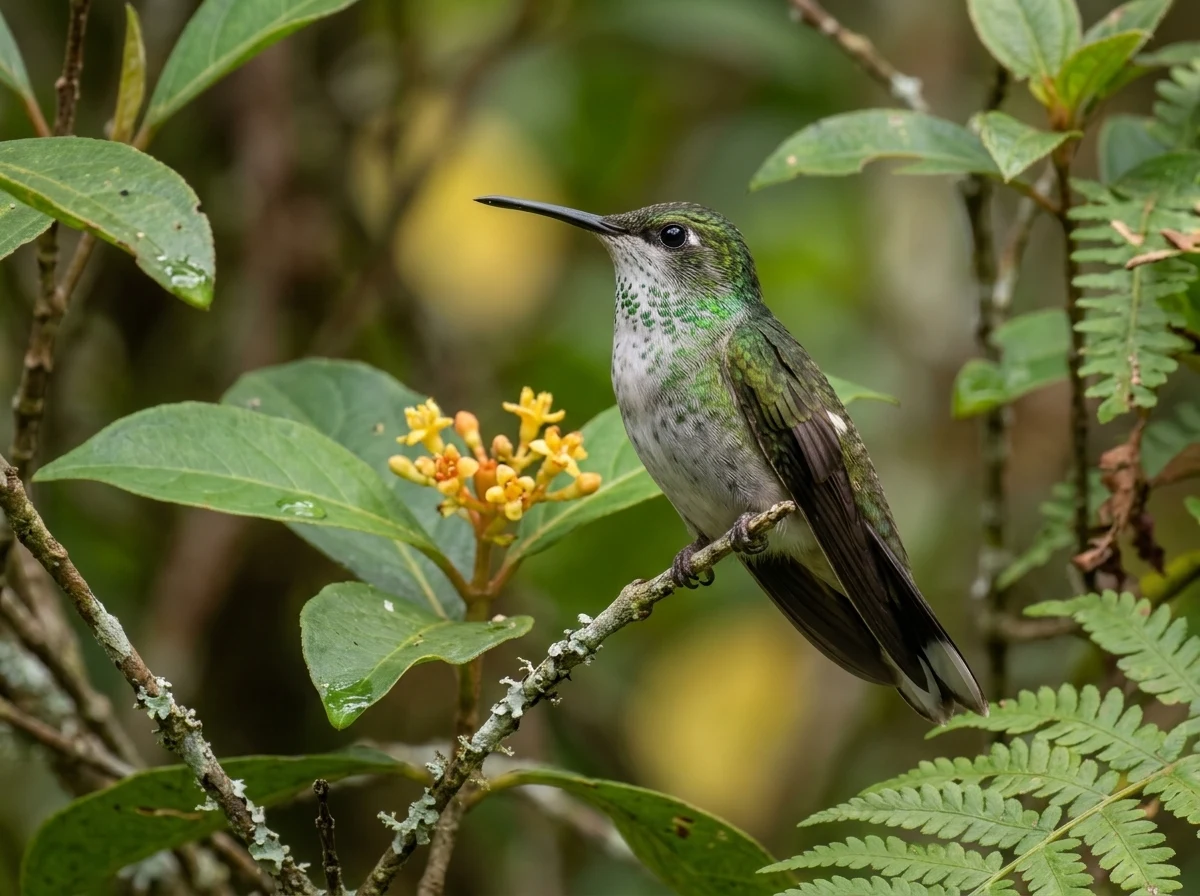
The Puerto Rican Emerald (Riccordia maugaeus) is the smallest bird on the island and a clear example of territorial defense of nectar. It is highly territorial and defends its flowers with intense aerial pursuits. Its short, straight bill allows it to feed on flowers with short corollas; sometimes it pierces the base of larger flowers, a behavior called nectar robbing because it does not pollinate the flower.
This species is distributed in forests and woodlands from the coast up to the mountains. It feeds on nectar from small, brightly colored, scented flowers of trees, herbs, shrubs, and epiphytes. Plants documented as attractive to the Puerto Rican Emerald include Malvaviscus penduliflorus (Turks cap), Hamelia patens (firebush), and Odontonema sp. (cardinal's guard).
04
How to observe defense without interfering
To study this behavior, choose a patch of flowers or a feeder and observe from a distance that does not alter the birds' behavior. Note the time, the number of hummingbirds present, and what each one does: whether it perches, chases another, calls, or performs tail displays. Also record whether the arriving bird leaves immediately or manages to feed.
A useful checklist includes: (1) hummingbird species or type, if you can identify it; (2) defended resource: flowers or feeder; (3) duration of the dispute; (4) who started the chase; (5) who retreated; (6) whether there was physical contact or only display. With several repeated observations on different days, you can compare whether defense is more intense when there are fewer flowers or more hummingbirds.
05
What you can do in your yard
If you want to reduce disputes in your yard, you can increase the nectar supply. Planting native species helps because hummingbirds defend larger territories when there are few flowers and nectar is scarce. In addition, native plants attract insects and spiders that complement their diet, especially during breeding.
Another option is to place several feeders apart or hidden, for example around a corner, so that a single individual cannot control them all. You can also cluster several feeders in one place: when there are many hummingbirds and enough food, no one can chase everyone away and disputes decrease. Clean and refill feeders every few days to keep nectar fresh.
Linked profiles
Hummingbirds in this guide
The Puerto Rican Emerald illustrates flower defense; the Puerto Rican Mango appears as a catalog reference.
AI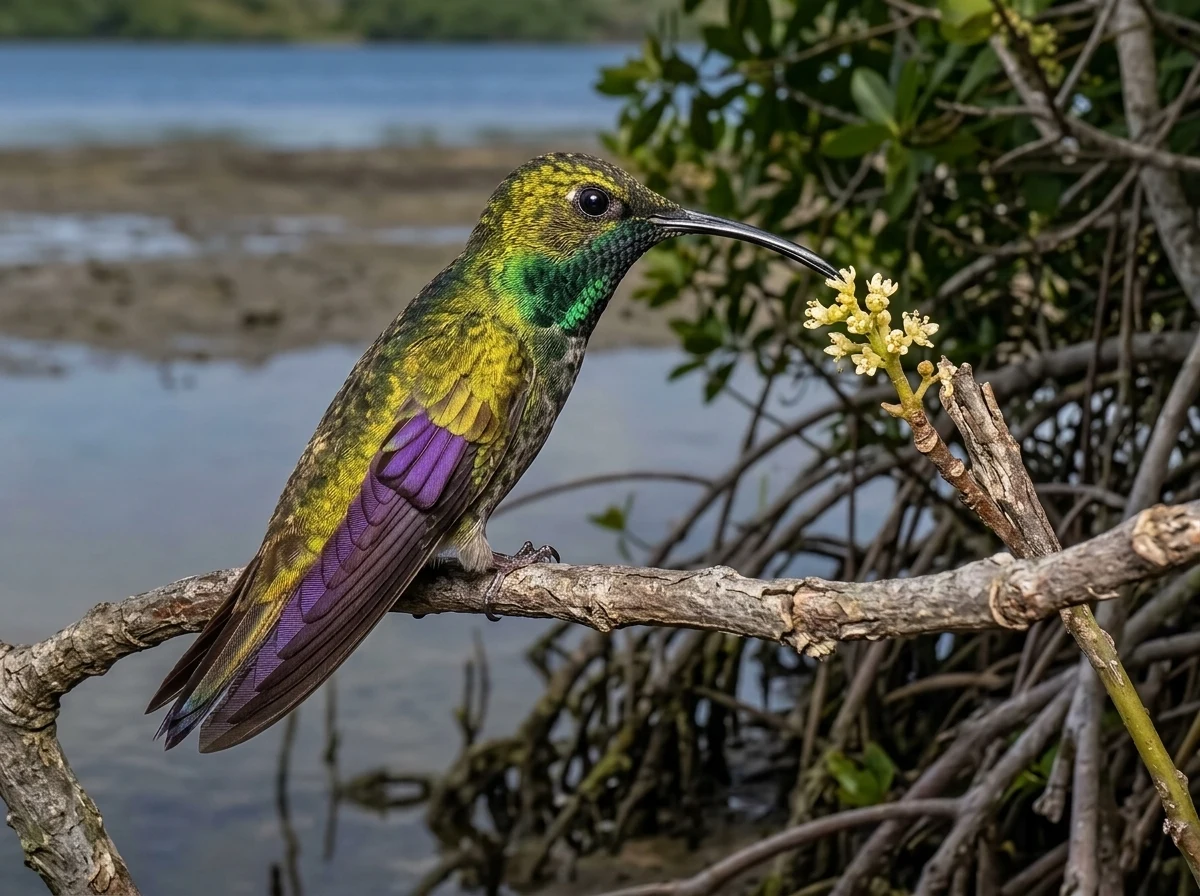 AI
AI01
Why do hummingbirds fight if there is enough food at the feeder?
Because they evolved with limited, slowly renewing nectar sources. A feeder is, to them, another flower: a concentrated source that could run out. Their instinct tells them to protect it.
02
Do hummingbirds defend flowers even without feeders?
Yes. Flower defense is the original behavior. Feeders simply add another resource that triggers the same territorial response.
03
Which flowers attract hummingbirds most in Puerto Rico?
For the Puerto Rican Emerald, plants documented as attractive include Malvaviscus penduliflorus (Turks cap), Hamelia patens (firebush), and Odontonema sp. (cardinal's guard).
04
Can I prevent hummingbirds from fighting in my yard?
Not entirely, but you can reduce disputes by planting native species and placing several feeders apart or clustered. With more food available, defense becomes less intense.
05
Do hummingbirds defend territory all year?
Defense occurs when there is a resource worth protecting. Hummingbirds defend flowers and feeders when nectar is available.
Keep exploring
Connected routes
Sources and review
The evidence is one link away.
These sources support the editorial scope of this guide. Bird profiles also retain their own taxonomy, occurrence, and conservation references.
Reviewed:
01↗02↗03↗
National Audubon Society / Audubon Magazine
Why Do Hummingbirds Fight So Much?
Evidence for cited sections; consult the original document.BirdsCaribbean
Hummingbirds—Tiny but Mighty
Evidence for cited sections; consult the original document.BirdsCaribbean
From the Nest – Day 39: Puerto Rican Emerald
Evidence for cited sections; consult the original document.The atlas continues