 AI
AIIdentification · Comparison
Compare Two Hummingbirds: Mango vs. Emerald
Two hummingbirds easily confused at a distance. Learn to separate them with a comparison table, an observation procedure, and student questions.
Reviewed:Prepared with AI assistance and linked sources. Illustrations are not field photographs.
Two Hummingbirds, One Island
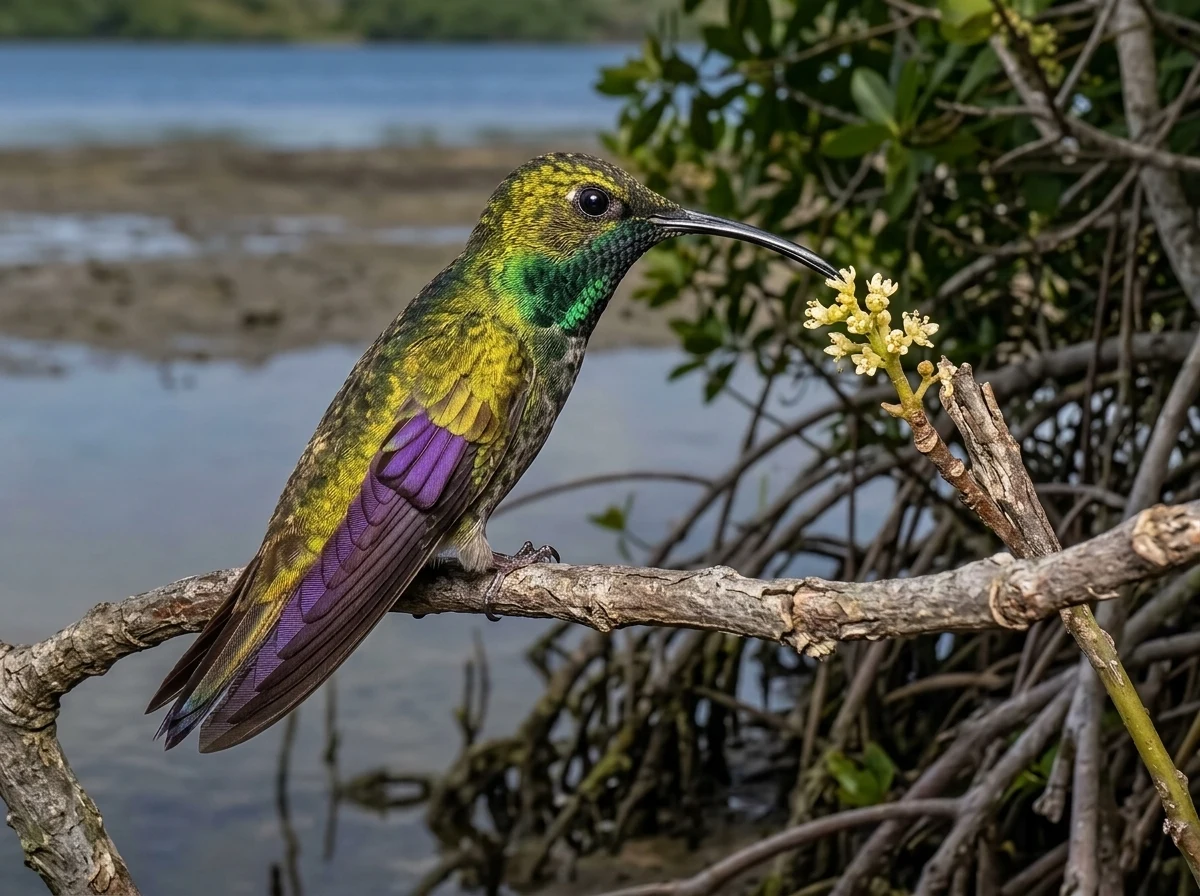
In Puerto Rico, two hummingbirds share gardens, forest edges, and shade coffee farms: the Puerto Rican Mango (Anthracothorax aurulentus) and the Puerto Rican Emerald (Riccordia maugaeus). At first glance both are green, tiny, and extremely fast, but they belong to different lineages and differ in size, bill shape, coloration, and habitat.
This guide does not repeat their full species profiles: it focuses on direct comparison. It includes a field table, a procedure for observing without trapping, student questions, and a checklist. The goal is to help you decide confidently which of the two you are seeing, even when you only have a few seconds.
Identification · Comparison
Key Differences at a Glance
Grande vs. pequeñoRelative sizeThe Mango is noticeably more robust; the Emerald is smaller and more compact.
Pico largo y curvo vs. pico rectoBill shapeThe Mango has a long, decurved bill; the Emerald's is shorter and straighter.
Verde dorado vs. verde esmeraldaOverall colorationThe Mango can appear green with golden reflections; the Emerald tends toward emerald green.
01
Size and Proportions: The First Clue
The Puerto Rican Mango is a robust hummingbird, with a body mass of about 5.6 grams according to catalog data. The Puerto Rican Emerald is smaller, with a mass of about 4.25 grams. That difference of just over one gram may seem minimal, but in the field it translates into a heavier silhouette and an apparently more powerful flight in the Mango.
Beyond size, observe the proportion of the bill to the head. The Mango has a long, clearly decurved bill, adapted to deep flowers. The Emerald has a shorter, straighter bill. If the bird perches, compare bill length with the head: in the Mango the bill often looks as long as or longer than the head; in the Emerald it is proportionally shorter.
02
Coloration: Golden Green vs. Emerald Green
The Mango's scientific name, aurulentus, means 'full of yellow' and reflects its golden iridescence. Although it is a 'green' hummingbird, in good light it can appear green with golden or bronzy reflections. The Puerto Rican Emerald, as its common name suggests, tends toward a cooler, more uniform emerald green.
Light changes everything. A Mango backlit can look dark or nearly black, while an Emerald in direct sun can shine intensely. Therefore, coloration alone is not diagnostic: use it together with size and bill shape. If you can see the throat or chest, note whether the shine is golden or emerald, but do not base the identification on a single flash.
03
Habitat and Behavior: Where Each Is More Likely
The Mango favors forests (except rain forest), forest clearings, scrub, shade coffee plantations, and suburban gardens. It is widespread and common in Puerto Rico. The Puerto Rican Emerald also uses dry and moist forests, woodlands, plantations, and gardens, according to catalog data.
Behaviorally, both are residents and defend floral territories. The Mango, due to its size, can dominate feeders and large flowers. The Emerald, more agile, sometimes visits smaller flowers or feeds at the edges of a Mango's territory. Watch whether the bird chases or is chased: the size-based hierarchy is an additional clue.
04
Sound: What to Listen For (and What Not to Promise)
The reference documents available for this guide do not include detailed descriptions of the Mango's or the Emerald's calls. Therefore, we do not assert specific acoustic differences that are not supported. What we can say is that both produce vocalizations and mechanical wing sounds.
For students, the lesson is important: do not invent sound differences. If you want to compare vocalizations, record with your phone and compare spectrograms or consult sound archives from reliable sources. Identifying hummingbirds by sound requires practice and reference recordings, not assumptions.
05
Other Puerto Rico Hummingbirds: Why the Comparison Matters
Puerto Rico has more than the Mango and the Emerald. The Green-throated Carib (Eulampis holosericeus) and the Antillean Crested Hummingbird (Orthorhyncus cristatus) have also been recorded, according to the Puerto Rico bird catalog. The Carib is native but not endemic, and the Crested Hummingbird ranges from eastern Puerto Rico into the Lesser Antilles.
The Antillean Crested Hummingbird is even smaller (about 3.26 grams) and, as its name suggests, males have a crest. The Green-throated Carib is larger (about 5.9 grams) and has a curved bill. Knowing these additional species prevents confusing a Puerto Rican Emerald with a Crested Hummingbird, or a Mango with a Carib.
Linked profiles
Species Compared
Four hummingbirds recorded in Puerto Rico: two endemics and two additional species that help calibrate identification.
AI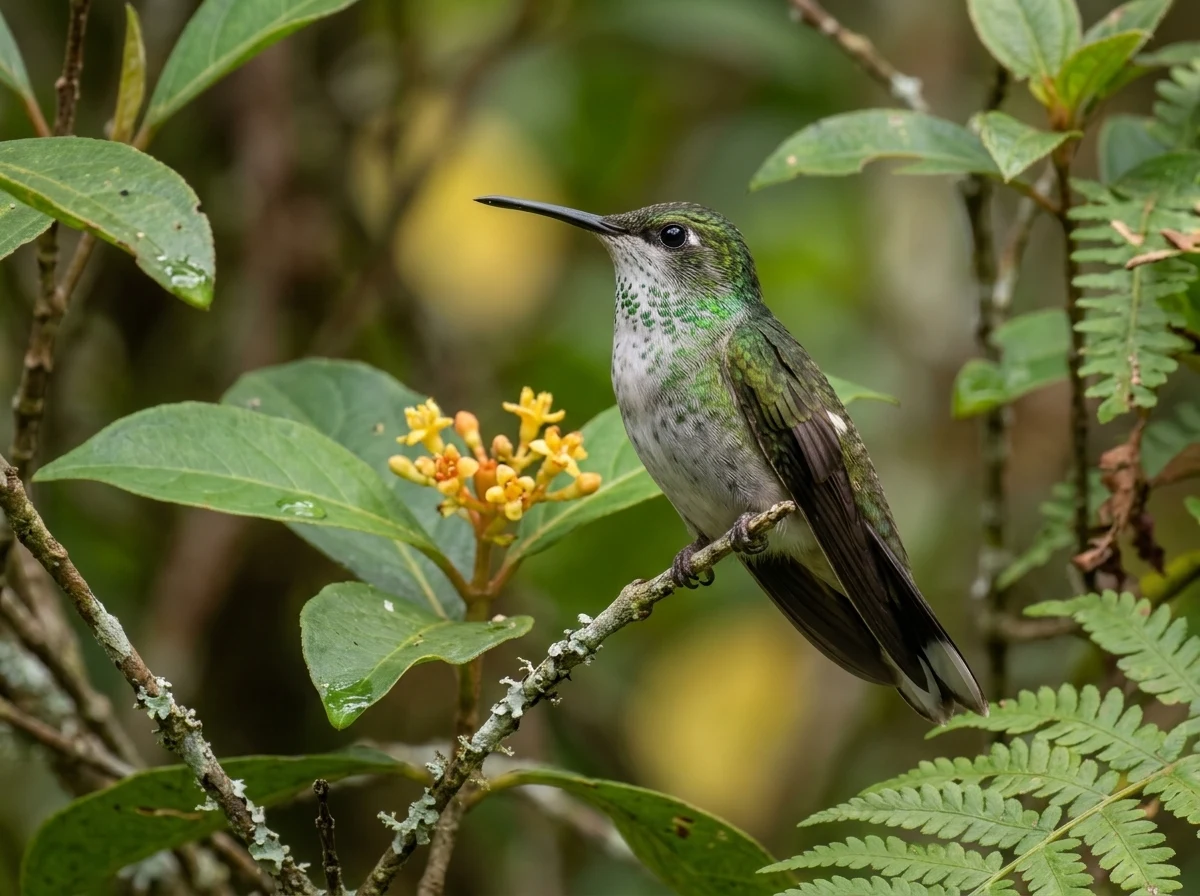 AI
AI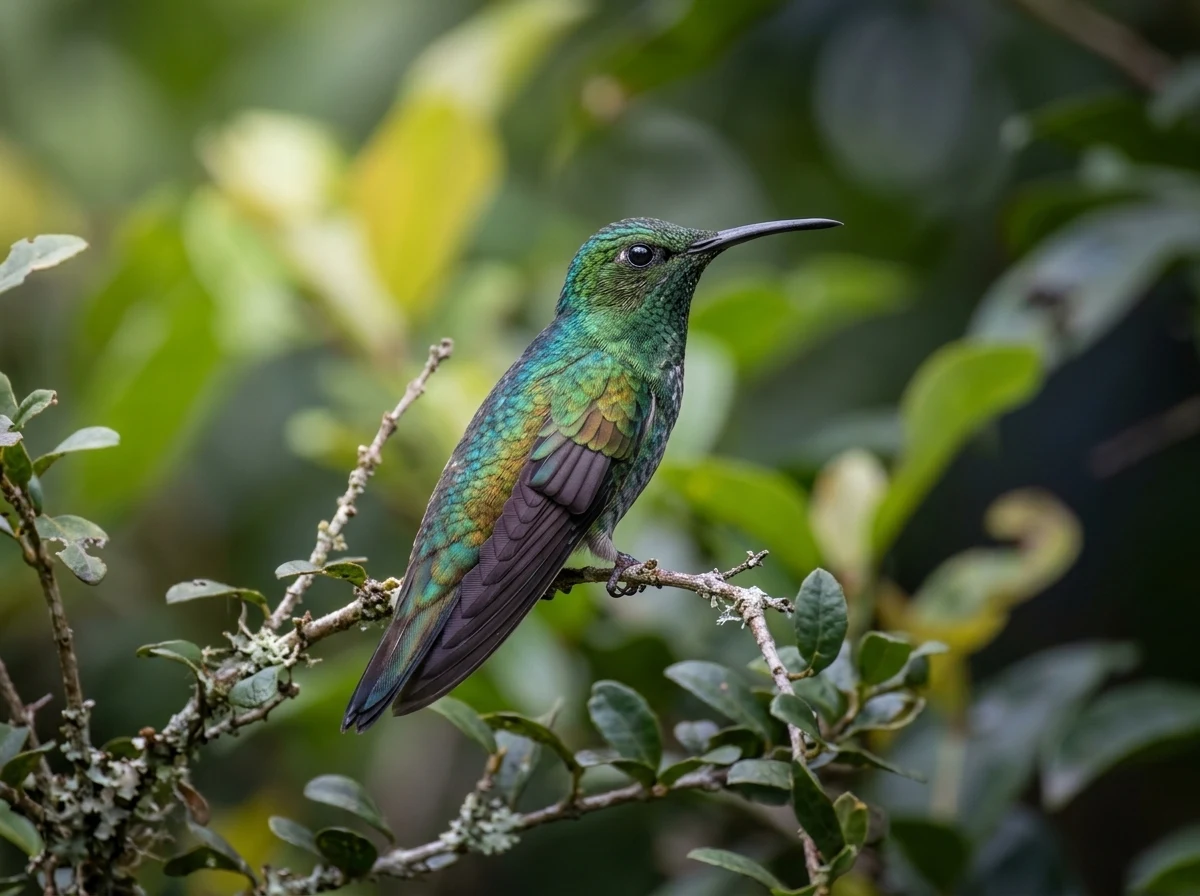 AI
AI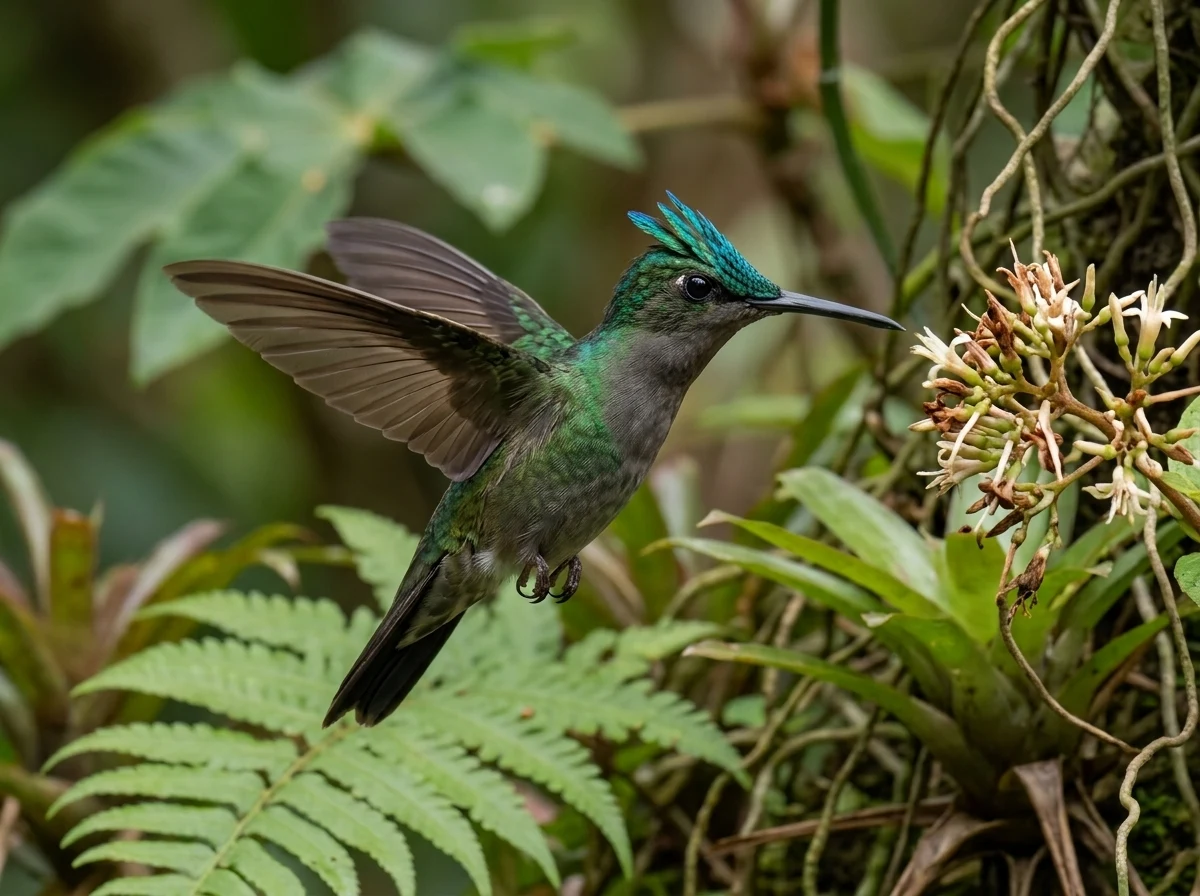 AI
AINative / natural occurrenceIUCN LC
Antillean Crested Hummingbird
Zumbadorcito Crestado
Orthorhyncus cristatus
01
What is the most reliable difference between the Mango and the Emerald?
The combination of size and bill shape. The Mango is more robust and has a long, decurved bill; the Emerald is smaller and its bill is shorter and straighter. Coloration helps, but it varies with light.
02
Can I identify them by sound alone?
Not reliably with the available information. The reference documents do not detail diagnostic acoustic differences. Record and compare with reliable archives before relying on sound.
03
Are the Mango and the Emerald endemic to Puerto Rico?
The Puerto Rican Emerald is endemic. The Mango is a near-endemic also recorded in the Virgin Islands, where its presence is uncertain and may disappear.
04
What should I do if I see a hummingbird and I am not sure?
First observe size and bill shape. Then note habitat and behavior. If you can, take a photo or record a video. Do not force the identification: note 'hummingbird sp.' and check later.
05
Are there other hummingbirds in Puerto Rico I might confuse?
Yes. The Green-throated Carib and the Antillean Crested Hummingbird have also been recorded. The Crested is smaller and males have a crest; the Carib is larger and has a curved bill.
Keep exploring
Connected routes
Sources and review
The evidence is one link away.
These sources support the editorial scope of this guide. Bird profiles also retain their own taxonomy, occurrence, and conservation references.
Reviewed:
The atlas continues