 AI
AIHabitat guides
Why Salt Ponds Attract Shorebirds
It is not the salt itself: it is the chain of life that grows in the briny water. A guide to understanding why salt ponds become vital stopovers for shorebirds.
Reviewed: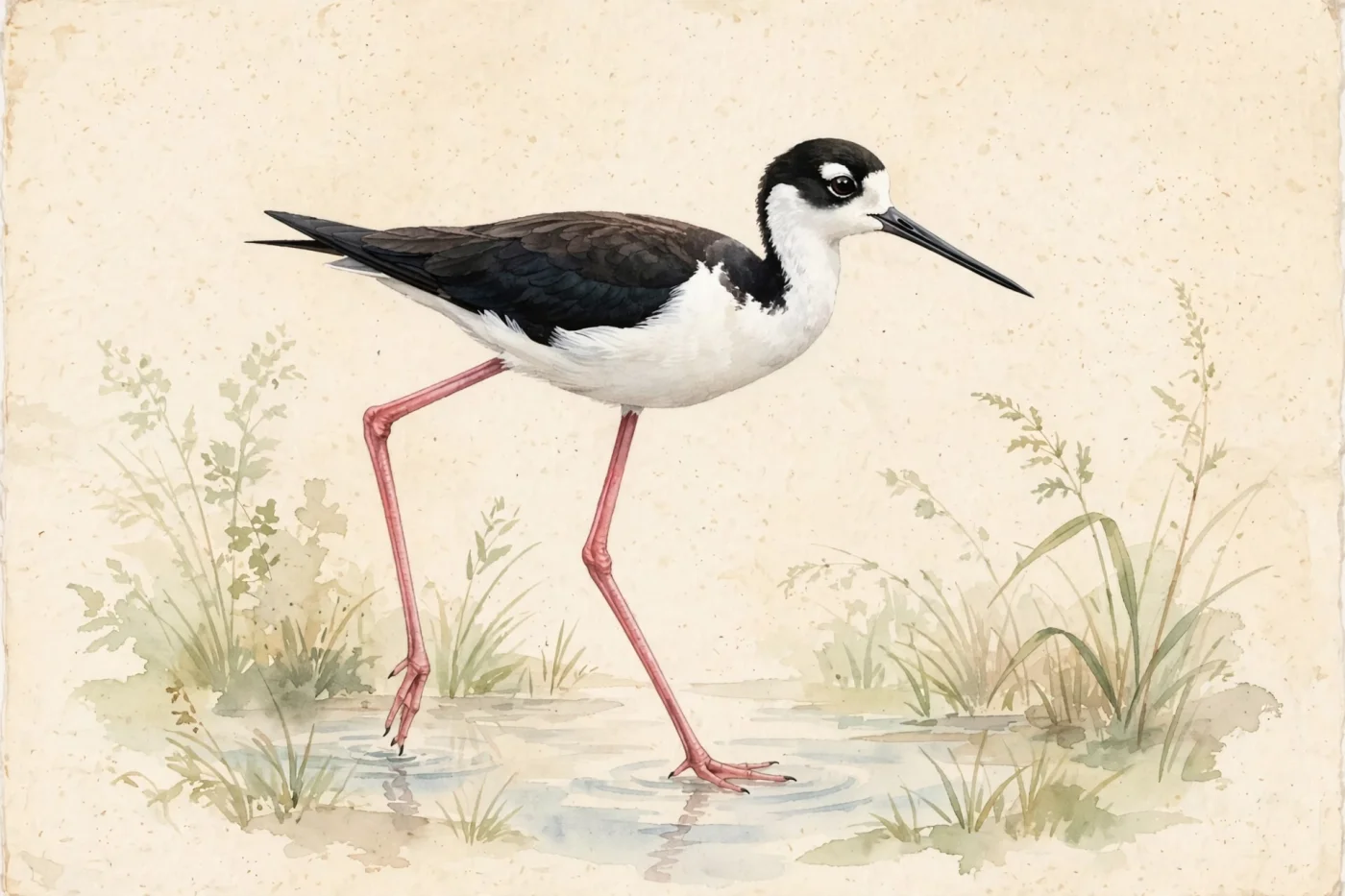
Prepared with AI assistance and linked sources. Illustrations are not field photographs.
The short answer
Salt ponds attract shorebirds because their briny waters produce abundant food. At the Cargill Salt Ponds in Bonaire, BirdsCaribbean documented that the brine grows brine shrimp and brine flies, small invertebrates that form the food base for thousands of shorebirds each year (c300-why-salt-ponds-attract-shorebirds-s1).
In Puerto Rico, salt flats are also habitat for resident birds and shorebirds, according to the U.S. Fish and Wildlife Service (c300-why-salt-ponds-attract-shorebirds-s4). This guide explains the mechanism, compares two shorebird species, and proposes a simple observation you can test in the field.
Habitat guides
Three keys to remember
Camarones y moscas de salmueraThe base foodBirdsCaribbean identifies these invertebrates as the base that supports thousands of shorebirds at the Cargill Salt Ponds (c300-why-salt-ponds-attract-shorebirds-s1).
Más de 20,000 aves playerasA documented exampleThat number corresponds to the Cargill Salt Ponds, Bonaire, not to a Puerto Rico count (c300-why-salt-ponds-attract-shorebirds-s1).
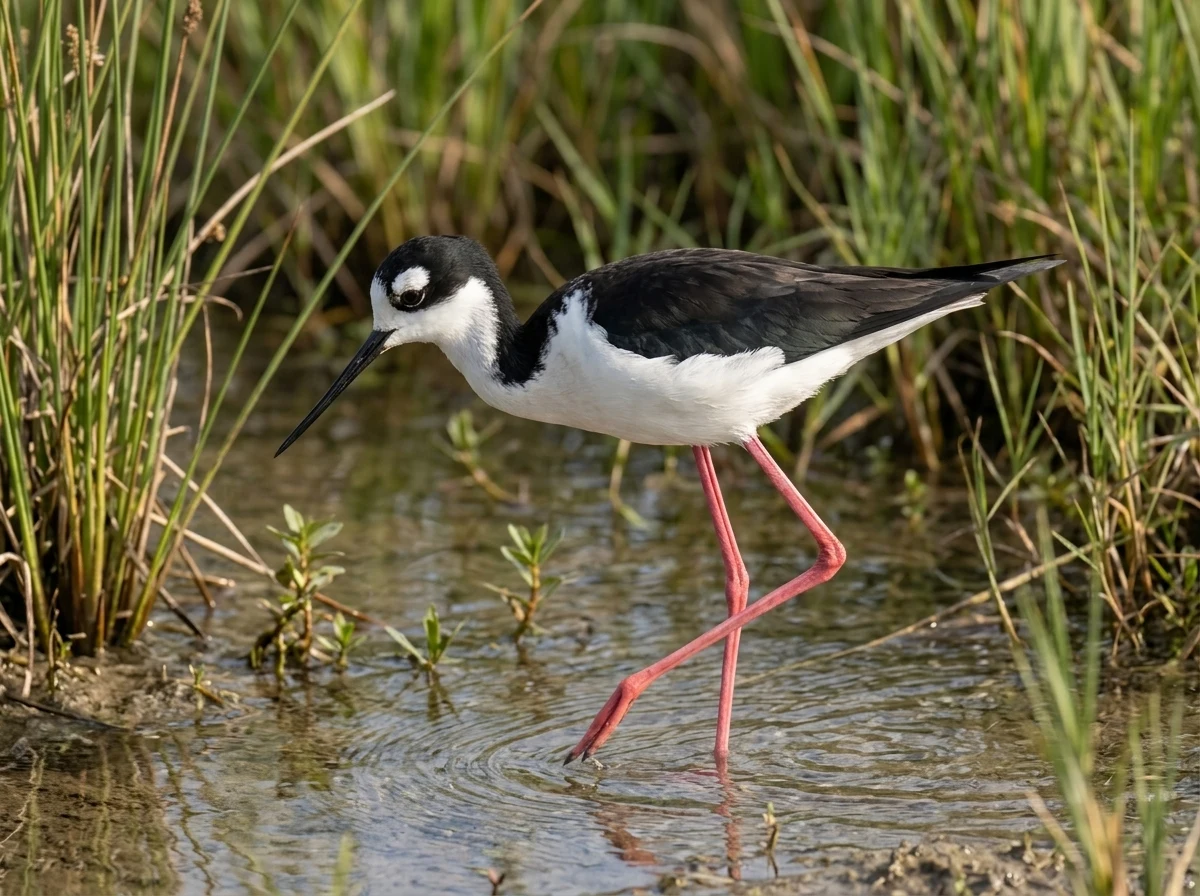
Viuda y Playero GraciosoTwo species to compareBoth are in the Puerto Rico bird catalog as native species of natural occurrence; the Black-necked Stilt is listed among the birds that use Puerto Rico salt flats (c300-why-salt-ponds-attract-shorebirds-s4).
01
The mechanism: salt, sun, and a food chain
A salt pond is not just a salty puddle. It is a solar evaporation system: seawater enters, moves through shallow ponds, and concentrates as the sun and wind evaporate it. That process creates waters with variable salinity, from brackish to nearly saturated. At the Cargill Salt Ponds in Bonaire, BirdsCaribbean describes 2,700 hectares of artificial wetlands, primarily solar evaporation ponds for salt extraction (c300-why-salt-ponds-attract-shorebirds-s1).
That range of salinity is the key. Brine shrimp and brine flies thrive in these waters, and in turn become concentrated food for shorebirds. BirdsCaribbean puts it plainly: brine shrimp fill the ponds and brine flies cover the dike roads between them; for shorebirds, those invertebrates are a delicious food source right there (c300-why-salt-ponds-attract-shorebirds-s1).
The result is a predictable food patch. Shorebirds migrating along the Atlantic need stopover sites where they can refuel; salt ponds offer exactly that. That is why the Cargill Salt Ponds were designated a Western Hemisphere Shorebird Reserve Network (WHSRN) site of regional importance, with more than 20,000 shorebirds of 17 species recorded (c300-why-salt-ponds-attract-shorebirds-s1).
02
Two shorebirds, two strategies: Black-necked Stilt and Semipalmated Sandpiper
The Black-necked Stilt (Himantopus mexicanus) is a shorebird with very long legs and black-and-white plumage. In the Puerto Rico bird catalog it appears as a native species of natural occurrence; its estimated body mass is about 173 grams. It feeds on aquatic invertebrates and nests on the ground in a shallow scrape. The U.S. Fish and Wildlife Service includes it among the birds that use Puerto Rico salt flats (c300-why-salt-ponds-attract-shorebirds-s4).
The Semipalmated Sandpiper (Calidris pusilla) is much smaller: about 32 grams. It is a long-distance migrant that feeds on invertebrates. BirdsCaribbean lists it among the species recorded at the Cargill Salt Ponds, along with other small shorebirds (c300-why-salt-ponds-attract-shorebirds-s1).
The comparison is useful for observers. The stilt is large, with very long pink legs and a fine, straight bill; it walks slowly along the water’s edge and is often seen in pairs or small groups. The Semipalmated Sandpiper is a small “peep,” with black legs and a short, straight bill; it usually moves in tight, active flocks. Both species depend on the same resource — invertebrates — but exploit it at different scales: the stilt takes larger or deeper prey; the Semipalmated Sandpiper picks at a smaller scale.
In Puerto Rico, the catalog records both as native species of natural occurrence. Abundance is not inferred from that presence: they are part of the documented avifauna, not a guarantee that they will be seen at every salt pond.
03
Puerto Rico has salt flats too
The U.S. Fish and Wildlife Service published a document titled “Las Salinas son también hábitat para aves” (“Salt Flats are also habitat for birds”), which describes salt flats as important habitat for resident birds and mentions the Black-necked Stilt among the species that use them (c300-why-salt-ponds-attract-shorebirds-s4). That document offers no counts or abundances; it only confirms habitat use.
BirdsCaribbean also mentions salt ponds and salinas as part of the wetlands that shorebirds use in the Caribbean, along with mangroves, tidal flats, beaches, and mudflats (c300-why-salt-ponds-attract-shorebirds-s3). In Puerto Rico, the Cabo Rojo Salt Flats in the southwest are a WHSRN site; the Cargill Salt Ponds designation became the Caribbean’s second WHSRN site, joining Cabo Rojo (c300-why-salt-ponds-attract-shorebirds-s1).
It is important not to confuse the Bonaire example with a local count. The more than 20,000 shorebirds and 17 species correspond to the Cargill Salt Ponds, Bonaire (c300-why-salt-ponds-attract-shorebirds-s1). For Puerto Rico, the evidence available here only confirms presence and habitat use, not numbers.
04
How to observe it yourself
You do not need a laboratory to test why salt ponds attract shorebirds. You need patience, binoculars, and a notebook. The goal is to observe feeding behavior and relate it to habitat, without capturing or handling birds.
Suggested procedure: choose a safe vantage point at the edge of the salt pond, without entering the water or walking on dikes if that could disturb the birds. Observe for 15 to 20 minutes. Note how many shorebirds you see, their approximate size, what they are doing (picking, walking, resting), and exactly where (water’s edge, mud, dike). If possible, record the time and general conditions (sun, wind, tide).
Practical comparison: look for a Black-necked Stilt and a Semipalmated Sandpiper on the same visit. Ask yourself: does the stilt walk in deeper water than the sandpiper? Does the sandpiper move in a flock while the stilt stays in a pair? Do both pick at the same type of substrate? Those differences reflect how each species exploits the same food.
Checklist for a salt pond visit: binoculars; water; sunscreen; neutral-colored clothing; notebook or notes app; watch; and a mental ruler for estimating sizes (sparrow, thrush, pigeon). Do not share exact nest locations or locations of breeding birds. Do not feed the birds. Do not walk on fragile dikes or inside the ponds.
Linked profiles
The two birds in this guide
A long-legged native species and a tiny migrant: two different ways of using the same food.
AI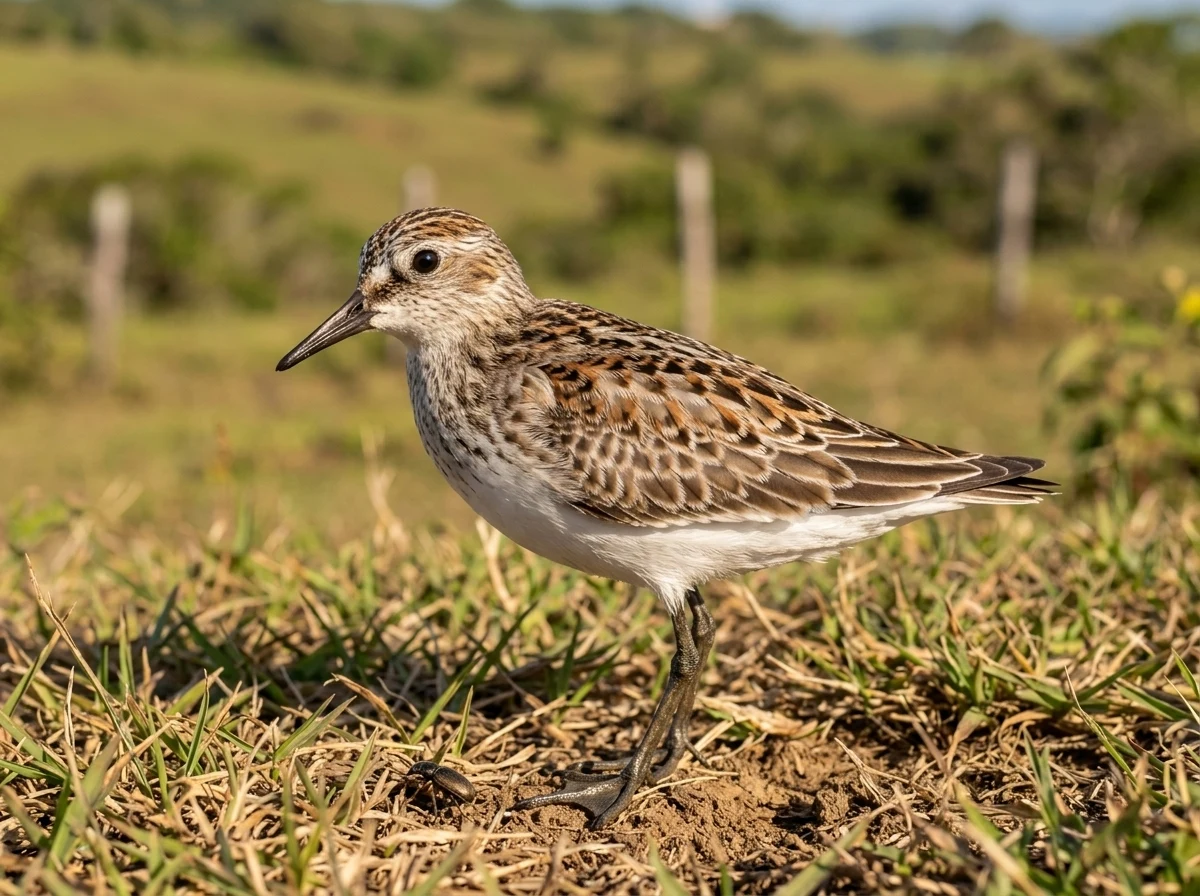 AI
AI01
Do salt ponds attract shorebirds because of the salt?
Not directly. Salinity creates conditions for brine shrimp and brine flies, and those invertebrates are the food that attracts shorebirds (c300-why-salt-ponds-attract-shorebirds-s1).
02
Are there salt flats important for shorebirds in Puerto Rico?
Yes. BirdsCaribbean notes that the Cabo Rojo Salt Flats in southwestern Puerto Rico are a WHSRN site; the Cargill Salt Ponds designation became the Caribbean’s second WHSRN site, joining Cabo Rojo (c300-why-salt-ponds-attract-shorebirds-s1). The U.S. Fish and Wildlife Service also documents salt flats as bird habitat in Puerto Rico (c300-why-salt-ponds-attract-shorebirds-s4).
03
Can I see a Black-necked Stilt and a Semipalmated Sandpiper at the same salt pond?
Both species are in the Puerto Rico bird catalog as native species of natural occurrence, but there is no guarantee of seeing them together on a given visit. The Black-necked Stilt is listed among the birds that use Puerto Rico salt flats (c300-why-salt-ponds-attract-shorebirds-s4); the Semipalmated Sandpiper appears among the species recorded at the Cargill Salt Ponds, Bonaire (c300-why-salt-ponds-attract-shorebirds-s1).
04
What does it mean for a site to be WHSRN?
The Western Hemisphere Shorebird Reserve Network (WHSRN) protects key habitats throughout the Americas. Sites are classified by the total number of shorebirds they support annually or by the percentage of a species’ population. The Cargill Salt Ponds in Bonaire qualified as a site of regional importance (c300-why-salt-ponds-attract-shorebirds-s1).
05
Can I help count shorebirds at salt ponds?
Yes. BirdsCaribbean invites participation in the Caribbean Waterbird Census (CWC) and the International Shorebird Survey (ISS) by submitting lists through eBird. At least three counts between August and October are recommended, without disturbing the birds (c300-why-salt-ponds-attract-shorebirds-s3).
Keep exploring
Connected routes
Sources and review
The evidence is one link away.
These sources support the editorial scope of this guide. Bird profiles also retain their own taxonomy, occurrence, and conservation references.
Reviewed:
01↗02↗03↗
BirdsCaribbean
Worth Its Salt: Bonaire's Cargill Salt Ponds Designated a Shorebird Site of Regional Significance
Evidence for cited sections; consult the original document.BirdsCaribbean
Shorebirds – BirdsCaribbean
Evidence for cited sections; consult the original document.U.S. Fish and Wildlife Service
¡Ellas también son puertorriqueñas! / They are Puerto Rican, too! Las Salinas son también hábitat para aves
Evidence for cited sections; consult the original document.The atlas continues