 AI
AIIdentification
Bird Track and Sign Detective
You will not always see the bird. Learn to deduce what was there from foot shape, track pattern and the signs left in the substrate.
Reviewed: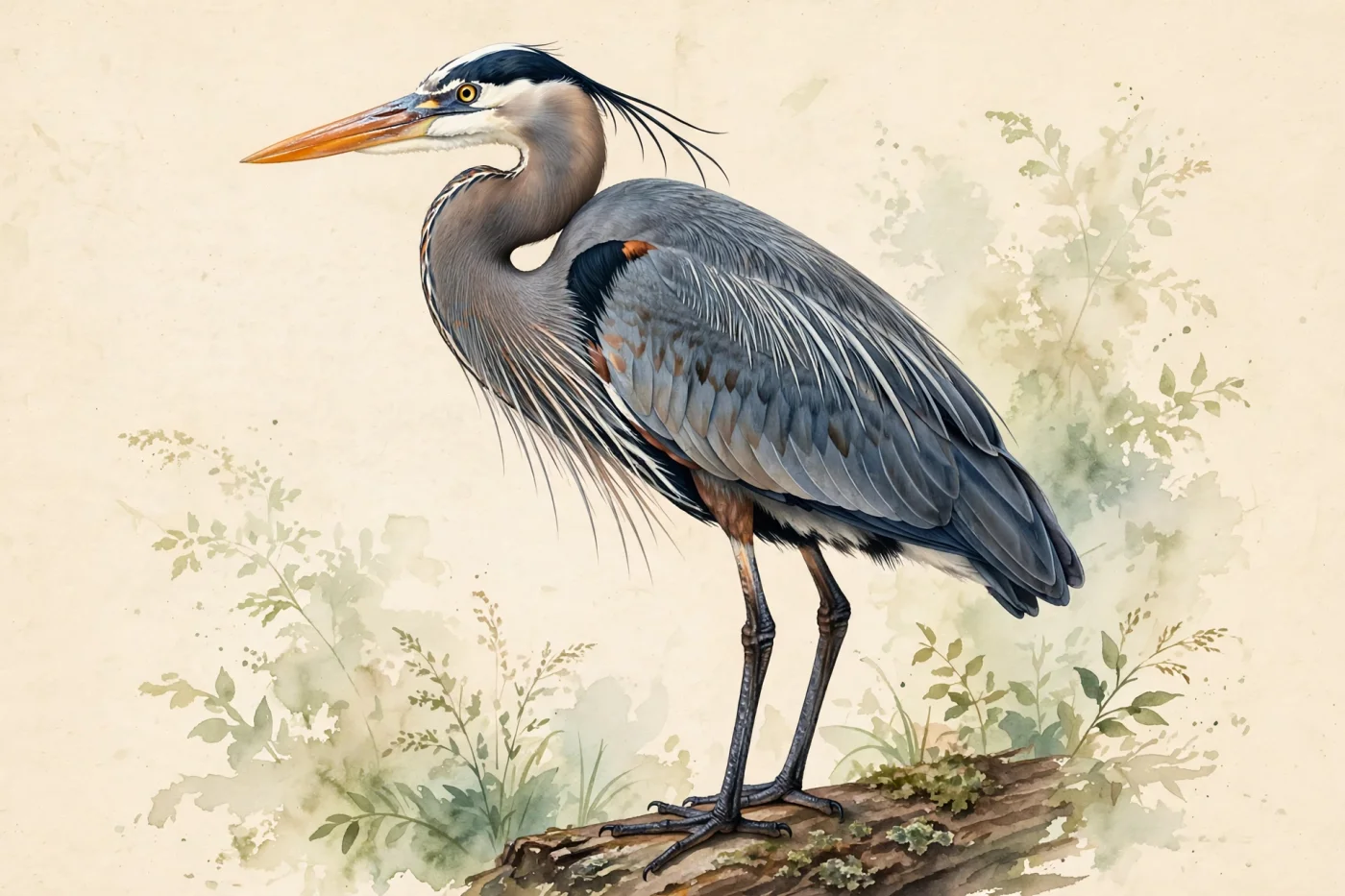
Prepared with AI assistance and linked sources. Illustrations are not field photographs.
The trail starts with the foot
Identifying birds by indirect signs is an exercise in deduction. Instead of relying on plumage color or song, you observe functional anatomy: how the toes are arranged, how many touch the ground and what kind of substrate preserves the impression. Most birds are digitigrade, meaning they walk on their toes rather than the whole sole of the foot, and their foot bones are fused into a tarsometatarsus that gives the leg extra leverage. That structure leaves recognizable tracks when mud, wet sand or fine dust records the step.
This guide does not replace a photo of the bird or a direct observation. Tracks are distorted by wind, rain and the animal's own weight, and the same species can leave different impressions depending on the ground. Even so, the combination of toe shape, presence or absence of webbing, relative size and walking pattern allows reasonable hypotheses. The educational value is in the process: observe, measure, compare and record before concluding.
Identification
Three ideas to remember
DigitígradasMost walk on their toesDo not expect a full sole print like a mammal's.
AnisodáctilaThree toes forward, one backIt is the most common arrangement among birds.
SustratoMud and wet sand preserve bestDry or loose ground erases details.
01
How to read a foot: toe arrangements
The key is to count and locate the toes. The anisodactyl arrangement has three toes forward (digits 2, 3 and 4) and one back (digit 1, the hallux). It is the typical pattern of nearly all songbirds and most perching birds. In herons, for example, the anisodactyl track shows three long forward toes and a rear toe that also leaves a mark when the ground is soft. If you see three toes forward and one back, you have already ruled out birds with full webbing or with two toes pointing back.
The zygodactyl arrangement has two toes forward and two back, because the outermost front toe (digit 4) is reversed. It appears in many woodpeckers and their allies, in most parrots, in owls and in the osprey, among others. It is a case of convergence: it evolved independently in several groups. Owls and the osprey can rotate the outer toe forward and backward, so a nocturnal raptor track may show a variable configuration depending on how it was perched. The heterodactyl arrangement, with two toes forward and two back but with the inner front toe reversed, exists only in trogons.
Webbed feet also exist. Palmate webbing joins only the anterior digits (2 to 4) and is found in ducks, geese, swans, gulls, terns and other aquatic birds. Totipalmate webbing joins all four digits and is characteristic of gannets, boobies, pelicans, cormorants, anhingas and frigatebirds. Semipalmate feet have a small web between the anterior digits and appear in some shorebirds, the avocet, herons (only two toes) and other birds. Lobate feet have no web but lobes of skin on the anterior digits and are seen in grebes, coots and phalaropes. For a sign detective, the practical question is: is there webbing between the toes or not?
02
Herons, raptors and shorebirds: comparing tracks
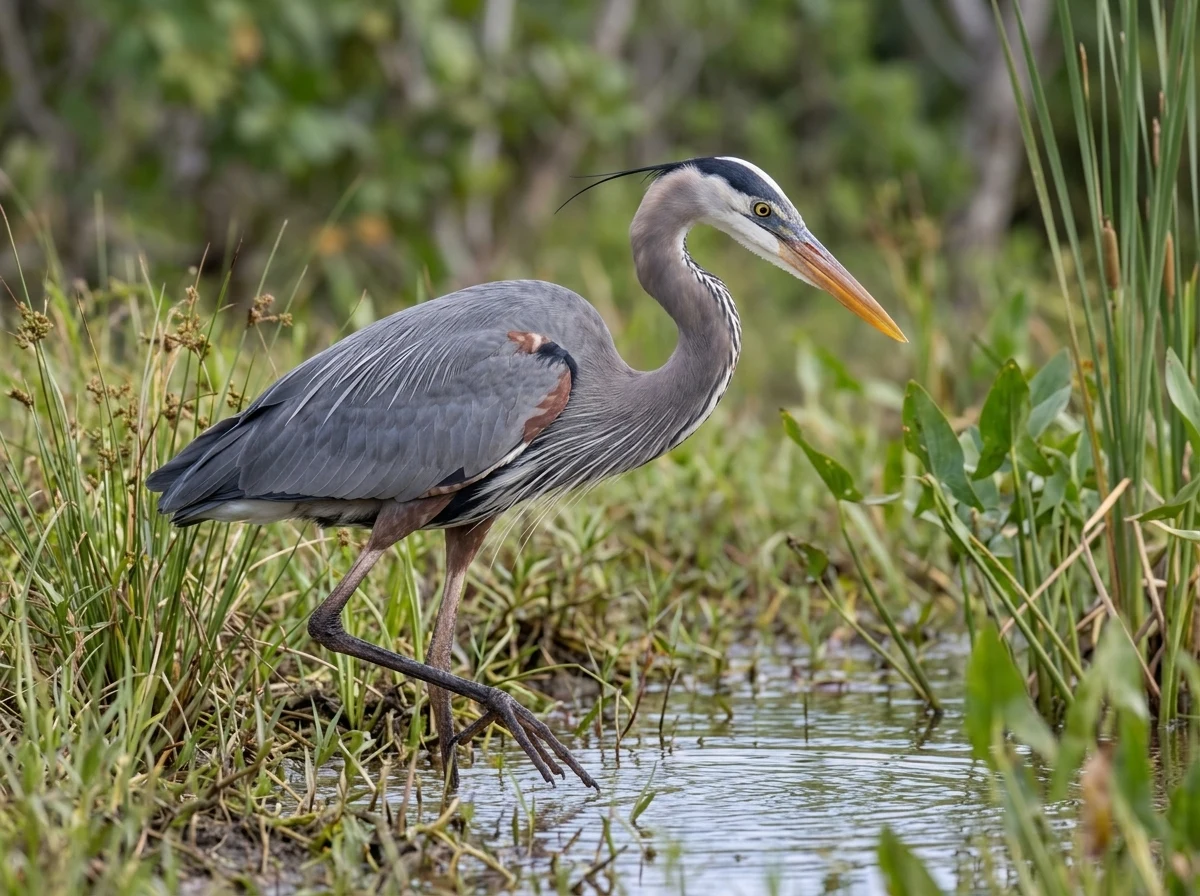
Herons are large wading birds. The Great Blue Heron (Ardea herodias) is a wetland ardeid with an average body mass of about 2.5 kg according to the available data. Its legs are long and anisodactyl, without full webbing, although herons have semipalmate webbing on only two toes. In soft mud, a heron can leave a track of three long forward toes and a rear toe, with a wide stride and often a nearly in-line step. The print size is usually much larger than a shorebird's but smaller than a pelican's.
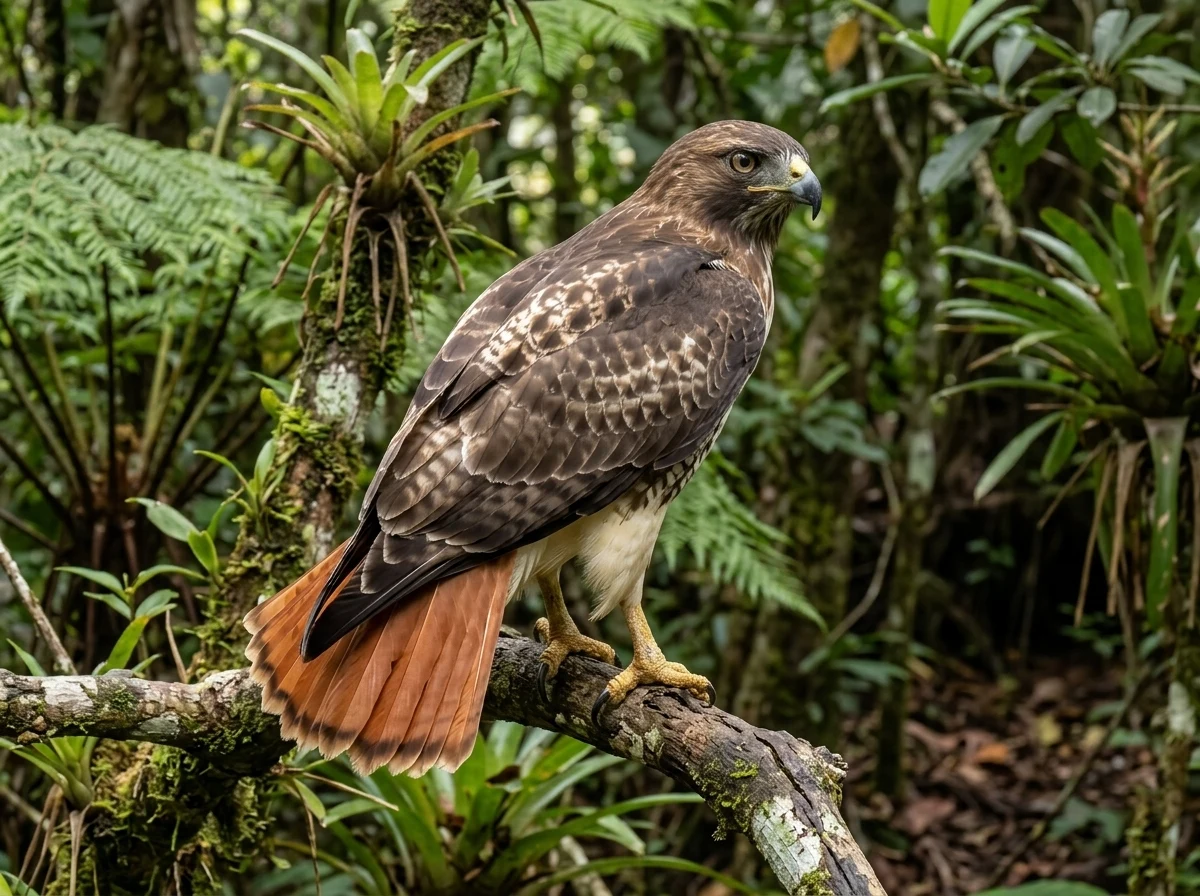
The Red-tailed Hawk (Buteo jamaicensis) is a raptor of forests and open areas, with an average mass near 1 kg. Its feet are anisodactyl and adapted for capturing prey: the toes are robust and the claws curved and strong. In a raptor track, the toes often look thick and claw marks may appear as dots or grooves at the end of each toe, especially in soft ground. Owls, by contrast, have zygodactyl feet and can rotate the outer toe, so a track with two toes back could be from an owl or another zygodactyl bird.
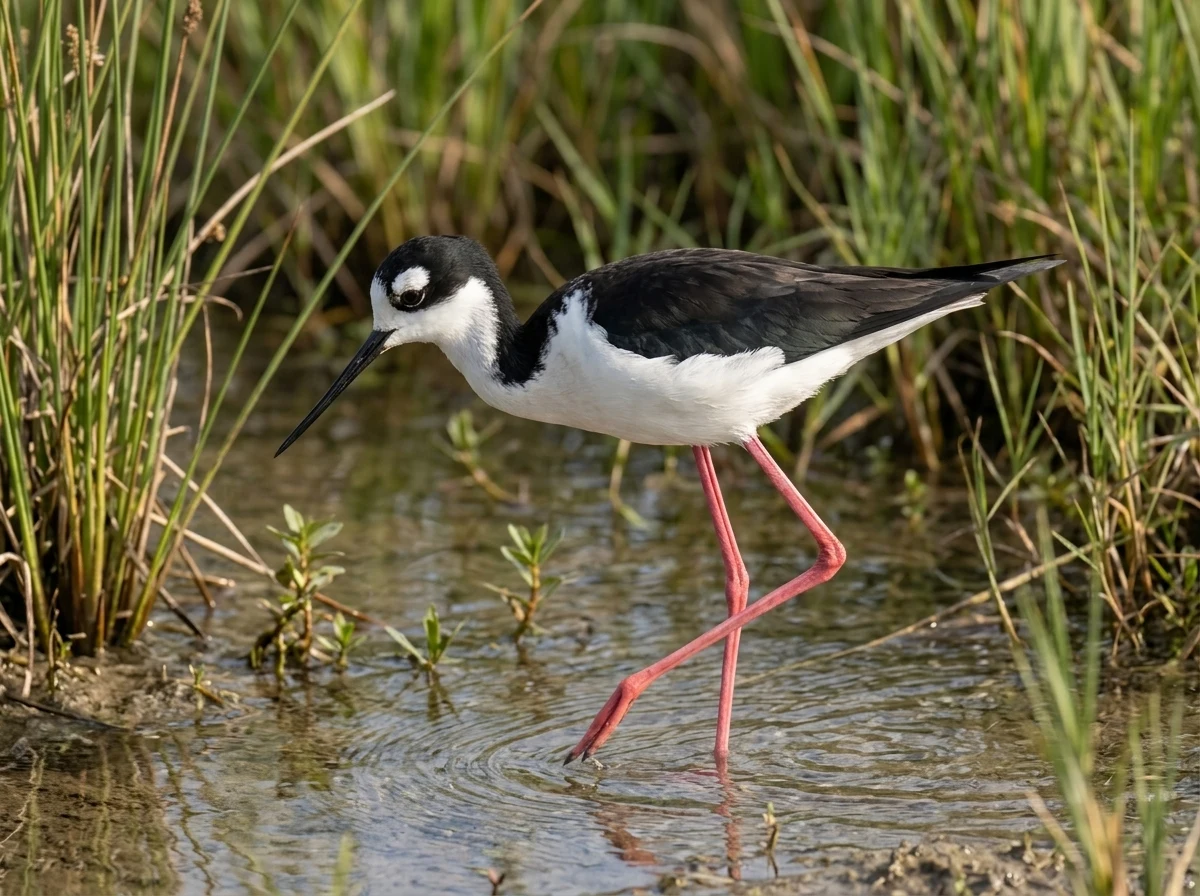
Shorebirds offer a useful contrast. The Black-necked Stilt (Himantopus mexicanus) is a wetland recurvirostrid with an average mass of about 173 g. Its legs are very long and anisodactyl, and its toes are relatively thin. The Killdeer (Charadrius vociferus) is a large plover, about 100 g, with anisodactyl feet and a vestigial or reduced hind toe. In shorebirds, the hind toe can be so small that it barely touches the ground, so many tracks appear to have only three toes. That reduced hallux is an important clue: if the track shows three forward toes and no clear rear mark, think shorebird before heron.
The Brown Pelican (Pelecanus occidentalis) is a large coastal seabird with an average mass of about 3 kg. Its feet are totipalmate: all four toes are joined by webbing. On the ground, a pelican track may look like a broad, webbed impression, with the toes united and a rear mark from digit 1 included in the web. Do not expect a three-toed track with separated toes like a heron's. This difference between full webbing and free toes is one of the most useful comparisons for separating large waterbirds.
03
Beyond the track: feathers, nests and other signs
Tracks are not the only indirect sign. A fallen feather can indicate a bird's presence, although identifying the species from a single feather is difficult and requires experience. Nests are another clue: herons build platform nests on the ground, rocks, shrubs or trees, and may nest in colonies or solitarily. The Red-tailed Hawk builds stick nests in trees, on poles or on buildings, and is usually solitary. The Black-necked Stilt and the Killdeer make scrape nests on the ground, sometimes lined with vegetation or pebbles. The Brown Pelican nests in colonies, on mounds or platforms on the ground or in shrubs.
For a sign detective, context matters as much as shape. A platform nest in a tall tree is not the same as a scrape in the sand. A pile of feathers near a pond may be evidence of a bird that perched or was depredated, but it does not by itself prove which species it was. The practical recommendation is to record habitat, substrate, date and measurements before attempting an identification. If you can, take a photo with a ruler or a coin as a scale. That discipline turns a casual observation into useful data.
04
Field procedure and checklist
When you find a track or sign, follow an orderly procedure. First, do not step on the area: photograph from several angles before approaching. Second, place a visible scale (ruler, coin or card) next to the track and take a perpendicular photo. Third, measure the total track length, the width between toes and the stride length if there are several steps. Fourth, describe the substrate: mud, wet sand, dry sand, dust, vegetation. Fifth, note the surrounding habitat: water edge, mangrove, grassland, forest, beach. Sixth, record the date and time. Seventh, draw a simple sketch with toe orientation and walking direction.
Checklist to carry: measuring tape or ruler, notebook or phone, pencil, camera app with a scale-photo option, field guide or access to identification resources, and water to clean up if the mud is thick. If you find an active nest, do not touch it or get too close: observe from a distance and leave. If you find an injured bird, do not try to handle it without guidance; seek specialized help. These are educational suggestions, not legal or veterinary instructions.
Deduction exercise: imagine you find a large track in soft mud next to a wetland. It has three long forward toes, a visible rear toe and no webbing between the toes. The stride is wide and the steps are nearly in line. Which group of birds would you consider first? A large heron is a reasonable hypothesis. Now imagine a broad track with all four toes joined by webbing near the coast. A pelican is a possibility. If the track is small, with three thin toes and no clear rear mark, think shorebird. The key is not to guess the exact species but to narrow the possibilities with evidence.
Linked profiles
Birds mentioned in this guide
Five species that illustrate the foot and sign contrasts described above.
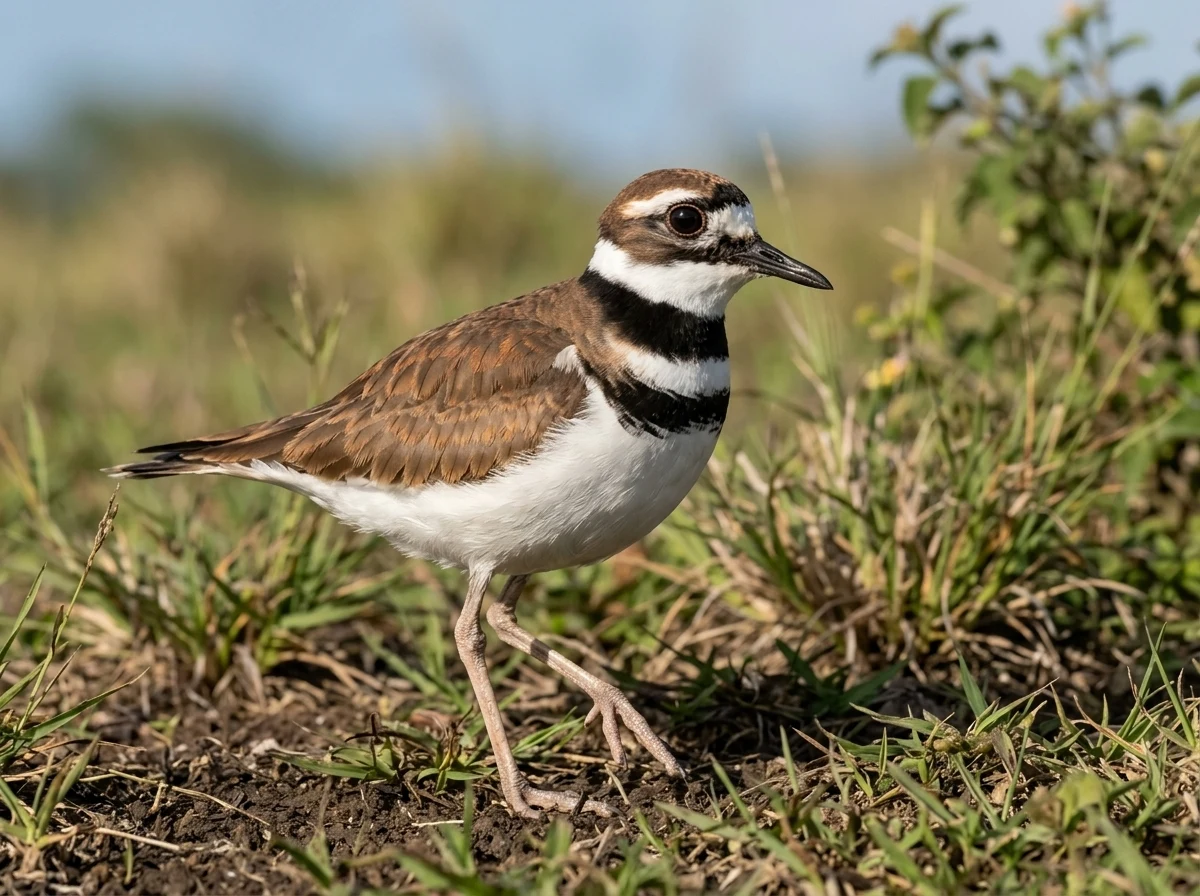
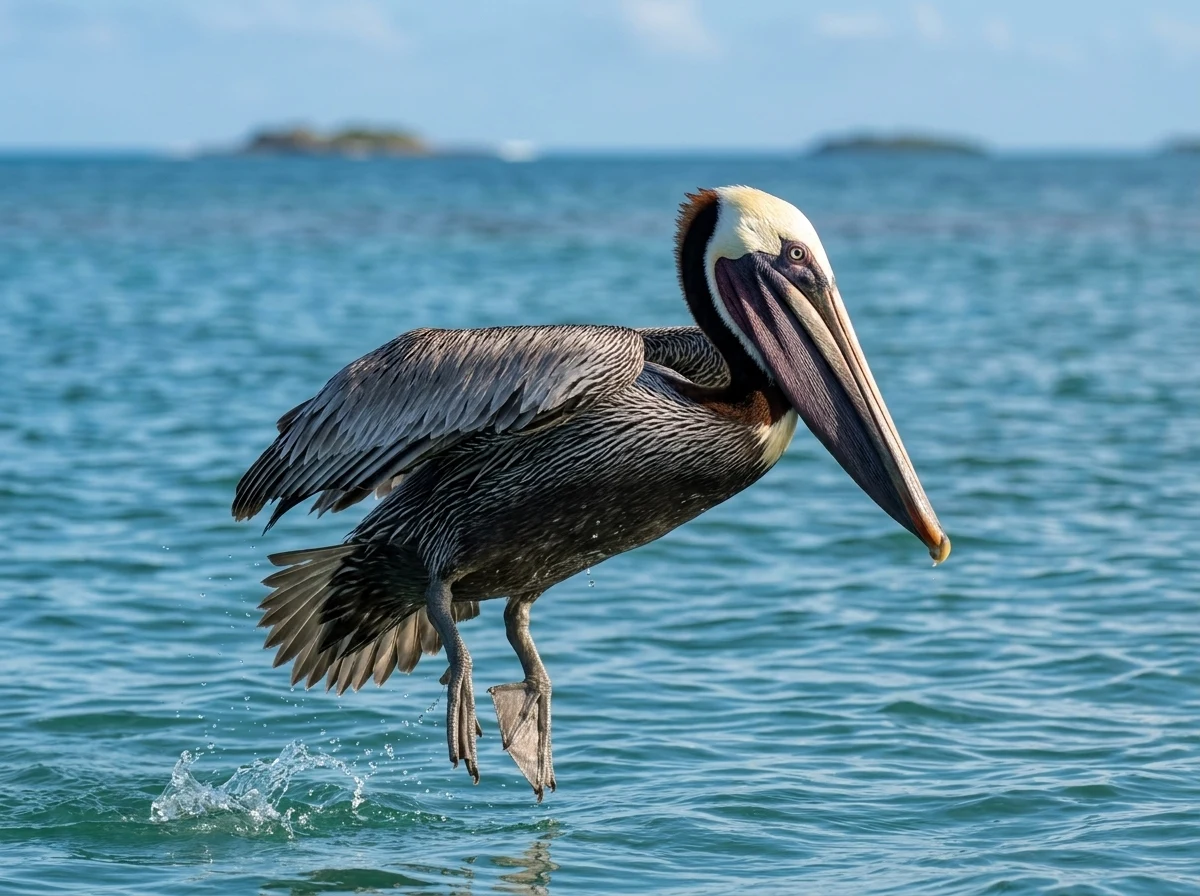
01
Can I identify a species from a single track?
Rarely with certainty. A track can be distorted and several species share the same toe arrangement. The realistic goal is to identify the group or narrow the possibilities, and confirm with other signs or a direct observation.
02
What do anisodactyl, zygodactyl and palmate mean?
Anisodactyl is three toes forward and one back, the most common pattern. Zygodactyl is two forward and two back, as in parrots and owls. Palmate refers to webbing joining only the anterior toes, as in ducks and gulls.
03
Do herons have webbing between their toes?
Herons have semipalmate webbing on only two toes, not full webbing like a duck or pelican. In a heron track, the toes usually look separated and the rear toe may leave a mark in soft mud.
04
Why do some shorebird tracks appear to have only three toes?
Because in many shorebirds the hind toe (hallux) is reduced and barely touches the ground. The Killdeer, for example, has a vestigial or reduced hind toe, so the rear mark may not appear.
05
Where can I learn more about Caribbean birds?
BirdsCaribbean offers downloadable educational resources, ebooks and the Journal of Caribbean Ornithology, an open-access scientific journal on Caribbean birds. It also maintains a regional network of observers and educators.
Keep exploring
Connected routes
Sources and review
The evidence is one link away.
These sources support the editorial scope of this guide. Bird profiles also retain their own taxonomy, occurrence, and conservation references.
Reviewed:
01↗02↗03↗
Wikipedia
Bird feet and legs
Evidence for cited sections; consult the original document.BirdsCaribbean
Resources – BirdsCaribbean
Evidence for cited sections; consult the original document.Cornell Lab of Ornithology
BirdsCaribbean (Birds of the World regional hub)
Evidence for cited sections; consult the original document.The atlas continues